Henan home style · Cold Dishes & Salads
Jingjie Smashed Cucumber Salad (荆芥拌刀拍黄瓜)
Henan's signature smashed cucumber salad: cracked cucumbers on a bed of anise-scented jingjie herb, garlic-black-vinegar dressing and a cool sesame paste drizzle.
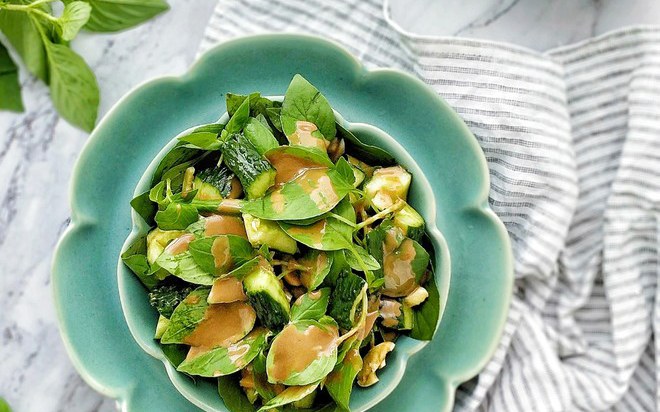
Instructions
-
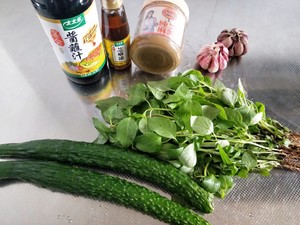 Pick the jingjie: strip the leaves and tender tops from any tough stems, soak them in cold water for 5 minutes, then spin or pat them very dry — wet herbs water down the dressing.
-
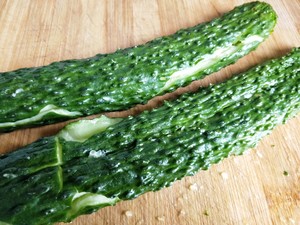 Smash the cucumbers with the flat side of your knife or a rolling pin until they split and crack; the rough, jagged surfaces hold dressing far better than clean cuts. Cut crosswise into 4 cm (1½ inch) chunks.
-
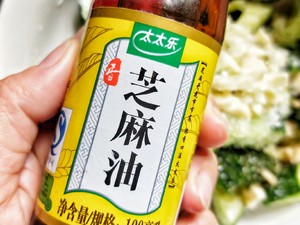
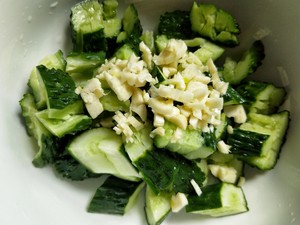 Tip the cucumber into a bowl, add the garlic, salt, sugar, black vinegar, light soy sauce and sesame oil, and toss with your hands for 30 seconds until the sugar and salt dissolve and every piece is coated.
-
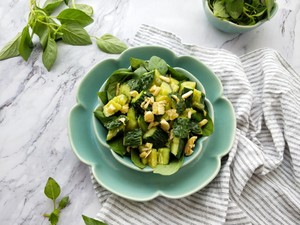
 Spread half the jingjie leaves across a serving plate like a bed of salad greens. Pile the dressed cucumber on top, then tuck the remaining jingjie around and over the cucumbers.
-
 Just before serving, whisk the sesame paste with the 2 Tbsp cool water until it falls from the spoon in a slow ribbon — loose enough to drizzle, not runny.
-
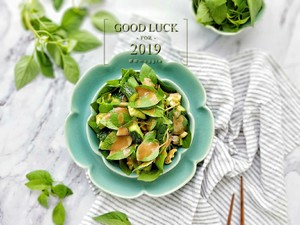 Drizzle the sesame paste over the salad at the table, toss everything together so the herbs and cucumbers catch the paste, and eat immediately while the cucumber is still snappy.
Why this recipe works
Three small decisions turn ordinary cucumbers into a salad people fight over.
1. Smashing instead of slicing. Whacking a cucumber with the flat of the knife cracks it open along its cell walls, creating rough, bruised faces and uneven edges. Those fractured surfaces grab onto dressing the way a smooth-cut round never can — the vinegar and garlic actually get into the cucumber instead of sliding off it. It also breaks up the seed core so every bite mixes crisp flesh with juicier middle.
2. Treating the herb as a vegetable, not a garnish. Jingjie's cool, mint-anise perfume fades the moment it is bruised, so this version never tosses it in — it spreads a bed of whole leaves under the cucumbers and tucks more around them. The herb stays bright and intact, and each forkful picks up a leaf or two on the way up. Only at the table do you toss, so the leaves keep their fragrance and the cucumber keeps its snap.
3. Sesame paste at the end. Chinese sesame paste is thicker and toastier than most dressings, so it is loosened with water to a pourable ribbon and drizzled last. Poured too early it thickens back up and glues the salad together; poured at the table it coats the jumbled leaves and cucumber in creamy streaks. New to how to smash cucumbers? One firm whack per piece with the knife's flat — you want cracks and ragged faces, not mush.
About the dish
In Henan province, jingjie is less a garnish than a seasonal vegetable: bunches sit in produce markets next to the greens all summer, and locals toss it into cold noodles, mutton soup, and just about anything served on a scorching day. The plant (Elsholtzia ciliata, a mint relative) has been used in Chinese medicine for centuries, but in Henan kitchens it is simply food — the story goes that a Henan summer table without jingjie is barely a table at all.
Pairing it with smashed cucumbers is the natural move: pai huang gua is the nation's favorite cold dish, and the Henan twist swaps chili oil for a cool sesame drizzle and a mountain of the herb. The result is the mirror image of the Sichuan version — no heat at all, just garlic, vinegar, sesame and that distinctive green coolness.
What to serve with it
This is a starter that resets the palate: serve it alongside something warm and substantial, like a quick stir-fry and rice. For a full summer spread, add another cold dish and a pot of congee, and eat everything at room temperature with cold drinks. It also tops cold noodles on hot days, and the jingjie herb is the point — if you grow it, pick it just before serving so the anise scent is at full strength. Because it is a cucumber salad without chili oil, it also suits kids and heat-shy guests at the same table.
Pro tips
- Jingjie tastes like mint and basil crossed with a soft anise note — in Henan it is eaten by the handful like lettuce, not sprinkled. A big bunch looks like too much; it is not.
- Smash, don't slice. The cracked, bruised surfaces drink up vinegar and garlic, while neatly cut rounds stay bland and slippery.
- Dress at the last minute. Salted cucumber starts weeping within 10 minutes, and the salad is at its snappiest in the first half hour.
- Chinese sesame paste is made from toasted seeds, so it tastes deeper than Middle Eastern tahini. In a pinch, mix tahini with ½ tsp toasted sesame oil.
- Choose cucumbers that feel heavy and squeaky-firm. Soft ones shatter into watery mush when you smack them instead of cracking into crisp chunks.
Storage & leftovers
- This salad is best within an hour of dressing; refrigerate leftovers in a sealed container and finish them within 24 hours.
- Leftovers release water — drain briefly, then re-brighten with a splash of vinegar and a pinch of salt.
- Keep undressed smashed cucumber and the thinned sesame paste separately for up to a day, then assemble fresh portions from them.
- Freezing makes no sense here — cucumbers collapse completely when thawed.
Frequently asked questions
What exactly is jingjie?
It is Elsholtzia ciliata, a mint-family herb with narrow serrated leaves — English names include Vietnamese balm and crested latesummer mint. In Henan it is treated as a vegetable: piled into cold noodles, mutton soups and salads by the handful. Look for it at Chinese or Southeast Asian grocers, grow it from seed, or substitute Thai basil.
How is this different from regular smashed cucumber salad?
Classic pai huang gua is cucumber, garlic and dressing, finished with chili oil. This Henan version makes the herb the co-star — a full bed of jingjie under and over the cucumbers — and ends with a sesame paste drizzle instead of heat. The flavor is greener, cooler and completely mild.
I can't find sesame paste. What can I use?
Tahini works one-to-one — stir in ½ tsp toasted sesame oil and a pinch of sugar to mimic the Chinese toasted flavor. Smooth peanut butter thinned with cool water is a common home fallback and tastes closer than you'd expect.
Can I make it ahead?
Partially. Smash the cucumbers and mix the dressing up to 4 hours ahead and refrigerate them separately. Assemble, dress and add the herbs no more than 10 minutes before eating, or the cucumbers go limp and watery.
Is this dish spicy?
Not at all — it is fully mild. The punch comes from raw garlic, sharp vinegar and the cool menthol-anise flavor of the herb. If you want heat, offer chili oil at the table and let each person add their own.
Can I just slice the cucumbers instead of smashing them?
You can, but you lose the point: smashing cracks the flesh into rough, porous faces that grip the salt and dressing, while slick slices mostly let it slide off. No cleaver or knife flat handy? A rolling pin or a heavy pan does the same job.