Chinese home style · Cold Dishes & Salads
Sesame Spinach Salad (芝麻酱菠菜)
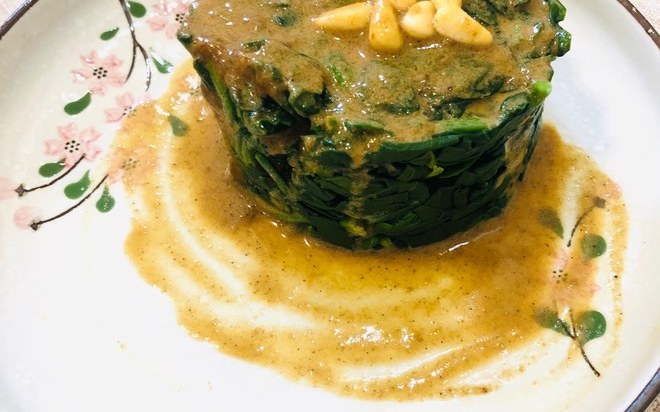
Blanched spinach under a rich sesame-tahini dressing with toasted pine nuts and a numbing Sichuan pepper oil finish — the vegan cold dish that converts everyone.
Instructions
-
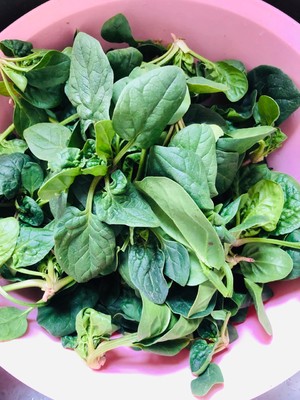 Wash the spinach well — soil hides at the roots. Soak in a basin of cold water for a few minutes so grit settles, then lift out and rinse again. Trim the root ends.
-
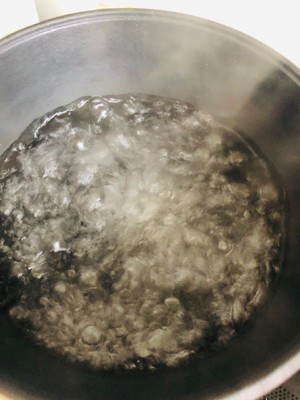 Blanch: bring a pot of water to a full boil, drop in the spinach, and cook exactly 40 seconds — in batches if your pot is small. The stems should be just pliable, the leaves still deeply green.
-
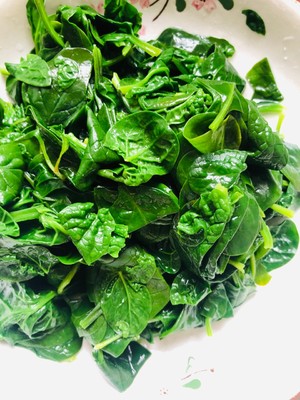 Shock and drain: lift the spinach straight into cold drinking water (use filtered or boiled-cooled water — you won't cook it again), then squeeze gently into a loose ball and set aside to drain. Squeeze only lightly: you want it damp, not wrung out.
-
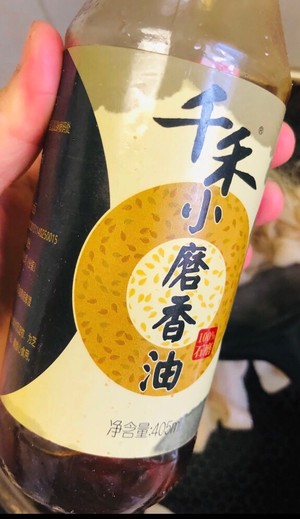 Make the dressing: in a bowl, stir the sesame paste with the light soy sauce, Sichuan pepper oil, sesame oil and the grated garlic if using. Add the just-boiled water 1 Tbsp at a time, stirring — the paste will seize at first, then suddenly turn smooth, glossy and pourable like warm honey. That's the right consistency.
-
 Loosely chop the spinach into a serving dish, spoon the dressing over the top (don't toss — let diners mix), scatter the toasted pine nuts over, and serve at room temperature.
Why this recipe works
This is the vegan cold dish that even meat-lovers finish first — and it runs on three small disciplines.
1. The 40-second blanch. Spinach needs just enough heat to relax the stems and soften the oxalic edge, and not one second more. Shocked in cold drinking water, it keeps its deep green and a faint bite that raw spinach salads never manage.
2. Hot water turns paste into sauce. Sesame paste loosened with cold water stays grainy forever; whisked with just-boiled water it suddenly emulsifies into a pouring cream. The moment it flips — clumpy to glossy — stop adding water. It is the same sesame logic behind Japanese goma-ae, though that version grinds toasted seeds instead of using paste.
3. Dress on top, not tossed in. Spooning the sauce over the mound rather than tossing keeps the leaves perky and the presentation generous. Diners mix their own; the pine nuts stay on top where they belong. The sauce keeps a week in the fridge, so make a double batch — assembly becomes a five-minute job at dinner time.
About the dish
Cold dressed vegetables (凉拌, liángbàn) open almost every Chinese home meal in summer: quick-blanced greens, a punchy sauce, room temperature. Sesame-paste spinach is the northern classic — the same sesame paste that loves cold noodles and shaobing pancakes, here poured over the season's greenest vegetable. Spinach season drives the dish's calendar in the north — spring and winter, when markets fill with fat-stemmed bunches — and the sesame paste is the same one the region runs on.
This version comes from a vegan home cook who keeps it strict — no chicken bouillon, no sugar hit — letting the toasted sesame, soy and that flick of Sichuan pepper oil do all the work. It's proof of the Chinese cold-dish doctrine: a great dressing and exact blanching beat any amount of fuss.
What to serve with it
It cools the burn of anything from the stir-fry page and is vegan enough to anchor a meatless dinner — tofu braise, steamed rice, this salad. It also belongs on any table that features fried food: its fresh, nutty snap resets the palate between bites of potstickers. For kids, halve the white pepper; for adults, add an extra drop of Sichuan pepper oil. Need a chinese spinach side dish in a hurry? This is the fifteen-minute answer: blanch, whisk, spoon. Leftovers are fine cold from the fridge the next day — never reheat it.
Pro tips
- Chinese sesame paste (芝麻酱) is made from TOASTED sesame — nutty and dark, completely different from Middle Eastern tahini, though tahini is a fine substitute in a pinch.
- The boiling-water trick is the whole skill of sesame dressing: paste loosened with cold water stays clumpy; hot water transforms it into a silky sauce.
- 40-second blanch, no longer — spinach that boils for a minute turns army-green and weepy.
- Sichuan pepper oil is what makes this dish memorable instead of nice — a tiny tingling finish over the rich sesame. Make our chili oil base with whole peppercorns, or buy it.
- Serve within the hour: dressed spinach weeps as it sits. Leftover dressing keeps a week and loves noodles and cucumbers.
Storage & leftovers
- Best eaten within an hour of dressing.
- Undressed blanched spinach keeps 1 day refrigerated; the dressing keeps 1 week in a jar.
- Leftovers get watery — squeeze and re-dress, or fold into tomorrow's noodles.
Frequently asked questions
Is this the same as sesame noodles' sauce?
Same paste, different dressing: noodles get a looser, garlicky sauce; spinach gets a richer, soy-forward one. Both take 5 minutes once the paste is loosened with hot water.
Can I use baby spinach?
Yes — blanch 20 seconds only, and squeeze even more gently; baby leaves hold more water.
How do I make it nut-free?
Skip the pine nuts (use toasted sesame seeds) and check your sesame paste label — pure sesame is nut-free, but some brands process with tree nuts.
Can I make it ahead for a dinner party?
Blanch and drain the spinach up to 4 hours ahead (room temp, loosely covered); dress at the last moment.
What else can this dressing do?
Toss it with hand-torn cucumber, blanched green beans, tofu strips, or thin wheat noodles — it's one of the master cold sauces of the Chinese kitchen.
Is Chinese sesame paste the same as tahini?
No — tahini uses raw sesame, Chinese paste uses toasted. Tahini works as a substitute but tastes paler; add ½ tsp toasted sesame oil to compensate.
How is this different from Japanese goma-ae spinach?
Same idea, different dressing. Goma-ae grinds toasted sesame seeds with sugar and soy for a sweet-savory crumble; this Chinese version uses creamy toasted-sesame paste loosened with hot water, sharpened with soy and a flick of Sichuan pepper oil. Blanching the spinach is nearly identical.
My sesame paste seized into grainy clumps. How do I fix it?
Keep whisking and add more hot water — 1 Tbsp of just-boiled water at a time, stirring firmly; it always loosens before it turns silky. Cold water is what causes the graininess, and a paste too thick to pour needs more hot water, not more soy sauce.