Chinese home style · Braised & Slow-Cooked
Classic Cola Chicken Wings (可乐鸡翅)
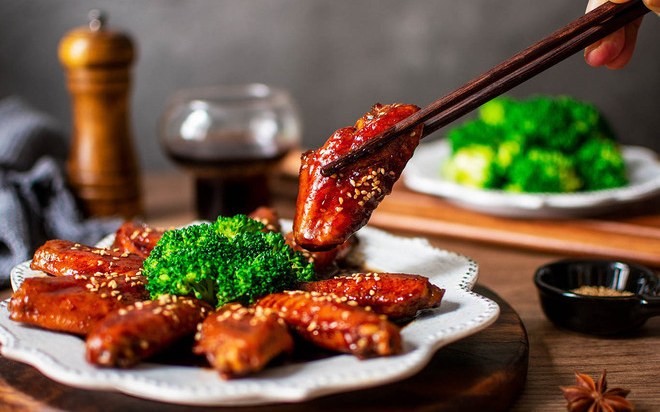
The viral Chinese one-pan classic: wings braised in cola until its sugar reduces into a glossy caramel lacquer. Weeknight-easy and famously hard to mess up.
Instructions
-
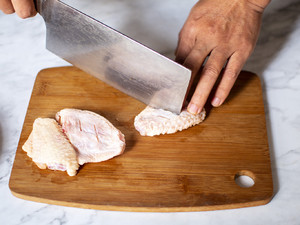
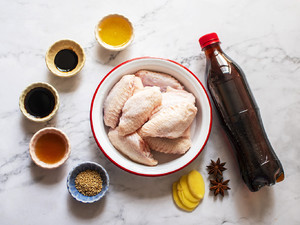 Score the wings: make two cuts on the bone side of each wing, about ¼ inch (½ cm) deep — flavor gets in through the back while the skin side stays whole and pretty. Rinse and pat very dry.
-
 Blanch: put the wings in a pot, cover with cold water, and bring to a boil over high heat. Skim off the gray foam, boil 1–2 minutes, then drain and pat the wings dry.
-
 Fry: heat the oil in a wok or skillet over medium heat, add the wings skin-side down, and fry 2–3 minutes per side until both sides are golden and the skin looks tight.
-
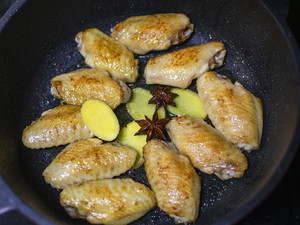 Push the wings aside, add the ginger slices and star anise to the oil, and let them sizzle about 30 seconds until fragrant.
-
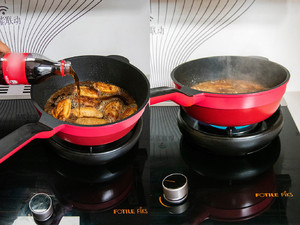 Pour the Shaoxing wine around the edge of the pan — it should sizzle on contact — and toss everything once.
-
 Add the cola, light soy and dark soy, raise the heat, and bring to a boil. Cover, drop to medium-low, and braise 10–15 minutes, flipping the wings once halfway.
-
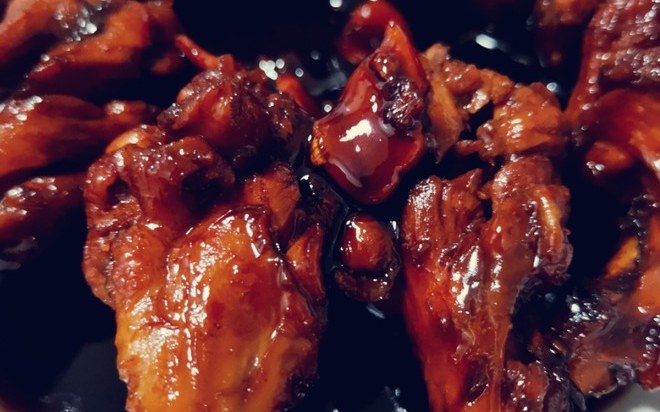
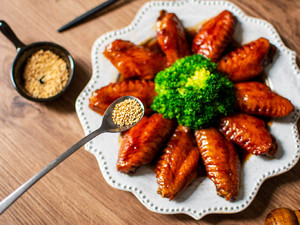 Uncover, raise the heat to medium, and reduce. This is the money moment: the cola's sugar concentrates into a sticky, caramel-like syrup. Keep the wings moving and stir the sauce for 3–5 minutes, until it coats the back of a spoon in a deep amber lacquer.
-
 Watch the pan — the line between glazed and burnt is about 60 seconds. Plate the wings, spoon the lacquer over, and finish with sesame seeds.
Why this recipe works
Cola chicken wings became a Chinese internet legend because the math is almost unfair: the ingredient that makes a red-cooked glaze — sugar, dissolved, with a little acid — comes pre-bottled.
1. Cola is caramel on installment. A 300 ml bottle holds about 35 g of sugar. As the braise reduces, water evaporates first and the sugar concentration climbs until the sauce does exactly what a candy pan does: turns syrupy, then caramel-amber. The soda's acidity slows crystallization and gently relaxes the wing surface, so the lacquer clings instead of sliding off.
2. Sear first, glaze last. Pan-frying the blanched wings builds Maillard browning — the savory, roasted notes a wet braise cannot produce — and renders some of the skin fat so the final glaze emulsifies glossy instead of separating watery. Blanch, fry, braise, reduce: each stage hands a finished flavor to the next.
3. The reduction is a timed event. In the last five minutes the sauce crosses from syrup to caramel. Medium heat and wings in constant motion widen that window: amber and glossy means done, dark brown means seconds from bitter. Every step in this recipe exists to make the window forgiving. Because everything happens on one stovetop burner, this stays a cola chicken wings no-oven dinner — the sticky cola glazed wings finish in the same pan they braise in.
About the dish
Unlike most dishes on this site, cola chicken wings (可乐鸡翅) have no dynasty, no region and no origin story older than a refrigerator. They are a child of 1990s China, when Coca-Cola went from novelty to household staple and home cooks realized the sweet brown soda could stand in for the caramelized sugar of red cooking. From family kitchens the dish spread to dominate Chinese recipe platforms — for years it has ranked among the most-searched recipes, a first dish for students and a last-resort dinner for tired parents. It is beloved because it is almost impossible to fail: pantry ingredients, one pan, and a glaze that tastes far more skilled than the effort involved.
The technique worth mastering is the reduction: raise the heat at the end and keep the wings moving until the cola thickens to a lacquer — it slides from syrupy to candy in under a minute. A splash of water rescues any near-miss, so do not panic at the first hiss.
What to serve with it
This is a rice magnet — steam a big pot, because the amber lacquer is the best part. Something cold and fresh alongside, like a smashed cucumber salad, balances the sweetness. The wings sit happily on a table with egg fried rice, and more one-pan comfort lives in the braised collection. Leftovers keep three days and reheat in a covered pan — the glaze loosens with a spoonful of water and clings again. Kids will happily eat these cold, which tells you everything you need to know. Whether you pour Coca-Cola or Pepsi, the lacquer reduces to the same amber shine — party food that never needs the oven.
Pro tips
- Cola is a pre-made caramel: one 300 ml bottle holds about 35 g of sugar already dissolved with a little acid, so you never add sugar, never make syrup, and never risk a burnt sugar-caramel (炒糖色). The sauce glazes itself as it reduces.
- The reduction is where this recipe fails or shines. Once the sauce turns from watery to syrupy, sugar browning accelerates fast — medium heat, constant motion, and pull it at light amber, not dark brown.
- Score the bone side, not the skin side. The skin is the presentation and the chew; cuts on the back let soy and cola in without the skin splitting into shreds.
- Flat cola is fine — the bubbles contribute nothing, and the bottom of a party bottle is the traditional use. What matters is the sugar, not the fizz.
- Star anise looks optional and is not: two pods give the braise the red-cooking aroma (卤) that separates this from plain sweet soy wings.
Storage & leftovers
- Refrigerate up to 3 days with the glaze pooled over the wings.
- Reheat in a covered skillet over medium-low with 1 Tbsp water for 3–4 minutes, until the glaze re-liquefies and re-coats.
- Freezing works for up to 1 month, though the glaze loses some shine; refresh it in a hot pan after thawing overnight.
Frequently asked questions
Why cola instead of just sugar and soy?
Cola is sugar dissolved at a ready-made concentration with a little acidity, so it reduces into caramel without you babysitting a sugar syrup. It also brings color and a faint vanilla-spice note from the soda's flavoring. It is the laziest reliable caramel in Chinese home cooking.
Can I use diet or zero-sugar cola?
No — without real sugar there is nothing to caramelize, the sauce stays watery, and artificial sweeteners can taste bitter boiled hard. Regular cola is non-negotiable for the glaze.
My glaze turned bitter and black. Can I fix it?
Sadly no — burnt sugar is burnt. Next time reduce on medium rather than high, keep the wings moving, and pull the pan the moment the sauce coats a spoon in amber. If you catch it early enough, finishing on lower heat can save the batch.
Can I add sugar if my cola tastes flat?
You should not need to — 300 ml of regular cola carries about 35 g of sugar. If you are feeding a bigger batch of wings, add 1 Tbsp sugar rather than more cola, so the braise does not turn watery.
Can I make it spicy?
Yes — this mild classic becomes a fiery cousin when you bloom a spoonful of chili bean sauce or a few dried chilies in the oil before the cola goes in. Our spicy wing-tip version takes that route with mala hotpot base.
Can I prep ahead for a party?
Braise through the covered simmer a day ahead, then do the final reduction just before serving — the glaze is at its best within minutes of leaving the pan. Leftovers re-glaze beautifully in a skillet with a spoonful of water.
Does Pepsi work, or only Coca-Cola?
Any regular sugar-sweetened cola works, Pepsi included — it runs a touch sweeter, which only makes the caramel arrive a little faster. What matters is real sugar: diet and zero-sugar sodas have nothing to caramelize, so the glaze never happens.