Chinese home style · Braised & Slow-Cooked
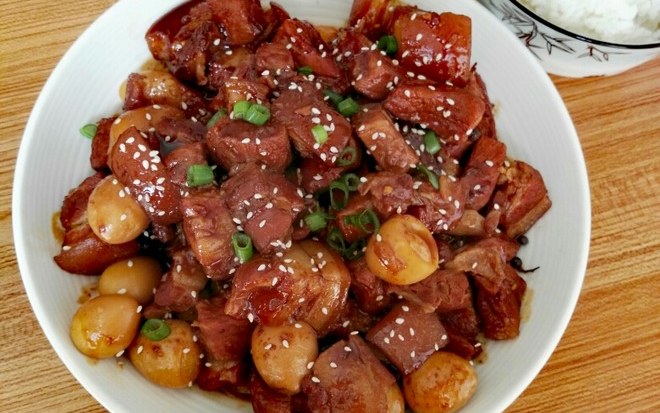
Dutch Oven Red-Braised Pork Belly (无水无油珐琅锅红烧肉)
No water, no added oil: pork belly renders its own fat in a Dutch oven, braises in beer, and skips the sugar-caramel step — hong shao rou made foolproof.
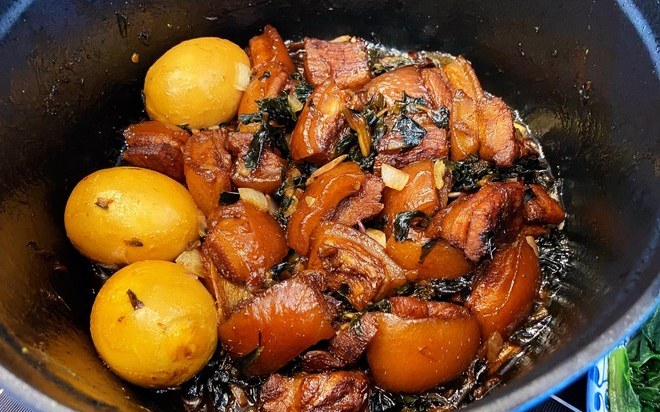
Instructions
-
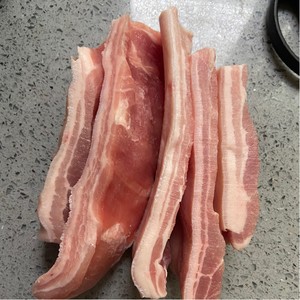 Rub the skin: heat a dry, empty skillet (not the enamel pot) over low heat until warm, then press the pork skin against it and rub back and forth for 1–2 minutes, like scrubbing out a stain. This cleans off any leftover stubble and tames the raw-pork smell of the rind. Rinse the pork clean.
-
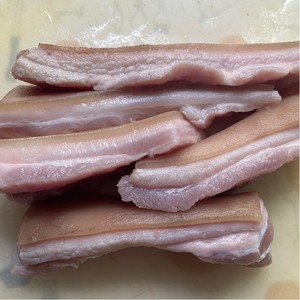 Cut the pork into 1½-inch (4 cm) cubes — mahjong-tile size — keeping skin on every piece. Cut bigger than feels right: the cubes shrink as the fat renders.
-
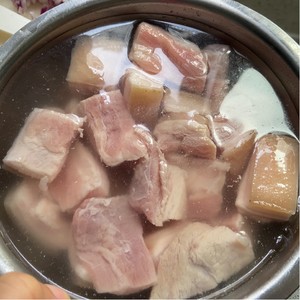 Soak the cubes in a bowl of cold water with a few drops of lemon juice for 20 minutes to draw out blood and gaminess. Drain well.
-
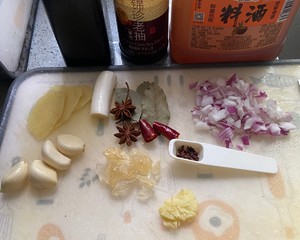 Blanch in the Dutch oven: cover the pork with fresh cold water, add 3 of the ginger slices, the extra Sichuan peppercorns and 1 Tbsp of the Shaoxing wine. Bring to a boil over high heat, skim off the gray foam, boil 1 minute, then lift the cubes out and rinse them under cold water twice. Pat completely dry with paper towels — dry pork browns; wet pork steams.
-
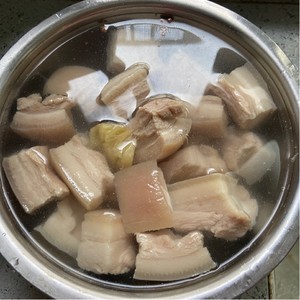 Dry-render (no oil at all): stand the cubes fat-side-down in the empty Dutch oven over medium-low heat, every piece touching the bottom. Leave them alone for 3–4 minutes; once fat bubbles out and the underside is golden, flip with tongs and brown the remaining fat sides, about 10 minutes total. The skin side and lean sides need no browning.
-
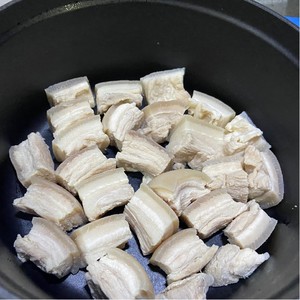 Push the pork to one side if you need room, add the rock sugar, and stir over low heat until it melts into the rendered fat and glazes the cubes.
-
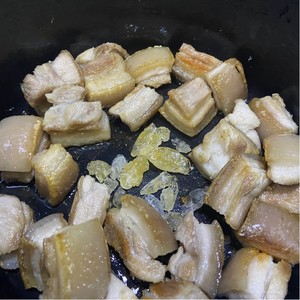 Add the star anise, bay leaves, scallion section, Sichuan peppercorns, remaining ginger, garlic and the dried chili. Stir-fry over medium heat for 1–2 minutes, until the spices smell fragrant and the garlic just turns golden.
-
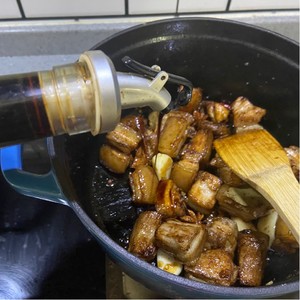 Season in three passes: add the dark soy and stir 2 minutes until the pork is evenly mahogany; add the light soy and stir 2 minutes; then pour the remaining 2 Tbsp Shaoxing wine down the side of the pot and stir 1 minute.
-
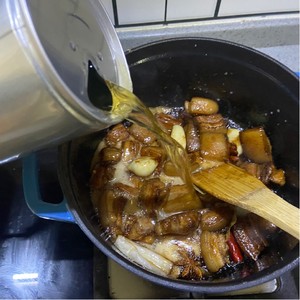 Pour in the beer to just cover the pork and raise the heat to bring it to a boil. Grind in the black pepper and tuck the boiled eggs into the liquid, if using.
-
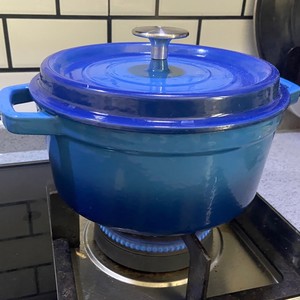 Cover, drop to a lazy simmer (medium-low) and braise 45 minutes. Meanwhile soak the dried greens in warm water for 10–15 minutes, drain, and chop coarsely.
-
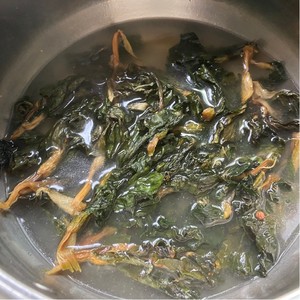 Scatter the greens over the pork and stir them in. Raise the heat and keep stirring as the sauce reduces, 7–8 minutes, until it turns glossy and coats every cube — the greens drink up pork fat as they soften.
-
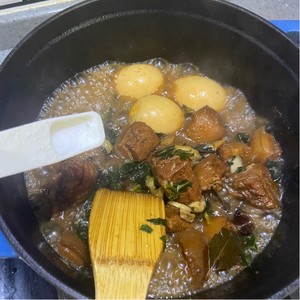 Taste the sauce: it should be just barely salty. If it is bland, add ¼ tsp salt; if too salty, stir in a handful more greens. Add the diced onion and cook 2–3 minutes more.
-
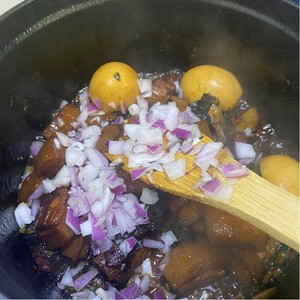 Stop while a few spoonfuls of sauce still pool at the bottom — the pot's residual heat keeps reducing. Serve straight from the Dutch oven with plenty of steamed rice.
Why this recipe works
Hong shao rou usually asks for two skills that scare home cooks: making sugar-caramel and managing a roaring wok. This enamel-pot version removes both and lets the pot do the work.
1. The pork fries in its own fat. Before anything else, the blanched cubes stand fat-side-down in a dry pot. Over medium-low heat the fat layers slowly melt out, and within minutes you have a couple of tablespoons of hot pork lard — enough to fry the sugar and spices. No added oil, no spatter, and the render also firms up the lean parts so they stay meaty instead of going mushy.
2. Beer is the only liquid. There is no added water anywhere in this braise. Malt sugars and a gentle acidity do what plain water cannot: they round out the saltiness of the soy and, as the beer reduces, it concentrates into flavor instead of diluting anything. It is stock-building logic for people who forgot to make stock.
3. Color without caramel. Instead of taking sugar to the dangerous amber stage, the rock sugar melts directly onto the pork and dark soy carries the color. You give up a little lacquer shine and gain a recipe that cannot taste burnt. The dried greens folded in at the end then absorb the rendered fat, so the dish balances its own richness.
About the dish
Red-braised pork belly (红烧肉) is China's most argued-over home dish — every family guards a version. This one belongs to the enamel-pot generation: the "no water, no oil" (无水无油) style that spread among home cooks who braise in heavy Dutch ovens, where meat, fat and a splash of alcohol are expected to do all the work. Swapping beer for water is a well-loved home trick; cooks report the meat turns softer and the gaminess fades faster. The handful of dried greens stirred in at the end is pure household thrift — dried vegetables were pantry insurance — and they turn a rich braise into a balanced one, the way Western cooks reach for prunes with pork. Eaten straight from the pot with rice, it is the weeknight answer to a weekend project — and because the pork renders its own fat, this is braised pork belly without oil, nothing added to mute the soy and spice.
What to serve with it
Steamed rice is non-negotiable — the sauce is built for it — and the boiled eggs braised alongside the pork are the cooks' treat, the red-braised-pork-with-eggs version families fight over. Cut the richness with something cold and sharp, like a smashed cucumber salad or quick-pickled radish, and keep hot tea on the table. Leftover pork, chopped and folded into egg fried rice the next morning, may honestly beat the original meal; the egg picks up the soy-and-beer glaze beautifully. For more soy-braised comfort, browse the braised dishes collection — this pot sits close to the center of it.
Pro tips
- No oil is not a gimmick: rendering the cubes fat-side-down first releases 1–2 Tbsp of pure pork fat, and that becomes the frying medium for the sugar and spices. If your belly runs lean, allow 1 tsp neutral oil in step 5.
- Beer replaces water in this braise — the malt adds a round, toasty sweetness and many cooks find the meat turns tender faster; the alcohol cooks off. Use a plain lager, not a bitter IPA.
- This recipe deliberately skips sugar-caramel (炒糖色): melting rock sugar directly onto the glazed pork, with dark soy carrying the color, gives a deep red-brown result with zero risk of bitter, burnt caramel. The trade is a slightly softer shine — worth it on a weeknight.
- The dried greens are the built-in grease-cutter: like dried mushrooms in a stew, they soak up rendered fat and perfume the sauce. Don't skip them — they're why a no-water braise doesn't taste heavy.
- Enamel cast iron holds heat long after the burner goes off, so end the reduction a touch early or the sauce will thicken past glossy into sticky.
- Small rock sugar pieces melt faster and more evenly. If you only have a big chunk, crack it under a towel with the back of a knife.
Storage & leftovers
- Refrigerate up to 4 days; like all slow braises it is better on day two.
- Reheat on the stove over low heat with 1 Tbsp water, stirring until the sauce loosens; in a pinch, microwave covered at 70% power for 2 minutes.
- Freeze up to 2 months. Thaw overnight in the fridge and reheat gently; skim the hardened fat cap first if it tastes too rich.
Frequently asked questions
Do I really need a Dutch oven?
No — any heavy pot with a tight lid works. Enameled cast iron just distributes heat so evenly that the dry-render and long simmer are more forgiving. On thin stainless or nonstick, keep the heat a notch lower and stir the final reduction more often.
Can I braise with water instead of beer?
Yes — use the same volume of water or unsalted chicken stock plus 1 Tbsp extra Shaoxing wine. The beer adds malty depth, but the dish stands on its spices and soy either way.
What are dried greens, and what can I substitute?
They're leafy greens dried to a dark, crinkly state — look for dried baby bok choy or preserved mustard greens (mei cai) in an Asian grocery. Without them, chop 5 oz (150 g) fresh baby bok choy or kale and stir it in 5 minutes before the end.
How is this different from classic hong shao rou?
Classic versions sear the pork, caramelize sugar in oil to a deep amber, and braise in water. This one skips the caramel, uses beer as the only liquid, and renders its own fat in the pot — the same mahogany result with fewer failure points.
Why did my pork stick to the pot during the dry-render?
The heat was too high or the pork was still wet. Pat the cubes bone-dry after blanching, start on medium-low, and leave them alone for the first few minutes — they release naturally once fat renders out.
Can I finish the braise in the oven?
Yes. After the beer comes to a boil, cover and transfer to a 300°F (150°C) oven for 1½ hours, then finish the reduction on the stovetop with the greens. It's nearly identical and even harder to burn.
Can I use pork shoulder instead of pork belly?
Yes — cube it the same size and follow the same timing; shoulder turns tender but leaner, so the braise is a little less rich. The dry-render step matters less — just brown the cubes well.
Does no caramel mean no sugar?
No — this version skips the oil-and-sugar caramelization of classic hong shao rou, but the rock sugar still dissolves into the braise for balance and gloss (1½ Tbsp brown sugar substitutes). The dark soy supplies the red-brown color.