Chinese home style · Braised & Slow-Cooked
Red-Braised Pork Belly (家常红烧肉)
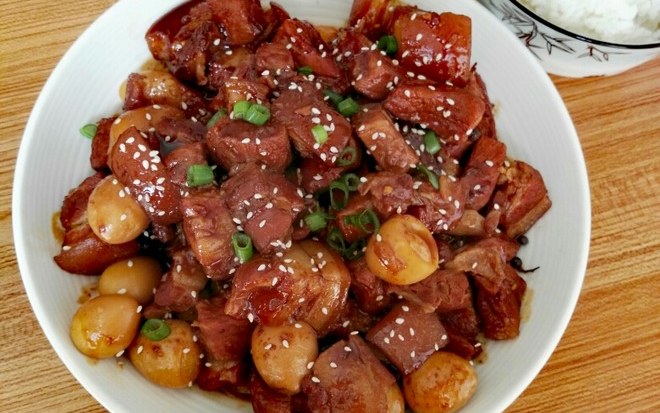
Melt-in-your-mouth hong shao rou: blistered skin, pork caramelized in rock-sugar amber, then 100 slow minutes in soy and spice until the sauce turns to lacquer.
Instructions
-
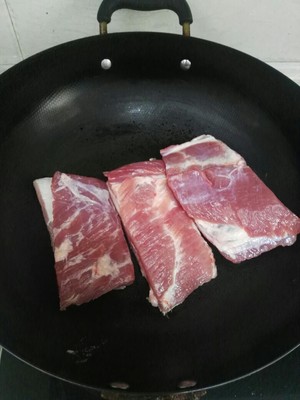
 Blister the skin: heat a dry wok or skillet over high heat until smoking, turn to medium, and press the pork belly skin-side down onto the hot surface for about 1 minute, sliding it around, until the skin is golden and lightly blistered in patches. (On an electric stove, use a dry cast-iron pan over medium-high.) This raw-skin sear pre-renders the rind — it will be chewy-tender instead of rubbery.
-
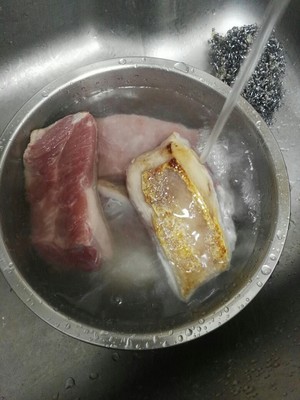
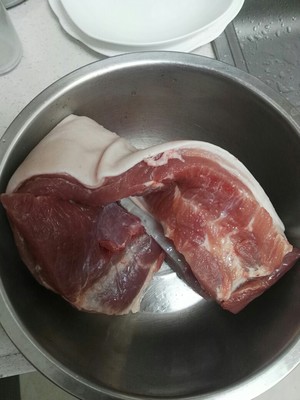 Scrape the skin: transfer the pork straight into cold water to cool the skin, then scrape the skin firmly with a knife blade — the charred residue comes off easily and the skin turns clean and smooth. Rinse well.
-
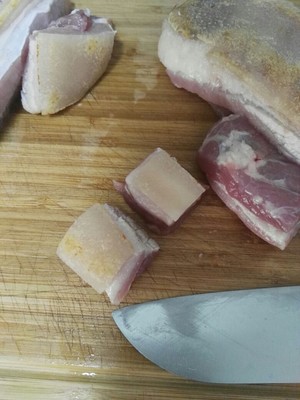
 Cut into 1½-inch (4 cm) cubes, keeping skin on every piece — cut larger than feels right; they shrink as the fat renders.
-
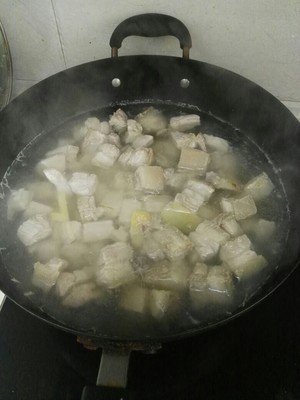
 Blanch: cover the cubes with fresh cold water, add 2 slices of ginger and 1 Tbsp of the Shaoxing wine, bring to a boil, and boil 1 minute. Drain and rinse the pieces clean. Blanching removes scum and keeps the braise clear.
-
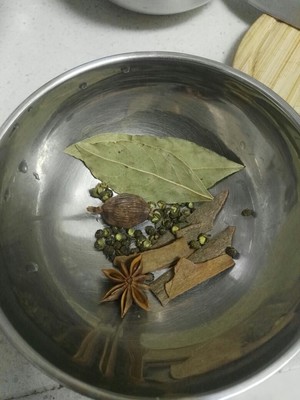
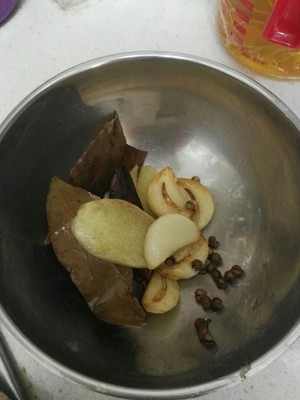
 Start the spice oil: heat 2 Tbsp oil in a clean pot or Dutch oven over low heat. Add the ginger, garlic, star anise, cinnamon, bay leaves and Sichuan peppercorns and fry gently 1–2 minutes, until fragrant and the garlic just turns gold. Fish out and reserve the whole spices.
-
 Caramelize: add the rock sugar to the oil and keep the heat low. Don't stir with a spoon — swirl the pot. The sugar melts, foams, and turns amber (like weak tea). The moment it's amber — 20 seconds, no longer — dump in the pork cubes all at once and let them sit 10 seconds before tossing.
-
 Coat the pork in the caramel over medium-low heat for 1 minute, then add the Shaoxing wine, dark soy, light soy and oyster sauce. Stir-fry 1 minute until every cube is glossy mahogany.
-
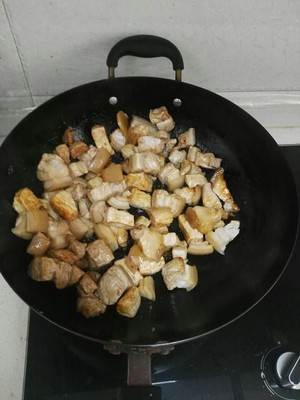 Braise: return the whole spices, pour in enough hot water to just cover the pork, cover the pot, bring to a boil, then reduce to the barest simmer. Cook 1 hour.
-
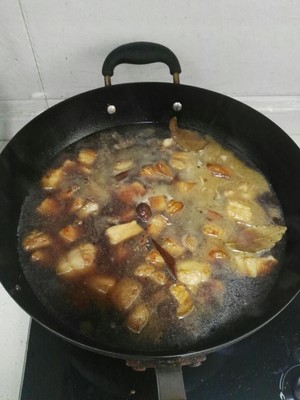 Taste the broth at the hour mark — it should taste slightly under-salted, because 40 more minutes of reduction concentrates it. Add salt if genuinely needed. Add the boiled eggs now, if using.
-
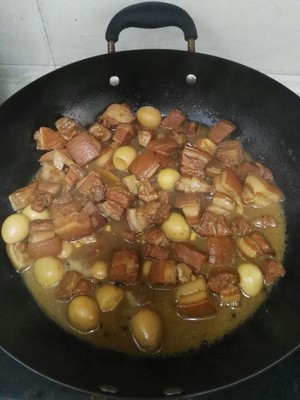 Continue simmering 40 minutes, until a chopstick slides into a cube with almost no resistance and the skin wobbles.
-
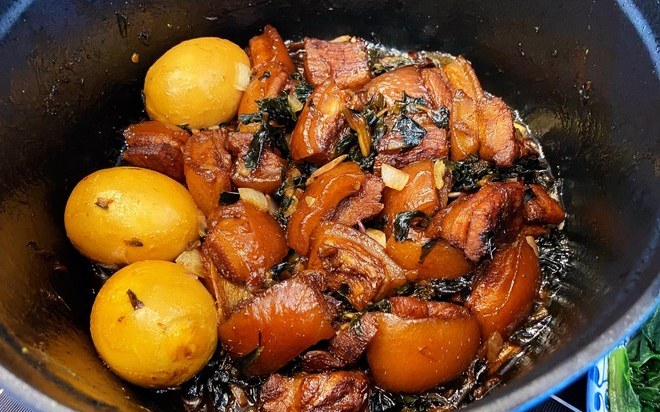
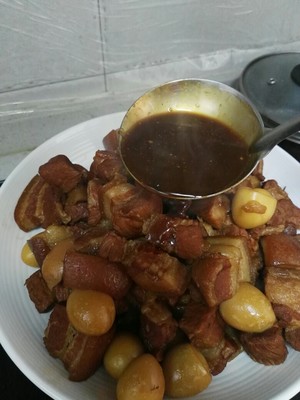 Reduce: lift the pork (and eggs) out with a slotted spoon into a serving dish. Raise the heat and boil the sauce 5–10 minutes, until it thickens enough to coat the back of a spoon. Pour the lacquer over the pork, scatter scallion greens and sesame, and serve with plenty of steamed rice.
Why this recipe works
Hong shao rou looks simple — brown some pork, add soy, wait — and home versions fail in predictable ways: rubbery skin, bitter sauce, greasy squares. This version comes from a home cook who got all three right, and the fixes below double as the answer to how to keep hong shao rou from turning out greasy.
1. Blister and scrape the raw skin. Restaurants torch pork skin; this recipe presses it onto a screaming-hot dry pan, then scrapes it clean. The double treatment (render + exfoliate) is what turns the skin into the dish's most coveted bite — glossy, wobbling, caramel-soft — instead of a rubber band.
2. Rock-sugar caramel as the color base. Before any soy touches the pot, the sugar is taken to amber and the pork coated in it (炒糖色). Sugar color gives the red-mahogany glow that soy alone can't — soy darkens but doesn't shine. It's also why the sauce ends up lacquered rather than flat.
3. Under-salt mid-braise, reduce at the end. The broth at hour one should taste barely seasoned, because 40 minutes of reduction concentrates everything — including salt. Season for the final state, not the current one. This is the counterintuitive detail that separates confident Chinese braising from guesswork.
About the dish
Hong shao rou (红烧肉, "red-cooked pork") is China's archetypal braise — the dish every region claims and every grandmother guards. "Red cooking" refers to the soy-and-caramel braise that gives dishes their ruby-brown lacquer, and pork belly is its crowning use: fat, skin and lean in one bite, transformed by a long simmer into something that barely needs chewing.
Regional versions argue over details — Shanghai adds more sugar, Hunan adds chili, Mao's hometown version became nationally famous — but the bones are constant: caramel, soy, wine, star anise, patience. In Chinese homes it's the Sunday-project dish, made in big pots and improved by day two. A pot of hong shao rou cooling on the stove is the smell of a Chinese weekend.
What to serve with it
Plain steamed rice and something sharp to cut the richness — smashed cucumber salad or quick-pickled radish. A clear soup on the side keeps the meal from feeling heavy. The braising sauce over rice is not optional behavior; it's the point. Braised eggs in the same pot are the quiet best bite — braise quail eggs whole for the red braised pork belly with quail eggs version, and they soak up the lacquer even faster than halved hen eggs. Leftovers reheat in a covered pan with a splash of water, and many cooks swear the flavor peaks on day two.
Pro tips
- The skin-blister-and-scrape (烧皮) step is the home cook's shortcut to restaurant texture: it renders and cleans the rind so it ends up like soft caramel, never like rubber. Don't skip it.
- Rock sugar gives a glossier, cleaner caramel than white sugar — find it in any Asian market (yellow rock crystals). Brown sugar is the honest substitute.
- Amber, not brown: pull the sugar the second it turns the color of black tea. Ten seconds past that point it's bitter, and the bitterness only shows an hour later, when it's too late.
- Under-salt at the hour mark on purpose — reduction is a salt concentrator. This is the most common hong shao rou failure.
- Skin-on is essential (it's where the texture lives); if your market only has skinless belly, the dish still works but ask the butcher for skin-on first.
- A fat separator trick if your belly is very fatty: chill the finished braise overnight, lift off the hardened fat cap, then reheat — the sauce becomes silky without greasiness.
Storage & leftovers
- Refrigerate up to 4 days — like all slow braises it's better on day two.
- Reheat gently on the stove with 1 Tbsp water; the sauce re-liquens as it warms.
- Freeze up to 2 months; thaw overnight and reheat covered. Skim the fat cap before or after reheating if you like.
Frequently asked questions
Can I skip the skin-blistering step?
You can, but the skin will be chewier and you may taste scorch residue. The dry-sear plus scrape takes 5 minutes and transforms the rind — it's the step that separates good from great.
Dark soy vs light soy — can I just use one?
Dark soy is for color (mild, thick); light soy is for salt and savor. Using only dark soy: bland but black. Only light soy: tasty but pale. This dish wants both, and they're worth owning for all Chinese braises.
Can I make it in the oven or a slow cooker?
Yes — after step 7, transfer everything to a 300°F (150°C) oven for 2–2½ hours, or slow-cook on LOW for 6 hours. Finish the sauce on the stovetop either way.
My caramel seized into crystals. Start over?
No — keep swirling on low; the crystals melt again and continue to amber. Seizing only matters for delicate candies; in a braise it self-corrects.
How fatty is it really?
Rich — that's the point. Most of the fat renders into the sauce and the long simmer turns the remaining fat layer translucent-soft. Serve small squares with rice, not steaks of it; the quail-egg version spreads the richness further.
What do I do with leftover sauce?
Strain and save it — it's a master braising liquid. Poach halved boiled eggs, tofu or mushrooms in it tomorrow; it freezes well for a month.
How do I keep red braised pork belly from being greasy?
Three things do the work: the skin-blister and blanch steps pre-render fat, the long simmer renders more of it into the sauce, and for the leanest result chill the finished braise and lift off the hardened fat cap before reheating.