Sichuan · Braised & Slow-Cooked
Red-Braised Goose (红烧鹅)
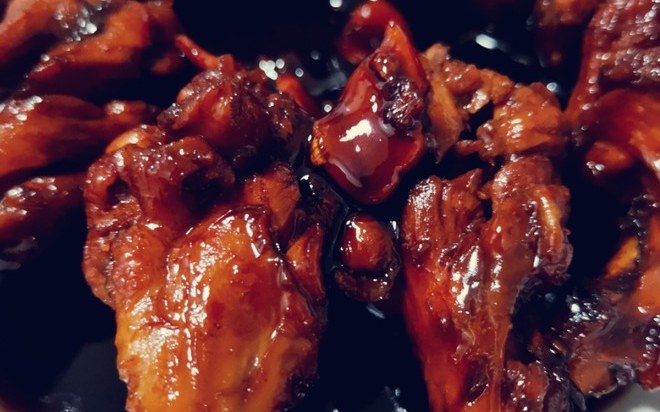
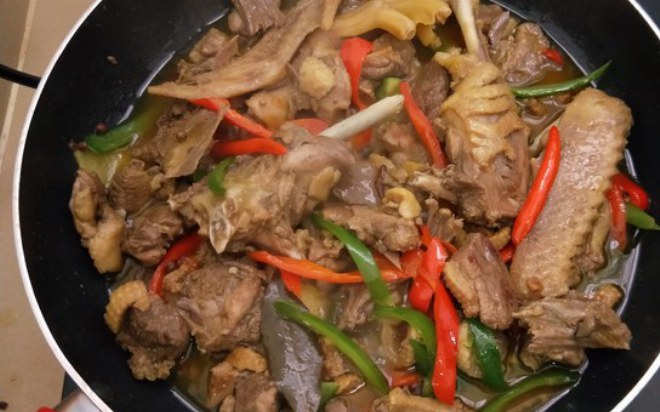
Sichuan red-braised goose: caramel-seared pieces cooked in beer with doubanjiang, fermented tofu and peanut butter - glossy, tender, deeply aromatic home cooking.
Instructions
-
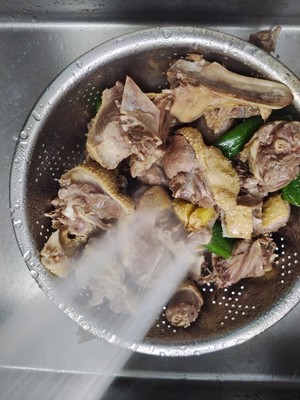
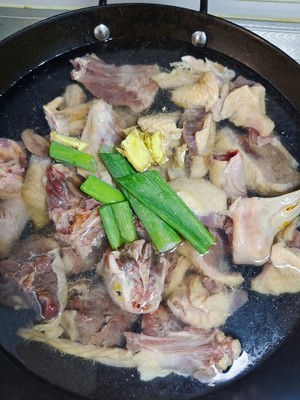 Blanch the goose: put the pieces in a pot of cold water with 1 of the scallions (in sections), 3 of the ginger slices and the Shaoxing wine. Bring to a boil, skim the foam, and boil 2–3 minutes, then lift the pieces out, rinse off any scum and pat dry. Goose skin and fat carry odors — this bath clears them.
-
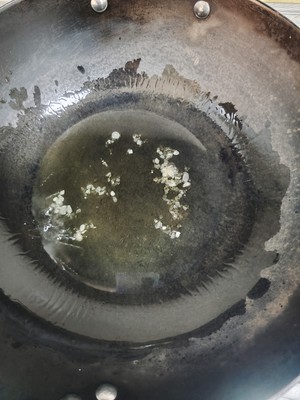
 Caramelize: heat 2 Tbsp oil in a wok or heavy pot over low heat, add the rock sugar and melt slowly, stirring, until it turns deep amber, about 4 minutes. Pull it at amber — one shade darker and the whole braise turns bitter.
-
 Add the goose and stir-fry over medium-high heat for 4–5 minutes to dry the surfaces and lacquer every piece in caramel. Transfer the goose to a plate, leaving the fat behind.
-
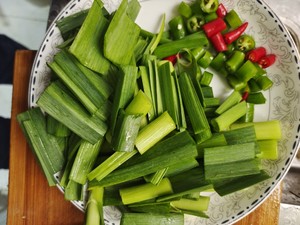
 Lower the heat to medium and fry the remaining ginger, the garlic cloves, scallion sections, dried chilies, Sichuan peppercorns, cinnamon and star anise in that fat until fragrant and just golden at the edges, about 1 minute.
-
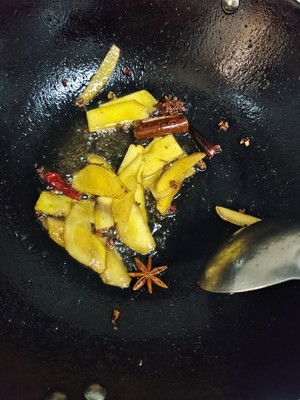 Add the yellow soybean paste and doubanjiang and fry, stirring, for 30 seconds, until the oil turns brick-red and the raw bean smell cooks off.
-
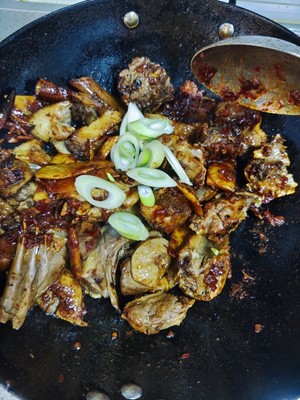 Return the goose, pour in the dark soy and sprinkle in 1 tsp salt, tossing to coat. Add the boiling water to just cover and the whole bottle of beer, and bring to a rolling boil.
-
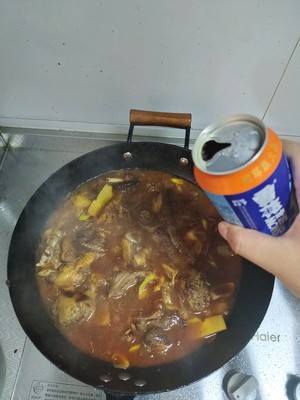 Stir in the peanut butter and crumble in the fermented bean curd, stirring until both dissolve completely into the reddening liquid.
-
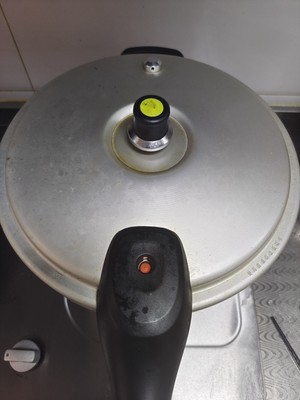 Seal the pressure cooker and cook at high pressure for 20 minutes, then let the pressure release naturally for 10 minutes before opening. No pressure cooker? Cover and simmer gently for 60–75 minutes instead, topping with hot water if the level falls below the meat, until the meat pulls easily from the bone.
-
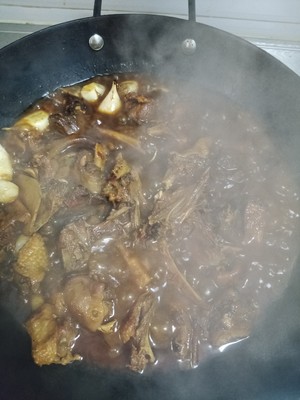 Return the goose and sauce to the wok if you used a pressure cooker insert. If the pot is dry, add 1 tsp oil and stir-fry the white sections of the garlic sprouts (or the smashed garlic) until their perfume hits hard, about 30 seconds. Raise the heat and reduce, stirring often, until the sauce glosses and coats the back of a spoon, 5–8 minutes.
-
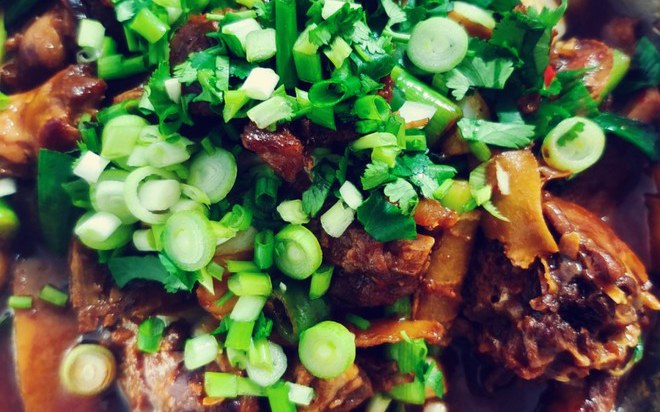
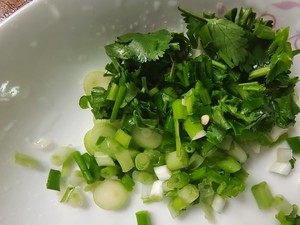 Add the bird's eye chilies, runner peppers and garlic-sprout greens and cook 1–2 minutes so they stay crisp and bright. Turn off the heat, scatter the cilantro and sliced scallion over the pot, and serve straight from the wok with steamed rice.
Why this recipe works
Goose is a bigger, gamier bird than duck, and this recipe tames it with three deliberate moves.
1. Caramel before soy. Rock sugar melted to amber, with the goose seared straight into it, lacquers the meat with a burnt-sugar crust that soy sauce alone cannot fake. The color goes mahogany first and seasoning comes second — the same logic as French gastrique, arrived at independently in every Chinese home kitchen.
2. A fermented paste trio, rounded with peanut butter. Yellow soybean paste and doubanjiang bring salty, savory depth; a single cube of fermented tofu adds a cheese-like funk; and the improbable half tablespoon of peanut butter dissolves into the braising liquid and emulsifies it, rounding salt and gaminess into something velvety. It reads like a typo. It is the trick of the recipe.
3. Pressure, then reduction. Twenty minutes at pressure converts the goose's dense collagen into gelatin without drying the meat — the reason the sauce sets glossy overnight. A final high-heat reduction in the wok, with the garlic sprouts blooming in fresh oil, concentrates what remains into a glaze that clings to bone-in pieces instead of pooling under them. If your bird is an old goose, expect to give this step extra time — the tenderizing curve of goose meat rewards patience far more than it punishes it.
About the dish
Braised goose is celebration food across the Chinese countryside, where the bird — larger, fattier and more assertive than duck — is raised in flocks and cooked for festivals, weddings and big family tables. Cantonese roast goose gets the fame, but at home a whole or half bird almost always ends up in a pot: braised with soy and aromatics, or, as here, with a Sichuan-leaning brigade of doubanjiang, Sichuan peppercorn and fresh green chilies. The bottle of beer is standard practice in Chinese home braises — its malt sweetness and gentle acidity do for the pot what wine does in European stewing.
This particular version, with its peanut butter and fermented tofu, is a modern home-kitchen construction shared on Chinese cooking blogs; the “immortal eating method” of its original title is blogger enthusiasm rather than history. Cook it once and you will forgive the hype — the combination braises like something handed down.
What to serve with it
Serve this from the pot with plenty of plain steamed rice — the sauce is the point and rice is its vehicle — plus one sharp, cold side to cut the richness, such as smashed cucumber or a vinegar-dressed salad from our cold dishes collection. Goose improves overnight: chill the meat in its sauce, lift off the fat cap before reheating, and warm it gently in a covered pot; day two is deeper and glossier than day one. Leftovers shred beautifully over rice or into noodles for a second dinner — our braised page has more dishes that behave the same way. Put the cilantro and scallions on the table so everyone can finish their own bowl.
Pro tips
- Have the butcher chop the goose with their cleaver — goose bones are dense, and a home chef's knife will skate and chip. Bone-in pieces are what make the sauce gelatinous, so don't ask for boneless.
- The mountain of ginger is deliberate. Goose is gamier than duck and the ginger exists specifically to lift that gamey edge — do not trim the amount.
- The peanut butter will not taste like peanut. It dissolves into the braise and does one job: emulsifying the fat and sauce into a velvety glaze that rounds off the fermented saltiness. This is the trick that makes the dish.
- If the sauce after pressure cooking is already almost gone, as it often is, skip straight to the garlic stir-fry and a 2-minute glaze over high heat — reduction time depends on how tight your cooker seals.
- Skim the orange goose fat after releasing the pressure and save it. Strained into a jar it keeps a month in the fridge and makes the best fried rice and roast potatoes of your life.
- Let the pressure fall naturally. A quick release shocks large bone-in pieces and can tighten the meat right when it should be turning silky.
Storage & leftovers
- Refrigerate the goose submerged in its sauce in a covered container for up to 3 days; skim the solidified fat before reheating.
- Reheat in a covered pot over low heat for 10 minutes, adding a splash of water if the sauce has tightened past glossy.
- Freeze meat and sauce together for up to 1 month; thaw overnight in the fridge. The gelatin-rich sauce freezes and reheats well.
- Strained goose fat keeps 1 month refrigerated — use it for fried rice or roasting potatoes.
Frequently asked questions
I can't find goose. Can I use duck?
Yes — half a duck (about 2½ lb / 1.2 kg bone-in) works with the identical method, cooked 5 minutes less at pressure. The dish will be milder and less rich; add 3 more ginger slices.
Where do I buy goose?
Asian grocery stores, especially in the weeks before Chinese New Year, and specialty butchers — order half a bird in advance. Ask for it chopped into 2-inch bone-in pieces.
How spicy is this?
Medium heat overall: 4 dried chilies in the braise for background warmth, and 2 fresh bird's eye chilies at the end for a sharp bite. For mild, drop the bird's eye chilies to 1 or 0; the doubanjiang alone still gives gentle warmth.
Can I skip the peanut butter?
It is the signature of this version, but with a nut allergy use 1 Tbsp tahini, or skip it entirely — you lose some silkiness, not the dish. Do not use chunky peanut butter.
Can I make it ahead?
It is better the next day: chill the goose in its sauce, lift off the fat cap, and reheat gently in a covered pot for 10 minutes. The sauce keeps sharpening the meat overnight.
What does the blanching accomplish?
Goose skin traps blood and impurities; a 2–3 minute blanch from cold water releases them so the braise stays clean-tasting instead of cloudy and metallic.
Does it matter if my goose is an old bird?
Only in the clock. An older bird (the classic pick for deep flavor in Chinese home kitchens) simply needs the long end of the braise — give it another 30 to 40 minutes at pressure or on the simmer before reducing. Young geese come tender at the short end; rough, dark, calloused feet at the market signal an older bird.
Is this the same as Cantonese roast goose (shao e)?
No. Roast goose is a whole bird hung, seasoned and roasted until the skin crackles. This Sichuan version chops the bird into pieces and red-braises them in beer and doubanjiang — glossy, saucy, spooned over rice. Same bird, completely different dish.