Chinese home style · Sauces & Basics
Extra-Thick Soy Milk (超浓豆浆)
Cook the beans first, then blend — soy milk thicker and sweeter than the usual method, with silky-fine okara that becomes breakfast pancakes the same morning.
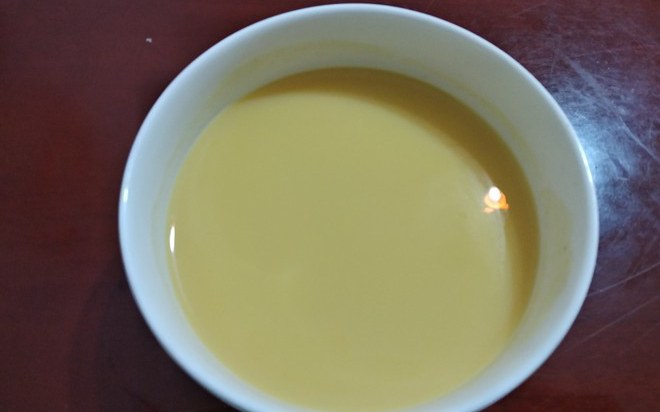
Instructions
-
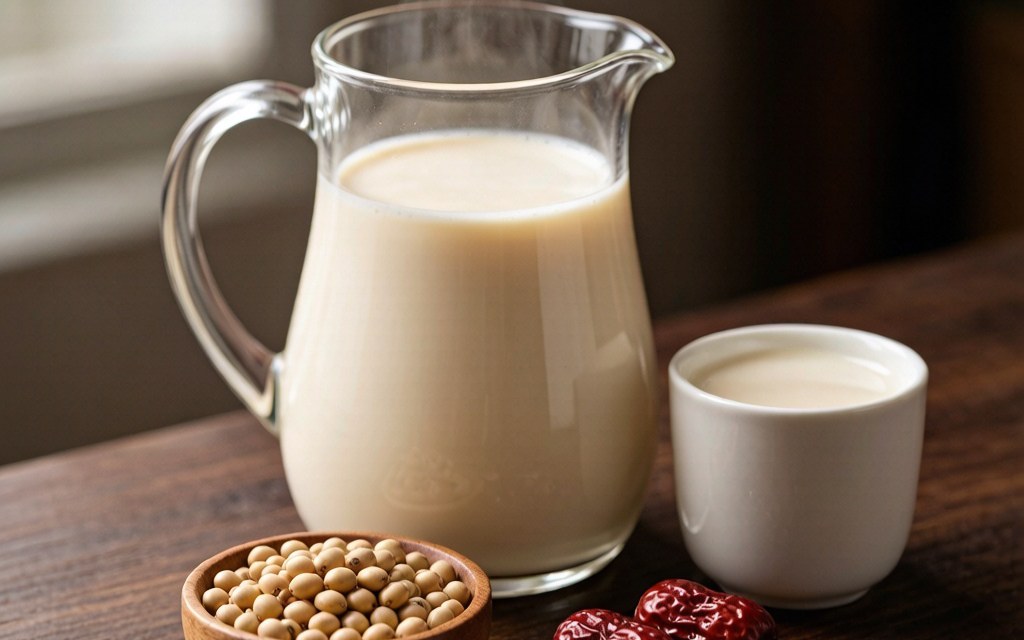
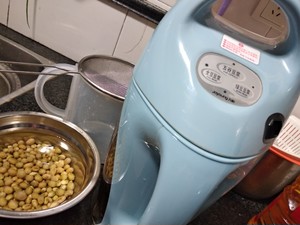 The night before: rinse the soybeans and your chosen add-ins (pit the dates). Put everything into a pressure cooker with 4 cups (1 L) of water. Set the bean program with the delay timer so it finishes in the morning — unsoaked beans need 30 minutes at high pressure, and because the pot does the waiting, there is no soaking step at all. If you are cooking right away instead, the same 30 minutes applies; soaked beans (8 hours) need only 15.
-
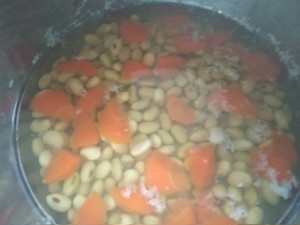 No pressure cooker? Soak the beans 8–12 hours, then simmer them in the water with the lid on for about 90 minutes, until a bean crushes to a smooth paste between two fingers. Then continue exactly as below.
-
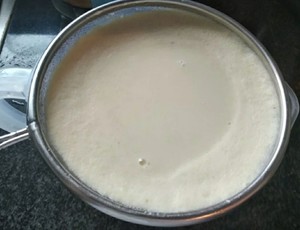 In the morning, transfer everything — beans, cooking liquid and all — into a blender. Add the 1 cup (240 ml) of boiling water and blend on high for 1–2 minutes, until the mixture is completely smooth and no skins or specks remain.
-
 Pour into a wide pot and set over medium heat, stirring with a silicone spatula and scraping the bottom. When it steams and small bubbles ring the edge, lower the heat and simmer gently for 8–10 minutes, stirring often. The milk is already fully cooked, so this simmer is purely for flavor and body. Watch the foam: soy milk swells like a rising beer head and can boil over in seconds, so use a pot no more than half full.
-
 Strain in batches through a fine-mesh sieve, pressing the pulp firmly with the back of a spoon. The okara will be startlingly fine and soft — only a few tablespoons from the whole batch. For a whole-bean style thick milk, skip straining entirely; it is genuinely optional here.
-
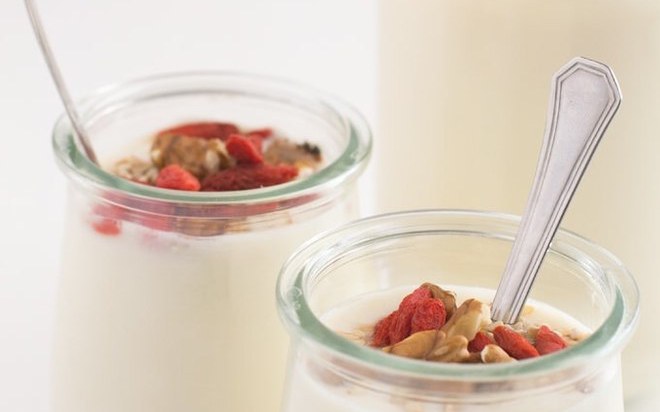
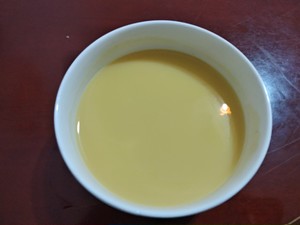
 Stir in the sugar or honey while hot, pour into cups, and drink warm. The milk thickens further as it cools and may lay down a skin — stir it back in or lift it off and eat it; it is soy film, a delicacy in its own right.
-
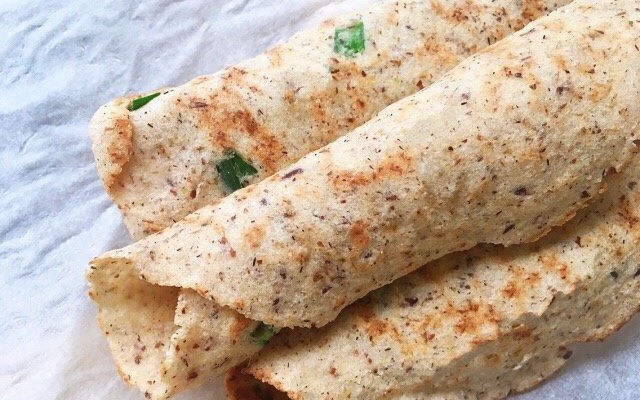
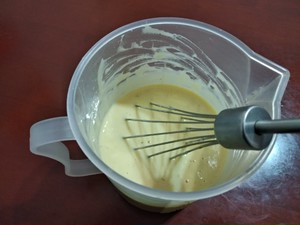
 While you drink, make the okara pancakes: whisk the okara with the egg, flour, and either the sugar or the salt and white pepper, until you have a thick, scoopable batter that falls heavily off the whisk. If it seems loose, whisk in 1 Tbsp more flour.
-
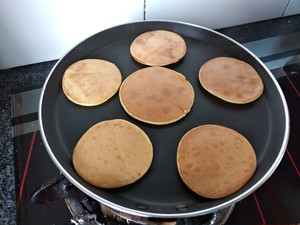
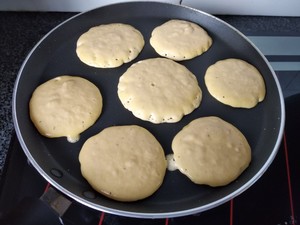
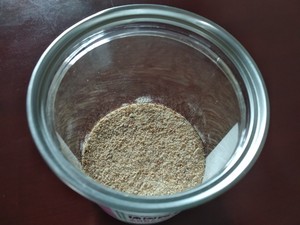 Brush a nonstick skillet lightly with the oil and set it over low heat. Drop the batter in ¼-cup rounds, then raise the heat to medium and cook for 2 minutes, until the edges look dry and matte — high heat makes them blister and puff unevenly. Flip and cook 1–2 minutes more, until golden and set through. Serve the pancakes warm alongside the milk.
Why this recipe works
Most homemade soy milk recipes blend raw soaked beans and then boil the raw slurry. This one inverts the order, and that inversion is where the thickness comes from.
1. Cooked beans blend differently. Cooking gelatinizes the starch inside each bean and fully denatures its proteins. Blend a cooked bean and it disperses into the liquid as smooth, hydrated solids — blend a raw one and you get suspended fragments that later settle, grit, and strain out as coarse pulp. The cooked route is why this milk drinks thick and the okara comes out fine enough to eat as pancakes the same morning.
2. The pressure cooker deletes the soak. Thirty minutes at high pressure does what twelve hours of soaking does, which means the entire schedule becomes: set the timer at night, press blend in the morning. For anyone who has ever dumped a soaking bowl down the drain because the morning got away from them, this is the feature.
3. Zero-waste by design. Because the okara is fine and low-volume, one egg and a spoon of flour turn the entire byproduct into breakfast with no extra mess. Nothing measured, nothing binned — the kind of loop Chinese home cooks have been running forever, and the reason the original recipe became a family habit. The result reads closer to breakfast-stall dou jiang than to any carton — thick enough to coat the spoon, sweet in the bean's own way.
About the dish
Soy milk (豆浆, dòujiāng) is China's default breakfast drink, sold warm in paper cups at street stalls and drunk dunking fried dough sticks straight into it. Home versions have always varied with the equipment — soy milk maker, blender, or grandmother's stone mill — and every household argues its own texture is the correct one.
This recipe is one home cook's answer to a familiar complaint: blender soy milk comes out thin, gritty and buried in okara. Her fix, borrowed and refined from a community of home cooks, was to cook the beans through first — in her case with the pressure cooker's overnight timer — and blend afterward. The result is what Chinese cooks call 浓滑: thick and slippery, with so little pulp that straining becomes a formality. Golden if you add carrot, nutty if you add peanuts, and always, unmistakably, a real breakfast.
What to serve with it
Drink it hot from the pot, sweetened or not, with the okara pancakes stacked beside it — and for the full street-side experience, dunk a fried dough stick straight into the cup. For the complete Chinese breakfast, add a steamed bun or a warm flower roll, and keep the extra pancakes for tomorrow's lunchbox. If you get hooked on the texture, the basics collection has more from-scratch staples to build the habit on. All of it happens without a soymilk maker — a pressure cooker and a blender cover the whole job.
Pro tips
- Cook-then-blend is the whole secret. Fully cooked beans are gelatinized and soft all the way through, so they emulsify into the liquid instead of staying gritty — that is why this milk is thicker and the okara finer than the standard soak-and-blend method.
- The cup of boiling water in step 3 is not sloppiness: hot liquid keeps the cooked starch smooth and means the pot only has to bring everything to a simmer, not cook it from scratch.
- A dedicated soy milk maker works too: pressure-cook first as written, then dump everything in, top up with boiling water, and run the grain (wǔgǔ) program — about 20 minutes.
- Keep the ratio in mind if you improvise: about 130–160 g of dry goods per liter of water gives a pourable but substantial milk. More turns to pudding, less tastes thin.
- Okara pancakes flip cleanly only when the edges have dried out — if the first one tears, the pan was not ready, not the batter.
- Strain while the milk is hot; cold okara pastes up the sieve and squeezes through much slower.
Storage & leftovers
- Refrigerate the milk in sealed jars for up to 3 days; it separates as it cools, so shake or stir before drinking.
- Reheat on the stove over medium-low, stirring, until steaming — or 60–90 seconds per cup in the microwave.
- Freeze up to 1 month; thaw overnight in the fridge and blitz 30 seconds in the blender to bring back the texture.
- Okara pancakes keep 2 days refrigerated; reheat in a dry skillet over low heat for 1 minute per side.
Frequently asked questions
Do I really not need to soak the beans?
Correct — in a pressure cooker. The overnight delay timer plus 30 minutes at high pressure fully softens unsoaked beans, which is what makes this a realistic weekday breakfast. For the stovetop route, soaking is non-negotiable; unsoaked beans would need 3 hours of simmering.
Why cook the beans first instead of blending them raw?
Raw-bean soy milk must then be boiled hard to cook the slurry, which produces lots of coarse okara and a thinner drink. Cooking first changes the texture at the source: the starches are already gelatinized, so blending gives you a naturally thick, sweet milk and a fine, minimal pulp.
Do I have to boil the blended milk for safety?
The beans were already fully cooked, so a long boil is not required the way it is for raw soy milk. The 8–10 minute simmer is for flavor, body and peace of mind — do keep it, but the foam panic of raw soymilk does not really apply here.
Can I skip straining?
Yes, and many Chinese home cooks do. Unstrained, this milk is closer to a whole-bean style — extremely thick, almost porridge-like, and very filling. Strain half and stir it back if you want an in-between texture.
Can the pancakes be made without flour?
Yes — egg-only okara pancakes are fluffier and more fragrant, but fragile. Use a little extra oil, keep the pancakes small, and flip with a thin silicone spatula once the surface is properly dry.
What do I do with extra okara beyond pancakes?
Spread it on a baking sheet and dry it in a 250°F/120°C oven for 40–50 minutes, toasting occasionally, for homemade roasted soybean flour — roll sticky rice balls in it, the old-school way.
Do I need a soymilk maker (doujiang ji)?
No — that is the point of the cook-then-blend method: a pressure cooker or a stovetop pot plus any blender does the whole job. A soymilk maker automates the same steps, but the homemade route gives you a thicker milk and the okara for pancakes.
How does this compare to store-bought soy milk?
Carton soy milk is filtered thin and lightly sweet; this is closer to what a Chinese breakfast stall serves — full-bodied, beanier, naturally sweeter. If it is thicker than you like, stir in hot water a splash at a time until it suits you.