Chinese home style · Sauces & Basics
Batter-Brushed Spring Roll Wrappers (自制春卷皮)
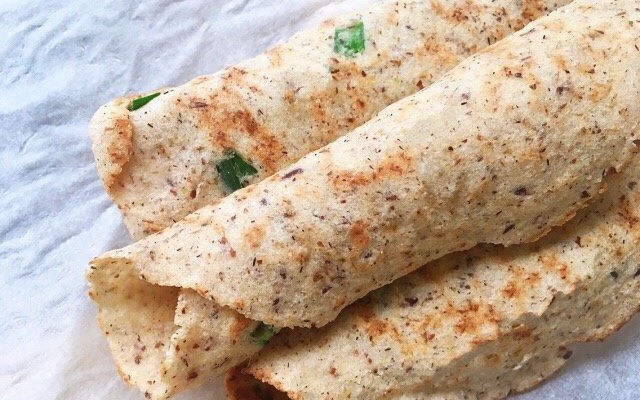
Paper-thin spring roll wrappers with no rolling pin and no machine: a simple flour batter brushed onto a nonstick pan, three thin coats at a time.
Instructions
-
 Whisk the batter: combine the flour, salt and water in a bowl and whisk until completely smooth, with no lumps — the consistency of pourable yogurt, like pancake batter that flows off the whisk in ribbons. A little thin is fine; thick is not. Rest 15 minutes so the flour fully hydrates and the batter silkiness improves.
-
 Heat an 8-inch (20 cm) nonstick skillet over LOW heat for 2 minutes — low is the whole game here. The pan is ready when a drop of water sizzles gently, not violently. Wipe with the oil only if the pan tends to stick.
-
 Stir the batter thoroughly (the flour settles fast), dip in a pastry brush, and brush a thin, even spiral of batter across the pan into an 18 cm (7 inch) circle. Work quickly; the batter sets in seconds on a hot pan.
-
 Let the first coat just lose its wet sheen — about 15 seconds — then brush a second thin coat on top, and a third after that. Three thin coats build a wrapper that is substantial but still translucent; one thick coat stays gummy in the middle.
-
 Cook over low heat for 40-60 seconds more, until the edges curl up on their own and the surface turns from milky white to even translucent, with faint dry patches but no brown spots. If it is browning, the heat is too high — lift the pan off the burner for a moment.
-
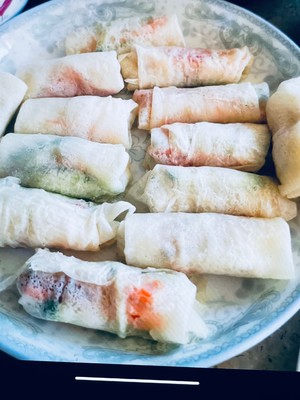
 Peel: tip the pan, grab the lifted edge with your fingertips, and peel the wrapper off in one slow motion onto a plate. It should come away whole and cool enough to handle immediately. Stack the finished wrappers as you go — warm ones do not stick to each other.
-
 Repeat, stirring the batter before every single wrapper. A 15-wrapper batch takes about 25 minutes of relaxed, low-heat work; the first two are practice, the rest go fast.
-
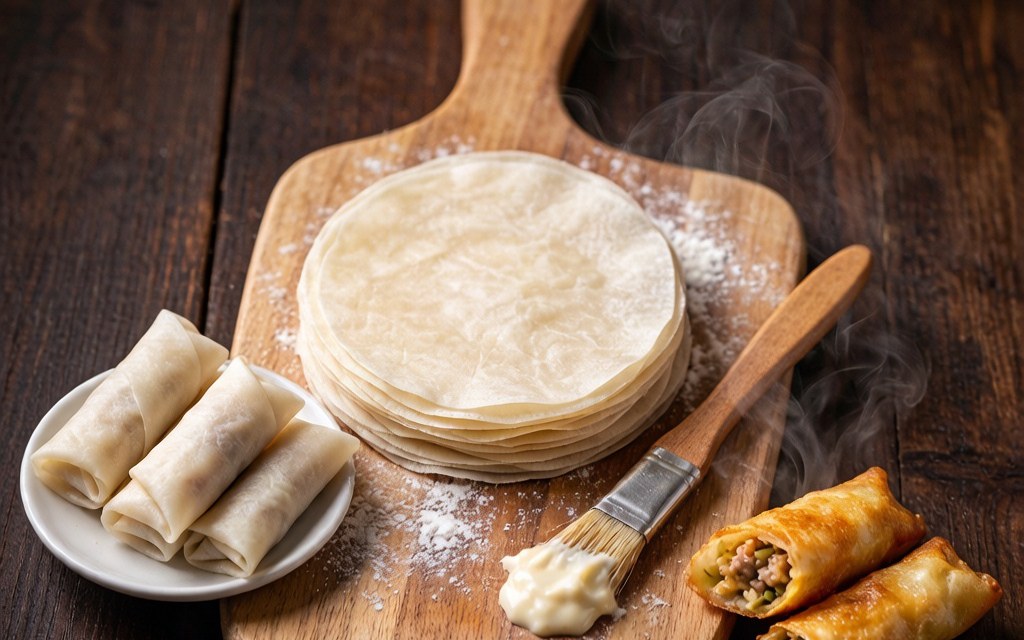
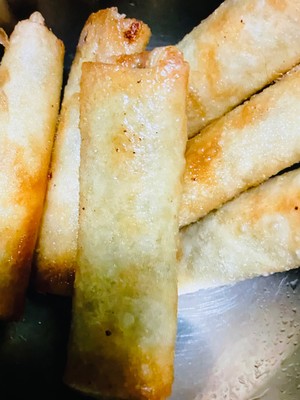
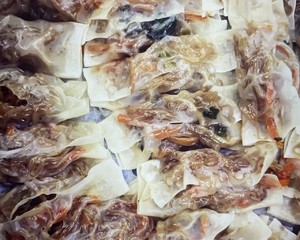
 Use for fried spring rolls: lay a wrapper flat, spoon 2 Tbsp of filling in a log across the lower third, fold the bottom over, fold in the sides, and roll up tightly. Dab the tip with the flour paste to seal, then fry at 350°F (180°C) for 2-3 minutes until golden and blistered.
-
 For soft fresh rolls, dip each wrapper in warm water for 5 seconds first — it turns supple and slightly tacky, so the rolled edge seals itself without any paste.
Why this recipe works
Store-bought spring roll skins are made by machines that smear a ribbon of batter across a rotating hot drum. This recipe puts that drum in your hand — or rather, a brush in your hand and a skillet under it.
1. Liquid batter beats rolled dough. A rolled wrapper is only as thin as your patience; a brushed wrapper is as thin as its coat. Whisked flour and water flow into a layer a millimeter thin with zero effort, and hydration is total — no dry flour bits, no lumps, so the fried result crisps evenly instead of getting doughy patches.
2. Three thin coats, not one thick pour. A single thick coat traps moisture and stays gummy in the middle while the outside fries. Three coats, each flashed dry for a few seconds, laminate into a wrapper with structure: strong enough to roll tight around a filling, thin enough to go glassy in oil.
3. Low heat is the technique. Everything about this method is slow on purpose. On low heat the batter sets just fast enough to hold a coat and just slow enough for you to finish brushing the circle — and the wrapper dries to translucent without browning, which is what keeps it pliable for rolling and pale-gold, not scorched, in the fryer.
About the dish
Chinese spring roll skins have two traditional homes: the rolled-and-steamed discs of Jiangnan home kitchens, and the batter-smeared skins of the market stall, where vendors hold a fist of soft dough and wipe it across a hot drum in one practiced sweep — the same stall craft that becomes popiah wrappers (潤餅皮) for soft fresh rolls in Fujian and Taiwan. This recipe is the home translation of the stall method — a brush instead of a dough fist, a skillet instead of a drum.
The appeal is independence. With 100 g of flour and 170 ml of water — things every kitchen has — you can make a spring roll night happen whenever the craving lands, no specialty store run, no sad cracked supermarket skins. One hundred grams of flour yields about fifteen wrappers; the whole project is twenty-five unhurried minutes, most of it the pleasant, meditative rhythm of brush, wait, peel.
What to serve with it
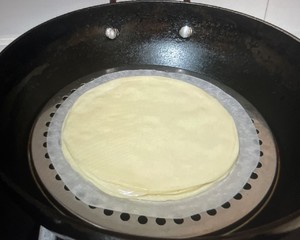
Your first batch deserves the classic treatment: fill with a savory pork or vegetable mixture, fry until blistered, and eat straight from the rack with rice vinegar — see our spring roll family for filling ideas, or tuck the wrappers around a street-food-style stir-fry for fresh rolls. Extra skins keep 3 days in the fridge, so you are always two steps from a snack. To keep frozen spring roll wrappers supple, freeze them with parchment between skins and refresh each one over steam for 20 seconds before rolling.
Pro tips
- If the batter sets before you finish brushing the circle, the pan is too hot: lift it off the burner, brush, then return it. On low heat you are always in control.
- Stir the batter before every wrapper — flour sinks within seconds, and an unstirred batter makes wrappers that go from thick to paper-thin down the batch.
- Hold the brush strokes light and overlapping, like painting. Pressing hard scrapes the half-set first coat and leaves bald, torn patches.
- Wrappers that tear when rolling were usually overcooked (dry and brittle) or rolled cold from the fridge — warm them 5 seconds in a damp towel in the microwave first.
- The first couple of wrappers are calibration. Whatever is wrong — too thick, ragged edges — fix it in the batter or heat, not by eating your mistakes. (Eat them too. Cook's treat.)
Storage & leftovers
- Stack cooled wrappers in a sealed bag with the air pressed out; refrigerate up to 3 days.
- Freeze up to 2 months, interleaved with parchment so they separate; thaw still bagged.
- Refresh any wrapper: 5 seconds in warm water or 20 seconds over steam makes it supple again.
- Filled, uncooked rolls freeze well on a tray; fry from frozen, adding 2 minutes and starting over medium heat.
Frequently asked questions
How is this different from the rolled-and-steamed wrapper method?
Steamed stack wrappers start as a kneaded dough rolled thin between oiled discs — chewy and stretchy. This batter method paints liquid flour onto the pan, like crepes: no kneading, no rolling pin, thinner and more delicate, with a snappier fry. Both are real Chinese techniques; the batter one is closer to what machine-made skins feel like.
Can I use these for fresh, Vietnamese-style rolls?
These are wheat, not rice paper — softer and less bouncy when wet. Dipped in warm water for 5 seconds they roll up fine for soft rolls, but their calling is the fried spring roll, where they blister beautifully.
My wrappers came out thick and doughy. What happened?
You poured one heavy coat instead of brushing three thin ones — a thick layer traps moisture and stays gummy in the center even after frying. Scrape the pan clean and go back to thin spiral coats that barely cover the surface; the finished wrapper should look translucent, not opaque.
Are these really zero-calorie, like the online versions claim?
No — they are flour and water, about 35 kcal per wrapper. The nickname comes from home cooks who found them light compared with store-bought skins. Enjoy them for what they are: two ingredients, nothing else.
Can I make the batter ahead?
Yes — whisk it smooth, cover, and refrigerate up to 24 hours. It thickens as it sits; whisk in water 1 Tbsp (15 ml) at a time until it flows like yogurt again before brushing.
Why do my wrappers stick to the pan?
Either the pan lost its nonstick magic (scorched old coating — replace it) or you cooked past translucent into dry-brittle. Pull each wrapper the moment the surface goes uniformly translucent; at that point it releases by itself.
Are these the same as egg roll wrappers?
Not quite — egg roll wrappers are thicker, usually contain egg and stay chewy when fried; these batter skins are eggless and go glassy-crisp. For thick egg rolls, use a dough-based wrapper instead.
How do I store wrappers so they don't stick together?
Let them cool first — warm batter skins cling only while steaming-hot. Stack cooled wrappers in a bag with the air pressed out (3 days refrigerated), or freeze with parchment between skins for up to 2 months.