Chinese home style · Rice & One-Bowl Meals
Golden Fried Rice (黄金炒饭)
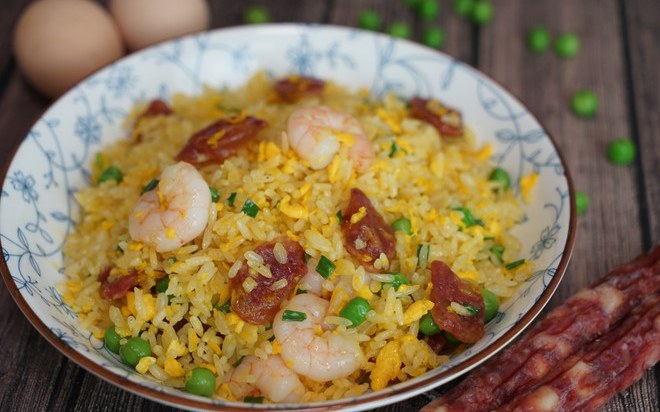
Golden fried rice done right: lap cheong and shrimp, a two-stage egg that coats every grain, and a mix-once fried rice powder that seasons a month of wok nights.
Instructions
-
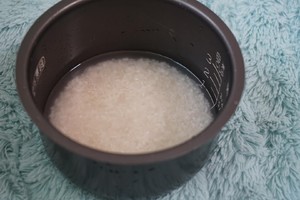
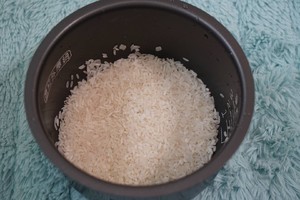 Cook the rice first: rinse jasmine or dongbei short-grain rice a few times, then cook it slightly drier than your usual pot — measure the water you would normally add and remove about 1 Tbsp per cup. Firm grains fry up distinct instead of mushy.
-
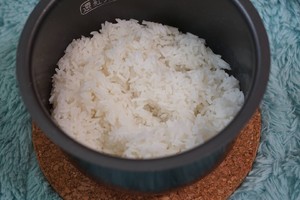
 The moment the rice is done, fluff it with the paddle and spread it on a tray so it steams off. Hot rice cannot be fried. Once it is completely cool, wrap it and chill for 2–4 hours (day-old takeout rice works too).
-
 Make the fried rice powder: stir the salt, ground chili, white pepper, chicken bouillon and MSG together in a dry jar. Mix once and it seasons a month of wok nights; you will use ¾ tsp (3 g) per pan here.
-
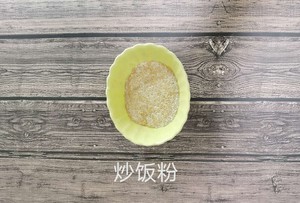 Prep everything before the wok goes on: slice the lap cheong thin, peel the shrimp, rinse the peas, beat the eggs, chop the scallions, and break the cold rice into loose grains with damp fingers.
-
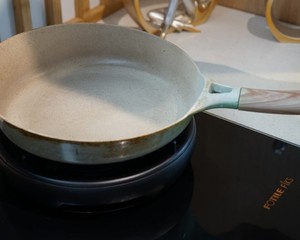 Heat the wok over medium heat — deliberately not screaming hot, or the sausage scorches before its fat renders. Add the canola oil and swirl; its deep yellow color is what makes the finished rice glow.
-
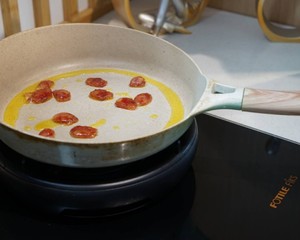 Add the lap cheong and stir over medium-low for about 1 minute, until the slices turn translucent at the edges and the oil smells like cured pork.
-
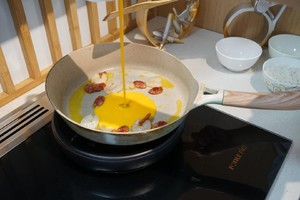 Add the shrimp and stir-fry about 1 minute, until they just turn opaque and curl into loose C shapes. They will finish later, so do not cook them through now.
-
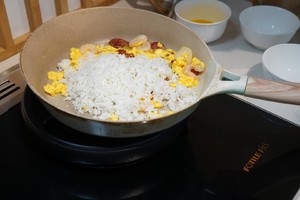 Pour in half the beaten egg. Let it sit for 5 seconds to set, then scramble it quickly into small golden curds.
-
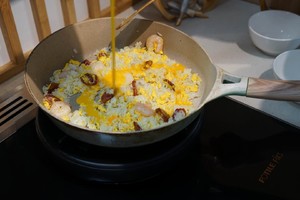 Add the rice and turn the heat down to low. Press and knock the clumps with the back of your spatula until every piece is broken and the grains slide freely — this is where fried rice is actually won, not in the final showy tossing.
-
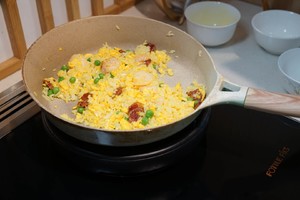 Pour the remaining egg evenly over the loose rice, raise the heat to medium-high, and toss continuously for 1–2 minutes so the raw egg wraps each grain as it sets — the effect Chinese cooks call gold wrapping silver.
-
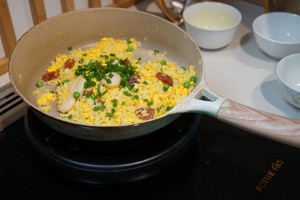 Scatter in the peas, then sprinkle ¾ tsp (3 g) of the fried rice powder over the rice and toss for 30 seconds. Salt always goes in at the end: added early, it draws out moisture and makes the rice gummy as it fries.
-
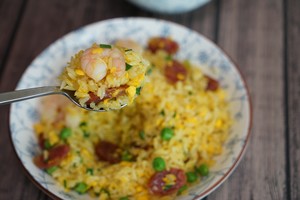 Add the scallions, give two final tosses, and serve immediately. Once the rice enters the wok, the whole fry should take only 3–4 minutes.
Why this recipe works
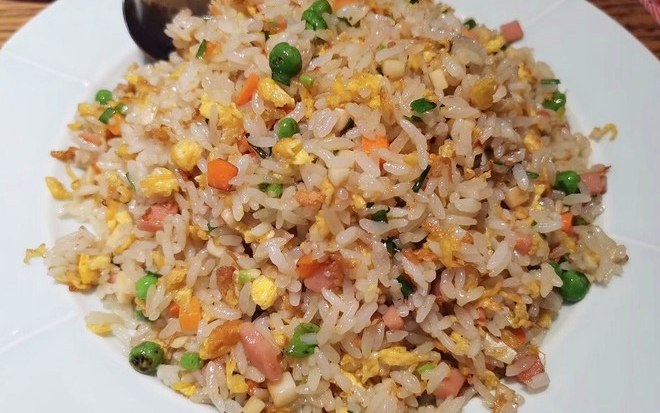
Golden fried rice looks like a plain egg fried rice with better lighting. It is not — three small decisions do the work.
1. Two-stage egg. Half the egg is scrambled early, giving the wok savory curds and a seasoned surface. The other half is poured raw over loose rice at high heat, where it sets in a film around each grain: the classic wok-cook's ideal of "gold wrapping silver". Each method alone gives you either flavor or looks; together they give both.
2. Low heat to break, high heat to fry. Cold rice clumps, and clumps crushed at high heat turn to mush. On low heat the spatula can press and knock the grains apart gently, and only then does the fire go up — so the final minute of frying toasts the grains instead of fighting them. This is the closest a home burner gets to wok hei — the smoky sear behind restaurant-style day old rice fried rice.
3. Salt last, always. Salt is hygroscopic: added early it pulls water out of the rice and sausage, and that moisture steams the grains into gumminess. The pre-mixed fried rice powder exists to make the last-30-seconds seasoning exact — ¾ tsp per pan, measured once, repeated forever.
About the dish
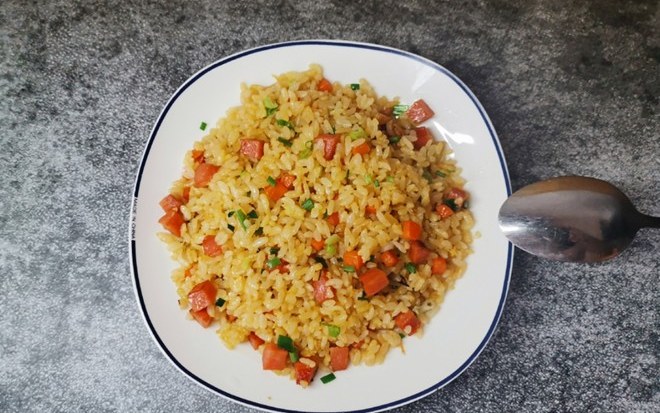
Egg fried rice is the baseline dish of every Chinese home kitchen, and the golden version — every grain stained amber — is its showpiece. Cooks argue about the exact route (whole egg versus yolk only, egg first versus rice first), but the goal is constant: rice so distinct it rattles in the bowl, with no puddle of grease at the bottom.
This pan is the loaded home version: sweet lap cheong for rendered fat and cured smoke, a few shrimp for lift, peas for color, and rapeseed oil for the deep yellow tint that gives the dish its name. It is the fried rice you make when plain egg fried rice has become a Tuesday habit and you want to remember why it became one.
What to serve with it
This is a full bowl on its own — just add something cold and sharp on the side, like a smashed cucumber salad, plus hot tea or a cold soy milk to drink. If fried rice has you hooked, the rice collection has the claypot and soy-sauce versions next, and a pot of hot and sour soup turns two servings into a dinner party. Kids like extra sausage and fewer peas; adults can dial up the optional chili in the fried rice powder. Leftovers re-crisp in a hot wok the next morning.
Pro tips
- The two-stage egg is the whole trick: half scrambled early for flavor and texture, half poured over the loose rice to coat each grain. One-stage egg fried rice is fine, but this is what makes the rice glow gold instead of yellow.
- Rapeseed/canola oil is traditional here for a reason — its rich yellow tint survives the fry. Neutral oil works, but skip extra-virgin olive oil: its flavor fights the sausage and it burns at stir-fry heat.
- Never fry on full heat from the start. The sausage needs gentle rendering, the egg needs a moment to set, and only the final minute wants real fire for wok breath.
- Break every rice clump with the spatula on low heat before the second egg goes in. Clumps sealed under egg stay clumps — there is no fixing them later.
- If you cook rice just for this, make it a day ahead. Fresher-than-chilled rice works only if you spread it thin and dry it thoroughly first.
- No lap cheong? Use diced ham or bacon, rendering it the same way; the dish loses a little sweetness but keeps its structure.
Storage & leftovers
- Refrigerate leftovers in a shallow container for up to 2 days.
- Reheat in a hot skillet for 2–3 minutes with a teaspoon of water to loosen the grains — the microwave makes them rubbery.
- The fried rice powder itself keeps about 2 weeks in an airtight jar in a dry cupboard; make a fresh jar rather than letting it clump.
- Freezing is not recommended — cooked rice turns hard and the egg coating weeps when thawed.
Frequently asked questions
What does 'gold wrapping silver' mean?
It is the wok-cook's name for rice grains wrapped in egg: the white rice (silver) disappears under a thin golden coat (gold). You get it by adding raw egg to loose, hot rice and tossing hard as it sets — the second egg addition in step 10.
Why can't I just add the salt at the start?
Salt pulls water out of the rice as it fries, and wet rice steams and clumps instead of toasting. Seasoning in the last 30 seconds is why restaurant fried rice stays dry and distinct.
Do I have to use MSG and bouillon?
No. The ¾ tsp of fried rice powder per pan is mostly salt; leave out the MSG and it is still a balanced seasoning. The powder exists so your seasoning is identical every time — a small jar keeps two weeks in a dry cupboard.
Can I use fresh hot rice?
It is the most common way fried rice fails: hot rice steams, clumps and breaks. If you must, spread it on a tray in the freezer for 20–30 minutes until fully cold and surface-dry, then fry immediately.
What else can go in this fried rice?
Keep it light: the classic trio here is sausage, shrimp and peas. Corn, diced carrot or chopped cabbage all work — but crowd the wok and everything steams instead of frying.
Can I make it less oily?
The 1½ Tbsp of oil is already lean for two servings. Do not go much lower or the egg sticks and the sausage scorches; the rice will still taste light because cold grains absorb little oil.
How do I get wok hei on a home stove?
Preheat until the wok just smokes before the oil goes in, fry in two batches if your burner is weak so the rice sears instead of steams, and keep everything dry. Wok hei comes from vaporizing moisture at the hot surface, not from adding more oil.
What is the difference between this and yolk-only golden fried rice?
Some versions toss the rice with yolks only for the deepest amber color. This recipe's two-stage method scrambles half the egg for curds and lets the rest coat the grains — you keep the gold and gain savory egg pieces in the same wok.