Jiangsu (Huaiyang) · Rice & One-Bowl Meals
Yangzhou Fried Rice (扬州炒饭)
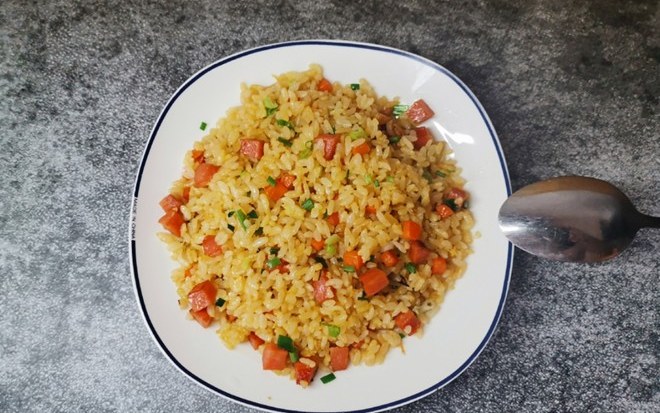
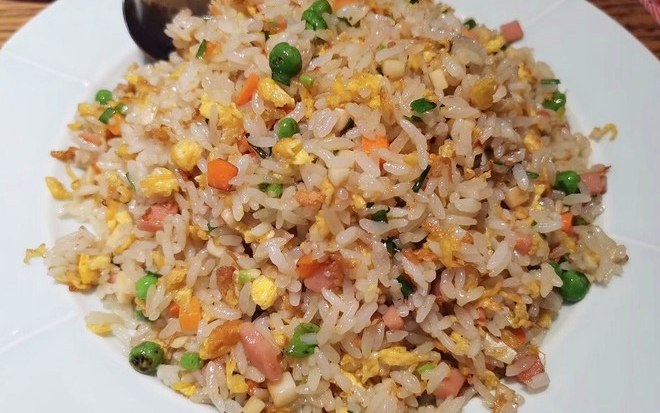
The famous "special fried rice": golden egg-coated grains with ham, shrimp, peas and carrot in every spoonful — the Jiangsu original behind every takeout version.
Instructions
-
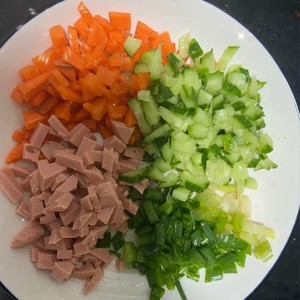 Prep everything before heat: dice ham, cucumber and carrot small and uniform (¼ inch — the Yangzhou standard is that every ingredient matches the pea in size), thaw the peas, slice the scallions. Fried rice is 10 minutes of heat and 15 minutes of knife work.
-
Blanch the dice: drop the carrot and peas into boiling water for 60 seconds, drain well. Par-cooking guarantees the carrot is tender without over-frying everything else.
-
 Coat the rice: pour the beaten eggs over the cold, clumped rice in a big bowl and mix with your hand until every grain is separately golden — no dry white grains, no puddles. This is the golden-fried-rice technique; it gives color and flavor in every bite.
-
 Sear the shrimp (if using): heat 1 Tbsp oil in a wok over high heat, fry the shrimp 45–60 seconds until just pink, and remove. They finish perfectly by riding the residual heat — fully cooked shrimp in fried rice turn rubbery.
-
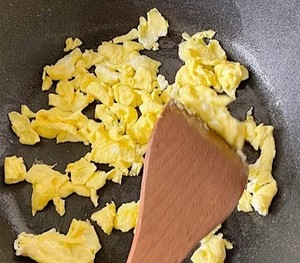
Scramble soft: add another ½ Tbsp oil, pour in any leftover beaten egg (if none, beat one more egg), and scramble 15 seconds — set, but still wet — then remove and join the shrimp.
-
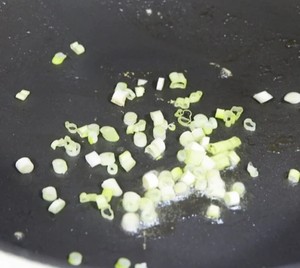 Fry the rice: add the last 1½ Tbsp oil, then the scallion whites — 10 seconds until sweet-smelling. Add the rice, spread it in a layer, and press-toss for 2 minutes over high heat, until the grains are hot, separate and dancing in the pan.
-
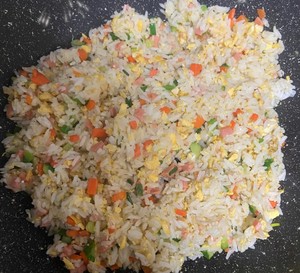 Add the ham, carrot, peas and cucumber; toss 1 minute, until the cucumber just loses its raw edge (its cool crunch is part of the design — don't cook it soft).
-
Return the shrimp and soft-scrambled egg. Season down the side of the wok with the oyster sauce, light soy, sesame oil, salt and white pepper — hitting the hot metal first caramelizes them for a second, then they get tossed through evenly.
- Toss 30 seconds more, kill the heat, scatter the scallion greens, toss once, and serve straight from the wok.
Why this recipe works
Yangzhou fried rice is the dish Western takeout menus call "special fried rice," and it earns the name by discipline, not extravagance.
1. The uniform dice. Huaiyang cuisine — the refined school of Jiangsu cooking that Yangzhou belongs to — is obsessed with knife consistency, and this is its most famous application: ham, carrot and cucumber all cut to pea-size, so no spoonful ever tastes lopsided. It's the difference between fried rice and fried stuff with rice.
2. Egg-coated grains. Beating raw egg through cold rice before the wok gives every grain its own golden jacket (the golden technique from our egg fried rice), instead of a few scrambled clumps sitting on top. Flavor and color distribute themselves — the same move that defines proper golden fried rice.
3. Protein staged by tolerance. Shrimp sear alone and rest; egg scrambles soft and waits; ham and vegetables take the wok's full heat. Everything meets for one final 30-second toss, each component cooked exactly as much as it wants — no rubber shrimp, no gray egg.
About the dish
Yangzhou, the canal-city capital of Jiangsu cuisine, has fed travelers for a thousand years — Marco Polo claimed (dubiously) to have governed it. The fried rice that carries its name began as hotel food for canal merchants: yesterday's rice revived with the kitchen's best bits — ham, shrimp, egg, seasonal vegetables — cut fine enough that a humble dish eats like craft.
The modern standard was codified in 2002 by the city's chefs' association, which specifies (among other things) the uniform dice and the presence of ham and shrimp. Home versions flex with the fridge — this one keeps the classic bones. What never changes: day-old rice, a roaring wok, and the doctrine that fried rice is a knife-skills dish disguised as a leftover dish.
What to serve with it
A pot of hot and sour soup is the classic pairing — one fiery, one golden. Or serve it under a main like kung pao chicken where plain rice would waste the sauce. For most of us it's dinner on its own, eaten straight from the wok — though on takeout menus from Guangzhou to New York the same dish answers to Young Chow fried rice, a romanization inherited from Cantonese kitchens. Kids pick around the peas; adults appreciate the cucumber dice for crunch. Leftovers reheat brilliantly in a hot wok with a few drops of water — never the microwave, which toughens the rice.
Pro tips
- The uniform dice is the soul of Yangzhou fried rice: peas, ham, carrot, cucumber all cut to the same ¼-inch so every spoonful tastes identical. It looks fastidious and takes five minutes.
- Day-old rice is the texture secret — same as our <a href="/rice">golden egg fried rice</a>. Fresh rice? Spread it on a tray and freeze 20 minutes.
- Cucumber in fried rice surprises Western cooks; it's traditional in the Jiangsu version and adds a cool, fresh snap against the hot grains. Skip it if you must, but it's the signature.
- Cook each protein to just-short of done and let the final toss finish it — shrimp, egg and ham all ride the carryover.
- High heat throughout: a quiet pan steams the rice gray. If your stove is timid, cook in two smaller batches.
Storage & leftovers
- Refrigerate up to 2 days; reheat in a hot skillet with a few drops of water until steaming.
- Freeze portions up to 1 month; reheat from frozen in a covered skillet 5–6 minutes.
- Food-safety note: cool leftover cooked rice quickly (within an hour) and refrigerate — rice is the one ingredient that shouldn't sit out.
Frequently asked questions
What makes it "Yangzhou" fried rice?
It comes from Yangzhou in Jiangsu province, and its identity is the mixed dice — ham, shrimp and vegetables in uniform cut — over egg-coated rice. Versions with just egg and scallion are egg fried rice; versions with everything are Yangzhou.
Can I skip the shrimp?
Yes — ham-and-vegetable is the everyday home version. The shrimp version is what restaurants serve; both are authentic.
Do I need a wok?
A 12-inch nonstick or cast-iron skillet on the highest heat works. What matters is that the rice can spread out and fry instead of pile up and steam.
Why is my fried rice mushy?
Rice too fresh or warm, pan too crowded, or sauces poured directly on the rice instead of flashed down the hot wok side. All three are addressed above.
Can I use other proteins?
Chinese BBQ pork (char siu) is the classic luxury version; leftover roast chicken works. Keep total add-ins under half the rice's volume or it stops frying and starts steaming.
Is MSG traditional?
Restaurant versions often use it, but this seasoning set — oyster sauce, light soy, sesame oil — doesn't need it. The ham and shrimp bring their own umami.
Can I make it vegetarian?
Yes — omit the shrimp and ham and swap the oyster sauce for vegetarian mushroom stir-fry sauce or an extra ½ tsp light soy. The uniform-dice doctrine still applies: keep every vegetable cut to the same pea-size.