Chinese home style · Rice & One-Bowl Meals
Beef and Broccoli Fried Rice (西兰花牛肉炒饭)
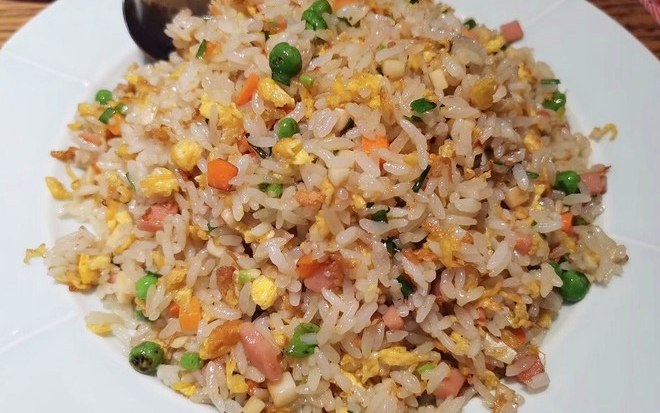
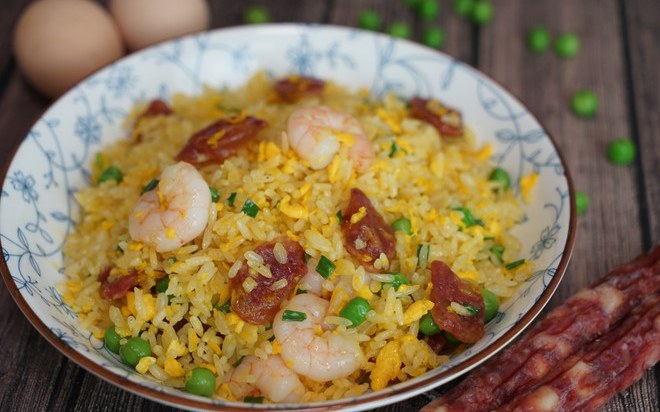
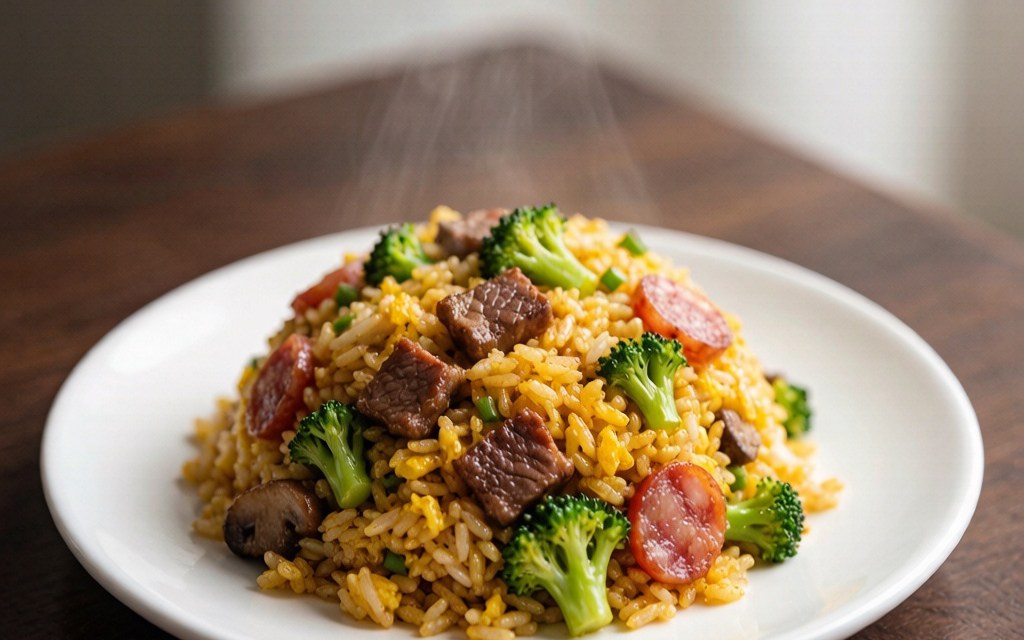
Golden fried rice the Yangzhou way: egg yolk coats every grain, tossed with chopped broccoli, tender braised beef, shiitake and sweet Chinese sausage in one wok.
Instructions
-
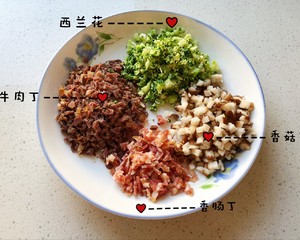 Soak the broccoli florets in lightly salted water for 10 minutes, then rinse and pat completely dry with a towel. Surface water is the enemy of fried rice — wet vegetables steam the grains instead of frying them.
-
Chop everything to rice-grain size: the broccoli, the shiitake mushrooms, the cooked beef and the Chinese sausage, each into its own small pile. Uniform tiny pieces cook through on wok heat alone, so nothing needs blanching.
-
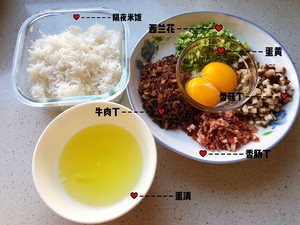 Separate the cold eggs: whites into one bowl, yolks into another, and beat each until completely smooth. This split is the signature of golden fried rice — the yolks will paint every grain of rice, while the whites fry up as soft, separate curds.
-
Heat a wok (or a 10–12 inch nonstick skillet) over high heat until a drop of water skitters and evaporates on contact. Add 1 Tbsp oil, pour in the egg whites and scramble for 30–40 seconds, just until they set into soft curds. Break them into small pieces and transfer to a plate.
-
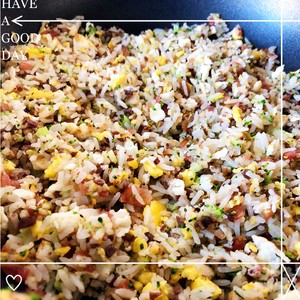 Add the remaining 1 Tbsp oil. Pour in the beaten yolks, let them sizzle for 5 seconds, then scramble until loosely set but still glossy, about 15 seconds. Add the beef, shiitake and sausage and stir-fry for 1–2 minutes, until the mushroom edges brown and the sausage fat renders and smells sweet.
-
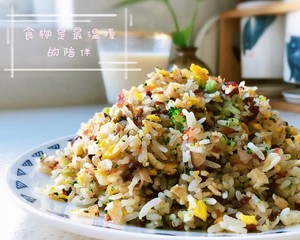 Add the chopped broccoli and toss for 1 minute — it should turn a brighter green and just lose its raw edge. It will finish cooking with the rice.
-
Crumble in the cold rice, breaking up any clumps with the spatula, and return the scrambled egg whites. Add the oyster sauce, abalone sauce and sugar right on top of the rice so they dissolve into it as it fries.
-
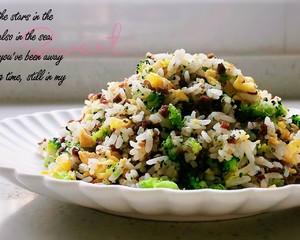 Fry over medium-high heat for 5–6 minutes, tossing and pressing the rice against the hot pan, until every grain is separate, fluffy and steaming hot. Taste before adding any salt — the sausage and oyster sauce usually carry enough. Serve straight from the wok.
Why this recipe works
This is humble fried rice built with real technique — three small decisions separate fluffy, golden grains from a soggy pan of rice.
1. The egg split. Most fried rice beats the eggs whole. Jiangsu cooks separate them: the yolks go into the hot pan first and are scrambled while still loose, so when the rice arrives every grain gets lacquered gold, while the whites are fried on their own into tender, bouncy curds that stay distinct. One egg, two textures, and a color no soy sauce could give you.
2. Everything chopped to rice size. Broccoli, shiitake, beef and sausage are all cut to the size of a grain of rice. Tiny pieces cook through in seconds on wok heat — no blanching pot, no raw centers — and every spoonful tastes complete instead of alternating between bites of vegetable and bites of plain rice.
3. A long, unhurried fry. Five to six minutes at medium-high sounds like a lot for fried rice; that is exactly the point. Frying drives surface moisture off the grains, the sauces dissolve and glaze instead of pooling, and the rice turns springy — the texture Chinese cooks prize in the best fried rice. Rush this step and you get wet rice; keep it moving and you get fried rice.
About the dish
The cook behind the original recipe is from Yangzhou, and the parentage shows: Yangzhou fried rice (扬州炒饭) is the most famous fried rice in China, born in the canal city of Yangzhou in Jiangsu province, where cooks have argued over the correct egg technique for generations. In the classic "gold wrapping silver" (金裹银) style, the yolk coats each grain while the white stays separate — precisely the split this recipe uses.
But this particular version is a fridge-cleaner, and that is the honest spirit of home fried rice: no shrimp, no ham, no fully stocked Yangzhou larder — just broccoli, leftover braised beef, two mushrooms and the tail end of a sausage. Broccoli is a modern, health-minded addition that a Yangzhou cook a century ago would never have seen. The result is a contemporary Chinese home dish, not a museum piece, and all the better for it.
What to serve with it
This is a one-bowl meal — it needs nothing but a spoon. If you are setting a fuller table, a light soup like egg drop soup or a crunchy smashed cucumber salad adds freshness without competing. Kids are happy with a drizzle of extra light soy at the table; adults get hot tea afterwards to cut the fried richness. Leftovers re-fry beautifully — two minutes in a hot skillet wakes the grains back up. Start from day-old rice and the whole thing comes together before a takeout order would. Curious about the mother technique? Compare it with our golden egg fried rice, or cook its stir-fry sibling, beef and broccoli.
Pro tips
- Day-old refrigerated rice fries better than fresh: the grains have dried out and stay separate. In a pinch, spread hot fresh rice on a plate and refrigerate uncovered for 30–60 minutes, or freeze it for 15 minutes.
- Cold eggs separate cleanly, straight from the fridge, with no broken yolks — and cold yolks scramble into softer, glossier curds.
- The 5–6 minute fry is not a typo. Frying drives off surface moisture, and that is what turns heavy rice springy and fluffy. Keep the heat at medium-high and keep everything moving so nothing burns.
- Chinese sausage is the secret seasoning — its rendered fat coats the rice with sweet, smoky flavor. If you skip it, add an extra ½ Tbsp oyster sauce to compensate.
- This is a fridge-cleaner dish by design: any leftover braised beef, pot roast or last night's steak works. Chop it fine and it behaves exactly like the original.
- Don't add salt until the very end — oyster sauce, abalone sauce and cured sausage are all salty, and the rice concentrates as it fries.
Storage & leftovers
- Refrigerate leftovers in a sealed container for up to 3 days.
- Reheat in a skillet with 1 tsp oil over medium-high heat for 2–3 minutes, tossing often, until steaming hot — the rice crisps at the edges again. The microwave works too: 2 minutes at 700–800 W, stir halfway, rest 1 minute.
- Freeze for up to 1 month in a flat, sealed bag and thaw overnight in the fridge. The texture holds up better than most fried rice because the rice was fried dry, though the broccoli will be soft.
Frequently asked questions
Can I use raw beef instead of cooked braised beef?
Yes. Slice 3 oz (85 g) raw beef thin against the grain, toss with 1 tsp soy sauce, 1 tsp cornstarch and ½ tsp oil, then stir-fry it first until just done and set it aside. Add it back together with the rice so it doesn't overcook.
I can't find abalone sauce. What should I use?
Hoisin sauce is the closest easy swap — slightly sweeter, so use a touch less sugar. Or simply use 1 more Tbsp of oyster sauce; abalone sauce is essentially a milder, fancier cousin of oyster sauce.
Can I use freshly cooked rice?
Yes, but dry it first: spread the hot rice on a tray and refrigerate uncovered for 30–60 minutes, or freeze for 15 minutes. Adding steaming fresh rice straight to the wok makes it clump and turn gummy.
How do I make this vegetarian?
Skip the beef and sausage, double the shiitake and add 3 oz (85 g) diced firm tofu, and use vegetarian mushroom stir-fry sauce in place of the oyster sauce. Everything else stays the same.
Why did my fried rice come out soggy and clumpy?
Usually one of three things: the rice was too fresh and moist, the pan was overloaded so it steamed instead of fried, or the heat was too low. Use dried-out rice, cook in two batches if your pan is small, and keep the heat at medium-high.
Can I prep it ahead?
Chop the broccoli, mushrooms, beef and sausage and separate the eggs in the morning — keep everything covered in the fridge. The actual cooking takes about 10 minutes, so it stays an easy weeknight one-bowl meal.
Can I use leftover beef and broccoli takeout?
Yes — that is the spirit of the dish. Chop last night's beef and broccoli small, skip any raw-meat marinating, and add them where the recipe adds the cooked braised beef so they only warm through.
What makes fried rice golden?
The Jiangsu "gold wrapping silver" technique: yolks go into the pan first, scrambled while loose so every grain gets lacquered gold, while the whites fry separately into tender curds. The color comes from egg, not soy sauce.