Shaanxi · Cold Dishes & Salads
Sesame Paste Liangpi (麻酱凉皮)
Washed-dough liangpi: slippery cold skin noodles and spongy steamed gluten under a garlicky sesame sauce — the Xi'an street classic, rewritten for home kitchens.
Instructions
-
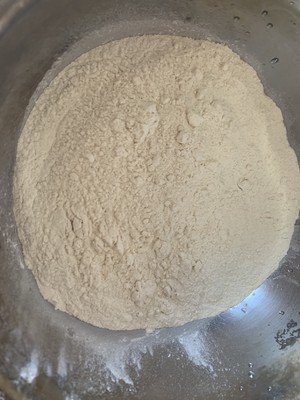 Make the dough: mix the flour with the cool water, stirring until shaggy flakes form, then knead 6-8 minutes into a smooth, medium-firm dough. Cover and rest 30-40 minutes — resting relaxes the gluten so it holds together during the washing step.
-
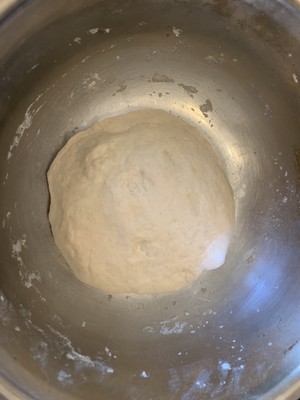 Wash the dough: put the dough in a large bowl with 3 cups (720 ml) of the cold water. Knead, squeeze and fold it in the water like a sponge for 3-4 minutes, until the water turns milky white and the dough slumps into a stringy, elastic mass. Pour the milky water into a second bowl, add fresh water to the dough, and repeat 3-4 more times, until the water runs nearly clear and what remains is a lumpy gluten ball.
-
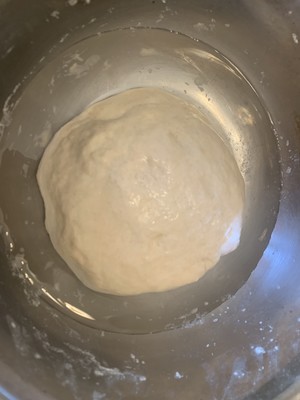 Strain all the milky water through a fine-mesh sieve into one bowl, tipping any gluten bits caught in the sieve back onto the gluten ball. Refrigerate the starchy water for 4 hours (or overnight), until a clear layer forms on top and dense white starch settles below.
-
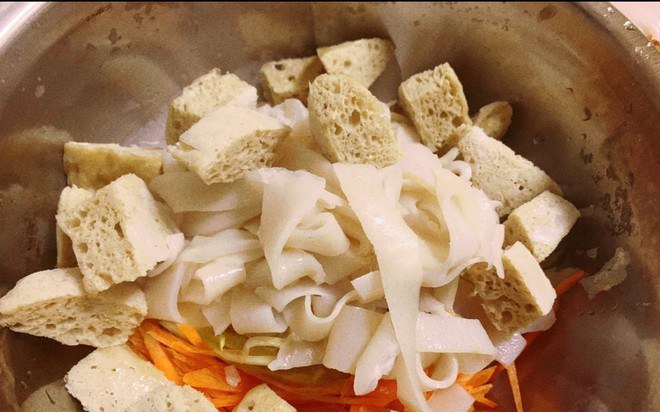
 Make the gluten: sprinkle the yeast over the gluten ball, knead it in, and rest 30 minutes until puffy. Steam over boiling water for 15-20 minutes — it rises into a light, spongy loaf. Cool completely, then cut into ¾-inch (2 cm) cubes.
-
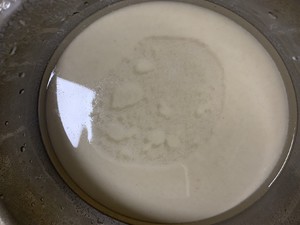 Prepare the slurry: gently pour the clear water off the settled starch without disturbing the white layer. Stir the starch with ⅓ cup (80 ml) fresh water until it flows like heavy cream — thick but pourable.
-
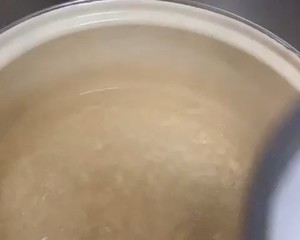 Set up the steaming station: bring 2 inches (5 cm) of water to a full boil in a wide pot, set a rack or steamer insert inside, and have a 9-inch (23 cm) round shallow metal pan or glass pie dish ready, lightly oiled. A second pan makes the work much faster.
-
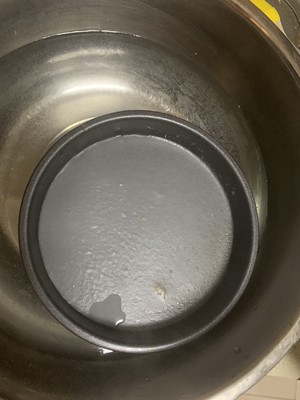 Ladle about ⅓ cup (80 ml) slurry into the pan and tilt until it coats the bottom in a thin, even layer. Float the pan on the boiling water (or set it in the steamer), cover, and cook 1-2 minutes, until the sheet turns translucent and balloons up in the middle.
-
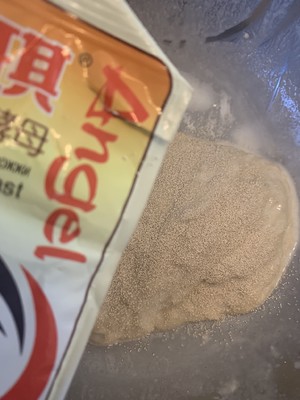 Lift the pan out with tongs and set it in a basin of cold water for 20-30 seconds to cool. Brush the surface with a thin film of oil, then peel the sheet off from one edge. Repeat with the remaining slurry, stacking the oiled sheets as you go.
-
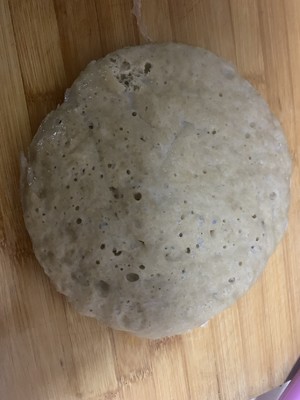 Cut the stack of sheets into ¾-inch (2 cm) wide strips, and cut the cooled gluten into cubes. If two sheets stick, pull them apart gently — the oil film between them lets them release.
-
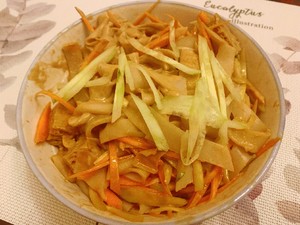 Make the dressing: whisk the sesame paste with the hot water until smooth and pourable, then whisk in the light soy sauce, vinegar, oyster sauce, sugar, salt and garlic paste.
-
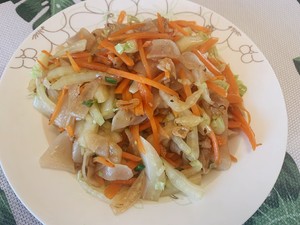 Toss the liangpi strips and gluten cubes with the dressing in a large bowl, using tongs to separate every strand. Add the cucumber and carrot, drizzle with chili oil if using, and serve cold, straight away.
Why this recipe works
Liangpi looks like a noodle, but no noodle dough is involved. One ball of ordinary wheat dough gives up two different foods, and the trick is simply water.
1. Washing separates starch from gluten. When you knead dough underwater, the starch granules dissolve out into the bowl while the gluten proteins — stretchy and insoluble — ball up in your hands. The milky water becomes the noodles; the stringy ball becomes the spongy topping. It feels wrong the first time, watching your carefully kneaded dough disintegrate, but that disintegration is the technique.
2. Settling purifies the starch. Four hours in the fridge lets the dense starch sink while the thin, cloudy impurities stay suspended above. Pouring off that clear layer and re-thinning the compacted starch with fresh water gives you a slurry of exactly the right concentration — which is why the sheets come out chewy instead of brittle.
3. A film of oil between sheets. Every finished sheet gets a whisper of oil while still hot, and every sheet peels cleanly off its neighbor at serving time. Brush all the way to the edges: the corner you skip is the corner that tears.
About the dish
Liangpi — literally "cold skin" (凉皮) — is the defining street snack of Shaanxi province, with Xi'an as its capital. The story goes that it began as tribute food in the Qin dynasty, but the verifiable history is humbler: a cheap, filling dish of wheat starch dressed with chili and vinegar, sold from carts and hole-in-the-wall shops for generations. Regional versions argue loudly. Hanzhong liangpi is soft and vinegar-forward; Xi'an's is chewier, often with bean sprouts, and frequently finished with a spoonful of thick sesame paste — the style written here.
The steamed gluten (面筋) is not a garnish but half the point: spongy cubes that soak up the dressing. Because the dish is served cold and the sauce is aromatic rather than heavy, liangpi works year-round — a summer refresher that never really leaves the winter tables either. Making it at home is a project, not a weeknight stir-fry, but the process is strangely satisfying and every step has a clear reason.
What to serve with it
Sesame paste liangpi is a cold dish, so pair it with something hot and simple: a clear tomato egg-drop soup or a plate of garlicky greens. For a street-food spread, add cong you bing or jianbing and let everyone tear, dress and slurp family-style. Kids like the spongy gluten cubes and skip the chili; adults go heavy on the garlic water. Leftover plain sheets, remember, fry beautifully the next day — hot wok, a little oil, thirty seconds. And if you ever bring home store-bought liangpi, this dressing stands on its own as the liangpi sesame sauce recipe worth keeping: whisk, toss, done.
Pro tips
- The wash is the whole recipe: starch leaves the dough into the water, gluten stays in your hands. Keep every drop of cloudy water — it becomes the noodles — or the batch will be gluey and sparse.
- Slurry thickness decides everything. Too thick and the sheets turn gummy and tear; too thin and they fall apart. It should coat a spoon and flow like heavy cream — adjust a spoonful at a time.
- Two pans pay for themselves: while one sheet steams, load and swirl the next. Expect the first sheet to be the ugliest; by the third you will have the rhythm.
- Skip the yeast for dense, chewy gluten; use it for the spongy, airy version closer to what Xi'an vendors sell. Both are correct.
- Leftover undressed sheets transform the next day: cut them wide and stir-fry over high heat with cabbage, carrot and a splash of soy sauce for a completely different meal.
Storage & leftovers
- Undressed sheets and gluten keep 2 days refrigerated, bagged or well covered. Store the dressing separately — dressed liangpi goes soggy within hours.
- Dressed leftovers keep 1 day refrigerated; loosen with 1 tsp cold water and re-toss before serving.
- Freezing is not recommended: the sheets turn brittle and weep when thawed.
Frequently asked questions
Can I make liangpi without washing the dough?
Yes, but it becomes a different dish. No-wash liangpi uses a plain flour-starch batter — much quicker, but the texture is soft rather than springy, and there is no gluten. The washed version here is the classic Xi'an style.
My sheets stick together and tear. What went wrong?
Usually one of three things: the slurry was not strained, the oil between sheets was skipped, or you peeled before the sheet cooled. Strain the slurry, oil every surface generously, and chill each sheet in cold water before peeling.
Can I use tahini instead of Chinese sesame paste?
Yes. Tahini is made from hulled sesame, slightly more bitter but close. Whisk it with the hot water first, then add a small pinch of extra sugar to round it out.
Why did my gluten turn out dense and hard?
It was steamed before the yeast had time to work, or the yeast was old. Let it rest 30 minutes until it feels puffy and lighter, and steam the full 15-20 minutes before lifting the lid.
How spicy is this?
Mild as written — the sesame dressing carries no heat at all. The chili oil is entirely optional; drizzle in 1-2 Tbsp for the classic red-dressed street style.
Can I do this in stages?
Yes, and it is the sanest way: rest and wash the dough in the morning, refrigerate the slurry overnight, then steam the sheets and gluten the next day. Settled slurry keeps 24 hours in the fridge.
What is the difference between this and rice liangpi (mipi)?
This is the washed wheat-dough style — springy, translucent sheets plus steamed gluten. Mipi, the Hanzhong tradition, is made by grinding soaked rice into a slurry: softer, more tender sheets and no gluten at all. Same dressings, different noodle.