Shaanxi · Street Food & Snacks
Baijimo Roujiamo (白吉馍肉夹馍)
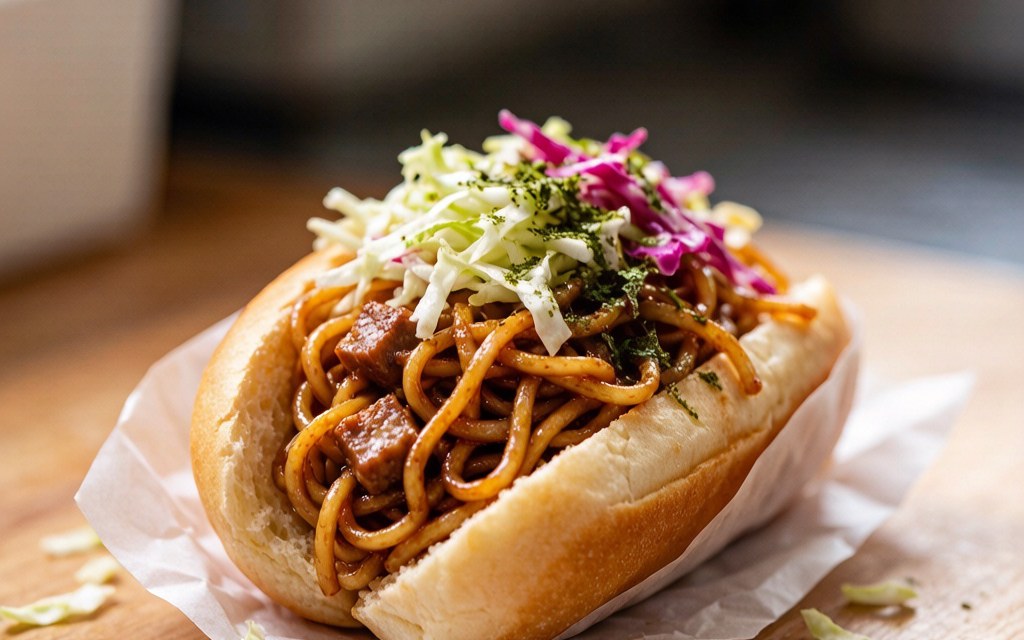
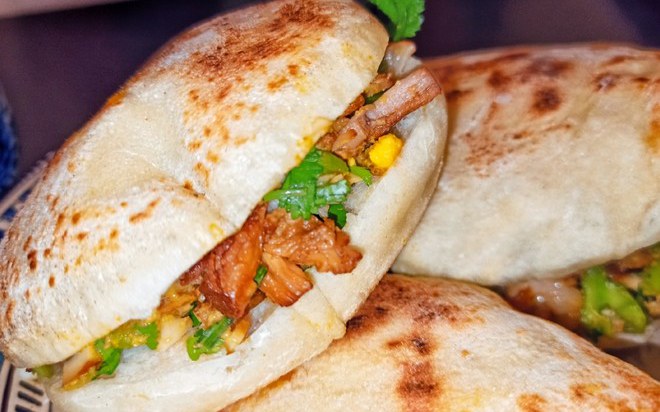
Xi'an roujiamo proper: layered baijimo flatbreads dry-panned for golden spiral marks, oven-finished, stuffed with spice-braised pork. Crisp shell, tender layers.
Instructions
-
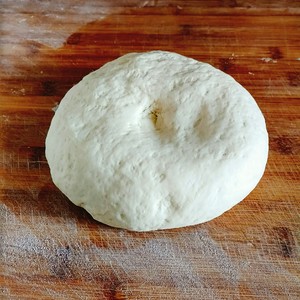 Make the dough: put the flour in a large bowl, make a well, and add the yeast dissolved in the water (below 86°F/30°C). Add the sugar — it is not for sweetness but to feed the fermentation — the baking powder and the oil.
-
 Stir into shaggy flakes, then knead for 8–10 minutes until the dough is smooth in the "three lights" state: not sticking to the bowl, not sticking to your hand, clean surface. It should feel noticeably firmer than bread dough.
-
 Cover and rest 30 minutes, knead once, rest 15 minutes more, and knead again until the surface is satin-smooth. This is only a half-proof — when you press a finger in, the dent should spring back slowly. Do not let it double like bread dough.
-
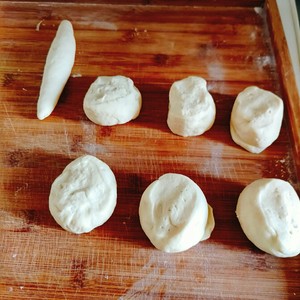
 Divide into 11 pieces of about 70 g each. Knead each one individually until perfectly smooth — this kneading is what makes the buns fluffy rather than dense.
-
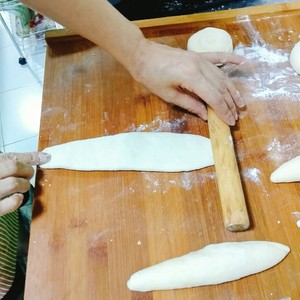
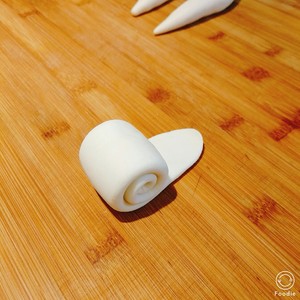
 Shape each piece: roll it into a spindle, thin at both ends and fat in the middle, then flatten and roll it up tightly from one short end into a spiral log. Tuck the tail end underneath. That rolled spiral is what gives baijimo its peel-apart layers.
-
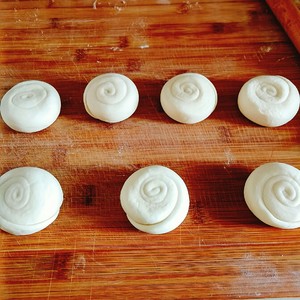
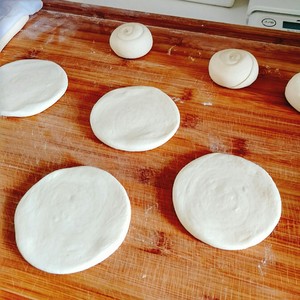 Roll each log into a disc about 6 mm (¼ inch) thick — do not go thinner, the buns need room to puff. Cup a disc in both hands and turn it, pinching the thick edges thin, until it is a neat round.
-
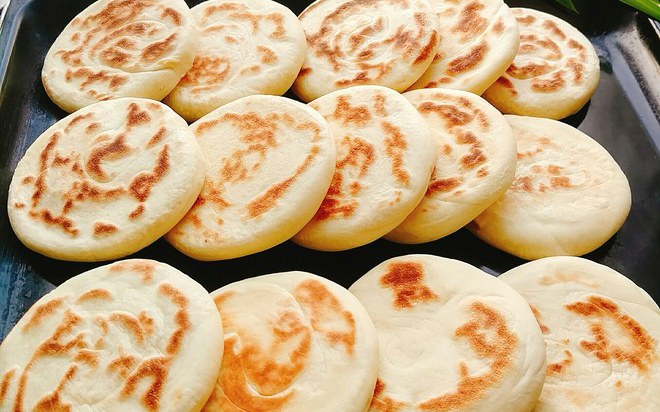
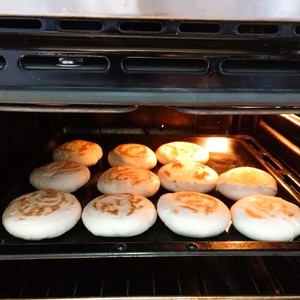 Heat a dry, ungreased skillet (cast iron is ideal) over low heat. Cook the discs one or two at a time for about 1 minute per side, pressing gently, until each side shows light golden spiral marks — the "golden edge, silver ring" look. They will not puff much yet.
-
 Transfer the marked buns to a baking sheet and bake on the middle rack at 375°F (190°C) for 5–8 minutes, until they are just barely domed and sound hollow when tapped on the bottom. If they balloon like drums, the earlier proof went too far.
-
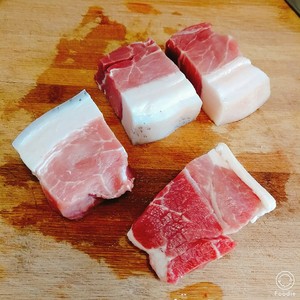
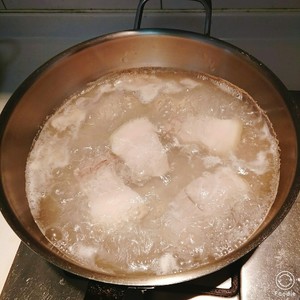 For the pork: blanch the whole piece of pork in boiling water for 5 minutes, lift out, and discard the water. Put it in a pot with water to cover by 2 cm (¾ inch), the wine, both soy sauces, ginger, rock sugar and scallion.
-
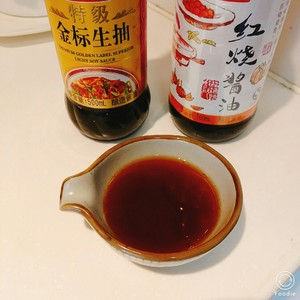 Bundle the whole spices in a cheesecloth square, tie it, and drop it in. Bring to a boil, then simmer gently, covered, for 1½–2 hours, until a chopstick slides into the meat with only slight resistance.
-
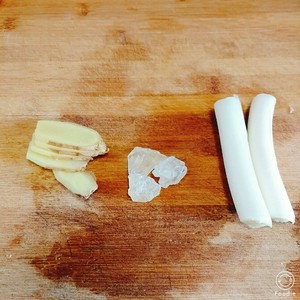 Add 1 tsp salt to the pot, simmer 10 minutes more, then turn off the heat and let the pork steep in the covered pot for 30 minutes — this soak seasons it to the center.
-
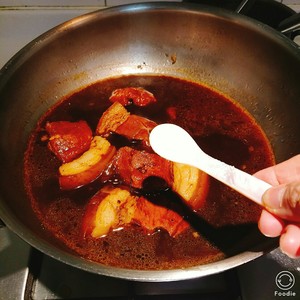 To serve: lift the pork out, chop it finely on a board, moisten with 2–3 Tbsp of the strained braising liquid, split a warm bun along its seam, and pack in the meat. Eat immediately, before the bun loses its snap.
Why this recipe works
A roujiamo lives or dies on the bun, and baijimo — the Shaanxi original — is built by three small decisions that home cooks usually skip.
1. The half-proof. Bread dough wants to double and turn airy. Baijimo dough is pulled off at half-rise: pressed with a finger, the dent creeps back slowly instead of springing or staying. Less gas means a tighter crumb with enough strength to hold a wet filling, and just enough lift to stay tender. Sugar goes in not for sweetness but as yeast food, and a little baking powder guarantees lift in the oven even if your proof ran short.
2. The spiral roll. Each 70 g ball is rolled into a spindle, flattened, then rolled up like a sleeping bag before being pressed into a disc. That roll stacks dozens of micro-layers of dough; in the pan and oven they separate into the peel-apart strata that Xi'an eaters praise by tearing the bun apart and eating it empty. Tucking the tail underneath also leaves the faint seam that tells you where to cut.
3. Pan marks, then oven. A dry, ungreased skillet over low heat brands the discs with the golden spiral marks — the "golden edge, silver ring, chrysanthemum heart" of the authentic bun — while the oven's even heat finishes a 6 mm disc that a pan alone would scorch. The result sounds hollow when tapped and stays crisp outside, soft inside, never gummy.
About the dish
Roujiamo is two dishes in one: la zhi rou, pork steeped in an old spiced broth, and baijimo, the flatbread said to come from Baiji village in Shaanxi. Vendors in Xi'an keep master stocks running for years, so the meat picks up depth no first-day braise can match; the source cook, who lived across from a famous shop in Xi'an, watched the bun makers for months and wrote this home version from that apprenticeship.
The traditional bun is proofed with an old sourdough-style starter and baked over charcoal, and the shape is judged by its golden rim and ring of pan marks. This recipe swaps in yeast and a home oven but keeps the two things that actually define it: the firm, half-proofed dough and the spiral that makes the layers. Baijimo is also everyday food in Shaanxi — stuffed with braised pork, or with shredded peppers, or nothing at all.
What to serve with it
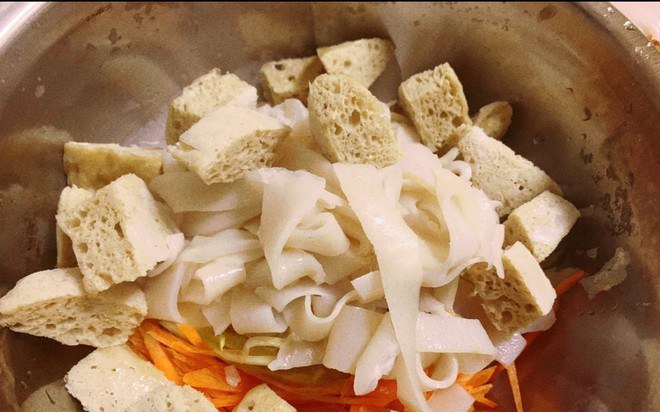
Eat roujiamo the moment it is assembled — the hot, crisp bun against the warm chopped pork is the entire show. A vinegar-dressed cold dish on the side cuts the richness; liangpi noodles are the classic Xi'an pairing, and a simple cucumber salad works too. In Xi'an the sandwich arrives with a cup of the braising broth or a bottle of sour plum drink; at home, a small bowl of the warmed la zhi rou liquid for dipping each bite is not authentic street practice but is impossible to resist. To reheat roujiamo, always re-crisp the buns in a dry skillet first. Leftover pork also makes an outstanding filling for steamed buns from the buns table.
Pro tips
- The dough must be firmer than steamed-bun dough and only half-proofed. A fully risen dough puffs into a drum in the oven and the layers vanish — the single most common baijimo failure.
- The rolled spiral is the whole point of the shape. Xi'an customers peel baijimo apart layer by layer and eat it plain, so even if you stuff every bun, the lamination is worth protecting.
- No oven? Finish the marked buns in the covered dry skillet over the lowest heat for 8–10 minutes, flipping twice, until they sound hollow when tapped.
- The source shop's braising liquid is a master stock that gets older and better every day; at home, save your leftover liquid — it is the start of a la zhi rou base for next time.
- Skim the fat off the cooled braising liquid and keep it; a spoonful stirred into the chopped pork is exactly what street vendors do when they fill your mo.
Storage & leftovers
- Buns: refrigerate in a sealed bag for up to 3 days. Re-crisp in a dry skillet over low heat for 2 minutes per side or 3 minutes at 350°F (175°C) in the oven.
- Buns freeze well for up to 1 month; thaw overnight and re-crisp as above. Fill them only at serving time.
- Braised pork keeps 4 days refrigerated in its liquid, and freezes for 2 months; the chilled fat can be lifted off and reserved for frying.
- Leftover strained braising liquid can be boiled, frozen, and reused as the base for the next batch — it improves with each round.
Frequently asked questions
Can I just use regular roujiamo buns or pita?
You can, but baijimo's half-proofed, spiral-rolled dough is what gives the crisp shell and peel-apart layers. The technique in this recipe needs no special equipment, only patience with the kneading.
How spicy is the pork?
Mild and aromatic, not hot — the dried chilies are optional and mostly perfume the broth. Serve chili oil on the side if your table likes heat.
My buns puffed up like balloons and the layers disappeared. What went wrong?
The dough over-proofed or was rolled too thin. Keep it to the half-proof (slow spring-back under a finger press) and the 6 mm (¼ inch) thickness.
Can I make the pork ahead?
Yes, and you should: it is better the next day. Refrigerate the pork submerged in its liquid for up to 4 days and reheat gently in the braising liquid before chopping.
What can I use instead of black cardamom and galangal?
The braise still works with just star anise, cinnamon, bay, Sichuan peppercorns and fennel — the classic minimum. Black cardamom adds a smoky depth; ¼ tsp liquid smoke in the pot is a rough stand-in.
Why pan-fry and then bake — why not just bake?
The dry pan sets the golden spiral marks and a slight crust first; the oven then cooks the thick center through without burning the marks. One method alone cannot give both.
Can I make baijimo without an oven?
Yes. Pan-mark the discs as directed, then finish them in the covered dry skillet over the lowest heat for 8-10 minutes, flipping twice, until they sound hollow when tapped on the bottom. It is a slower, fully stovetop route to the same bun.
Pork belly or pork shoulder for the braise?
Both work here. Belly is the classic choice — its fat renders into the broth and keeps the chopped filling succulent. Shoulder is leaner and holds together a little firmer; steep it the full 30 minutes in the liquid so it seasons to the center.