Chinese home style · Sauces & Basics
All-Purpose Bao Dough (通用包子皮做法)
One master dough for bao: flour, milk, yeast, sugar and a spoon of lard, no baking powder. Knead it smooth, proof once, and the pleats hold through steaming.
Instructions
-
 Combine the flour, milk, water, sugar and yeast in a bowl and stir with chopsticks or a fork into shaggy flakes with no dry flour left. In summer use cold liquids to slow fermentation; in winter warm both to about 95°F/35°C to speed it up.
-
 Cover and rest the shaggy dough for 5 minutes before touching it. This pause lets the flour fully hydrate, so the kneading that follows takes half the effort.
-
 Knead as if washing a shirt — push the dough away with the heel of your hand, fold it back over itself, rotate a quarter turn, repeat — for about 5 minutes, until it smooths out and stops sticking to your hands.
-
 Add the lard and keep kneading. It will look greasy and broken at first; after about 5 more minutes the dough absorbs it completely and reaches the 'three smooths': smooth dough, smooth hands, smooth board.
-
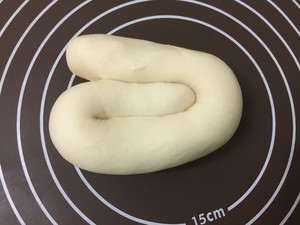
 Roll the dough into a rope, fold it in half, roll again, and fold — repeat this fold-and-roll cycle at least 3 times. It is hand-kneading on fast-forward, and it drives out the big air pockets.
-
 Cut the rope with a bench knife and inspect the cut face: it should be dense and pore-free, like a clean slice of cheese. If you see bubbles, run a few more fold-and-roll cycles.
-
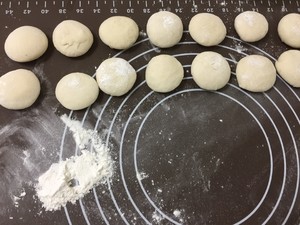
 Pinch off 16 equal pieces (about 30 g each) straight from the rope by closing your thumb and forefinger around it — no weighing each piece and no knife, which leaves ragged edges that roll unevenly. Work quickly and keep the rope covered.
-
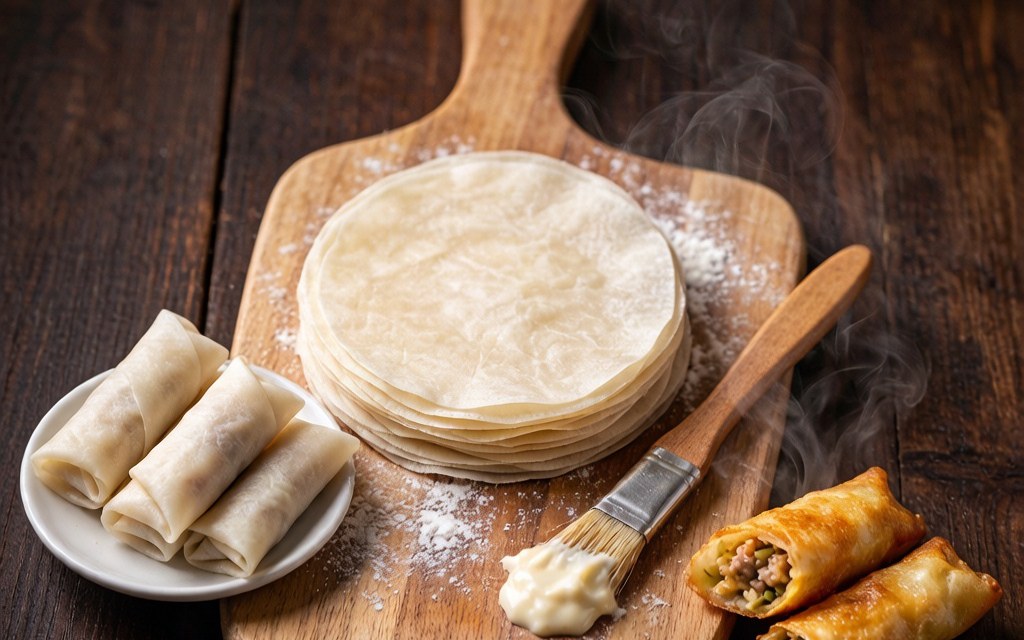
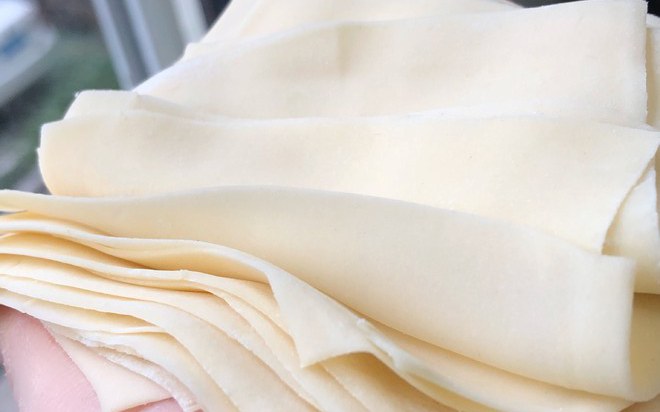
 Roll each piece into a wrapper about 3½-4 inches across, thick in the middle and thin at the edges, dusting lightly with flour. For glossy 'water-light' skins, knead each piece round again before rolling.
-
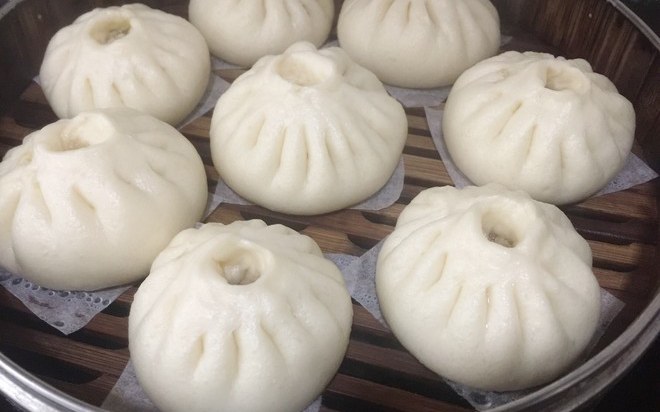
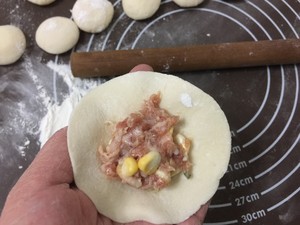
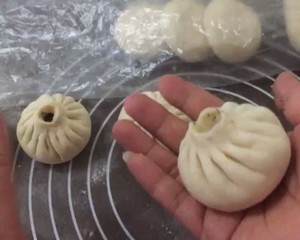
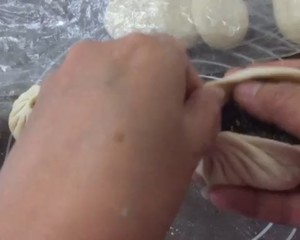 Fill and pleat: hold a wrapper in your palm, spoon in 1½-2 Tbsp of filling (no more, or the seal bursts in the steamer), fold pleats around with your thumb and forefinger, and pinch the final fold firmly to close.
-
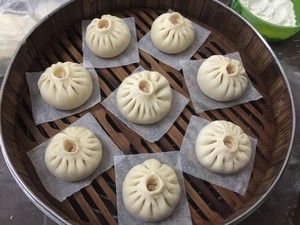
 Arrange 8 buns per 12-inch steamer tray with space between them. Fill the pot with 95-105°F/35-40°C water, set the trays on top, cover, and proof about 30 minutes in summer — longer in winter — until the buns look visibly puffy, feel light for their size, and have grown about 1.5-2 times.
-
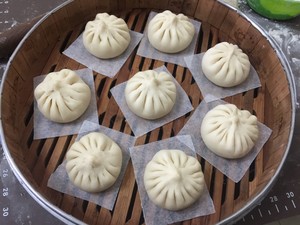 Steam: heat the same water to a rolling boil on high and steam 12 minutes (10 minutes for plain mantou). Turn off the heat, wait 2 minutes, then lift the lid away from the buns. Longer steaming turns the skin yellow.
Why this recipe works
This is the dough to learn once and use forever — for pork buns, vegetable buns, red bean buns and plain mantou.
1. The 5-minute pre-rest. Stirring the dough only to shaggy flakes and walking away for 5 minutes lets every flour particle hydrate on its own. Hydrated flour kneads in half the time, which is why a dough that would take 15 hard minutes by hand comes smooth in two easy 5-minute sessions.
2. Lard, the whiteness secret. A small spoon of lard shortens the gluten slightly, so the steamed skin turns out whiter, more tender and faintly glossy — the look Chinese bakers call 'water-light' (水光肌). It goes in after the dough is already smooth, and 5 minutes of kneading folds it in completely.
3. One proof, strong pleats. Letting shaped buns rise only once — straight in the steamer over warm water — keeps the gluten firm enough to hold every pleat you pinched. It is also faster and more forgiving for beginners: you judge one rise, not two — this is what Chinese recipe cards mean by a single-proof bao dough (yi fa).
About the dish
Baozi are the default Chinese breakfast: folded around meat or vegetables and steamed by street vendors and home cooks alike. Traditional recipes for the wrapper call for nothing more than flour, water, yeast and a little sugar — leavened purely by yeast, never baking powder, which home bakers avoid as an unnecessary additive. The lard is the old-school trick: a spoonful of rendered fat slightly shortens the gluten, which is why wrappers made this way stay soft and snowy-white instead of turning gray or tough — the same reason bakery bao skins feel pillowy.
The wrapper is also where most home bao go wrong. Cooks obsess over fillings, but a dough that is under-kneaded, under-rested or rolled too thin is what actually produces flat tops, burst seams and pale-gray skins. Treat this recipe as the foundation half of every bun you will ever make; the filling changes, the wrapper does not.
What to serve with it
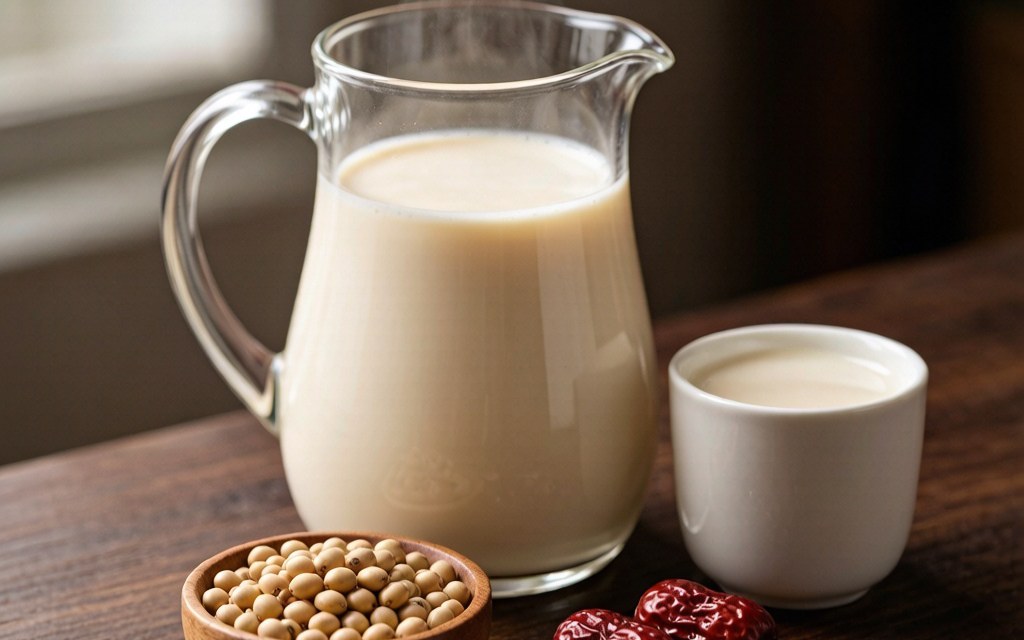
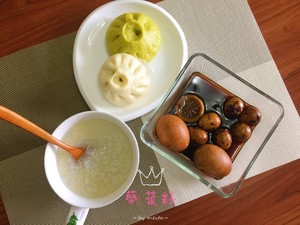
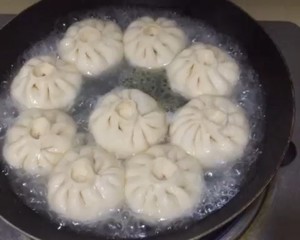
This dough wraps anything: classic steamed pork buns, vegetable bao, red-bean paste buns, or plain mantou split and dipped in sweetened condensed milk — the simplest dessert in the Chinese kitchen. For a full breakfast, steam a tray of bao with a bowl of warm soy milk or congee alongside — the milk in the dough means even the plain mantou come out tender enough to eat unadorned. Keep a batch of wrappers in the fridge and turn leftovers into pan-fried pockets from the basics collection. However you fill it, resteam leftovers for 4-5 minutes and they taste freshly made.
Pro tips
- Use fine caster sugar — coarse sugar stays gritty in a short knead. You can also dissolve the sugar in the milk first and guarantee it.
- Single-proofing (yi fa) is why the pleats survive steaming: one rise keeps the gluten strong enough to carry crisp fold lines. Two-rise doughs bake up puffier but blur the pattern.
- The cut-face test in the middle of the recipe is the honest kneading check — hidden bubbles now become craters and dents after steaming.
- Speed matters after portioning: the yeast is active from that moment. Flatten, fill and wrap each piece as soon as it is rolled.
- For a spinach-green dough, replace all the milk and water with just under ¾ cup (170 g) strained spinach juice — blanch, blend, squeeze, and use at room temperature.
Storage & leftovers
- Wrapped raw buns freeze well: tray-freeze until solid, bag, and steam from frozen for 14-15 minutes without thawing.
- Steamed buns keep 2 days refrigerated in a sealed bag; resteam 4-5 minutes until soft and piping hot.
- Plain steamed mantou can be cooled, bagged and frozen for up to 1 month with no loss of softness.
Frequently asked questions
Can I skip the lard?
Yes, the dough works without it. Lard makes the skin whiter, softer and glossier; neutral oil is a decent substitute with a slightly less white result. For dairy-free, swap the milk for water.
Why did my buns come out flat with blurry pleats?
Usually one of: dough too soft (knead in 10-15 g more flour), wrappers rolled too thin, filling too wet, no upward tension at the closed top, or too little filling to hold the dome. Roll thicker, fill generously without overflowing, and pull the gathered top taut.
Can I use this dough for plain mantou?
Yes — skip the filling, roll each piece into a tight smooth ball, proof the same way, and steam 10 minutes. Mantou needs no pleating skill at all.
Instant or active dry yeast?
Both work. Stir active dry yeast into the warm milk with the sugar first and wait 5 minutes for foam; instant can go straight in with the flour. Freeze yeast after opening so it stays lively.
Can I make the dough ahead?
Not ideally — pleats hold best on freshly mixed, single-proof dough. Prep ahead by measuring the flour and sugar, and mixing the liquids separately, the night before; combine in the morning.
My dough sticks while I roll. What now?
Dust the board and the wrapper lightly, shaking off excess — flour trapped in the seam stops it sealing. If it still sticks, your flour drinks less: next batch hold back 1 Tbsp of the water.
Why are my bao gray or yellow instead of white?
Three usual causes: steaming too long (over 12 minutes yellows the skin — follow the 2-minute rest before lifting the lid), skipping the lard that keeps this dough snowy, and flour choice — unbleached all-purpose bakes slightly beige. Knead to the three smooths, proof only once, and the skin stays pale and glossy.
Can I use cake flour instead of all-purpose?
This recipe is written and tested with all-purpose. Cake flour (lower protein) tends to give a whiter, finer crumb but a less chewy wrapper — if you swap, expect a softer skin and handle the dough a little more gently so it still has the strength to hold pleats.