Chinese home style · Sauces & Basics
Homemade Wonton Wrappers (手擀馄饨皮)
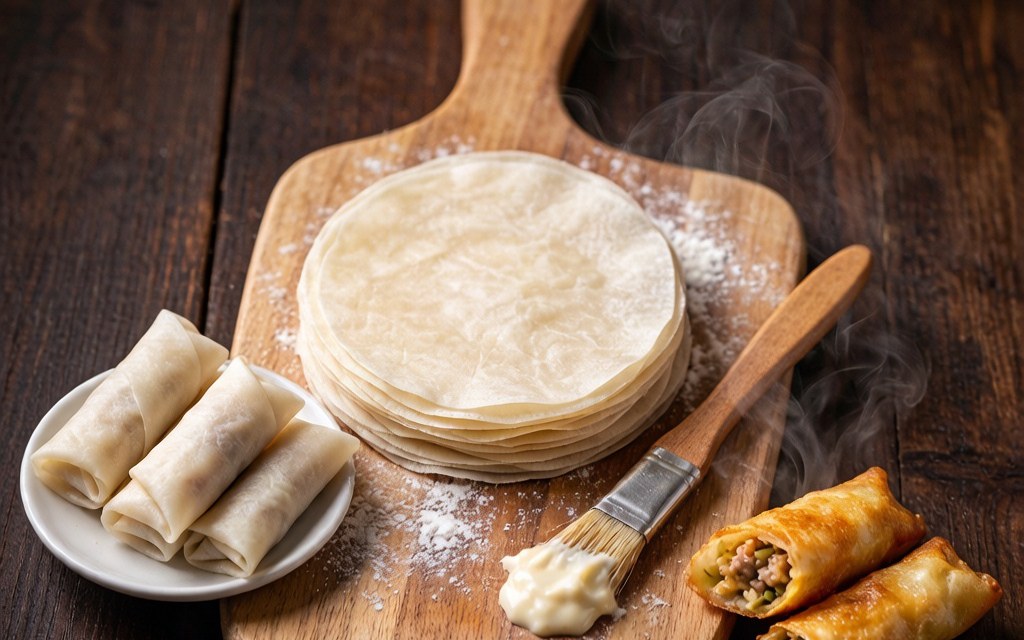
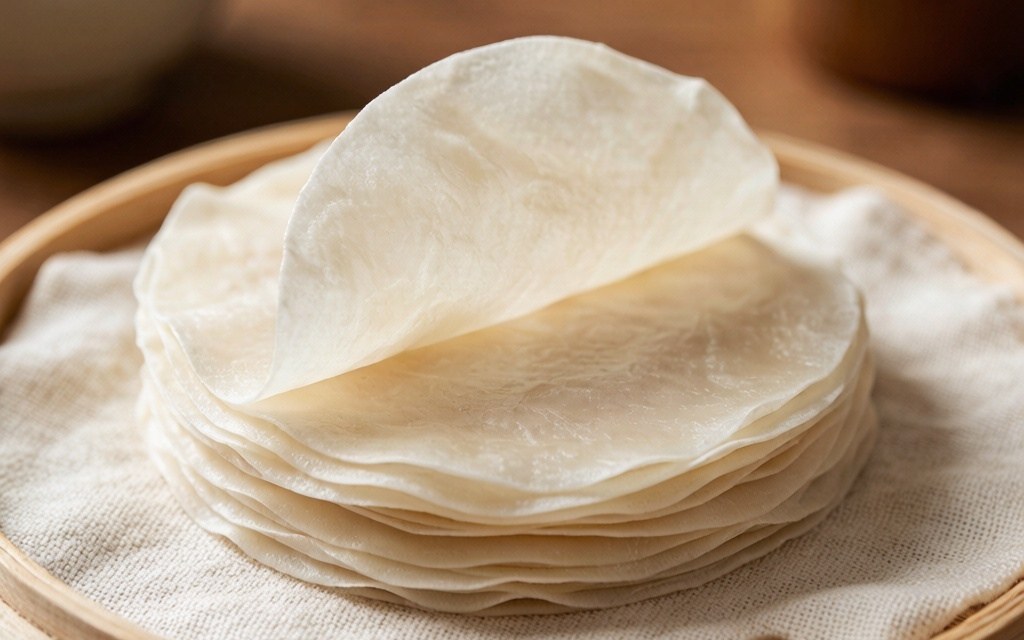
Thin, translucent, chewy wonton wrappers from four ingredients — flour, cornstarch, egg and water — rolled into one sheet and cut into squares. No machine needed.
Instructions
-
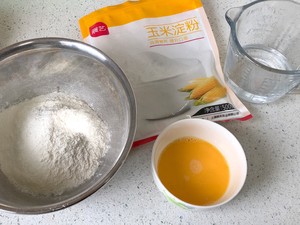 Mix the dry: stir the 180 g flour and 10 g cornstarch together in a bowl. Beat the egg with the water, then add it to the flour gradually while stirring with chopsticks — different flours drink differently, so you may not need every drop.
-
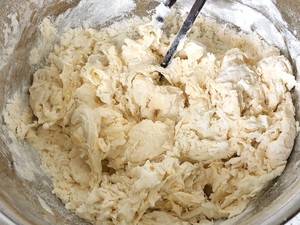 Stir until shaggy flocks form, then knead into a ball with no dry flour left. The dough will feel distinctly stiff — firmer than bread dough — and that is correct. Cover with plastic wrap and rest 15 minutes; the dough softens noticeably as it rests.
-
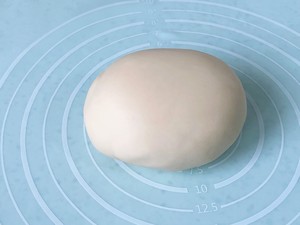 Knead the rested dough for 2–3 minutes until completely smooth, then cover and rest another 15 minutes. Knead once more, briefly. Cut a slice off the dough and look at the cross-section: no visible air holes means it is kneaded properly.
-
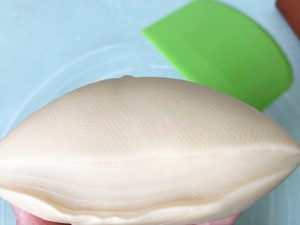 Divide the dough in half. Keep one half wrapped in plastic while you work the other — exposed dough skins over in minutes.
-
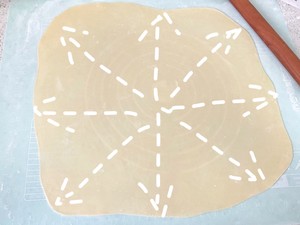 Dust the counter generously with cornstarch — more than feels reasonable — and set the dough on it. Roll from the center straight out toward each edge, in every direction like the spokes of a wheel, rotating the sheet as you go. Even, radiating pressure rolls the sheet bigger and thinner without tearing.
-
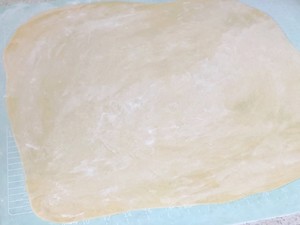 Keep rolling until the sheet is thin enough to see your hand or a line beneath it — about 1 mm. The twice-rested dough is soft and stretchy, so it rolls out easily; if it fights back and shrinks, rest it 5 more minutes.
-
 Dust the top of the sheet with a thin layer of cornstarch — both surfaces must be coated or the folds will weld together.
-
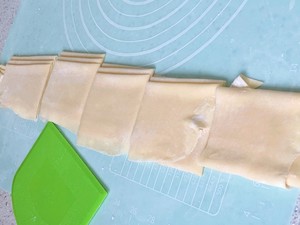
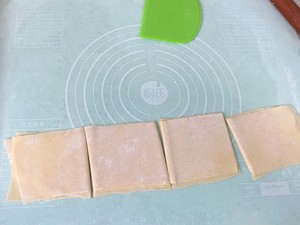 Fold the sheet in a zigzag (Z-fold) accordion style, then cut crosswise into even segments with a bench scraper or knife, keeping every cut perpendicular to the edge.
-
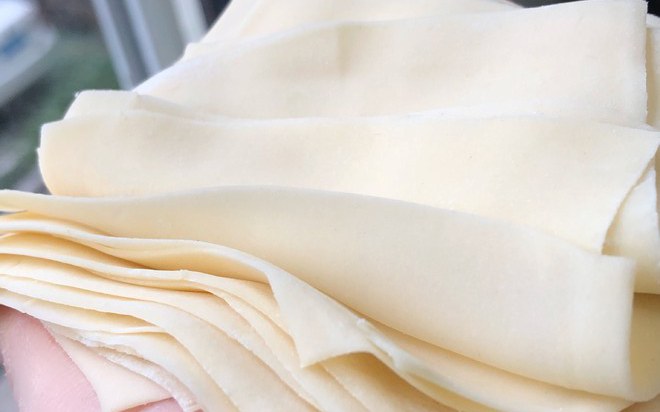
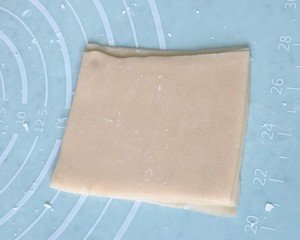 Unroll the segments into long strips and stack the strips with their ends aligned. Now cut to size: squares about 3 inches (8 cm) for large wontons, or 2½ inches (6 cm) for small wontons — about 36 large from this batch.
-
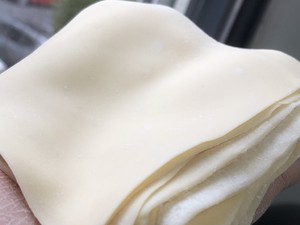 Optional, for translucent skins: stack 4–6 squares with cornstarch between the layers and roll gently over the stack with the pin. They come out dramatically bigger, thinner and see-through — small-wonton territory. Every surface must keep its starch coat.
-
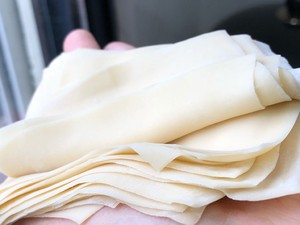 Keep the finished squares covered with plastic wrap or in a bag at all times — wonton wrappers dry out fast and cracked edges will not seal. Fill within a few hours, or refrigerate/freeze (see Storage).
Why this recipe works
Store-bought wonton wrappers are machine-extruded; this hand method gets surprisingly close with three deliberate choices.
1. A spoon of cornstarch inside the dough. Cornstarch dilutes the gluten network — the same trick bakers use to keep cakes tender. In a wrapper, that means the skin goes silky and slightly translucent instead of bready, and it stays supple after boiling. It is only 10 g against 180 g of flour, but it visibly changes the sheet's character.
2. Egg for chew, water for stretch. Egg proteins set firmly, which is what gives wonton skins their springy, almost noodle-like bite compared to plain-flour dumpling wrappers. Splitting the liquid between egg and water keeps the dough workable — all egg would make it tough and hard to roll thin.
3. Rest, knead, rest — then roll once. The two 15-minute rests do the real work: gluten relaxes, the stiff dough turns soft and stretchy, and one confident rolling session takes it to 1 mm without fighting back. The radiating, center-outward rolling pattern stretches every part of the sheet evenly, which is why it stays an even thickness instead of going paper-thin in the middle. That is wonton wrapper dough without machine rollers doing the work instead.
About the dish
Wonton skins and dumpling skins are different animals, and using one for the other is why homemade versions sometimes disappoint. Dumpling wrappers are round, thicker at the center, water-only, and made one puck at a time. Wonton wrappers are square, uniformly thin, usually contain egg (commercial ones add alkaline salt too), and are rolled as one big sheet and cut — which is exactly what this recipe does. Hand-rolled skins are also springier than store-bought, and they survive boiling without the starch-bloom cloudiness packaged skins often have.
The original author wrote this during a stretch when getting to the store was impractical — the classic reason Chinese home cooks learn to roll their own. The same dough, rolled a touch thicker and cut into strips instead of squares, makes fresh hand-cut noodles, which is why the technique is worth learning once and keeping forever.
What to serve with it
Fill these with anything from the dumplings shelf — small pork-and-prawn wontons are the classic — or use them for small steamed dumplings and light vegetable pots. Keep the trimmed edges for noodle nights: the leftover dough strips boil up into fresh noodles in two minutes, so nothing is wasted. Work with a damp cloth over the squares and dust each one with cornstarch so they never stick together. They keep two days in the fridge and a month frozen, well separated; knowing how to store wonton wrappers — dusted, air pressed out — is the line between silk and shatter, children happily take over the square-cutting if you hand them a pastry wheel.
Pro tips
- The ratio to remember: flour-plus-cornstarch to liquid (egg plus water) is 2:1 by weight. Scale the whole recipe up or down from there.
- Cornstarch is doing two jobs — a little inside the dough makes it more translucent and tender, and plenty outside keeps the sheets from welding. Do not swap the dusting cornstarch for flour; flour dusting grabs and sticks.
- Stiff dough is the goal, not a mistake. Beginners keep adding water to make the dough 'nice', and end up with dough that rolls into a rubber sheet instead of a thin wrapper. The two rests fix the stiffness instead.
- The no-air-holes cross-section test is the most honest check on your kneading: trapped air means blisters and burst wontons later.
- A stiff bench scraper makes the segment cuts clean and quick; wobble the knife and the strips come out uneven.
- If you own a pasta machine, this same dough can be rolled through it on progressively narrower settings — but the hand-rolled route here was designed for no equipment at all.
Storage & leftovers
- Refrigerate the squares in a sealed bag for up to 3 days; dust every layer with cornstarch and press the air out so they do not dry or weld.
- Freeze well-dusted squares flat in a bag for up to 1 month; thaw in the fridge and peel apart gently — still-frozen wrappers snap.
- Already-wrapped wontons freeze on a tray first, then bag; they boil straight from frozen and hold together better than refrigerated ones.
- If wrappers dry at the edges after a day in the fridge, stack 4 at a time and re-roll gently — the starch lets them take the pressure and they seal fine.
Frequently asked questions
Can I skip the cornstarch?
In the dough, yes — use all flour, and the wrappers are just a shade less translucent and tender. For the dusting, no substitute works as well; without cornstarch between layers the folded sheet will weld into one lump.
Why is my dough so hard to knead right after mixing?
It is supposed to be stiff — that is what rolls into thin, strong wrappers. Do not add water. Rest it 15 minutes and it relaxes to workable; the second rest makes it soft and stretchy.
How thin is thin enough?
You should be able to see your hand's outline through the sheet, about 1 mm. Large wonton wrappers do not need to be see-through; for small wontons or wonton-skin delicacy, use the stack-and-reroll step in the last wrapping stages.
Can I make these without eggs?
Yes — replace the 25 g egg with 25 g more water. The wrappers are slightly less chewy and a little paler, and otherwise the recipe is identical.
Why did my stacked wrappers stick together?
Not enough cornstarch between layers, or the sheet was damp on top when folded. Dust both faces generously before any folding, and shake off nothing — the excess starch is the insurance.
Can I use a stand mixer to knead?
Yes — 4–5 minutes on the dough hook from shaggy to smooth, then finish by hand for 30 seconds to feel when it is done. The rests stay the same.
What is the difference between wonton and dumpling wrappers?
Dumpling wrappers are round, thicker at the center, and water-only; wonton wrappers are square, uniformly thin, and usually contain egg (commercial versions add alkaline salt too). They are not quite interchangeable — wonton skins want that silky, springy bite.
How do I store homemade wonton wrappers?
Dust every layer with cornstarch, press the air out, and refrigerate in a sealed bag for up to 3 days, or freeze the well-dusted squares flat for up to 1 month. Thaw in the fridge and peel apart gently — still-frozen wrappers snap.