Chinese home style · Street Food & Snacks
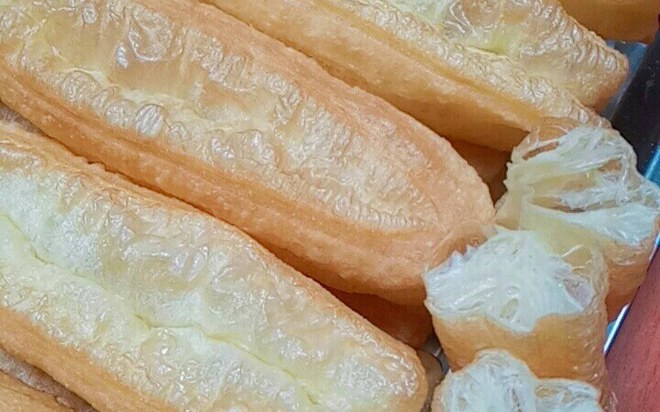
Big Fluffy Youtiao (大油条)
A breakfast-shop formula for maximum puff: an extra-soft dough, fold-rest rounds and an overnight chill fry into huge, airy youtiao — no thermometer needed.
Instructions
-
 Stir the baking powder, baking soda and leavening premix into the flour. In another bowl, beat the egg with the salt and the warm water.
-
 Pour the egg mixture into the flour and stir to a shaggy, flourless mass, then work in the oil. The dough should end up distinctly softer than dumpling dough — soft enough that it barely holds its shape.
-
 Press-fold, do not knead, for 5 minutes: sink your fist into the dough, fold it over, and repeat. Rest 20 minutes covered, then press-fold another 10 minutes. The breakfast-shop routine is three folds and two rests; two rounds is the workable home shortcut.
-
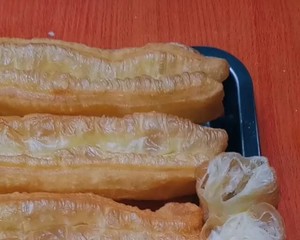 Wrap the dough tightly and refrigerate 6–8 hours — overnight like the shops do, and never the freezer.
-
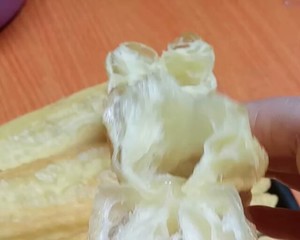 In the morning, let the dough temper before frying: about 10 minutes in hot weather, up to 30 minutes in a cold kitchen. Cold dough snaps when stretched; tempered dough stretches with life.
-
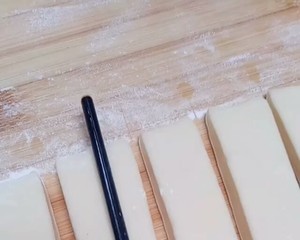
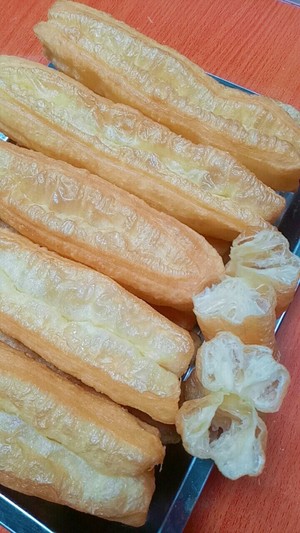 Without kneading, stretch and roll the dough into a strip about chopstick-thick — roughly 1 cm (⅜ in) — and cut crosswise into strips two fingers wide (4 cm). Thinner strips mean less puff.
-
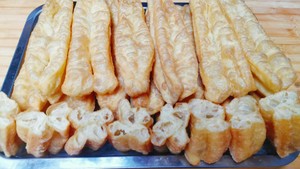 Dab a line of water down the center of every other strip, stack the pairs, and press the middle with a chopstick. If your pot is small, cut each welded pair in half crosswise.
-
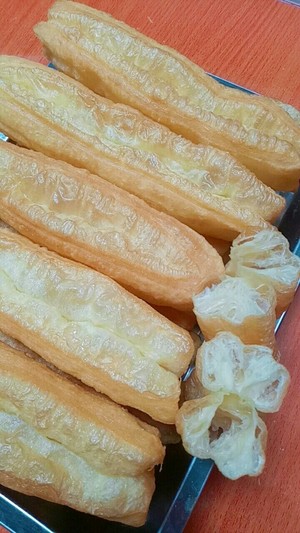 No thermometer? Fry a walnut-sized scrap of dough: it should float quickly and stay pale. If it browns fast, the oil is too hot; if it loiters on the bottom, too cool. With a thermometer, aim for 180–190°C/355–375°F.
-
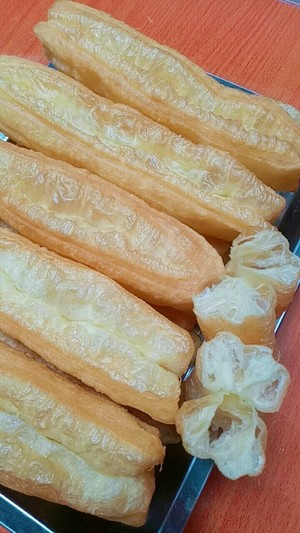 Stretch each blank gently from both ends — do not pinch the ends tight — lower it into the oil, and keep it turning constantly with chopsticks. Constant motion is what makes it puff big. Fry until inflated and gold, 2–3 minutes, then drain on a rack.
Why this recipe works
This formula came from a breakfast-shop owner and keeps the two habits that make the professionals' sticks so much bigger than everyone else's.
1. The softness rule. The dough is wetter and softer than any noodle or dumpling dough you make — soft enough to sag. That matters because a fried stick can only inflate as far as its gluten can stretch: a stiff dough fights the expansion, snaps when you pull the blank, and sets into a shell around a dense middle. Soft dough stretches willingly, traps the gas, and balloons.
2. Fold-rest cycles, not kneading. Pressing the dough with your fist and folding it over distributes the leavening evenly without tightening the gluten the way palm-kneading would. The author's shop routine is three folds and two rests; two rounds is enough at home, but do not skip both — unevenly distributed leavening is exactly what produces lopsided puff with one big hole and one dead side.
3. The scrap test. Instead of trusting a dial, you fry a walnut-sized scrap and read it: floats fast and browns fast means too hot; loiters on the bottom means too cool; floats quickly and stays pale means go. It turns oil temperature from guesswork into a 20-second diagnosis. Nailing that youtiao oil temperature window is what separates puffed hollow sticks from dense ones.
About the dish
This is the home translation of a stall formula. The author picked it up from a breakfast-shop owner's short-video lesson, adjusted the water for ordinary supermarket flour, and tested it across several batches — including one fried entirely without the commercial leavening premix, which still puffed. That pedigree shows in the details: the explicit warning that the dough must be softer than dumpling dough, the instruction to leave the ends unpinched, the note that the fridge — never the freezer — is where the dough spends the night.
Big-fluffy youtiao (大油条) is a style rather than a separate dish: the same breakfast stick, fried larger and softer, the kind meant to be torn in half and dunked. At home it has one extra advantage over the stall — you fry in oil you chose yourself, and you can taste the difference.
What to serve with it
Tear them while steaming and dunk into sweet or savory soy milk, or lay them over congee. Split and lightly re-fried, they make the base for a street-style breakfast wrap with egg, and day-old sticks, sliced and crisped in a dry pan, top a bowl of rice nicely. Our street food page collects more stall classics, and a bowl from our soups page rounds out the morning. That is why youtiao with soy milk endures as the breakfast shop pairing — dip a fresh stick and eat it before the crackle fades.
Pro tips
- Pinch the ends lightly or not at all: squeezed-shut ends cannot expand, and you get flat little nubs on both tips.
- Softer than dumpling dough is the rule — soft is safe, stiff is fatal. A stiff dough snaps when stretched and fries into dense, hard sticks.
- Flour brands drink differently, so add the water in stages and stop when the dough is just soft enough to sag under its own weight.
- The leavening premix is skippable: the author tested a batch without it when none was available, and with just baking powder and soda the sticks still puffed well.
- Fry to your taste — pale gold stays pillow-soft, deep gold turns crisper and holds longer. Slightly darker is the better choice if there will be leftovers.
- Fry 2 sticks at a time in a home pot; overcrowding drops the temperature and every stick suffers.
Storage & leftovers
- Eat within 2 hours for full crispness; hold extras on a wire rack in a 100°C/200°F oven up to 30 minutes.
- Refrigerate leftovers in a paper bag up to 2 days; re-crisp in an air fryer or 180°C/350°F oven for 3–5 minutes.
- Fried youtiao freeze well for up to 1 month in a freezer bag — reheat from frozen in the air fryer, 6–8 minutes, without thawing.
Frequently asked questions
Can I leave out the youtiao leavening premix?
Yes. The author fried a batch without it when she could not buy any — still fluffy. Use the baking powder and baking soda as written and expect slightly less dramatic rise.
How soft should the dough actually be?
Noticeably softer than dumpling dough: it should slump and spread rather than sit in a firm ball. Stiff dough is the number one cause of sticks that snap when stretched and never puff.
Why did my youtiao turn hard and stiff after cooling?
Usually undercooked centers or oil that was too hot — the crust set before the crumb finished expanding and steaming. Fry at 180–190°C/355–375°F until evenly gold, and re-crisp leftovers in the oven rather than the microwave.
Why fold, rest, and fold again?
Each cycle distributes the leavening more evenly and relaxes the gluten a little more. Even distribution is what makes the holes even: unevenly mixed leavening puffs lopsided.
Can I add sugar?
Yes — about 2 tsp (8 g) works, and it deepens the color. Watch the fry, because sugared dough browns sooner than the plain version.
Can I make this same-day instead of overnight?
A 4-hour room-temperature rest is the fallback, but the overnight chill hydrates and relaxes the dough far better. Plan it as a night-before recipe and the morning takes 15 minutes.
What is the right oil temperature for youtiao?
180–190°C (355–375°F) is the window: hot enough for instant puff, cool enough to cook the crumb through. No thermometer? Fry a walnut-sized scrap — it should float quickly and stay pale. Browning fast means too hot; loitering on the bottom means too cool.
Why is youtiao eaten with soy milk?
The pairing is the classic Chinese breakfast: hot soy milk, sweet or savory, softens the crisp shell just enough, and the puffy sticks act like straws. Dip rather than soak if you want to keep some crackle.