Chinese home style · Street Food & Snacks
Five-Spice Tea Eggs (五香茶叶蛋)
Tea eggs built around one insight: cook the whites only until just set, crack them warm, and overnight the five-spice braise seasons them all the way to the yolk.
Instructions
-
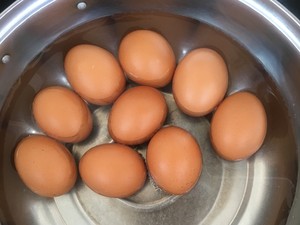
 Cook the eggs gently: place them in a pot of cold water, bring to a boil over high heat, then turn the heat off, cover, and let sit for 5–8 minutes. The whites set slowly and stay tender instead of turning rubbery — and tender whites absorb the marinade far faster.
-
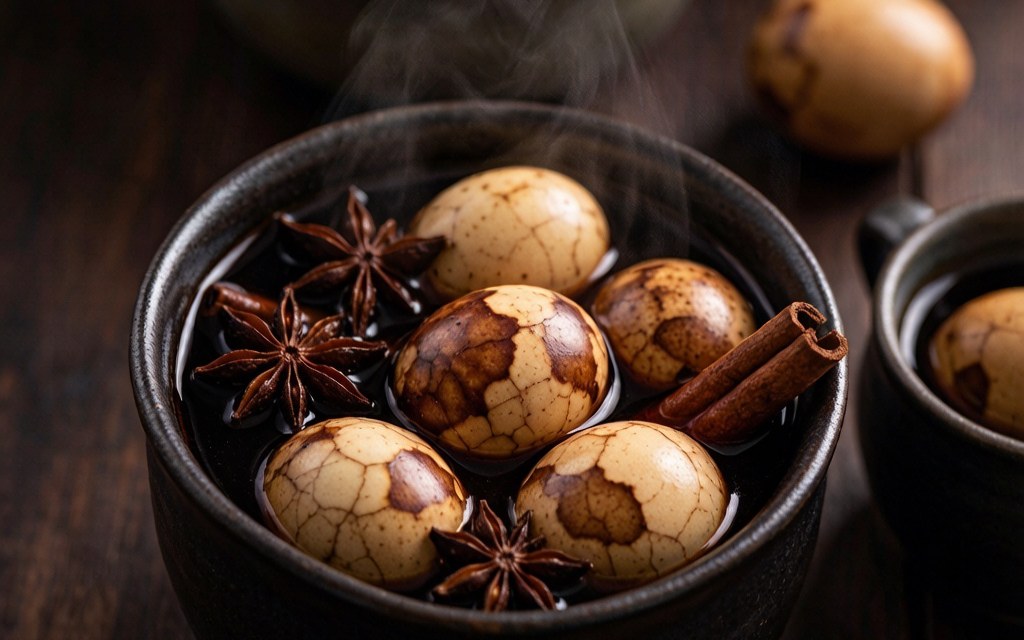
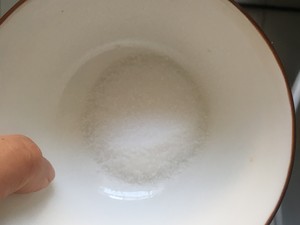
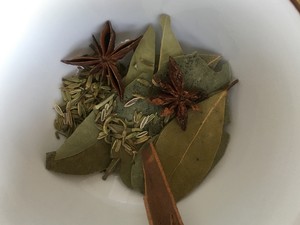
 Meanwhile make the braise: combine the salt, sugar, light and dark soy sauce, star anise, cinnamon, bay leaves, fennel seeds and tea in a pot with 4¼ cups (1 L) water.
-
 Bring the braise to a boil, then simmer on low for 5 minutes to wake up the spices. Cover and set aside.
-
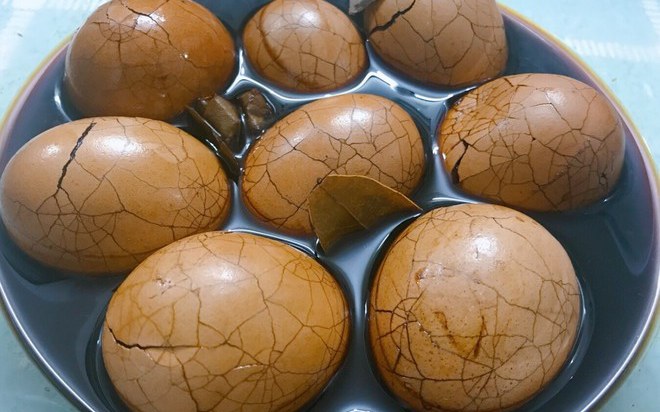
 Lift the eggs out and tap them all over with a small spoon while still warm — evenly, gently, until the shell is crazed everywhere. The whites are barely set right now, so don't press hard enough to dent them.
-
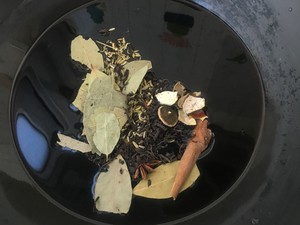 Lower the cracked eggs into the hot braise. Bring back to a boil, then cover, turn to the lowest heat, and poach for 5 minutes — just enough to finish cooking without tightening the whites.
-
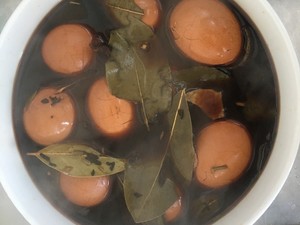
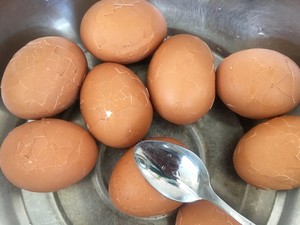 Turn off the heat and leave the eggs in the liquid. Soak at least 8 hours and up to 15 — one night does it. The salt travels through the cracks and seasons all the way to the yolk.
-
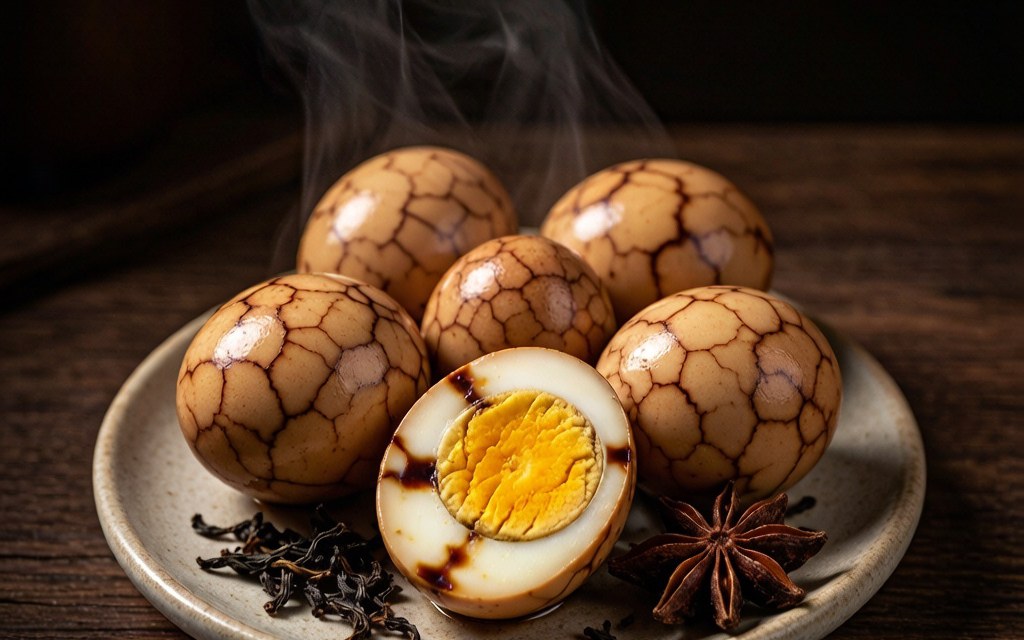
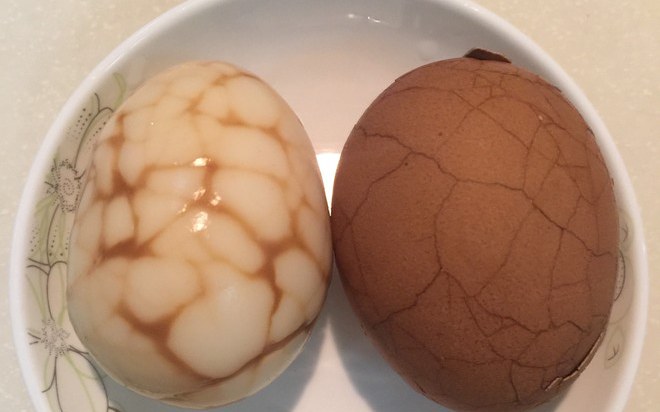
 Peel: the whites come out marbled brown and white, tender and seasoned edge to edge. Serve cold or reheated gently in the liquid.
Why this recipe works
Most tea egg recipes fail quietly: pretty pattern, bland center. This one is organized around fixing exactly that.
1. Cook the whites gently, on purpose. Egg white begins to set around 140°F (60°C), and the slower it sets, the more tender it stays. Boil an egg hard and the white tightens into a rubbery block that resists flavor; bring it just to a boil and let residual heat finish the job, and the white stays open, delicate and hungry for marinade. The author of the original method figured out that this single change is why her eggs taste seasoned to the yolk after one night while others take three.
2. Crack them warm. A warm shell crazes easily and cleanly under a spoon, and the membrane beneath is looser — you get even spiderweb cracks without gouging the soft white underneath. Cold eggs crack in fewer, harder lines.
3. A braise salted for the barrier. The shell is still between spice and egg, so the liquid is deliberately seasoned slightly past comfortable tasting. Across a night of soaking, that surplus salt and spice is exactly what survives the journey to the center. It also settles the how-long-to-steep-tea-eggs question: the marbled pattern arrives within hours, but a full overnight soak is what carries seasoning all the way to the yolk.
About the dish
Wǔxiāng — "five fragrance" — is the classical Chinese spice idea: a balanced handful of warm aromatics, traditionally star anise, cinnamon, clove, fennel and Sichuan pepper. Home versions flex with what's in the tin; this one uses star anise, cinnamon, bay and fennel seeds, with the tea supplying the fifth dimension of flavor.
The distinctive move here is the tender-egg method. Where many recipes boil the eggs hard, then crack and soak for days, this one cooks them barely, cracks them while the whites are still silky, and needs only one night of soaking — because a tender white drinks in the braise. The reward is a tea egg whose white is marbled and soft, with a yolk that tastes of star anise all the way through.
What to serve with it
Halve one over a bowl of morning congee, or tuck a whole peeled egg into a lunchbox straight from the fridge. They make a quiet, savory counterpoint to bolder street-food snacks, and a leftover or two dropped into a noodle soup never hurt anyone. Keep them submerged in the braise in the fridge — every extra night deepens the color and the spice, and by day three the marbling looks hand-painted. Stored shell-on and submerged they keep about four days, which makes them the ultimate make-ahead breakfast — grab, peel, eat.
Pro tips
- The whole recipe hangs on one fact: egg white starts setting around 140°F (60°C), and whites that set slowly stay tender. A hard-cooked, rubbery white is a flavor wall — marinade crawls through it for days.
- Crack while warm, not cold. Warm shells craze more readily and the membrane underneath is looser.
- Fennel seeds are the spice most people skip — they add the warm, faintly sweet lift that separates this from soy-only braised eggs.
- Weigh the salt the first time: 15 g sounds like a lot until you remember it's seasoning a full liter of water with shells acting as a barrier.
- Keep the used braise: strain, boil 2 minutes, cool, and freeze. It's the start of your next batch, and it also braises tofu or mushrooms beautifully.
Storage & leftovers
- Refrigerate the eggs in their braise, covered, up to 4 days.
- Re-warm by bringing them, in liquid, to a bare simmer for 2 minutes, or microwave a peeled egg for 15 seconds.
- The strained braise freezes well for 2 months and can start your next batch.
Frequently asked questions
How spicy are five-spice tea eggs?
Not spicy — warm and savory. Star anise, cinnamon, bay and fennel are aromatic spices with no heat at all.
Why boil, turn off, and rest the eggs instead of a normal hard boil?
Two reasons: whites that set slowly stay tender and silky, and a barely-set white soaks up marinade dramatically faster than a fully rubberized one. That's the difference between flavor reaching the yolk overnight and flavor stopping at the surface.
What tea should I use?
Black tea or pu'er — something dark and malty. Green, jasmine or white teas turn bitter and strange over a long simmer; the original author is emphatic about this.
Do I have to soak the full 15 hours?
8 hours gets you well-seasoned whites; 15 hours seasons to the yolk. Past about 24 hours they start getting salty — pull them out or dilute the liquid.
Can I swap the spices?
Keep the star anise and cinnamon as the backbone; bay and fennel can flex. A 1-inch piece of dried tangerine peel is a lovely traditional addition if you have it.
How long do tea eggs keep in the fridge?
About four days, shell on and fully submerged in the braise so they neither dry out nor over-salt. The strained braise itself freezes for two months and can start your next batch.
How do I get a finer marbled tea egg pattern?
Tap the warm shell all over with the back of a spoon so it crazes into small, even cracks — fine cracks let the braise seep through in a dense spiderweb, while a few hard knocks give only broad streaks.