Chinese home style · Street Food & Snacks
Chinese Tea Eggs (茶叶蛋)
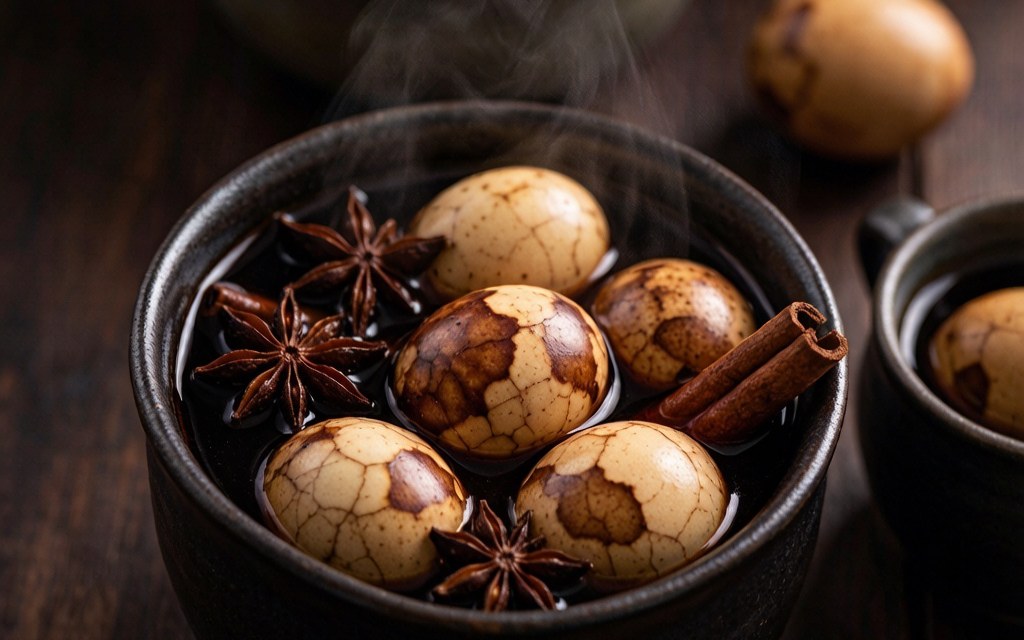
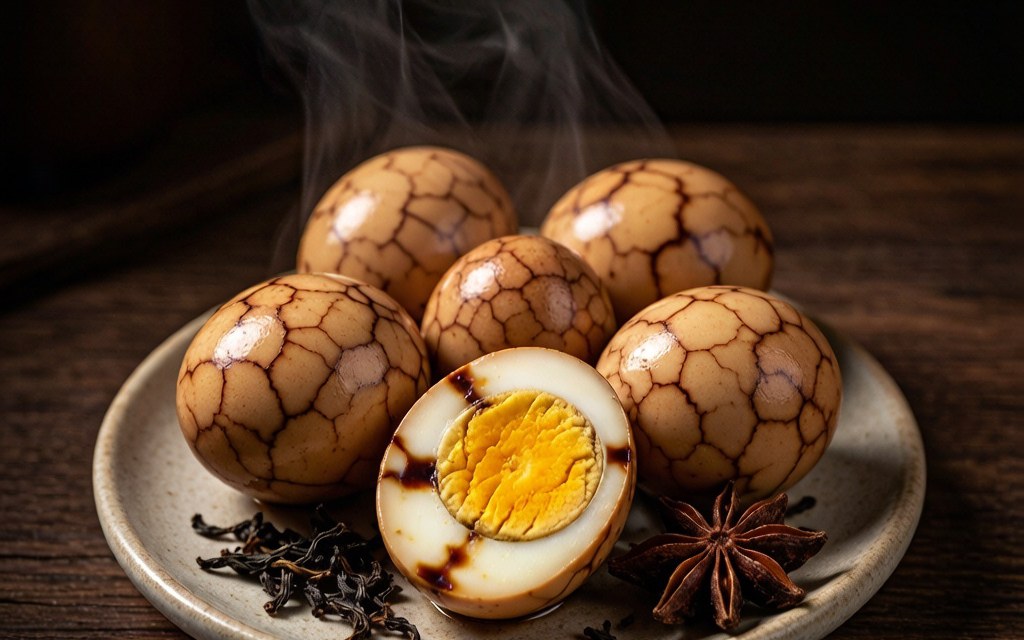
Marbled tea eggs simmered in black tea, soy and warm spices until the pattern sinks all the way in — plus a soft-yolk marinated version for the leftover brine.
Instructions
-
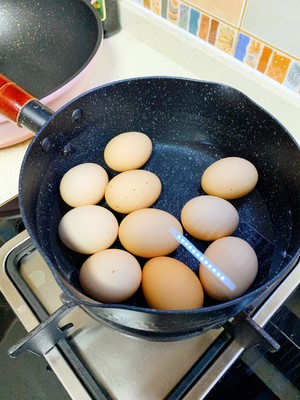 Boil the eggs: place them in a pot, cover with cold water, add 1 tsp salt, and bring to a boil. Boil for 8 minutes, then lift the eggs into cold water to cool for 5 minutes. The salt in the water helps the shells release cleanly.
-
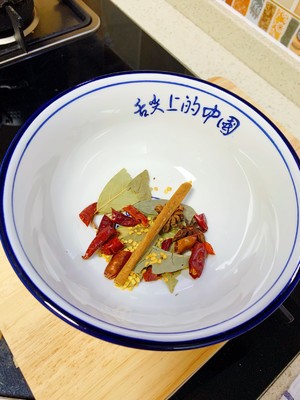 Build the marinade: in a pot, combine the star anise, cinnamon, bay leaves, snipped chilies, rock sugar, 2½ tsp salt, both soy sauces, the tea and 2½ cups (600 ml) water.
-
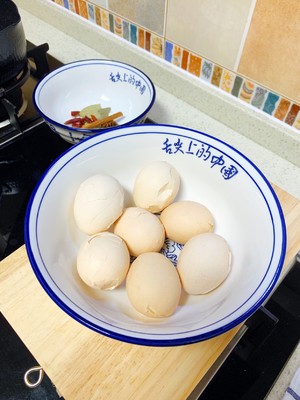 Crack the cooled eggs all over by tapping and rolling them with the back of a teaspoon — you want fine, even spiderweb cracks, not smashed patches. The cracks are how the marinade draws the pattern in.
-
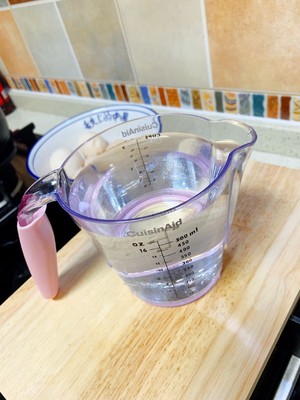 Add the eggs to the marinade, bring it to a boil, then turn off the heat.
-
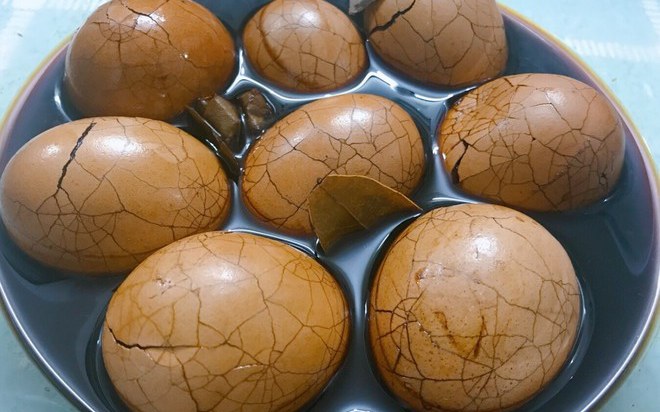
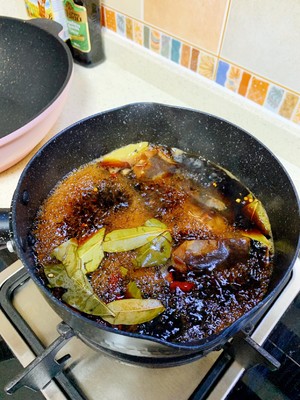 Slow-braise: transfer everything to a small slow cooker and cook on low overnight (8–10 hours), then hold on warm until morning. No slow cooker? Simmer covered on the stove's lowest heat for 40 minutes instead.
-
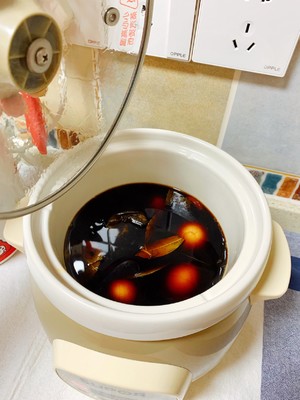 Soak: for the deepest flavor and marbling, leave the eggs in the liquid, refrigerated, overnight and up to 24 hours. They keep improving as they sit.
-
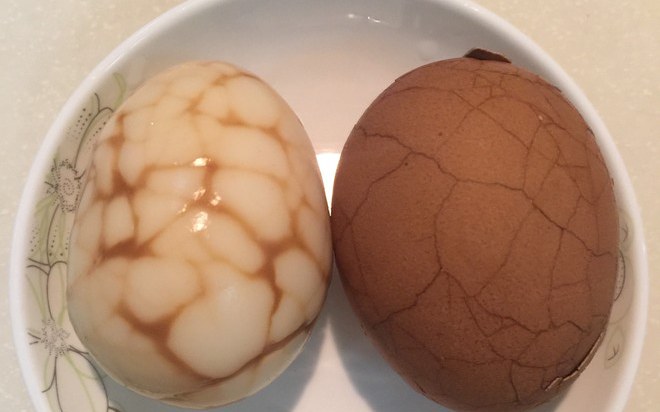
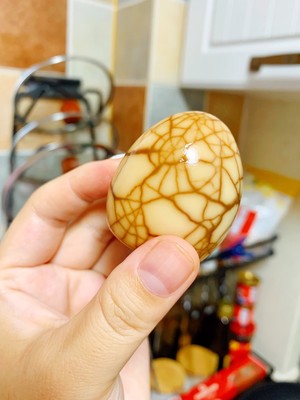 Peel and serve warm or at room temperature — the whites should be tea-brown with dark marbling all the way through.
-
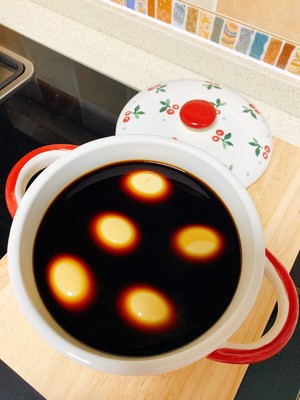 Soft-yolk variation: bring a pot of water with a pinch of salt to a boil, lower to a bare simmer, lower in fresh eggs and cook exactly 6 minutes. Chill in ice water, peel gently, and soak the peeled eggs in the leftover chilled braising liquid overnight in the fridge — the whites pick up the tea flavor while the yolks stay molten.
Why this recipe works
Tea eggs look effortless because most of the work is time — but three details decide whether you get marble or murk.
1. Salted boiling water. A little salt in the initial boil does something subtle: it helps the membrane between shell and white contract differently from the egg, creating a gap that makes peeling clean. It also guards against cracks leaking white into the water before you want them.
2. Crack-then-soak, not crack-then-boil-hard. The spiderweb of fine cracks is a door for the marinade; smashing the shell is not. Fine, even crazing lets flavor and color travel in while the shell keeps its shape — and the pattern it prints on the white is the signature of the dish.
3. Low heat and long time. A short, hard boil flavors only the outer white. Hours of gentle heat — slow cooker or the stove's lowest flame — plus an overnight soak in the liquid lets the salt and tea travel all the way to the yolk. This is a recipe where patience is the actual technique — and why slow cooker tea eggs are the set-and-forget version of it.
About the dish
Tea eggs are China's default snack: sold at train stations, street carts, convenience stores and grandmothers' kitchens alike, kept warm in dark broth where they grow more flavorful by the hour. Recipes for tea-scented eggs have been written down in Chinese cookbooks for centuries, and the logic never changed — eggs are cheap, the shell is a natural wrapper, and a spiced braise turns them into something you'd happily pay for.
Every region and every family holds its own ratio of tea to soy to sugar; this version leans on black tea and rock sugar with a whisper of dried chili, closer to the braises of central China. The soft-yolk variation at the end — peeled eggs soaked in the chilled brine — is the home cook's bonus round: same flavor, molten center.
What to serve with it
One tea egg with a bowl of hot congee is the classic Chinese breakfast; two of them travel in a bag as the original convenience-store snack, and that is still the best way to eat them — at room temperature, straight from the brine. They also drop beautifully into a bowl of noodle soup at the last minute — halve a soft boiled marinated egg over ramen-style noodles the same way — or sit next to anything from the street-food chapter as the quiet, marbled supporting act. For kids, shorten the brine time so the flavor stays mild. Peeled eggs keep about four days refrigerated in their liquid, and the flavor deepens by the day.
Pro tips
- Salt in the boiling water isn't there for flavor — it helps the shell membrane pull away from the white, so peeling is easier and the egg doesn't gouge.
- Crack fine and even. A few big smashed spots look like bruises; a fine spiderweb looks like marble. Tap gently, rotate, tap again.
- Whole dried chilies contribute nothing — the spice only transfers if you snip them. Snipped gives a faint warmth; omit them entirely for zero heat.
- Taste the braising liquid before the eggs go in: it should taste slightly too salty on its own, because an intact shell is a barrier the salt has to cross.
- The braising liquid is reusable once: boil it, strain it, refrigerate or freeze it, and refresh the next batch with 1 tsp salt and 1 Tbsp light soy.
Storage & leftovers
- Store the eggs in their braising liquid in a covered container in the fridge for up to 4 days — they keep getting more flavorful.
- To serve warm, slip the eggs (in liquid) into a small pot and warm gently for 3–4 minutes, or microwave a peeled egg for 15 seconds.
- Freezing is not recommended — the whites turn rubbery and weep when thawed.
Frequently asked questions
How spicy are these tea eggs?
Barely. With the chilies snipped you get a faint warm hum rather than heat; left whole they do nothing; omitted entirely this is a classic mild profile suitable for kids.
Can I use green tea instead of black?
Don't. Green tea turns bitter and astringent over a long simmer and gives the eggs a grassy smell. Black tea — bags, loose leaf, or pu'er — is what gives the classic smoky note and brown color.
Do I need a slow cooker?
No. The slow cooker just makes the overnight part effortless and gentle. A 40-minute covered simmer on the stove's lowest setting, followed by an overnight soak in the liquid, reaches the same place.
How long should they soak?
Minimum 4 hours for real flavor, overnight for the full marbled look and salt penetration to the yolk, and no more than about 48 hours before they turn noticeably salty.
Why didn't my eggs take on the pattern?
Either the cracks were too few or too shallow, or the eggs didn't sit in the liquid long enough. Crack until the shell looks uniformly crazed, then give them at least overnight.
Can I make the soft-yolk version with the same liquid?
That's exactly what the leftover braise is for. Chill it, peel your 6-minute eggs, and soak them overnight in the fridge. Don't put warm eggs into warm liquid again or they overcook.
My eggs cracked while boiling and whites leaked out. Still usable?
Yes — a leaked white just bulges into a small knob and the egg still braises fine, though the marbling may print less evenly. Start the eggs in cold water rather than a rolling boil, and keep the salt in the boiling water, which helps prevent exactly this.