Chinese home style · Street Food & Snacks
Easy 40-Minute Tea Eggs (懒人茶叶蛋)
A lazy one-pot version of Chinese tea eggs: boil, crack, simmer 20 minutes, soak overnight — pantry spices and tea bags, 40 minutes of easy work.
Instructions
-
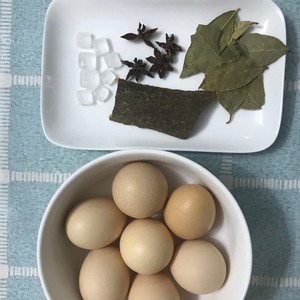 Wipe the eggs clean with a damp cloth — they go into the pot shell-on and the shell is the wrapper, so this matters.
-
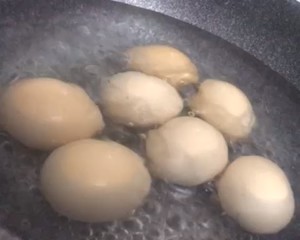 Bring a pot of water to a rolling boil, lower the eggs in gently, and boil for 6–7 minutes. Drain and run under cold water until cool enough to handle.
-
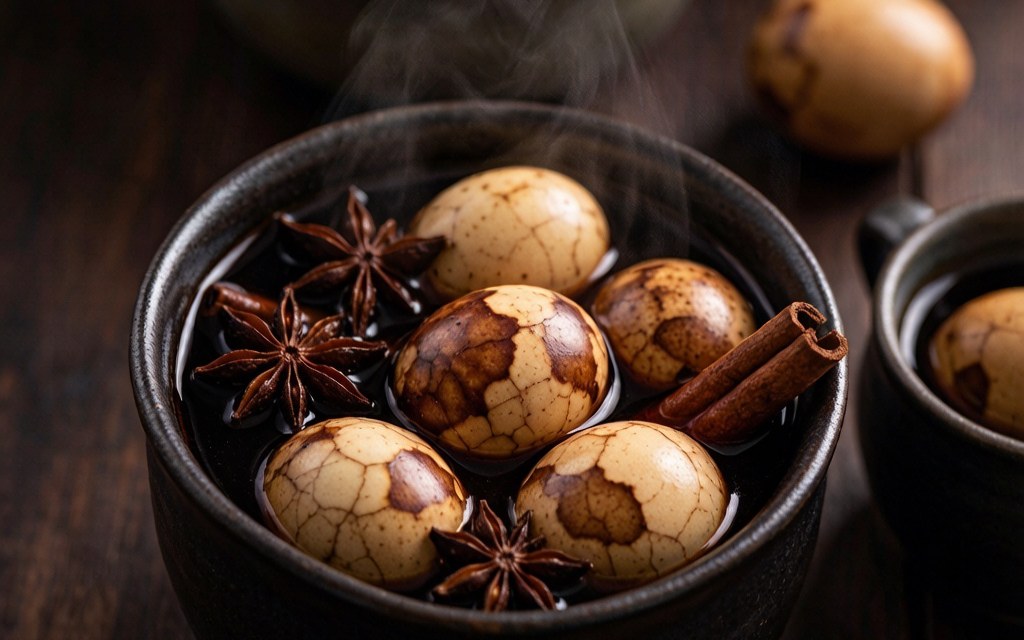
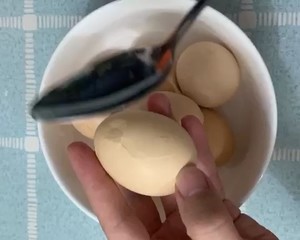 Crack each egg all over with the back of a metal spoon, rotating as you go — you want an even spiderweb of crazing, shell intact but thoroughly dented.
-
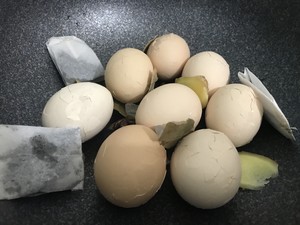 Return the eggs to the pot and add the tea bags, star anise, cinnamon, bay leaves, rock sugar, salt, both soy sauces, bouillon and five-spice powder.
-
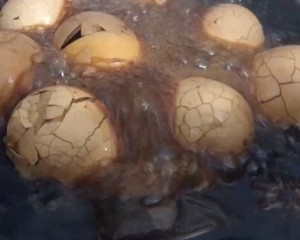 Pour in fresh water to cover everything by about 1 inch (2.5 cm).
-
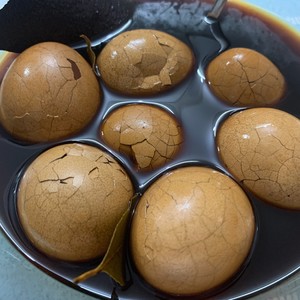 Bring to a boil over high heat, then turn to medium-low and simmer, covered, for 20 minutes — about 30 minutes of total cooking including the initial egg boil.
-
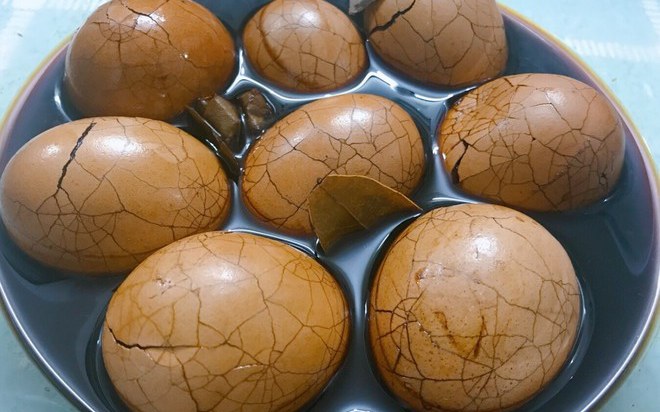
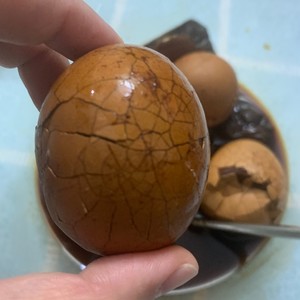 Turn off the heat and transfer everything, eggs and liquid together, to a container. Soak at least 8 hours, overnight if you can, so the flavor reaches the yolks.
-
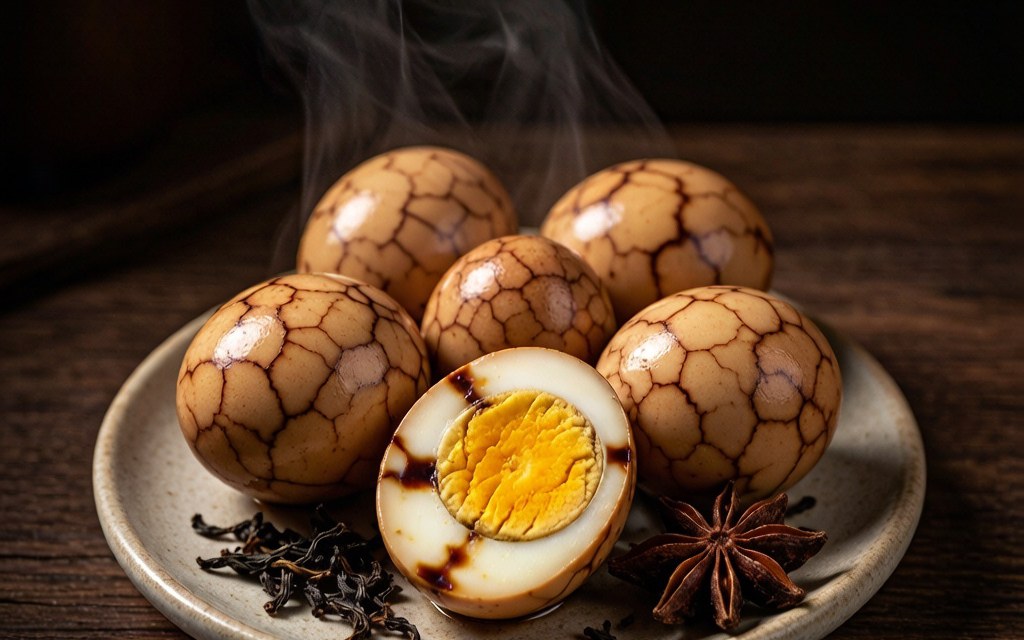
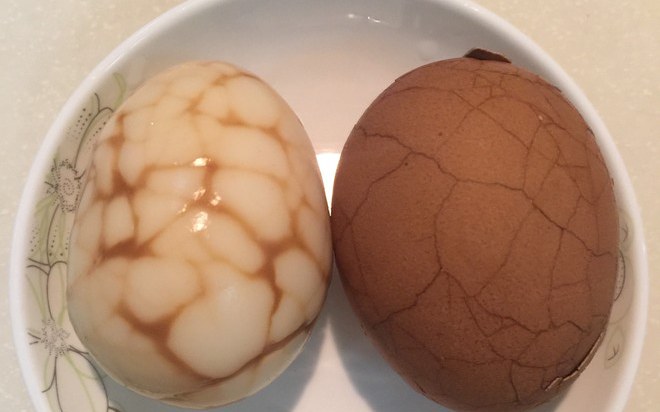
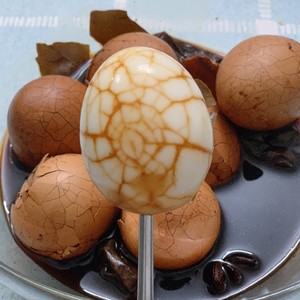 Peel and serve. The whites should show a brown spiderweb pattern, darkest along the cracks.
Why this recipe works
This is the stripped-down route to the same marbled eggs — three simplifications, none of which cost flavor.
1. One pot, two phases. The eggs boil briefly for structure, then the whole pot simmers as the braise comes up to temperature and the spices bloom. Everything happens in one vessel, so cleanup is one pot and the eggs never leave the liquid they're seasoning in.
2. Five-spice powder instead of a spice drawer. Whole-star-anise-and-cinnamon purists weigh out eight ingredients; this version gets its warmth from a teaspoon of five-spice powder backed up by a few whole spices for the liquid. It's the home-cook shortcut, and in a 20-minute simmer the difference is small.
3. The soak is the recipe. Cracking the shells turns them into a sieve, and the overnight sit is when the salt, soy and tea actually travel inside. The 40 minutes of heat work just sets the stage — the fridge does the real cooking while you sleep. How to make tea eggs marbled, in one line: crack finer, soak longer.
About the dish
Tea eggs are the snack you buy without thinking in China: a pot of dark broth by the convenience-store register, eggs going in pale and coming out marbled. The original author of this version started making them for exactly that reason — too impatient for the line at the store, and with one egg too many in the fridge.
The lazy approach doesn't pretend to be refined. It swaps precise spice weighing for five-spice powder, uses whatever black tea bags are in the cupboard, and counts on an overnight soak instead of technique. That's genuinely how most home batches happen, and the result — a chewy-edged, tea-scented egg that tastes like the store version at a fraction of the cost — is the point.
What to serve with it
A peeled tea egg beside a bowl of morning congee is the classic pairing; halved over a bowl of noodles, it turns a plain lunch into something deliberate. They are also the backpack snack of Chinese train journeys — make a double batch and store them in the broth, where they keep improving for three days — same-day tea eggs are good, day-three eggs are better. If you're building a snack board, they sit happily next to anything from the street-food chapter.
Pro tips
- The spoon-back cracking trick: hit the egg with the rounded back of a spoon, never the edge — you get dents and crazing without punching through the shell.
- Short on time? Peel the eggs before soaking. Without the shell in the way, even a 2-hour soak flavors them well — they just won't have the marbled look.
- Don't stretch the simmer past about 30 minutes total; the whites tighten and turn rubbery, and the deep flavor comes from the soak, not the boil.
- Keep the eggs in a single layer if your pot allows, so every crack stays submerged in the braise.
- Strain and boil the leftover liquid, then use it once more within 3 days for a second batch, topping up with 1 Tbsp light soy.
Storage & leftovers
- Refrigerate the eggs in their liquid, covered, for 3–4 days; they grow saltier as they sit.
- Reheat by covering a peeled or whole egg with boiling water in a cup for 10 minutes — no stove, no rubbery whites.
- Freezing is not recommended: the whites turn rubbery and release water when thawed.
Frequently asked questions
How spicy are easy tea eggs?
Not spicy at all — five-spice powder is warm and aromatic, not hot. This is a snack for everyone, kids included.
Can I skip the overnight soak?
You can eat them straight after the simmer, but the flavor will stop at the outer white. Even 4 hours of soaking doubles the depth; overnight is the real deal.
Do the tea bags need to be fancy?
No — the original uses ordinary supermarket black tea bags. Any black tea works; green tea turns bitter over a long simmer and is best avoided.
Why are my eggs rubbery?
They were boiled too long or reheated hard. Boil 6–7 minutes for the first cook, simmer no more than 20, and re-warm gently.
How is this different from classic tea eggs?
Same dish, trimmed for effort: no weighing, no separate spice bowl — pantry five-spice powder does the work — and one pot from start to finish.
How long do tea eggs keep?
3–4 days refrigerated right in their braising liquid — the marbling keeps deepening and they grow saltier as they sit. Re-warm in a cup of boiling water instead of the microwave, and skip freezing, which turns the whites rubbery.
How do I get deeper marbling?
Crack more, crack finer: an even spiderweb of crazing every few millimeters, shell still on the egg, then the overnight soak. Pale, patchy lines mean too few cracks or too short a soak.