Cantonese · Sweets & Drinks
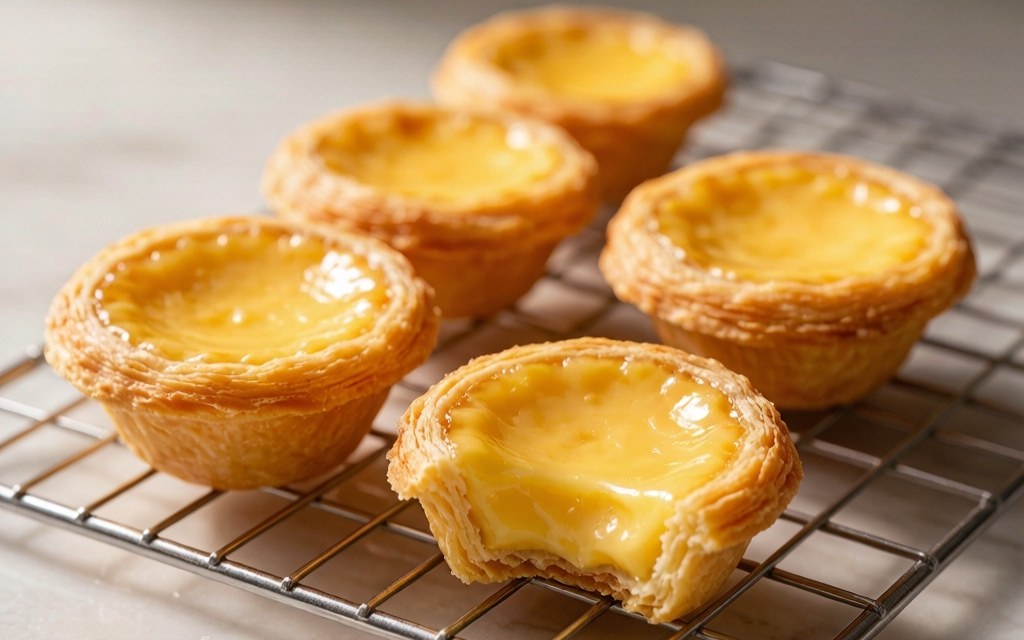
Hong Kong-Style Egg Tarts with Silky Custard (港式蛋挞)
Cha chaan teng-style egg tarts with glass-smooth custard: the no-bubble straining method, how to choose and rescue frozen tart shells, and exact bake cues.
Instructions
-
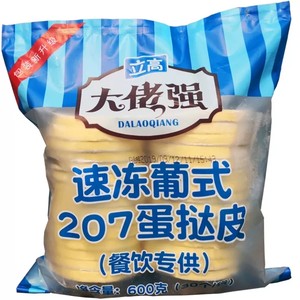 Pick your shells: buy frozen, self-standing tart shells about 2¾ inches (7 cm) across — the flaky layered kind sold in the freezer case of Chinese grocers. If they arrived squashed, unwrap them, let them soften 3 minutes at room temperature, and reshape by hand, nesting each against an intact shell as a mold. No need to thaw before filling.
-
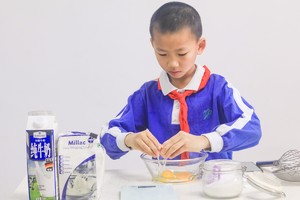 Whisk the egg, yolks and sugar in a bowl just until the sugar dissolves — stir, don't whip. You are not looking for foam, and foam becomes bubbles in the baked custard. This sugar level is what builds the caramel freckles on top, so cut it only if you accept a paler tart.
-
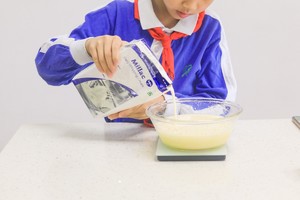 Whisk in the milk, then the heavy cream and condensed milk, until the mixture is even and no egg strings remain.
-
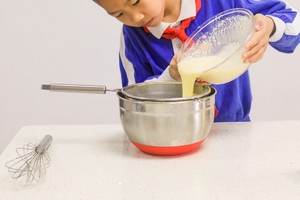 Add the cake flour and whisk until no dry lumps show. This small dose of flour is what sets the custard gently — the same idea as finishing a Chinese sauce with a thin starch slurry.
-
 Preheat the oven to 400°F (200°C), top and bottom heat, for at least 10 minutes with a rack in the middle position. Put an oven thermometer in there too — home ovens routinely run far off their dial, and this recipe lives and dies by temperature.
-
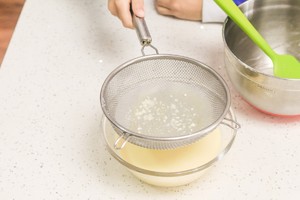
 Strain the custard through a fine-mesh sieve into a jug, pressing any flour lumps through with a spatula. Strain a second time, then a third — the third pass should leave almost nothing behind. Hold the bowl low above the sieve so the falling stream does not whip in air.
-
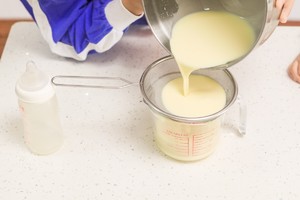
 Let the strained custard sit 20 minutes; any surface bubbles pop on their own. If the surface is already mirror-flat, fill right away. Finished custard should look like still water — that mirror is the sign of a silky tart.
-
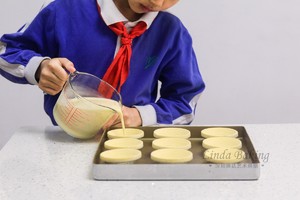
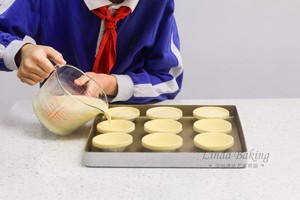
 Arrange the frozen shells on a baking tray (no thawing needed) and fill each 80% full — the custard expands in the oven, and fuller shells will overflow.
-
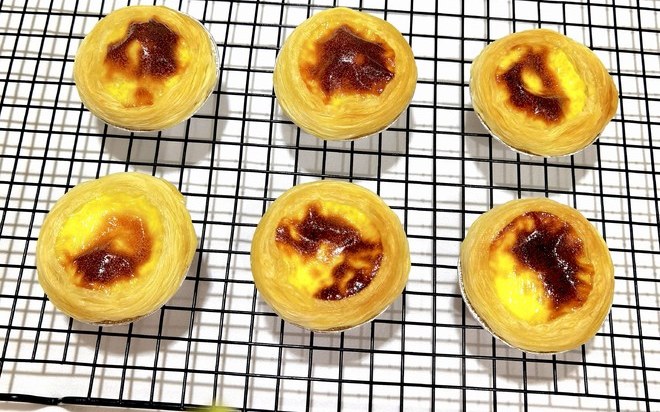
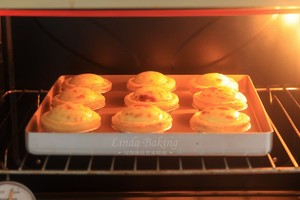
 Bake on the middle rack at 400°F (200°C) for 15 minutes, until the custard is set with a faint wobble in the center and a few small caramel-brown freckles have appeared. If no freckles show at 15 minutes, give them 2–3 more minutes while watching closely — they go from freckled to burnt fast.
-
 Serve hot. The centers sink slightly as they cool — that is simple thermal contraction, not a failure. Egg tarts are at their best within the first hour.
Why this recipe works
The whole recipe is an exercise in removing things: air, lumps, guesswork. What is left is the silkiest custard a home oven can make.
1. Three strains, zero bubbles. Bubbles in baked custard come from air beaten into the eggs and from stray solids that seed bigger holes. Straining three times — pressing the flour lumps through with a spatula each round — leaves the liquid glassy, and pouring from low keeps new air out. The 20-minute rest lets any survivor bubbles rise and pop before the bake.
2. A spoon of flour for a gentle set. Egg alone, baked hot, curdles into holes and weeps; the 15 g of cake flour works the way a thin starch slurry works in a finishing sauce, setting the custard softly and evenly at a temperature where it stays silky.
3. Hot and fast, with a thermometer. Egg tarts are the opposite of cakes: they want 400°F (200°C) and about 15 minutes, so the custard sets before it boils and puffs. Home ovens drift badly — the source baker found two identical ovens needing 15 minutes' difference — so an oven thermometer, plus rebalancing top and bottom heat when shells turn soggy, is the difference between bakery tarts and pale, wet ones.
About the dish
Egg tarts arrived in Hong Kong by two roads. British custard tarts came with the traders; and in the 1920s, the tea rooms of Guangzhou's grand department stores — locked in fierce competition, each launching new snacks weekly — began serving an egg tart tuned to Chinese tastes. Cantonese bakers carried it to Hong Kong, where it became the cha chaan teng's signature bake, sold warm alongside milk tea in two pastry schools: shortcrust (gang pi, "butter pastry") and puff (su pi, "flaky pastry").
This custard is the home baker's take on that classic: more milk than cream, a spoonful of flour for a soft, even set, and a surface freckled — not blistered — with caramel. That even, glassy set is the Hong Kong signature, and it is what separates these tarts from their Portuguese cousins, which are richer and deliberately charred on top. Bakers' folklore says a proper dan tat should tremble like silken tofu; the triple strain in this recipe is how you get there.
What to serve with it
Serve warm, two or three to a plate, with strong Hong Kong-style milk tea — the pairing is the whole point of a cha chaan teng afternoon. On this site they round out a dessert table beautifully after anything savory, and for a fuller Cantonese snack spread, add a pot of steamed buns and keep the tarts coming hot from the oven. They are also the classic dim sum egg tarts to end a home yum cha session — set the tray out warm beside the tea and let everyone grab their own.
Pro tips
- Bubbles in the finished custard come from three places: too much egg white, over-whisking, or baking too long at too low a temperature. Strain three times, stir gently, and keep the heat high so each tart bakes fast.
- If the shells stay pale and soggy, your oven's top element runs hot while the bottom lags — raise the bottom heat by 25–50°F (or 20–30°C), lower the top heat, or move the tray one rack down. Fix one variable at a time.
- Superfine sugar dissolves without whipping; with only granulated sugar, whisk it with the eggs a minute longer before adding the dairy.
- The 20-minute rest does double duty: bubbles escape, and the flour hydrates fully so the set is even rather than starchy at the edges.
- Weigh the shells if you can — 600 g packs of 30 (20 g each) are the standard size this filling ratio is tuned for.
Storage & leftovers
- Baked tarts are best within the hour, warm; they keep 1 day in a covered box and reheat 3–4 minutes at 350°F (175°C).
- Unbaked strained custard keeps 2 days refrigerated or 1 month frozen in a sealed container; thaw fully and re-strain before using.
- Frozen shells keep for months in the freezer; reshape dented ones after 3 minutes at room temperature.
Frequently asked questions
Can I reduce the sugar?
A little, at a cost: the caramel freckles come from sugar caramelizing on the custard's surface, so cutting much below 3 Tbsp (40 g) means a paler, flatter-tasting tart. Start by cutting 1 Tbsp and see how you like it.
Why strain three times?
Once removes the egg chalaza and lumps; the second catches the flour clumps that hide; the third is insurance. Skipping the strains is the most common cause of pocked, bumpy custard surfaces.
Can I make the custard ahead?
Yes — refrigerate the strained custard up to 2 days, or freeze up to 1 month; thaw overnight in the fridge and re-strain once before filling. Bake straight from a cold jug and add 1 minute.
My custard puffed up like a muffin. What happened?
It baked too long or too cool — egg tarts want a hot, fast bake at 400°F (200°C) so the custard sets before it has time to boil. Also check your ratio: extra whites inflate, so keep it to 1 whole egg plus 2 yolks.
What kind of tart shells should I buy?
Frozen flaky-pastry shells about 2¾ inches (7 cm), around 20 g each, from the freezer case of a Chinese supermarket. Shortcrust-style shells also work — Hong Kong tarts come in both schools — but the flaky kind contrasts best with this soft-set custard.
Do I really need an oven thermometer?
Strongly recommended. The source baker ran two identical ovens side by side and one needed 15 extra minutes at the same dial setting — home ovens can be off by 50°F, and custard punishes drift.
What's the difference between Hong Kong and Portuguese egg tarts?
Hong Kong tarts bake to a glassy, just-set custard freckled — not charred — with caramel, in either shortcrust or flaky puff shells. Portuguese pasteis de nata are richer, lean harder on egg yolks and cream, and are deliberately scorched on top. This recipe is the Hong Kong school.
Why did my custard weep liquid or turn grainy?
Overbaking — custard that boils in the oven weeps and curdles. Bake hot and fast at 400°F (200°C) and pull the tarts at the first faint wobble, and keep the ratio at 1 whole egg plus 2 yolks so extra whites don't toughen the set.