Chinese home style · Sweets & Drinks
Brown Sugar Fa Gao (红糖发糕)
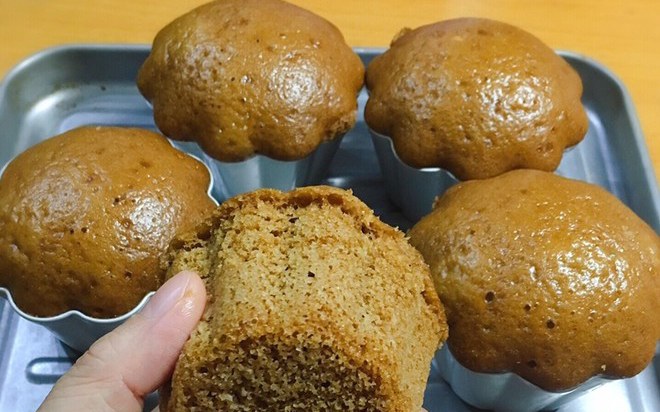
Steamed brown sugar fa gao: a no-knead batter poured into cups, proofed once and steamed until it cracks into chewy mushroom tops — caramel-sweet and springy.
Instructions
-
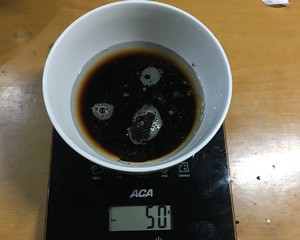
 Stir the brown sugar into the warm water until dissolved, then set it aside to cool until just warm to the touch — about 35°C (95°F), which takes 10 to 15 minutes. Hot sugar water would kill the yeast.
-
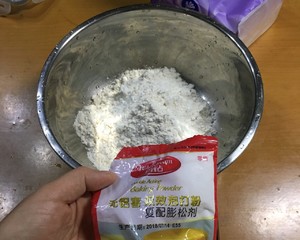
 Whisk the cake flour and baking powder together in a mixing bowl until evenly combined.
-
 Add the beaten egg and stir until the flour is evenly moistened into shaggy clumps.
-
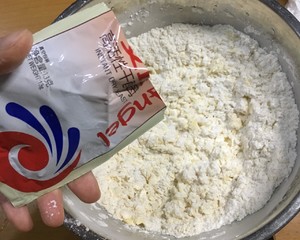 Sprinkle in the instant yeast and stir it through so no dry pockets remain.
-
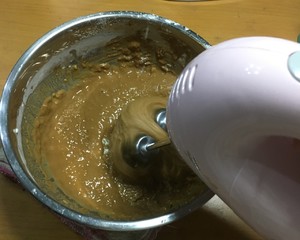 Pour in the cooled brown sugar water and beat with an electric mixer on low for 2 to 3 minutes, until the batter is completely smooth and lump-free, like thick pancake batter. No mixer? Whisk hard for 4 minutes.
-
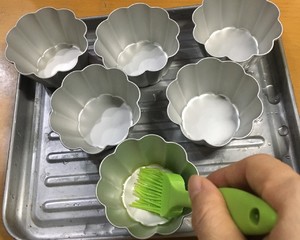 Scrape the bowl walls and bottom with a spatula so every bit of dry flour is folded into the batter.
-
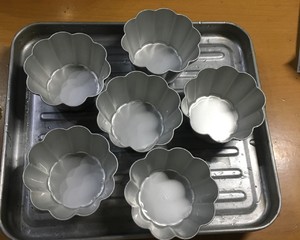
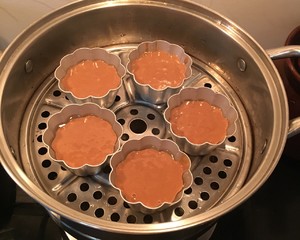 Brush 6 muffin cups or dariole molds (or one 8-inch/20 cm round pan) with the oil, then fill each to 80% — the batter rises a lot.
-
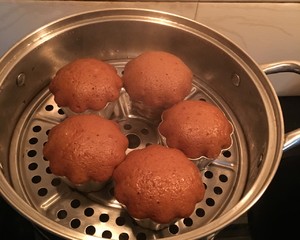 Set the molds in a steamer basket over cold water, cover, and proof off the heat for 40 to 60 minutes, until the batter has domed up to the rim. Watch the state, not the clock: a cold kitchen takes the full hour.
-
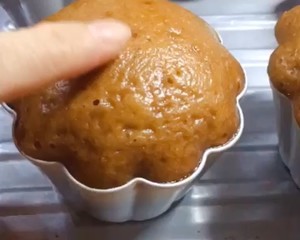 Lay a jujube slice or a few raisins on each cup if you like. Turn the heat to high and steam 25 minutes from a full boil — small cups are done 15 to 20 minutes after strong steam rises; a single large pan needs 5 minutes more. Do not lift the lid mid-steam.
-
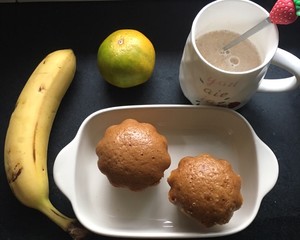 Turn off the heat and rest, lid closed, for 3 minutes. Unmold — they pop out cleanly — and serve warm; the crumb should spring back slowly when pressed.
Why this recipe works
This recipe trades the usual kneaded dough for a stirred batter, and that is the whole trick. Because there is no gluten to develop, there is nothing to knead and nothing to overwork — you simply beat flour, egg, liquid and leavening into something like thick pancake batter. Two leaveners share the job: the yeast builds flavor and provides the slow lift during the 40 to 60 minute proof, while the baking powder fires the moment hot steam hits, guaranteeing the batter keeps climbing once it can no longer wait for the yeast.
The mushroom top is steam physics. A fully proofed batter, filled only to 80%, meets violent steam from water at a rolling boil. The outside sets first while the center keeps rising, so the crust tears open and domes — the split that home bakers call a "smiling" fa gao. Under-proof the batter or steam over timid heat and you get a flat, dense puck instead.
Brown sugar does double duty. Dissolving it in warm water first feeds the yeast evenly through the batter and colors the whole crumb a deep caramel-brown, so the cake tastes sweeter and rounder than its modest 50 grams of sugar suggest. The egg adds tenderness and a little structure, which is what lets a batter this loose hold a dome at all.
About the dish
Fa gao (发糕) is the steamed-food world's answer to a muffin: a humble leavened cake steamed in cups or pans, with as many regional versions as there are families. The name plays on 发 (fā), "to rise" — and also "to prosper" — which is why fa gao shows up at Lunar New Year, where a cake that rises high and cracks open is read as a good omen for the year ahead.
Old-school versions start from rice flour and a long natural ferment. This cup-style wheat-flour version is the modern home shortcut — one bowl, one rise, no kneading — which is why it circulates on Chinese recipe feeds as "simpler than mantou." Its deep brown color comes entirely from the brown sugar; the original author liked to point out that it looks almost like chocolate, with none of the fuss. Unlike festival fa gao, this is an everyday breakfast cake, steamed in the morning and eaten warm.
What to serve with it
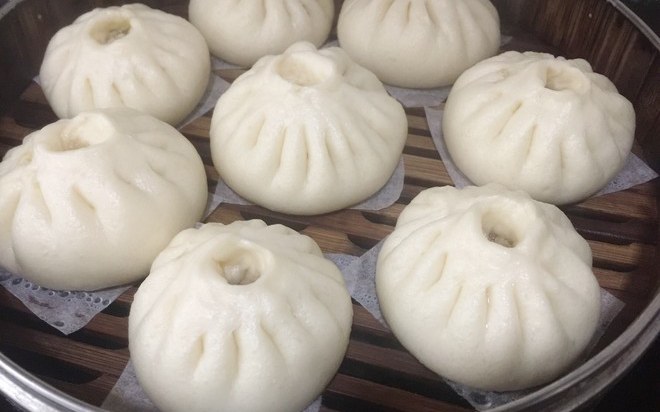
These are breakfast cakes in the Chinese sense: warm from the steamer with a glass of milk or a pot of tea, no butter or jam required. Split one while hot and the crumb steams in your hands. For a fuller table, steam a batch of savory baozi alongside so everyone gets a sweet and a salty, or keep it simple with more Chinese sweets for a weekend tea spread. Leftovers go straight to the freezer — 60 seconds in the microwave and they taste freshly steamed, so a batch of prosperity cake is always on hand for slow breakfasts.
Pro tips
- There is no kneading and no second proof here — the batter method means gluten is never developed, so overworking is impossible. The only skill is proofing patience.
- The mushroom-top crack forms when a fully proofed batter hits violent steam. Under-proofed batter or a lazy boil gives you a flat, dense puck instead.
- Use cake flour if you can: less gluten means a finer, more tender crumb. All-purpose works but bakes up slightly chewier.
- 50 g of brown sugar is deliberately restrained — the cake tastes barely sweet, in the Chinese breakfast style. Raise it to 70 g (⅓ cup) if you want dessert-level sweetness.
- Fill the molds no more than 80%. The author's own batch overflowed spectacularly because she filled too few cups.
Storage & leftovers
- Keep in a sealed container at room temperature for up to 1 day.
- Freeze extras wrapped individually for up to 1 month — microwave straight from frozen for 60 seconds and they come back soft, which is exactly how the source author eats them for breakfast.
- The fridge is the worst place for them (steamed cakes stale faster in the cold); if you must refrigerate, re-steam for 5 minutes to bring the crumb back.
Frequently asked questions
Why didn't my fa gao crack a mushroom top?
Three usual causes: the batter was under-proofed (it should dome to the rim before steaming), the water was not at a rolling boil when steaming began, or the lid was lifted early and the heat collapsed. Also check your yeast is fresh.
Can I use all-purpose flour instead of cake flour?
Yes, 1:1. The crumb will be a touch chewier and slightly less fine — closer to a soft mantou texture, which many people actually prefer.
Can I reduce the sugar?
You can go down to 30 g (2½ Tbsp), but below that the color turns pale and the yeast has less to feed on, so expect a longer proof and less caramel flavor.
Can I bake this instead of steaming?
Not really — steaming is what makes fa gao fa gao. Without steam the top sets differently and you lose the mushroom crack and the moist, springy crumb. It becomes a different (less interesting) cake.
How do I know the batter is fully proofed?
It has visibly domed to the rim of each cup and wobbles like mousse. The 40 to 60 minute window assumes a warm kitchen; in winter give it 75 minutes or set the steamer over warm (not hot) water.
Can you freeze fa gao?
Yes — wrap each cake individually and freeze for up to a month. Microwave straight from frozen for about 60 seconds and the crumb comes back soft. Avoid the fridge for storage when you can: steamed cakes stale faster in the cold than on the counter for a day.
What is the difference between fa gao and ma lai gao?
Both are steamed cakes, but they sit at opposite ends of the texture range. Fa gao is chewy and lightly sweet, steamed in cups until the top cracks open; ma lai gao is the dim sum sponge — egg-rich, golden, fluffy enough to bounce back when pressed. One smiles, one springs.