Portuguese-Macanese · Sweets & Drinks
Portuguese Egg Tarts with Caramel Spots (葡式蛋挞)
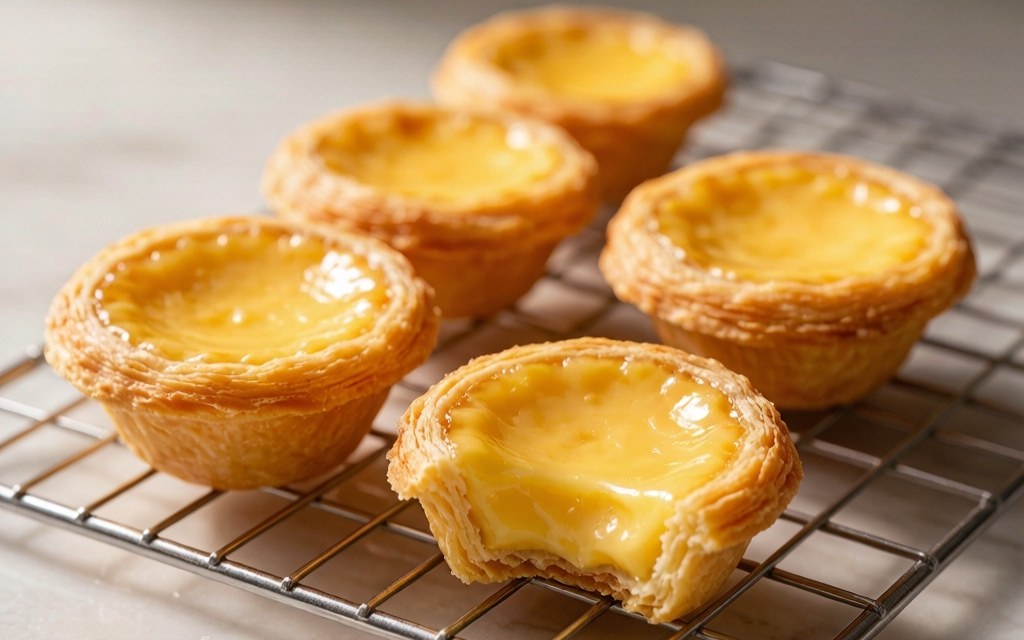
Ultra-silky Portuguese-style egg tarts: a yolk-and-cream custard with no flour, baked hot until caramel spots blister the tops — KFC-tart flavor at home.
Instructions
-
 Set the frozen tart shells on a baking tray and let them thaw at room temperature until pliable. Take the milk, cream and eggs out of the fridge at the same time — cold dairy makes the melted butter seize later.
-
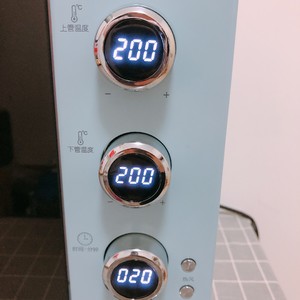 Preheat the oven to 400°F (200°C), top and bottom heat, for about 10 minutes.
-
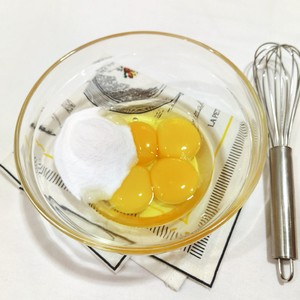 Whisk the egg, yolks and sugar until just combined and the sugar has dissolved — evenly mixed, never frothy.
-
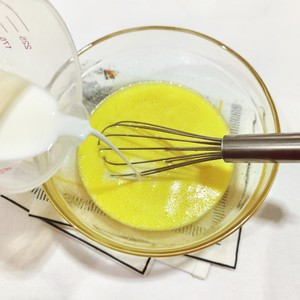 Add the milk, heavy cream and condensed milk and whisk smooth, then whisk in the melted butter last.
-
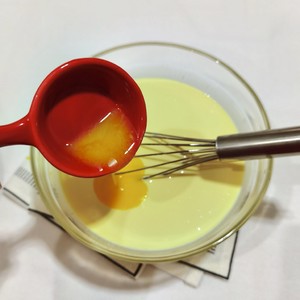 If your kitchen is cold and the butter has clumped into beads, pour the custard into a small saucepan and warm it over low heat to 105°F (40°C), stirring constantly — no hotter, or the eggs will scramble. Whisk again off the heat until glossy.
-
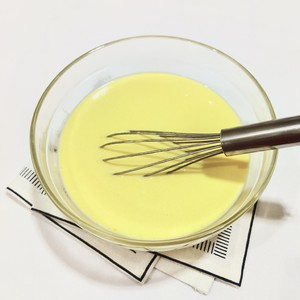 Strain the custard through a fine-mesh sieve twice, catching stray egg bits and breaking up foam; pour gently and from low to avoid whipping in new bubbles.
-
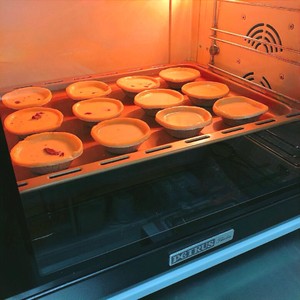 Fill the shells 80–90% full. This custard puffs and domes in the oven, and the fuller fill is what gives the classic high custard line. Tuck in any add-ins now.
-
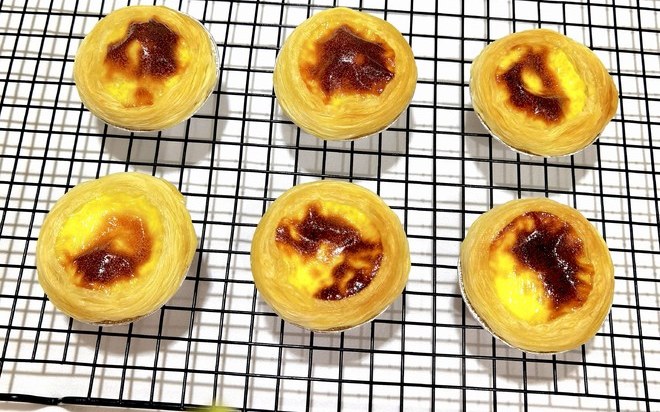
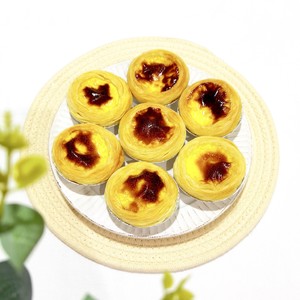 Bake on the middle rack at 400°F (200°C) for about 20 minutes, until the tops show caramel-brown spots and the custard is mostly set — it will still tremble slightly when the tray is nudged. In a small oven or air fryer, drop the temperature 25°F (15°C) and start checking at 12 minutes.
-
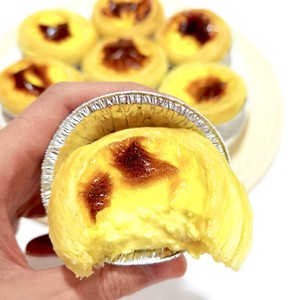 If the tops are still pale at 20 minutes, move the tray up one rack and give them 5 more minutes, watching the whole time — the spots you want are caramel, not charcoal.
-
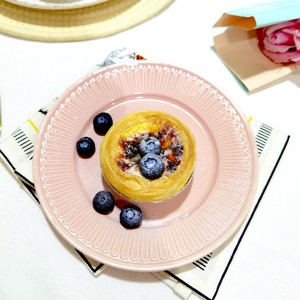 Rest 5 minutes and serve warm. The custard dips slightly as it cools — normal thermal contraction — and the texture is at its silkiest warm rather than piping hot.
Why this recipe works
Portuguese tarts are the richer, more dramatic sibling of the egg-tart family: no flour, mostly yolks, and enough heat to blister the surface into caramel.
1. A flour-free, cream-forward custard. Where Hong Kong-style custard sets with a little flour, this one relies on egg alone — one whole egg plus three yolks against 180 ml of cream. Fewer proteins set more gently, so the interior stays quivering and glossy rather than springy. Condensed milk and a spoon of butter add the round, cooked-milk sweetness that reads as KFC-style indulgence.
2. Temperature control at the edges. The custard must stay below about 105°F (40°C) until it hits the oven — whisk the butter in gently, and if a cold kitchen makes it seize, a brief low-heat warm-up rescues it before the eggs scramble. Room-temperature dairy is what keeps the melted butter in solution.
3. The generous fill and the dome. Filled to 8–9 tenths and baked at 400°F (200°C), the custard puffs into a dome, caramelizes on top, and settles back with the characteristic dip. That rise-and-fall is the signature of a properly baked Portuguese tart, not a flaw — the same thermal contraction every real nata shows.
About the dish
The pastel de nata is Lisbon's own: the story goes that monks at the Jerónimos Monastery used egg whites to starch clothes and clarify wine, leaving tubs of yolks that became rich custard tarts. When the monastery closed in 1834, the recipe was sold to a sugar refinery next door, whose bakery has sold the original pastéis de Belém since 1837.
The tart then made a second life half a world away. In 1989, an Englishman named Andrew Stow opened a bakery in Coloane, Macau — Portugal's old outpost on the Chinese coast — and reworked the nata with a lighter, milkier custard closer to English and Chinese baking. Lord Stow's egg tarts became a Macau signature, then a continental obsession when KFC's Asian stores put them on the menu, which is how most Chinese home bakers, including this recipe's author, first tasted them. The version here follows that Macau-and-Hong-Kong home-baking lineage.
What to serve with it
Best warm with coffee or strong tea, dusted with powdered sugar or topped with a few berries — with cappuccino in Lisbon, milk tea in Macau, either at home. As an after-dinner sweet they follow a savory spread of street snacks perfectly, and for a bigger dessert table they sit happily beside the silkier Chinese custards and tarts. Leftover custard bakes into pudding cups — nothing goes to waste. Because they sit richer than the Hong Kong style egg tarts on dim sum carts, one or two per person is plenty alongside coffee.
Pro tips
- This custard is richer than a Hong Kong tart's on purpose: nearly double the cream, no flour, and mostly yolks. Flour would set it firmer but would kill both the silkiness and the big caramel blisters.
- Room-temperature dairy is not fussiness — cold cream re-solidifies the melted butter into beads that never fully incorporate and show up as greasy specks after baking.
- Do not fill past 90%: the dome rises fast at 400°F, and overfilled tarts spill onto the tray and burn into smoke.
- Strain twice, not once: the second pass catches the fine chalaza threads that leave dimples on the surface.
- No caramel spots almost always means the oven ran cool: verify with an oven thermometer, and remember the spots come from sugar too — don't cut it below 30 g.
Storage & leftovers
- Best warm from the oven; hold at room temperature up to 4 hours — the shells lose their shatter as they sit.
- Refrigerate leftovers up to 2 days and re-crisp 5 minutes at 350°F (175°C) before serving.
- Strained unbaked custard keeps 2 days refrigerated or 1 month frozen; thaw fully and re-strain before baking.
Frequently asked questions
How are these different from Hong Kong-style egg tarts?
Portuguese tarts use a richer, flour-free, yolk-heavy cream custard baked until the top blisters with caramel spots, on flaky puff-pastry-style shells. Hong Kong tarts are milkier, set with a little flour, smoother and more evenly golden. The two custards are not interchangeable if you care about texture.
Can I use whole eggs only?
Yes — use 2 whole eggs plus 1 yolk, but expect a firmer, less silky custard with more bubbles; the extra whites are what turn rubbery when over-baked.
Why did my custard turn into sweet scrambled egg?
The butter-warming step went past 105°F (40°C), or the custard touched a hot pan bottom. Warm gently with constant stirring; if it is only slightly curdled, an extra strain can still rescue it.
Can I make the custard ahead?
Yes, up to 2 days refrigerated in a sealed jar; re-strain before filling. The unbaked custard also bakes beautifully as plain pudding cups at 325°F (160°C) for 25–30 minutes.
My tarts overflowed. Why?
More than 90% fill plus a very hot oven: the custard expands strongly at temperature. Fill to 80% the next batch, and set the tray on a lower rack to give the dome room.
Can I make these with store-bought puff pastry?
Yes — thaw a sheet, cut 3½-inch (9 cm) rounds, and press them into a muffin tin so the walls rise slightly above the rim; chill the lined tin while you mix the custard. Bake at 400°F (200°C) as written, checking a few minutes early — free-standing pastry browns faster than tart shells.
When do I add the chocolate or dried fruit?
After filling, before the tray goes into the oven — 2 tsp of dried cranberries, raisins or blueberries, or one small chocolate square per tart. Keep additions light: the flour-free custard needs a clear surface to blister.