Cantonese · Sweets & Drinks
Mango Pomelo Sago (杨枝甘露)
Hong Kong's classic mango pomelo sago: silky mango purée, chewy sago pearls and creamy coconut with bright bursts of pomelo — plus the mango flower cutting trick.

Instructions
-
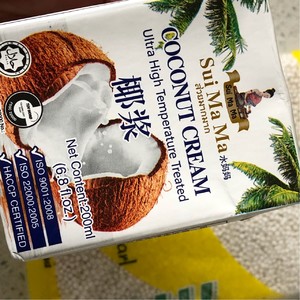 Do not rinse the sago pearls — they are pure starch and will dissolve if washed. Pour 2 cups (480 ml) of water into a small saucepan, bring it to a rolling boil over high heat, then stir in the sago.
-
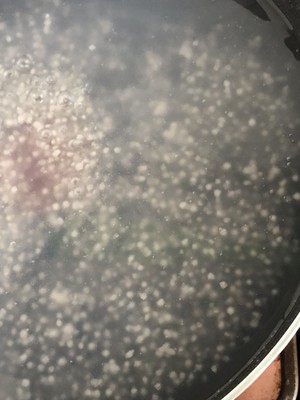 Cover, lower the heat to medium-low, and simmer for 15 minutes, lifting the lid to stir every few minutes so nothing sticks to the bottom. When the pearls look almost transparent with only a tiny white dot left in the center, turn off the heat and leave the pot covered for another 15 minutes — the trapped steam finishes them.
-
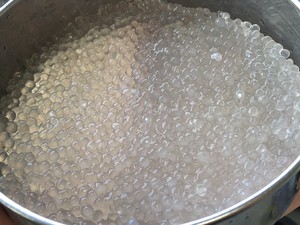 After the rest, every pearl should be fully translucent with no white core. Pour the sago into a fine sieve, rinse under cold running water a few times, then let it sit in a bowl of cold water while you prepare the rest.
-
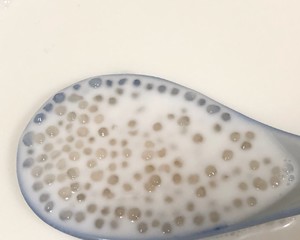 Make the coconut base: whisk the coconut cream, milk and condensed milk in a jug until smooth. Drain the sago well and stir it in — at this point you have the plain coconut sago that Hong Kong shops sell on its own.
-
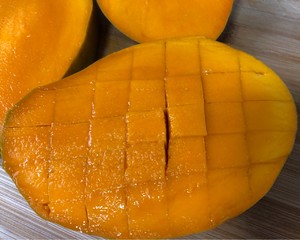 Cut the mango (the flower cut): stand it upright on its stem end and slice down both sides of the flat pit, giving you two thick cheeks plus a thin middle slice. Score the flesh of one cheek in a crosshatch pattern, cutting down to — but not through — the skin.
-
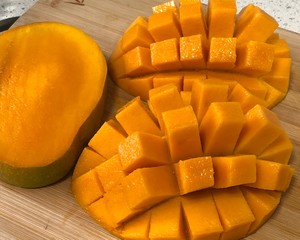 Push the skin up from underneath with your thumbs so the scored cubes fan out like a flower. Slice the neat square cubes off into a bowl and repeat with the second cheek; reserve the prettiest cubes for the top of the glasses.
-
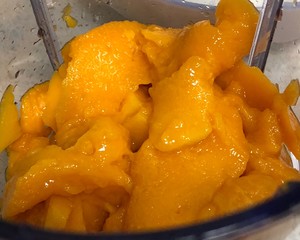 Blend all the remaining trimmings and scraps into a smooth purée. Blend the mango alone — do not blend it together with the milk, which whips in air and makes the purée foamy instead of dense and silky.
-
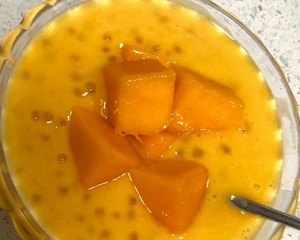 Stir the mango purée into the coconut sago, then ladle into glasses. Top with the reserved mango cubes and the pomelo flesh, add mint if you like, and serve right away — or chill for 30 minutes, since the classic version is served icy cold.
-
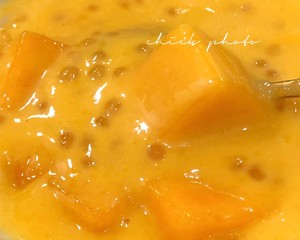 Layered-cup variation: for the prettiest presentation, spoon mango purée into the bottom of each glass, gently pour the coconut-sago over the back of a spoon, then finish with mango cubes and pomelo — stir before eating.
Why this recipe works
Three techniques separate a silky, shop-style mango pomelo sago from a watery homemade attempt.
1. Boil, then rest the sago. Sago pearls are nearly pure starch. Boiling alone either leaves a chalky white core or — if you push on — dissolves the outside into glue before the center cooks. The covered 15-minute rest lets stored heat finish gelatinizing the centers with no extra cooking, and a cold rinse afterwards washes off loose surface starch so the pearls stay distinct and springy instead of clumping. If you have ever wondered how to cook sago pearls with no white centers, this boil-rest-rinse sequence is the entire method.
2. The 1:2 coconut cream to milk ratio. Straight coconut cream coats the mouth like sunscreen; milk alone tastes thin. One part cream to two parts milk, sweetened only with a spoon of condensed milk, lands exactly where Hong Kong dessert shops sit: rich but still drinkable.
3. Purée and cubes, never just one mango. Half the mango is blended for body, half is cut into cubes for bite. And the purée is mango alone — blending mango with milk whips in air and gives you a foamy pale drink instead of a dense, silky fruit layer threaded through the sago.
About the dish
Mango pomelo sago (杨枝甘露, yeung zi gam lo in Cantonese) is a modern classic, not an ancient one. It is widely credited to the Lei Garden restaurant group, which created it in the 1980s, and it spread from there through Hong Kong dessert houses until it became the city's signature sweet — the thing you order after dim sum on a humid afternoon.
The poetic name translates as “sweet dew on a willow branch,” a Buddhist image of blessings sprinkled from a willow twig; the story goes that the mango and pomelo reminded the dish's creators of those falling strands. What matters in the bowl is the architecture: cold coconut-sago below, thick mango purée threaded through it, and bitter-juicy pomelo on top. That bitterness is the detail outsiders miss — it keeps a very sweet dessert tasting fresh to the last spoonful.
What to serve with it
Serve it icy cold in tall glasses as the dessert after a fiery Sichuan dinner — mapo tofu followed by mango pomelo sago is a favorite contrast. It also closes out a dim-sum spread beautifully, and kids will happily drink it through a straw. For more chilled and sweet finishes, browse our other dessert recipes — and consider a double batch, because the glasses empty faster than you think. Dairy-free eaters can swap the milk for oat milk and extra coconut cream — see the FAQ.
Pro tips
- The boil-rest method is what makes sago foolproof: boiling alone leaves white cores, while the covered 15-minute rest lets stored heat gelatinize the centers without turning the outsides to mush.
- Rinsing the cooked sago in cold water does two jobs: it stops the cooking and washes off loose surface starch, which is what keeps the pearls separate instead of one gluey clump.
- The 1:2 coconut cream to milk ratio is the sweet spot — all coconut cream tastes heavy and coats the mouth, all milk tastes thin.
- Pomelo is the signature note: bitter-juicy bursts that keep a very sweet dessert tasting fresh. Grapefruit supremes are the easy substitute; orange brings color but no bitterness.
- Flat-pitted varieties (Keitt, Kent, Ataulfo) cut cleanly into cubes; round fibrous mangoes waste flesh on the pit and fight the flower cut.
- The flower cut is not just pretty — propping the scored cheek up on its skin lets you shave the cubes off in one clean pass, and the leftover skin still looks good on the plate.
Storage & leftovers
- Refrigerate in sealed glasses or containers for up to 2 days; the sago firms up as it chills.
- Loosen chilled leftovers with 1–2 Tbsp (15–30 ml) of milk per serving and stir well before serving.
- Keep the reserved mango cubes separate and add them just before serving so they stay glossy and neat.
- Freezing is not recommended — the dairy separates and the sago turns hard and chalky when thawed.
Frequently asked questions
Can I use tapioca pearls instead of sago?
Yes — small-pearl tapioca is the closest substitute and is what most shops outside Asia actually use. Cook it the same way, but start checking 5 minutes early. Large boba pearls are too big and chewy for this dessert.
What if I only have coconut milk, not coconut cream?
That works fine — the source recipe suggests it: use a full can (about 1 cup / 240 ml) of coconut milk plus the same 200 ml of milk, and keep the condensed milk. The result is slightly lighter but still authentic.
Why is my sago still hard with a white center?
It either skipped the covered rest or was rinsed before cooking. After boiling, the pot must sit off the heat, lid on, for 15 minutes — that carryover steam is what finishes the centers.
Can I make mango pomelo sago ahead?
Yes, and it is arguably better cold. Assemble up to a day ahead and refrigerate; the sago slowly drinks up liquid overnight, so stir in a splash of milk before serving to loosen it.
No pomelo in my store — what can I use?
Grapefruit supremes are the best stand-in because they share the same bitter-juicy contrast. In a pinch, use diced fresh orange for looks, but expect a sweeter, less layered dessert.
Why did my mango purée turn foamy?
Because the mango and milk were blended together. Blend the mango alone, then stir the purée into the coconut base — you get a dense, silky layer with no foam.
Can I make mango pomelo sago dairy-free?
Yes — use extra coconut cream in place of the whole milk and sweeten with a spoon of sugar or agave instead of condensed milk. The mango purée carries most of the body, so the texture stays true.
How many calories are in mango pomelo sago?
About 260 kcal per serving for this version — most of it from the mango and the coconut-milk base rather than added sugar.