Chinese home style · Sweets & Drinks
Tiger-Stripe Tangyuan (虎纹汤圆)
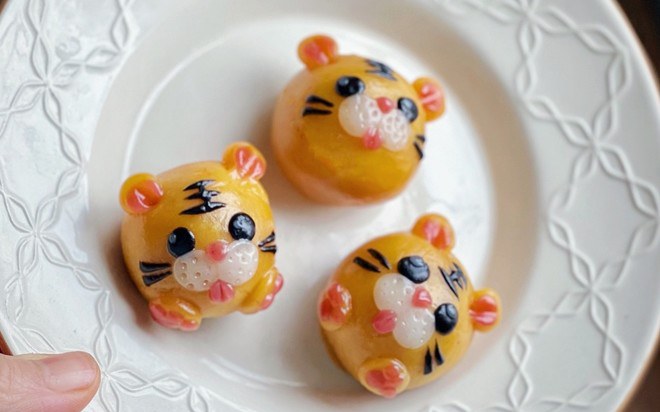
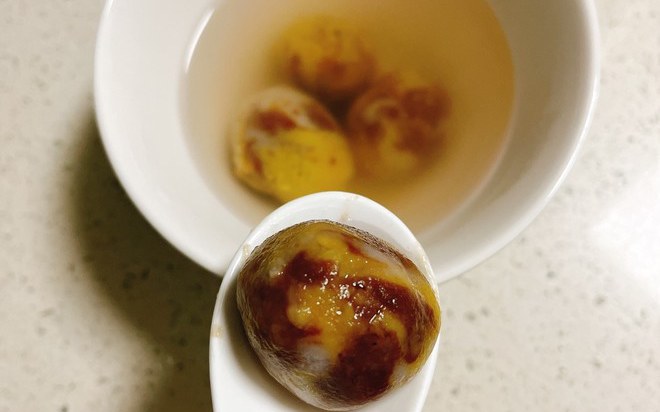
Boiled tangyuan striped orange and white like a tiger, filled with toasted walnuts, peanuts and black sesame bound with brown sugar and a bright hint of lemon zest.
Instructions
-
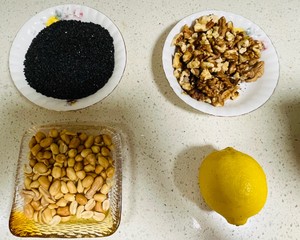 Toast the black sesame, walnuts and peanuts in a dry skillet over low heat, stirring, until they smell nutty — 3–5 minutes. Keep the heat low; scorched nuts turn bitter. Cool completely. (Skip this if your peanuts are already roasted.)
-
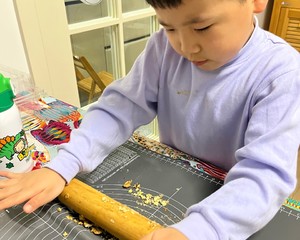 Crush the walnuts and peanuts with a rolling pin to coarse rubble — some texture makes the filling interesting rather than sandy. This is a good job for a helpful kid.
-
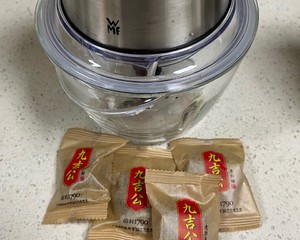 Grind the brown sugar to a fine powder in a blender (or mash soft brown sugar with a spoon), then zest the lemon, grating only the colored skin — the white pith underneath is bitter.
-
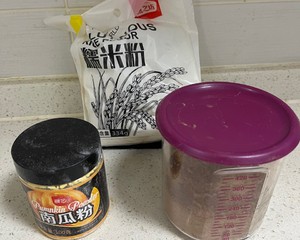 Combine the nuts, sesame, sugar, lemon zest and walnut oil in a bowl and mix until the mixture clumps when squeezed between two fingers; if it stays sandy, knead in another ½ tsp oil. Roll into 12–13 g balls, set on a tray, and freeze overnight (at least 4 hours) until rock hard — frozen filling is what makes wrapping possible for beginners.
-
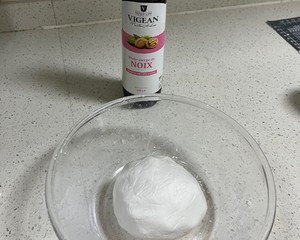 Make the dough: stir the glutinous rice flour and sugar together, pour in the hot water while mixing with chopsticks, then knead while still hot for 3–4 minutes into a smooth dough. Knead in the oil last. If the dough cracks at the edges, the water was not hot enough — wet your hands with hot water and keep kneading.
-
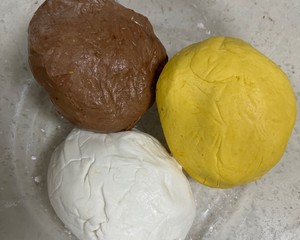 Divide the dough into two large pieces (about 135 g each) and one small (about 85 g). Knead pumpkin powder into one large piece (add a few drops of hot water if it stiffens) and cocoa powder into the small one. Cover all three with plastic wrap.
-
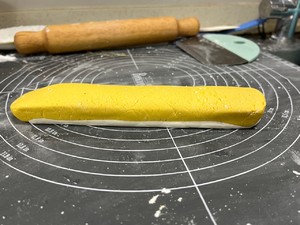 Build the striped block: flatten the white and yellow pieces into equal rectangles about 1 cm thick, stack them, and roll into one joined sheet. Cut slits 1 cm apart across it, not cutting all the way through, then press the chocolate dough into strips and fit a strip into every slit. Press the whole block firm and compact.
-
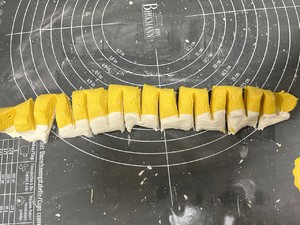 Now the one rule that decides everything: roll the block into a rope with the seams running parallel to your rolling direction — along the stripes, not across them. Rolled the right way the stripes become crisp tiger bands; rolled across, they smear into marble.
-
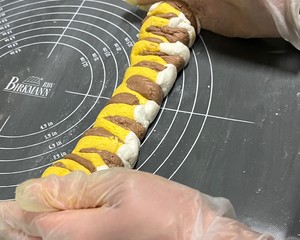 Cut the rope into 16 pieces and roll each into a smooth striped ball, keeping the pieces you are not using covered.
-
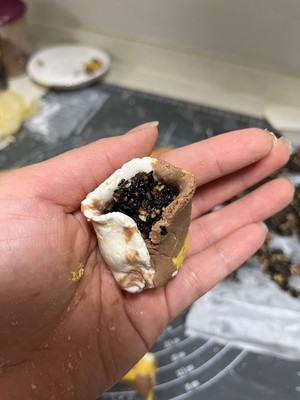
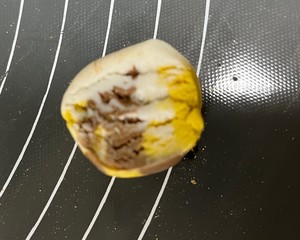 Flatten a striped ball into a 9 cm wrapper, thicker in the center and thin at the edge. Cup it in one palm, drop in a frozen filling ball, and push the dough up around it with your thumb, turning as you go, until the filling is enclosed. Pinch the top closed and roll gently between your palms until round.
-
 Dust the finished tangyuan with dry glutinous rice flour. Cook now, or freeze in a single layer on a tray and bag once solid.
-
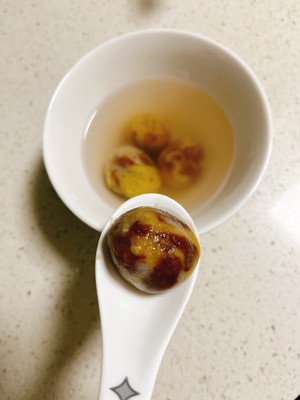 To cook: bring a pot of water to a rolling boil, stir so the water spins, and slide the tangyuan in along the edge. Once they float, boil 2–3 minutes more (5–6 from frozen). Serve hot, in the sweet cooking water itself.
Why this recipe works
Three techniques carry this recipe, and only one of them is about looks.
1. Hot-water dough. Glutinous rice flour gelatinizes at a lower temperature than wheat flour, so hot water (around 70°C) pre-cooks part of the starch as you mix. The result is a dough that is pliable immediately, rolls thin without cracking, and seals around the filling with almost no arguing. Cold-water glutinous dough, by contrast, is brittle and springs back.
2. Rock-hard frozen filling. Soft nut fillings are the reason most first-time tangyuan attempts end in soup. Freezing the rolled balls overnight turns each one into a solid core you can push dough around with a thumb, exactly like wrapping a stone — the filling thaws inside the wrapper as the tangyuan boils.
3. The stripe trick. The tiger bands are a lamination: two colored sheets stacked, slits cut and filled with a third color, then the block rolled along its seams. Rolling along the seams stretches the bands lengthwise into clean stripes; rolling across the seams shears them into a marble swirl. Same dough, opposite aesthetics.
About the dish
Tangyuan — wrapped glutinous rice balls — belong to the Lantern Festival table, where round foods stand for the family sitting complete. The classic northern style, yuanxiao, rolls fillings through dry flour; the southern style, tangyuan, wraps soft dough around the filling by hand, which is what this striped version does. Striped and marbled doughs are a modern home-kitchen flourish, borrowed from the way bakers marble bread: stack colors, cut, fill, roll. This one went viral around the Year of the Tiger, when cooks raced to make everything tiger-striped for the festival — and the walnut-black-sesame-brown sugar filling here is the old Cantonese nut filling dressed up with lemon zest. Tradition and toy box, in one bowl.
The stripes come from a baker's trick adapted to glutinous dough: stack tinted and plain sheets, press into a log, slice — every round shows its own marbling, no two alike. Keep unused dough covered while you work, wrap a few, admire the stripes, repeat. The making is the memory.
What to serve with it
Four tangyuan per bowl in their own hot cooking water, or in a light brown-sugar and ginger syrup. They are rich, so keep the rest of the meal simple: a pot of tea and maybe a plate of something crunchy from our street food collection. The striped dough is easier than it looks: two colored sheets, a few slits, and a roll along the seams — no food coloring, just pumpkin powder and cocoa. For dessert-first households, this pairs surprisingly well after a savory dinner of mapo tofu — the cool sweetness settles the spice.
Pro tips
- The rolling direction is the whole recipe: seams parallel to the rolling pin give tiger stripes, seams across give a marbled swirl. The original poster learned this the hard way at midnight — learn it from her mistake.
- Freeze the filling balls until genuinely hard. Soft filling smears the wrapper, stains the stripes and doubles the difficulty.
- Cracked dough means the water was not hot enough. Glutinous dough needs near-boiling water to gelatinize; hot-tap water will never come together properly.
- Leftover filling and dough scraps? Press the filling into a small dish, chill until firm, and cut squares — it eats like sesame brittle candy.
- The lemon zest sounds unusual but lifts the heavy nut-sugar filling; orange zest works the same way. Skip it only if you truly have no citrus.
- Color the yellow dough slightly paler than you think you need — the stripes darken a touch when the tangyuan boil.
Storage & leftovers
- Freeze raw tangyuan in a single layer on a tray until solid, then bag; cook from frozen within 1 month.
- Cooked leftovers keep 2 days in the fridge; reheat by dropping them into fresh boiling water for 1 minute.
- Do not freeze cooked tangyuan — the wrapper turns hard and chalky when thawed.
Frequently asked questions
Why did my stripes turn into marble?
You rolled the rope across the seams instead of along them. Press the chocolate strips in, then roll with the seams running parallel to the direction you push the rolling pin — the bands stay crisp.
I cannot find pumpkin powder. What can I use?
Dried orange sweet potato powder is a direct swap; turmeric colors the dough without much flavor. For the chocolate strips, cocoa powder stands in for charcoal or chocolate dough.
Can I skip the overnight freezing of the filling?
At minimum give it 4 hours in the freezer. Freshly mixed filling is too soft to handle and will squeeze out as you wrap — frozen balls are the difference between fun and frustration.
Can I make these ahead?
Yes — that is the point of freezing the filling. Wrapped raw tangyuan keep in the freezer for up to 1 month; boil them straight from frozen, adding 2–3 minutes.
How sweet are they?
Moderately — brown sugar gives a caramel note rather than a sugary hit. For lower sugar, the original uses xylitol 1:1 in both the filling and the dough.
My filling leaked out during boiling. What went wrong?
Usually a thin spot in the wrapper or an incompletely sealed top. Keep the wrapper center slightly thicker, pinch the seam firmly, and do not boil past the point where they float plus 3 minutes.
Can I make the stripes with food coloring instead?
You do not need it — the tiger bands here come from pumpkin powder and cocoa, which color the dough and add flavor at the same time. If you only have gel colors, use them in the water for one dough portion, but the natural powders keep the taste clean.