Chinese home style · Rice & One-Bowl Meals
Deluxe Laba Congee (腊八粥)
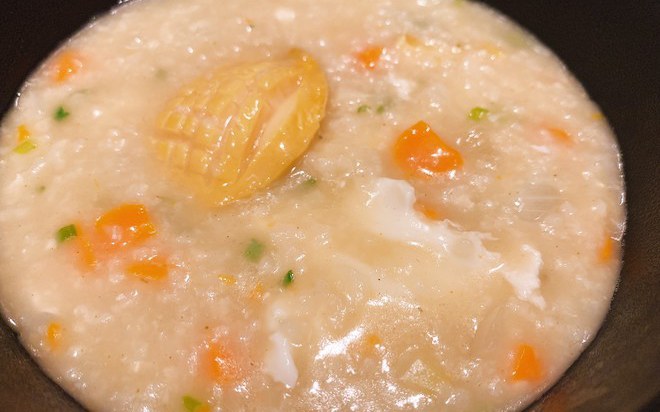
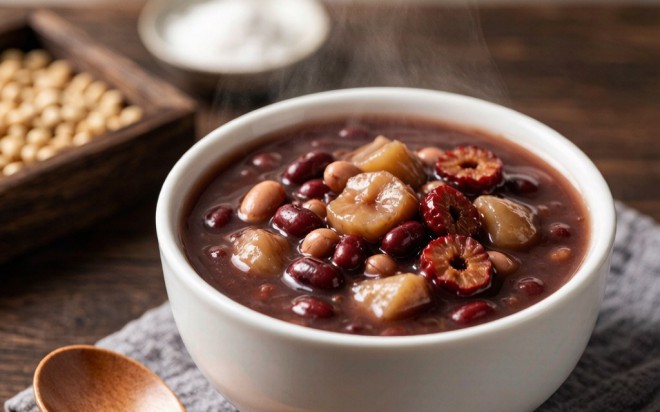
Deluxe Laba congee: thirteen grains, beans and chestnuts soaked overnight, simmered low until silky-thick, lightly sweet with red dates and brown sugar.
Instructions
-
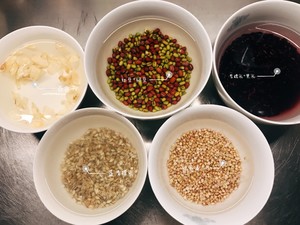 The night before, rinse the adzuki beans, mung beans, highland barley, buckwheat, lily bulbs, purple glutinous rice and black rice, then cover each with 2 inches of cold water and soak overnight (8-12 hours). In cold weather give the beans up to 24 hours. Soak the two dark rices in drinking water and keep that water — it carries the purple pigment straight into the finished congee.
-
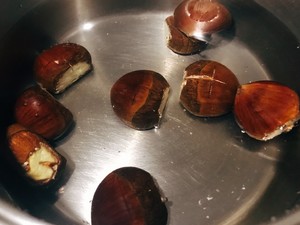 Score a slit across the shell of each chestnut, cover them with cold water, and bring to a boil over medium heat. Boil 5 minutes, then peel off shells and skins while hot — they slip off far more easily warm. You want about ¾ cup (85 g) kernels.
-
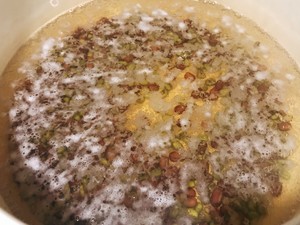 Drain the soaked beans. Put the adzuki and mung beans in a pot of fresh cold water, bring to a boil, boil 2 minutes, then drain. This quick blanch pulls out the raw, beany edge before the long simmer.
-
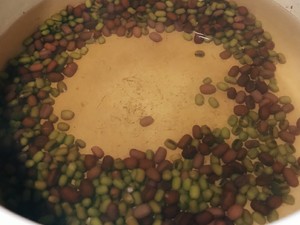 Return the blanched beans to the pot with one third of the water (about 2¾ cups / 660 ml). Bring to a boil, add another third, boil again, then pour in the rest and bring everything to a full boil. Adding the water in stages keeps the beans at a steady rolling boil instead of stalling.
-
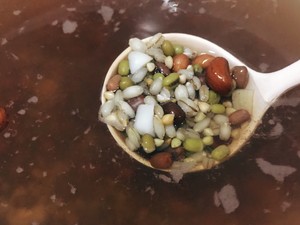 Drain the highland barley, buckwheat and lily bulbs and add them to the pot along with the raw peanuts. Stir well and bring back to a boil.
-
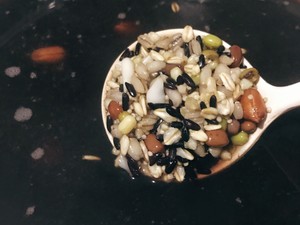 Stir in the brown sugar and the rolled oats and bring the pot back to a boil. The oats thicken quickly from here on, so give the bottom of the pot a good scrape.
-
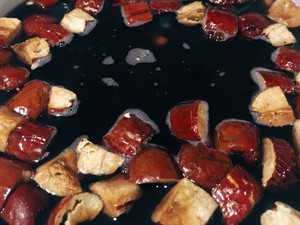 Drain the purple glutinous rice, black rice and millet and stir them in, pouring in their dark soaking water too — the congee turns a deep purple-brown at this point. Bring back to a boil.
-
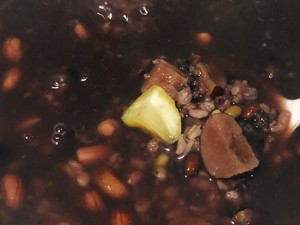 Add the red dates, bring to a boil, then cover, lower the heat and simmer gently for 20 minutes. If your dates are large, pit and snip each into quarters first; small dates can go in whole.
-
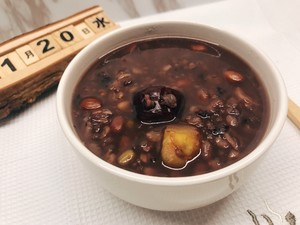 Add the chestnuts, re-cover and simmer another 20 minutes, stirring up from the bottom a few times — the congee is thick by now and can catch on the pot.
-
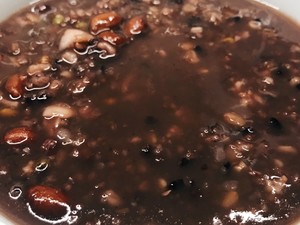 Turn off the heat and let it rest 10 minutes; it thickens further as it stands. Ladle into small bowls and serve hot — thick, glossy and lightly sweet.
Why this recipe works
A pot of Laba congee fails in one of two ways: some ingredients stay chalky while others collapse, or the whole thing scorches while you are not looking. This recipe dodges both with structure rather than luck.
The staged additions. Adzuki and mung beans need the most time, so they start alone. Barley, buckwheat and peanuts go in once the beans are rolling. Oats and sugar follow — oats are cooked in minutes and would turn gluey any earlier. Millet and the two rices come late, and chestnuts last, because they are already cooked and only need to take on flavor. Every ingredient gets exactly the simmering it needs, and they all arrive tender at the same moment.
The staged water. Adding the 2 L of water in thirds keeps the beans at a full rolling boil from the start. Dump it all in at once and the temperature sags; the beans sit half-cooked in lukewarm water and their skins stay tough.
The blanch. Two minutes of boiling and draining pulls the raw, green edge off the beans — the same reason cooks blanch spinach — so the finished pot tastes sweet and grainy-clean instead of flat. This staged method is how a proper laba zhou gets every grain tender at the same moment.
About the dish
Laba (腊八) falls on the eighth day of the twelfth lunar month, and cooking a big pot of mixed-grain porridge on that morning is a tradition that goes back at least to the Song dynasty, when temples are recorded distributing porridge to the poor. The legend says the date marks the day the Buddha attained enlightenment after a village girl revived him with a bowl of milk gruel — the story goes that Chinese Buddhists cooked porridge to commemorate it, and the custom spread to every household. From there it became the informal starting gun for Lunar New Year: after Laba, families begin curing meats and sweeping the house.
There is no canonical recipe. Northern versions lean on millet, red dates and chestnuts; southern versions add lotus seeds and longan. Families who say ba bao zhou (eight treasure congee) mean the same pot — eight is an auspicious count, not a fixed list. What makes this one 'deluxe' is the range — seven grains and beans, chestnuts, dates and lily bulbs — and the fact that nothing in it is an afterthought.
What to serve with it
Laba congee is a breakfast pot, and it wants simple company: a plate of pickled vegetables for contrast, or a basket of steamed mantou and flower rolls torn and dipped straight into the bowl. It is filling enough to stand alone as a light dinner too — ladle it thick, top with a few extra chestnuts and dates, and finish with a scatter of toasted peanuts. If you are building a festival table, follow it with something gently sweet from the dessert page, like sesame tangyuan, and you have a complete Laba morning: one pot of porridge, one steamer, one kitchen that smells like the twelfth month.
Pro tips
- Weigh the grains after soaking, not before, if you need to scale the pot: the dry total is about 25 oz (710 g) for 2 L of water, which lands at a spoonable, stand-a-ladle-in thickness.
- Peel chestnuts in batches while they are hot; once they cool, the inner skin clings again. A paring knife helps lift the skin out of the creases.
- The staged additions are the whole recipe: hard beans first, oats and sugar mid-way, millet and rices late, chestnuts last — everything lands tender at the same moment instead of one thing turning to mush.
- Use a heavy 5-6 quart pot. This congee is dense and starchy, and a thin pot scorch marks it within minutes even on low heat.
- Leftovers loosen beautifully with a splash of water, so do not thin the pot at the end — it should look almost too thick when you turn off the heat.
Storage & leftovers
- Refrigerate in airtight containers for up to 3 days; it sets almost solid when chilled, which is normal.
- Reheat on the stove over medium-low with ¼ cup (60 ml) water per bowl, stirring until steaming and loose again — or microwave 90 seconds to 2 minutes, stirring halfway.
- Freeze up to 2 months in portion-sized containers. Thaw overnight in the fridge; the texture is slightly grainier after thawing but still very good.
Frequently asked questions
What is Laba congee?
The porridge traditionally cooked on Laba, the eighth day of the twelfth lunar month, when Chinese families simmer a big pot of mixed grains, beans, nuts and dried fruit. There is no fixed ingredient list — every household uses what it has — so this recipe is a deluxe version, not the only 'correct' one.
Can I swap the grains?
Yes, freely. Keep the total dry weight around 25 oz (710 g), keep at least one glutinous rice for body, and sort whatever you use by cooking time: whole beans earliest, flakes and small grains last.
Can I cook it in a rice cooker?
You can — combine everything except the oats and chestnuts on the porridge setting, then stir in oats for the last 20 minutes and add chestnuts 20 minutes before serving. But the stovetop's staged boiling gives a noticeably deeper, toastier flavor.
Why did my congee scorch on the bottom?
It is the oats and starch catching once the pot thickens. Use a heavy pot, keep the heat at a bare simmer after step 8, and stir up from the bottom every few minutes.
Is it very sweet?
No — 100 g of brown sugar spread across nine bowls reads as lightly sweet. If you prefer dessert-level, go up to 150 g, but taste after 100 g first.
Can I make it ahead?
It is genuinely better made ahead: refrigerate overnight and reheat with a splash of water the next morning, and the grains will have drunk up the sweetness into a uniform, creamy pot.
Do I have to soak the beans and grains overnight?
Yes — the overnight soak (8-12 hours) is what the recipe is built around. Hydrated beans and grains finish at the same moment instead of staying chalky inside, so plan the night before; the staged simmer assumes it.
Is Laba congee the same as eight treasure congee?
Essentially, yes. Ba bao zhou — 'eight treasure congee' — names the mixed-grain pot by its ingredients (eight is an auspicious count, not a strict list), while Laba congee names the same kind of pot by the festival it is cooked for. Families use the two names interchangeably.