Taiwanese · Sweets & Drinks
Taiwanese Wheel Cakes (台式车轮饼)
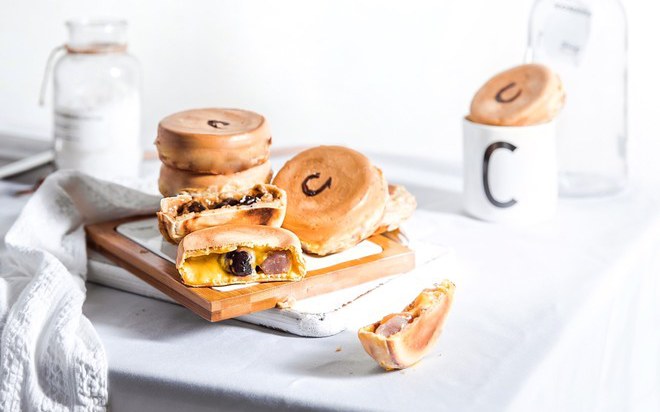
Taiwanese wheel cakes with a chewy griddle shell and three viral fillings — taro pork floss, sweet potato taro balls, boba milk tea custard — with exact grams.
Instructions
-
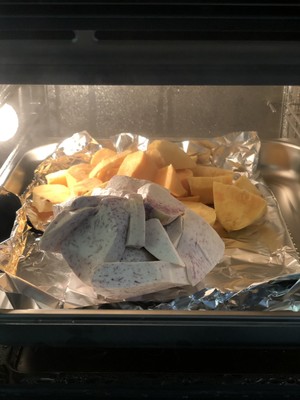 Steam the taro (or sweet potato) over high heat for about 30 minutes, until a chopstick slides through a chunk with no resistance. Steam both vegetables at once if you are making two fillings.
-
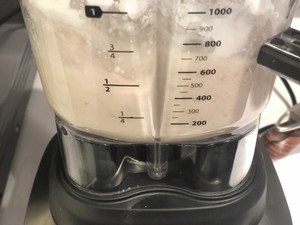 Blend the hot taro with the heavy cream, sugar, butter and milk powder until completely smooth and glossy — thick like soft-serve. For taro paste, add the purple sweet potato powder for the signature lavender color; sweet potato paste is made the same way, no powder needed. No blender? Mash hard, then push through a sieve.
-
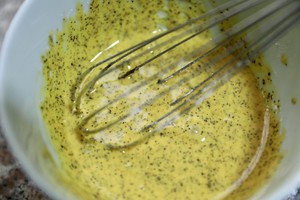 Make the milk tea custard: whisk the egg yolks with the sugar until pale and thick, then sift in the tea from the bags, the cake flour and the cornstarch, and whisk to a smooth paste.
-
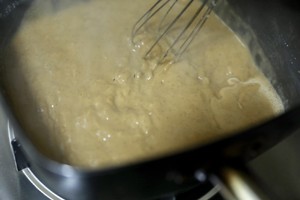 Heat the milk in a small saucepan until small bubbles ring the edge — do not let it boil. Pour it slowly over the yolk mixture, whisking constantly so the yolks do not scramble. Rest 5 minutes to steep the tea.
-
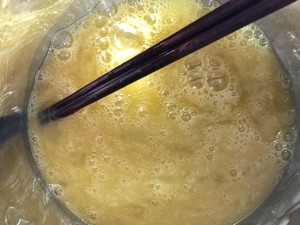
 Strain the mixture back into the pan through a fine sieve and cook over low heat, stirring constantly, until it thickens enough to coat the spoon heavily, 4-6 minutes. Off the heat, stir in the butter until melted, press plastic wrap onto the surface and chill. Fold the tapioca pearls, tossed with the brown sugar, into the cold custard.
-
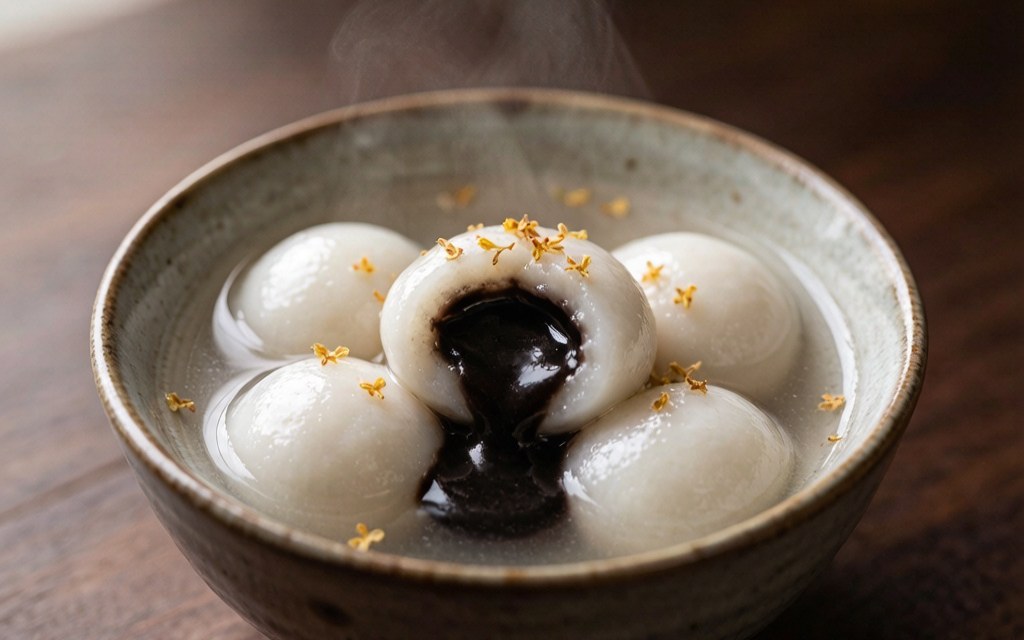
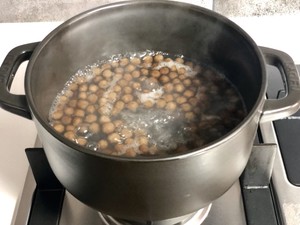
 Cook the frozen taro balls in boiling water until they float and turn translucent at the center, 3-4 minutes. Drain and toss with a teaspoon of sugar so they do not stick together.
-
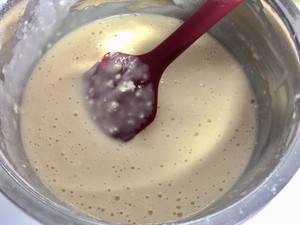 Make the batter: whisk the eggs with the sugar and salt for 2 minutes until slightly pale and foamy, whisk in the milk, then sift in the cake flour, sweet potato starch and baking powder and whisk until smooth. Stir in the oil, cover, and refrigerate at least 1 hour (up to overnight).
-
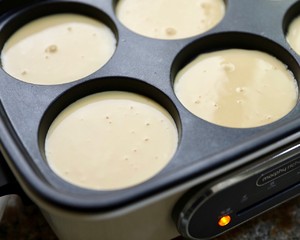 Heat a wheel-cake griddle — or one 6-inch (15 cm) nonstick skillet — over medium heat until a drop of water skitters across it. Pour in just enough batter to coat the bottom thinly, then immediately drag the back of a wooden spoon around the wall so the batter climbs about 1 cm up the sides; that rim becomes the dome.
-
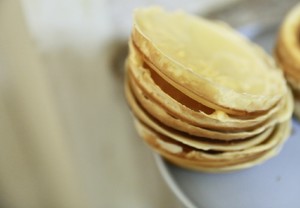 Cook until the surface loses its shine and the underside is pale golden with brown freckles, 1-2 minutes, then slide the shell out onto a plate. Wipe the hot pan with a cold damp towel for a few seconds to drop the temperature.
-
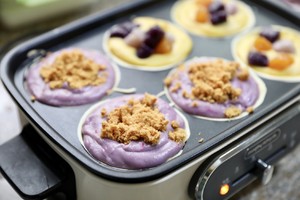 Pour the second shell, set the heat to low, and swirl the rim as before. Work quickly now: spread 2 tablespoons of taro paste on the shell and scatter 1 tablespoon of pork floss over it — or fill with custard and pearls, or sweet potato paste and taro balls. Semi-liquid fillings go down first, solids on top.
-
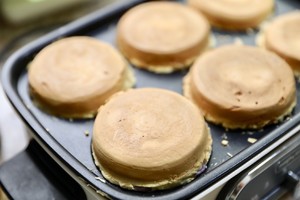 Lay a cooked shell on top, uncooked side down, and press gently so the still-tacky batter grabs it. If the edges refuse to seal, dip a butter knife in raw batter, paint the seam, and keep the heat low another minute.
-
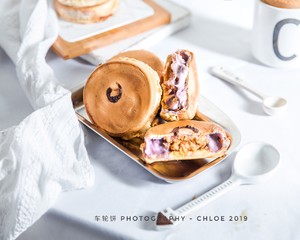 Cook over low heat 1-2 minutes per side, until both faces are evenly golden and the seam holds when you pick the cake up. Serve immediately — wheel cakes are a fresh-from-the-pan food and turn gummy reheated.
Why this recipe works
Wheel cakes look intimidating, but three details do all the work.
1. A rested batter. This is essentially a thin pancake batter with sweet potato starch swapped in for chew. An hour in the fridge fully hydrates the flour and swells the starch, so the shells cook through fast and stay pliable instead of tearing when you lift them out. The baking powder is what puffs the rim into that signature domed "wheel".
2. Two thin shells, filled separately. Street vendors cook each half in its own well: a thin ladle of batter swirled up the walls with a wooden tool, cooked until just set, then capped. Building the cake from two shells — instead of pouring batter over the filling in one go — means the filling only warms through, it never bakes.
3. Seal while tacky. The cap goes on while the bottom batter is still undercooked and sticky; that raw layer is the glue. Wait until both halves are fully cooked and nothing sticks — patch any gaps with a dab of raw batter and keep the heat low.
About the dish
Wheel cakes (車輪餅, chē lún bǐng) are a staple of Taiwanese night markets — round griddle cakes about the size of a hamburger bun, named for the wheel-shaped molds they were traditionally cooked in. The classic filling is red bean custard, which is why older stalls still call them 紅豆餅, "red bean cakes".
The versions here are the modern shop ones that took over Chinese social media: taro paste with pork floss (sweet against salty-savory), chewy taro balls with sweet potato, and brown-sugar boba folded through milk tea custard. Vendors use a special multi-well electric griddle; home cooks get close with a small nonstick skillet and a little patience. Eaten hot, the shell is crisp at the edge and custardy inside — which is exactly why they are never good reheated.
What to serve with it
Wheel cakes are a self-contained street snack — all they want is an unsweetened black or oolong tea on the side. Serve them straight from the pan, one per person, and warn everyone that the custard filling is molten. No special griddle? A 6-inch skillet turns out one proper wheel cake at a time — worth it for the taro pork floss filling alone. For a fuller afternoon spread, add something cold and light from our desserts collection so the table does not tilt entirely toward rich and warm.
Pro tips
- The cold-towel wipe between shells is the street vendor's real trick: it resets the pan temperature so the second shell cooks slowly enough to stay pliable for filling.
- Batter consistency check after chilling: it should ribbon off the spoon and self-level in 3-4 seconds. Too thick to swirl? Whisk in milk 1 tablespoon at a time.
- Taro and sweet potato pastes freeze beautifully for 2 months in flat zip-top bags — thaw and microwave 30 seconds before filling.
- Cook one practice shell before committing to the batch. Your first swirl will be too slow; by shell three your hands learn the rhythm.
- Keep fillings warm (custard in a bowl over hot water, pastes in 30-second microwave bursts). Cold filling stalls the seal and makes the shell gummy.
- No wheel-cake griddle? A 6-inch nonstick skillet makes one cake at a time. Do not be tempted to make bigger cakes — a thicker shell never cooks through before it burns.
Storage & leftovers
- Fillings: refrigerate 3-4 days; taro and sweet potato pastes freeze for 2 months.
- Batter: refrigerate up to 24 hours and re-whisk before using.
- Assembled wheel cakes do not keep — the shell weeps and toughens within 2 hours. Make only what you will eat.
Frequently asked questions
Can I make wheel cakes without a wheel-cake pan?
Yes. A 6-inch (15 cm) nonstick skillet works; you just make them one at a time. The multi-well electric griddle only speeds things up.
Where do I find taro, pork floss and taro balls?
Any Asian grocery: taro near the potatoes, pork floss (rou song) in the shelf-stable aisle, taro balls in the freezer. If taro is unavailable, orange sweet potato alone makes a lovely paste.
Can I make the fillings ahead?
All three fillings keep 3 days refrigerated (the custard up to 4). The batter holds overnight too. Assembled cakes, though, must be eaten within the hour.
Why won't my two shells stick together?
The bottom batter has cooked through, so there is nothing tacky to glue with. Paint the seam with raw batter and press 30 seconds over low heat — it will hold.
Are the cakes very sweet?
Moderately — the shell is barely sweet and the fillings sit around milk-tea-shop sweetness. Cut the filling sugar by a third if you prefer.
Can I use store-bought red bean paste instead?
Absolutely — it is the classic filling. Warm it slightly with a spoonful of cream to loosen it before filling.
Why did my wheel cake shell turn gummy?
Three usual causes: the filling was cold, which cools the shell and stalls the seal; the batter was too thick to cook through; or the finished cake sat too long and steamed in its own moisture. Keep fillings warm, whisk a little milk into a stiff batter, and serve within the hour.