Jiangsu · Sweets & Drinks
Rain Flower Stone Tangyuan (雨花石汤圆)
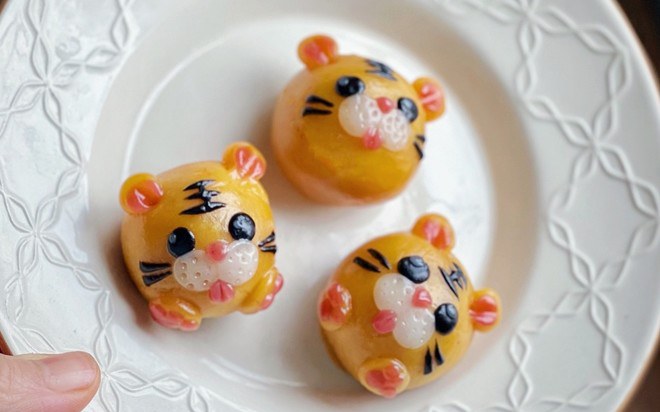
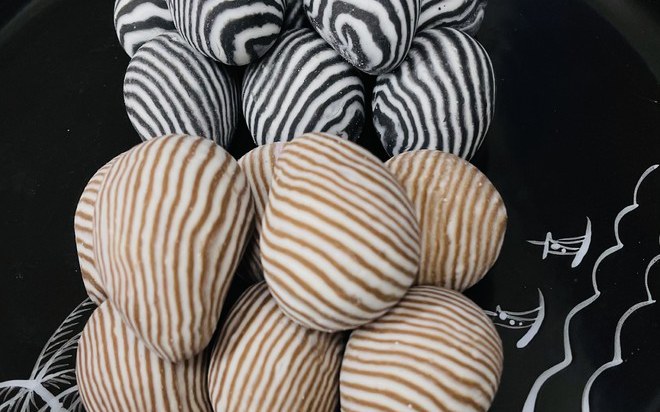
Nanjing-style tangyuan marbled like rain flower stones: white, cocoa and charcoal dough folded into unique veins, each one filled with sesame and peanut butter.
Instructions
-
 Scald the wheat starch: put it in a bowl, pour the 90 ml of just-boiled water over it all at once, and stir at once with a rolling pin or spatula until it turns translucent with no dry powder left. Turn it onto the counter and knead briefly until smooth.
-
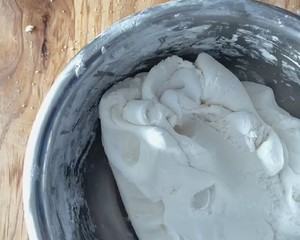
 Make the main dough: mix the glutinous rice flour and sugar, pour in the 150 ml of water at 80°C while stirring, and knead into a rough dough. Add the starch paste and knead the two together, then work in the lard and keep kneading until the dough is smooth, glossy and supple. Cover with plastic wrap.
-
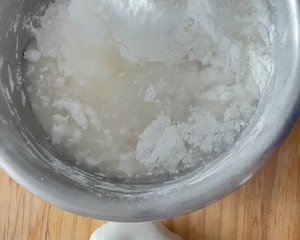 Divide the dough into 4 equal pieces. Knead cocoa powder into one piece and charcoal powder into another (add a few drops of water if they turn crumbly), leaving two pieces white. Keep every piece covered while you work.
-
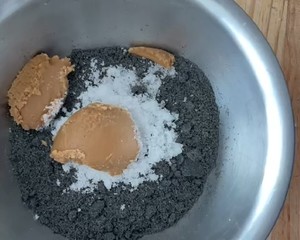
 Make the filling: toast both sesame seeds in a dry skillet over low heat until fragrant, cool, then grind with the sugar to a gritty powder. Stir in the peanut butter and melted lard until it clumps. Chill 30 minutes, roll into 20 balls of about 10 g, and freeze until hard — at least 1 hour.
-
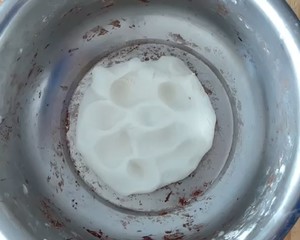 Marble one pair of colors: roll one white piece and the cocoa piece into equal rectangles, stack them, and roll out longer so they bond. Fold in half and tap flat, fold once more so you have 4 layers, then roll out again and cut the sheet into 3 strips. Mist the strips with water, stack them, and press firmly into one compact block. Repeat with the second white piece and the charcoal one — or stack all three colors at once if you prefer busier stones.
-
 Cut the block crosswise into slabs 1.5 cm thick. Every slab now carries its own vein pattern — no two are alike, and that is exactly the point.
-
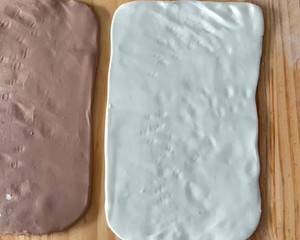 Flatten each slab with the pattern side up into a wrapper about 10 cm across. Press gently; overworking blurs the veins.
-
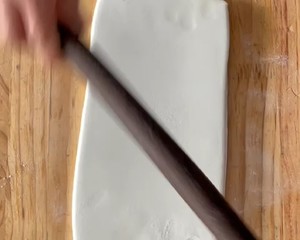 Wrap: cup a wrapper in your palm, set a frozen filling ball in the center, and push the dough up around it with your thumb until enclosed. Pinch the seam firmly closed.
-
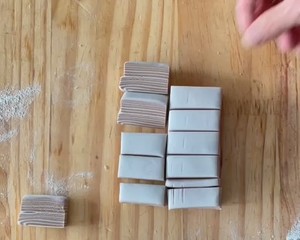 Shape each one into an irregular pebble — slightly flattened, not a perfect sphere — and pinch off any excess dough at the base. Smooth the surface with a light touch so the veins stay visible.
-
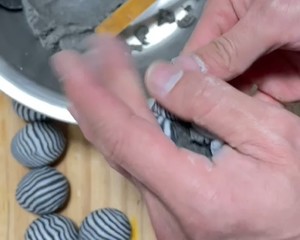 To cook: bring a large pot of water to a rolling boil, slide the tangyuan in along the edge, and stir once gently. Cook until they rise, look puffed and glossy, then give them 2–3 minutes more.
-
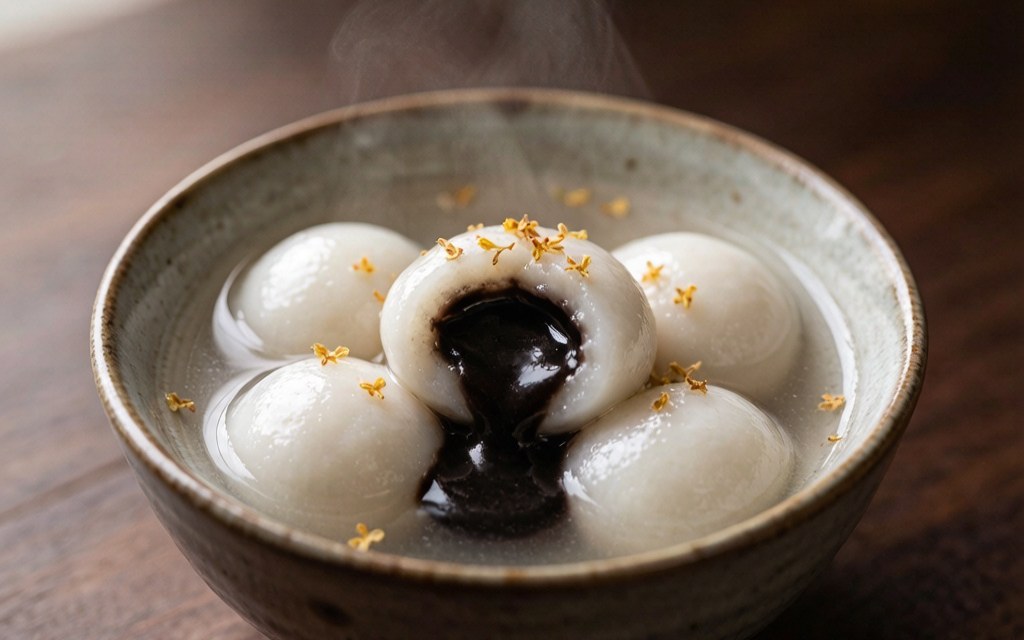
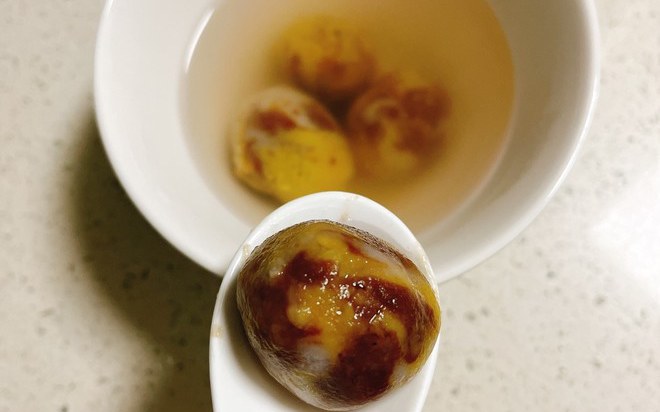
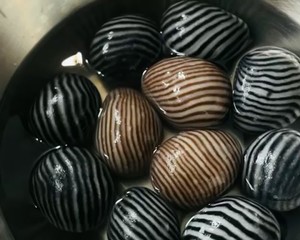 Lift out and serve hot, three to a bowl in the cooking water or a light syrup. Every bowl looks like a handful of polished river stones.
Why this recipe works
Rain flower stone tangyuan look like a pastry-shop stunt, but they rest on three ordinary techniques.
1. A two-dough wrapper. The wheat starch is scalded into a translucent paste and kneaded into the glutinous dough, giving the wrapper both stretch and spring — the same combination dim sum kitchens use for har gow skins. The lard finishes the job: it makes the dough supple, keeps it from cracking around the seam, and gives the cooked stones their faint sheen.
2. Lamination, not marbling. The veins come from stacking colored sheets, rolling, folding, cutting and stacking again — a rough puff-pastry fold. Each fold multiplies the color boundaries, so a 4-layer, 3-strip stack already shows dozens of bands. Roll or twist the dough instead and the colors blend into mud; fold them and they stay crisp lines. The same fold works for any two color tangyuan dough, so once you have it down you can marble matcha, beet, or charcoal at will.
3. Pattern-side-up wrapping. Flattening each slab with the veined face outward, then wrapping gently, puts the design on display where boiling cannot blur it. The shaping into irregular pebbles is not laziness — perfect spheres would look wrong; the slight asymmetry is what sells the stone.
About the dish
Nanjing is famous for yuhua stones — banded, multicolored agate pebbles washed down from the hills around the city, collected and polished as keepsakes for centuries. At some point Qinhuai dim sum chefs decided the city's signature dessert should look like its signature stone, and rain flower stone tangyuan were born: a modern creation, not an ancient one, that spread from Nanjing banquet houses to home kitchens and social media, where no two bowls ever look alike. The dough is the classic tangyuan wrapper — glutinous rice flour, a little starch, lard, sugar — colored with cocoa and bamboo charcoal, the same benign kitchen colorings used for dark steamed buns. Underneath the geology, it is still the Lantern Festival dessert: chewy, warm, and hiding sweet sesame lava.
What to serve with it
Three stones per bowl, in their own cooking water or a thin osmanthus syrup, ideally in white bowls so the marbling shows. Because the colors come from cocoa and charcoal rather than liquid dyes, these are natural food coloring tangyuan that hold their pattern even in the bowl. This is a finish-the-meal dessert: after something boldly savory like mapo tofu or a spread from our dumplings page, a quiet bowl of sweet, chewy stones is exactly the right last note. A pot of tea on the side, and let everyone compare their favorite stone.
Pro tips
- Fold, never twist: folding and rolling the layered dough is what makes long parallel veins; twisting or kneading the colors together just makes gray-brown mush.
- The 80°C water matters: boiling-hot water makes glutinous dough stickier and slightly gray, while cooler water barely binds. Let just-boiled water sit uncovered for 5 minutes and it is about right.
- Mist the strips with water before stacking, or the block will split into layers when you cut it.
- The slabs must be cut thick (1.5 cm). Thin slabs lose the vein depth that makes them look like stones.
- Freeze the filling balls hard, same as any tangyuan — these are big wrappers, but soft filling still smears the pattern side.
- Work fast once the dough is colored: glutinous dough dries pale and cracks. Covered bowls, damp cloth, quick hands.
Storage & leftovers
- Freeze raw tangyuan in a single layer on a tray until solid, then bag; cook from frozen within 1 month.
- Cooked tangyuan are best within the hour; leftovers keep a day in the fridge and reheat in gently simmering water for 2 minutes.
- Extra filling keeps a month frozen in a bag; roll and use it for plain white tangyuan later.
Frequently asked questions
What are rain flower stones?
Colorful banded agate pebbles found around Nanjing, prized in China for centuries as polished keepsakes. This Qinhuai dim sum creation imitates them in dough — each tangyuan comes out with its own unique marbling, like a real stone.
I cannot find wheat starch. Can I substitute?
Tapioca starch swaps 1:1 and gives a chewier wrapper. Cornstarch works too but makes a softer, less bouncy dough. In a pinch you can skip it and use 325 g glutinous rice flour total — the wrapper is just less springy.
Can I get the veined look without charcoal powder?
Yes — use cocoa for one color and skip the charcoal (use two whites to one cocoa), or add matcha or beet powder for different stone colors. You need at least two contrasting shades for visible veins.
My veins came out blurry. What happened?
The dough was kneaded or twisted after coloring, or the wrapper was flattened too hard. Fold and roll the layers, press the slab gently, and stop kneading once the colors are in.
Can I make these ahead?
Yes — freeze the shaped, raw tangyuan on a tray, then bag for up to 1 month. Boil straight from frozen, adding 2–3 minutes. The marble is unaffected by freezing.
Do I have to make the sesame-peanut butter filling?
No — any firm filling works: plain black sesame paste, red bean paste, or peanut sugar filling. Keep it low-moisture and frozen hard before wrapping.
My dough keeps cracking while I wrap the stones. How do I fix it?
Glutinous dough cracks when it dries out or goes cold. Keep every piece covered with plastic wrap while you work, knead in a few drops of warm water if it feels crumbly, and rest the dough 10 minutes — the lard in this recipe should keep it supple enough to pinch closed without splitting.
How do I keep the marble pattern sharp while boiling?
Slide the tangyuan in at a rolling boil, then turn the heat down so the water barely simmers, and do not crowd the pot — hard boiling and sticking both smudge the veins. Lift them out soon after they turn puffed and glossy, since long cooking blurs natural colorings.