Chinese home style · Sweets & Drinks
Tiger Tangyuan (萌虎汤圆)
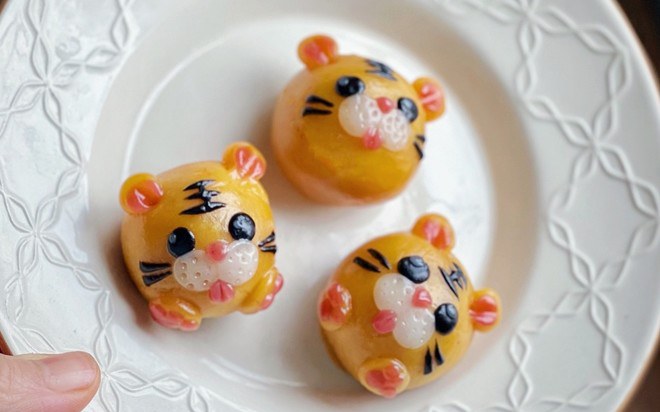
Steamed tiger tangyuan: chewy glutinous dough tinted with pumpkin and red yeast, filled with coconut or red bean paste and finished with an adorable tiger face.
Instructions
-
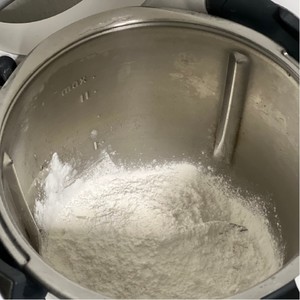 Make the base dough: stir 1⅓ cups glutinous rice flour, 2 Tbsp regular rice flour and the water together, then knead for 2–3 minutes into a soft, play-dough-like dough that yields without cracking. Cover with plastic wrap.
-
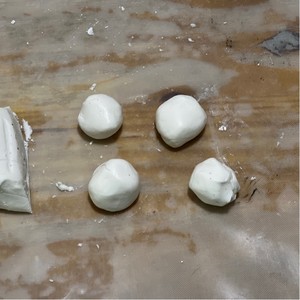
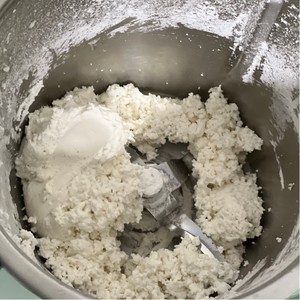 Pinch off one fifth of this dough and roll it into 4 small balls. Bring a small pot of water to a boil, drop in the balls, and cook until they float and turn translucent, 3–4 minutes. Scoop out and drain — this is the cooked-dough starter.
-
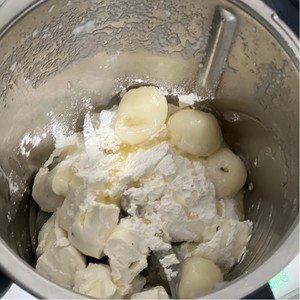
 Break the remaining raw dough into chunks and put them in a bowl with the ⅓ cup glutinous rice flour, 1 Tbsp rice flour, the cooked balls and the corn oil. Knead everything together while still warm for 5–8 minutes, until completely smooth and elastic with no lumps — this pre-cooked portion is the key to a wrapper that never cracks.
-
 Divide the dough into three roughly equal pieces. Knead pumpkin powder into one and red yeast powder into the other, leaving the third white; add a drop of water if the powders make a piece crumbly. From the white dough, pinch off two walnut-sized bits — knead charcoal powder into one (black) and a pinch of red yeast powder into the other (pink). Cover every piece with plastic wrap.
-
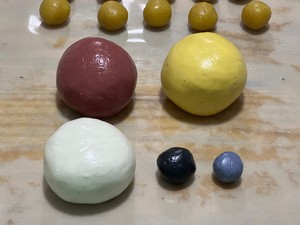 Roll the colored body dough into 12 balls of about 20 g each, and keep the filling balls nearby. Keep any dough you are not actively shaping under wrap — it skins over in minutes and then cracks.
-
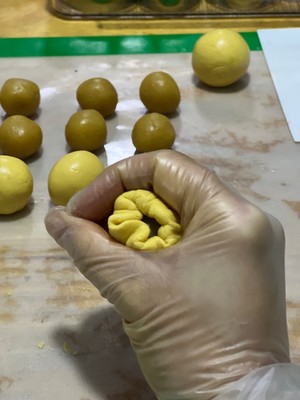 Flatten one body ball into a 7 cm disc, cup it in your palm, set a filling ball in the middle, and push the dough up around it with your thumb. Pinch the top closed and roll between your palms until smooth.
-
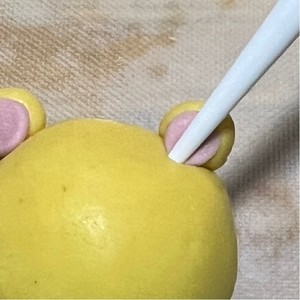
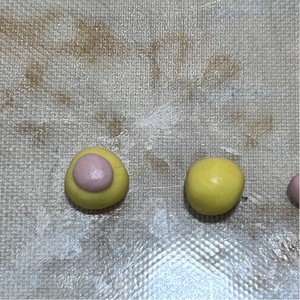 Ears: pinch off 2 g of body-colored dough, split it in two, and roll each half into a small ball. Flatten slightly, press onto the top of the head, then cap each ear with a smaller pink disc. Poke a few holes in each pink disc with a toothpick to suggest fur.
-
 Eyes: roll two 0.4 cm discs of black dough and set them just below the ears. Halo each with a slightly larger white disc pressed behind it, then dot a tiny ball of white dough on the upper edge of each black disc as a glint.
-
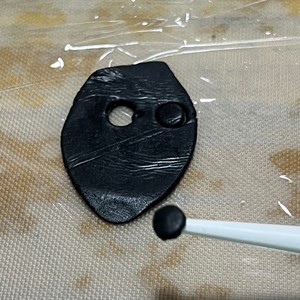 Muzzle: shape a piece of white dough into a lying figure-8 and press it below the eyes. Place a small pink ball at its narrow waist and a second one just below, then press a vertical dent in the lower ball with a toothpick — that reads as the nose and mouth.
-
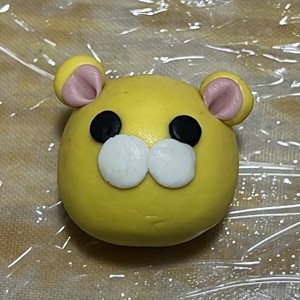 Whiskers and brow: roll the black dough into pencil-thin threads. Lay three short whiskers on each cheek, and on the forehead lay three horizontal strokes crossed by one vertical to form the Chinese character for "king" — the tiger's crown.
-
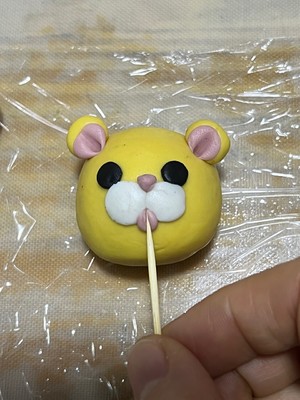 Whenever a decoration will not stick, touch your fingertip to a dish of water and dab the back of the piece; a tiny amount works like glue. Sit each finished tiger on a square of parchment.
-
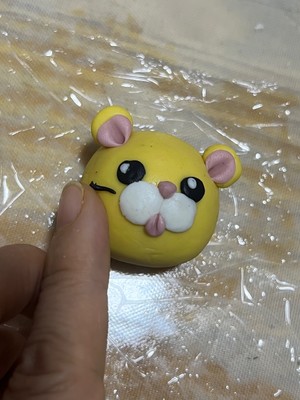 Set up a steamer with plenty of water and bring it to a full boil. Steam the tigers, parchment and all, over high heat for about 9 minutes with the lid on.
-
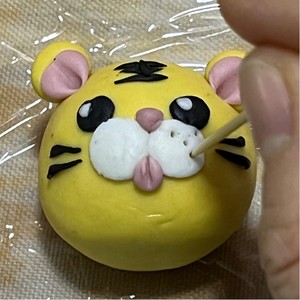 Serve hot, lifting each tiger by its parchment — the wet faces are fragile. Once cool, they freeze beautifully; re-steam from frozen for about 12 minutes.
Why this recipe works
Three details separate charming tiger tangyuan from cracked, blurry ones.
1. The cooked-dough method. Boiling one fifth of the dough and kneading it back in pre-gelatinizes part of the starch. That cooked portion acts like a binder: the finished dough stretches without tearing, seals around the filling cleanly, and — crucially for a decorated surface — does not crack along the ears and whiskers as it dries. It is the same logic behind hot-water doughs across the Chinese kitchen, applied in its most forgiving form.
2. Decoration order matters. Big shapes go on first (ears, eyes, muzzle), fine lines last (whiskers, brow). Wet dough sticks to wet dough, so each piece is pressed on with a dab of water and a moment of firm pressure. Build the face like a collage and nothing slides off in the steam.
3. Steaming, not boiling. Ordinary tangyuan are boiled, but rolling water erodes fine dough details. Nine minutes of gentle steam cooks the wrapper and filling through while every whisker stays exactly where you put it — and the parchment squares let you move the tigers without smudging their faces. In the steamed vs boiled tangyuan debate, that is the trade: steam keeps the art, boiling buys the classic slippery bounce in syrup.
About the dish
Tangyuan — soft glutinous rice balls served in sweet syrup — have been part of the Lantern Festival table since the Song dynasty, their roundness standing for family reunion. Shaped tangyuan are a recent, playful branch of the tradition: home cooks tint the dough with pumpkin, red yeast rice, charcoal and other natural colorings, then sculpt zodiac animals, fruits and cartoon faces. This little tiger had its moment around the Year of the Tiger, when social feeds filled with tiger-faced tangyuan for the festival. Steam them instead of boiling and you get a dessert that is equal parts craft project and comfort food — and underneath the whiskers it still tastes like proper tangyuan: chewy, warm and lightly sweet.
Steam rather than boil: it keeps the faces sharp and the fillings from washing out, and the pumpkin-orange dough deepens with a pinch of red yeast rice powder. Coconut or red bean paste goes in chilled so it wraps cleanly.
What to serve with it
Three tigers per bowl, spooned with a little warm sugar syrup, or simply on their own with hot tea. For a festival table, pair them with other sweet bites — our desserts collection has sesame and coconut ideas that round out the plate — and a pot of jasmine tea to cut the richness. Leftover plain dough rolls into ordinary white tangyuan; and if the shaping bug bites, the same dough technique works for filled steamed buns. Tiger shaped glutinous rice balls vanish fast, so double the batch if your table runs bigger than four.
Pro tips
- Keep every piece of dough under plastic wrap while you work. Glutinous dough skins over in minutes, and a dried surface cracks the moment you try to shape it.
- The cooked-ball step is not busywork: pre-gelatinized flour kneaded back into raw dough makes the wrapper stretchy, sealable and crack-free, which is what a decorated surface demands.
- Steam rather than boil these. Boiling water erodes the delicate ears and whiskers; gentle steam sets every detail intact.
- Natural color powders are potent — start with the amounts listed and add more only if the shade looks washed out. Charcoal powder can turn dough bitter if you overdo it.
- No pumpkin powder? Dry-fry grated orange sweet potato into the dough, or use turmeric for color only. Cocoa powder is the easiest stand-in for charcoal black.
- Kids are great at rolling the tiny balls for ears, eyes and nose — set them up with the white and pink dough and let them decorate.
Storage & leftovers
- Refrigerate steamed tigers in a sealed container for up to 2 days; the dough toughens when chilled.
- Re-steam for 5 minutes to restore softness. The microwave makes them rubbery, though 20 seconds under a damp paper towel works in a pinch.
- Freeze in a single layer on a tray, then transfer to a bag; keep for up to 1 month and re-steam from frozen for about 12 minutes.
Frequently asked questions
Can I boil these like regular tangyuan instead of steaming?
You can, but the face decorations may blur or fall off in the rolling water. If you must boil, slide them in gently, cook until they float plus 1 minute, and do not stir hard.
Where do I find pumpkin powder, red yeast powder and bamboo charcoal powder?
Asian grocery stores and online spice shops carry all three. Practical substitutes: turmeric (orange), beet powder (pink) and cocoa powder (black). The tangyuan tastes the same either way.
My dough keeps cracking when I shape it. What is wrong?
It is either too dry or drying out on the surface. Knead in water 1 tsp at a time until it feels like soft play dough, and keep every unused piece wrapped in plastic.
Can I make these ahead?
Yes. Freeze the steamed tigers in a single layer, then bag them for up to 1 month. Re-steam straight from frozen for about 12 minutes — no need to thaw.
What filling works best?
Anything stiff and low-moisture holds the shape: coconut filling, red bean paste, or black sesame paste chilled until firm. Wet fillings weep and distort the face.
Is this gluten-free?
Yes — glutinous rice flour and regular rice flour contain no wheat gluten, so the dough is naturally gluten-free. Just check that your filling is too.
What is the difference between tangyuan and yuanxiao?
Both are festival glutinous rice balls, but they are made differently: tangyuan are wrapped — a wet dough pinched around the filling, like these tigers — while yuanxiao are rolled, a solid filling tumbled in dry flour until coated. Tangyuan dominate the south and give you the smooth surface a decorated face needs.
Can I use fresh pumpkin instead of pumpkin powder?
Yes — steam the pumpkin, mash it smooth, chill it, and knead it into the white dough in place of part of the color step. Purees add moisture, so hold back some of the dough water and add it only if the dough feels dry. The shade is softer than powder but completely natural.