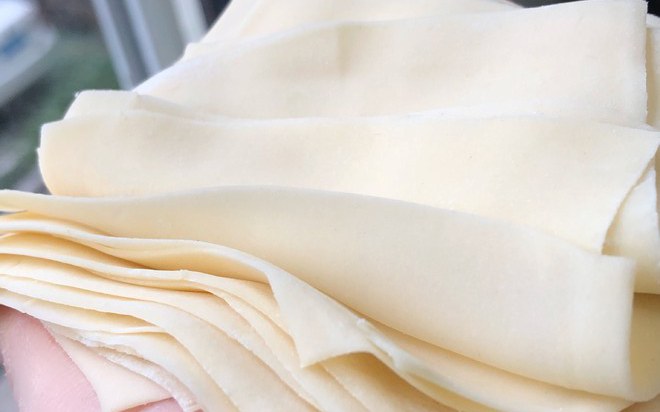
Chinese home style · Buns & Pancakes
Steamed Pancake Wrappers: Spring Roll & Duck Pancake Skins (春卷皮/荷叶饼)
Paper-thin, stretchy steamed wrappers from a two-ingredient dough — the stack-and-steam method makes 10 skins in one pot, ready for spring rolls or duck pancakes.
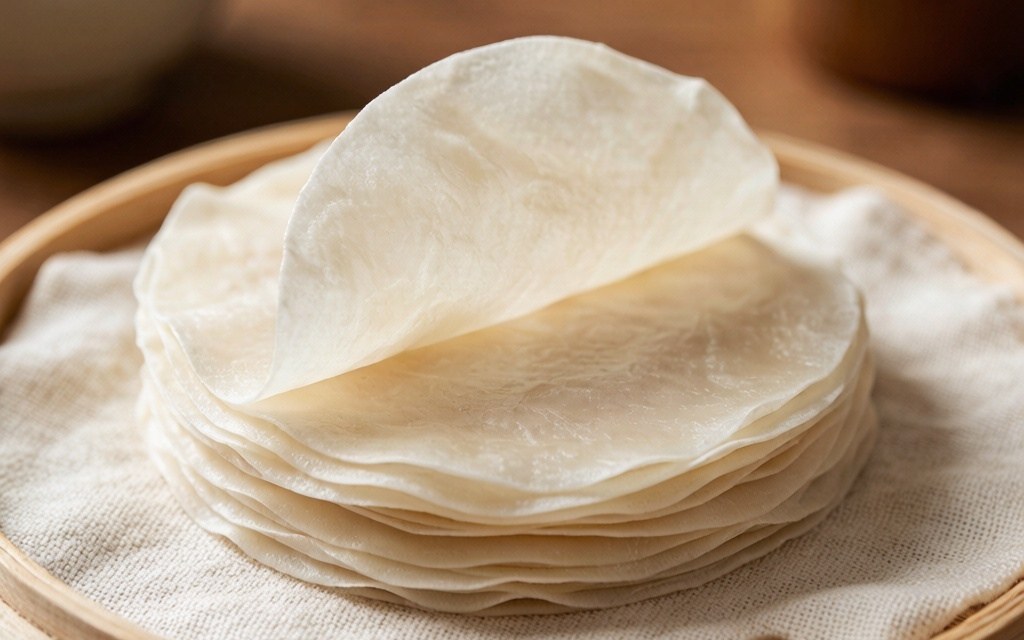
Instructions
-
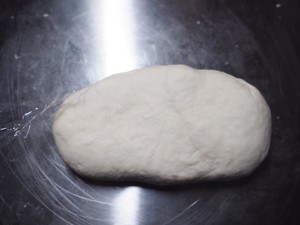
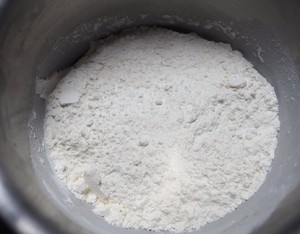 Make the dough: dissolve the salt in the warm water, stir it into the flour until shaggy flakes form, then knead 5 minutes into a smooth, medium-firm dough — it starts dry-feeling and smooths out as the flour hydrates. Cover and rest 5 minutes.
-
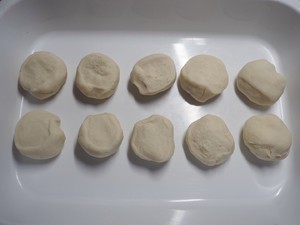
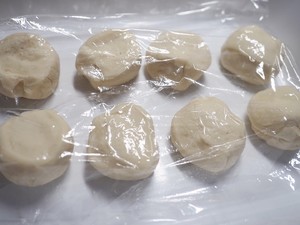
 Portion: roll the dough into a rope and cut into 10 equal pieces (about 1 oz / 30 g each). Brush each piece lightly with oil on all sides, stack them back together, cover, and rest 20 minutes — the oil keeps them from crusting and makes rolling thin easy.
-
 Make the oil paste: stir the 1½ tsp flour into the 1 Tbsp oil until smooth. This paste is the release layer that lets cooked wrappers peel apart like pages.
-
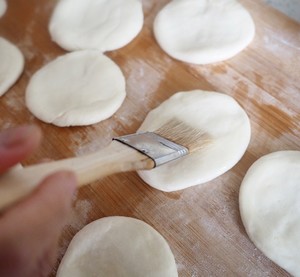
 Roll each ball into a 3-inch disc, brush the top thinly with oil paste, and stack the discs in pairs — paste facing paste. (For a grand stack: paste the top and bottom of the whole pile too.) Align the edges by pressing the stack together gently.
-
 Roll the stack: with the pair (or pile) flat on the counter, roll from the center outward, flipping occasionally, until you have an 7–8 inch (18–20 cm) circle, paper-thin and even. Rolling several together is the entire trick — they can't tear individually because they're protected by their partners.
-
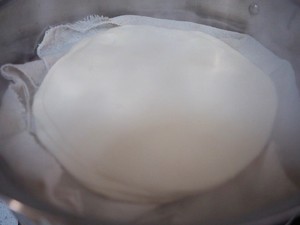
 Steam: set up a steamer with cold water and a cloth liner. Lay in the stack, cover, and steam 10–12 minutes over medium-high from cold start (about 8 minutes from a rolling boil).
-
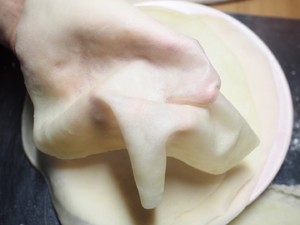
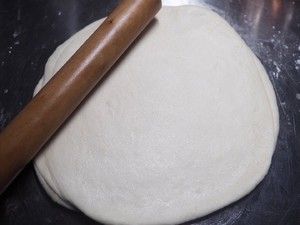 Peel while hot: take the stack out and separate the wrappers one by one immediately — they peel apart cleanly while warm and steam-softened; if they cool, they cling. Cover the peeled stack with a damp towel.
-
 Serve warm: fill with stir-fried spring roll filling and roll, or make Peking-duck-style pancakes — smear with hoisin, add duck or char siu, scallion and cucumber batons, and wrap like a soft taco.
-
 To store: cool completely, stack in a sealed bag, and refrigerate 3 days or freeze 2 months. Re-steam 3 minutes to bring back the silk.
Why this recipe works
Making thin wrappers at home intimidates people because the standard method — cooking each batter skin individually on a hot pan — genuinely is fiddly. The stack-and-steam method sidesteps all of it.
1. The paste-between-discs trick. A thin flour-oil paste between raw discs is the release layer. During steaming, the paste melts and keeps the layers from fusing, so the stack peels apart like the pages of a wet book. Missing this step is why so many first attempts become one solid blob.
2. Roll them together. Rolling several oiled discs as a unit means each wrapper is protected by its partners — you can roll the stack far thinner than any single disc could go alone. Paper-thin with zero tears, and no special hot-plate equipment — the classic home shortcut for steamed spring roll wrappers.
3. Warm-water dough with salt. Slightly warm water gives a dough that rolls thin without fighting back, and the salt quietly strengthens the gluten so the finished wrapper has the stretch to wrap around fillings — the Q-springy bite (Q弹) the source recipe names.
About the dish
Soft steamed pancakes sit at the root of northern Chinese eating — they appear as spring roll skins (春卷皮), Peking duck's mandarin pancakes (荷叶饼), and moo shu's moo shu pancakes, three dishes sharing one dough. The stack-and-steam technique is the home version, the kind grandmothers run when the whole family shows up and ten wrappers won't cut it — so they roll twenty at once.
Wrapper-making is also the honest gateway into the dishes it serves: once you can make the skin, spring rolls and duck pancakes become assembly jobs. It's the rare from-scratch project where the equipment list is shorter than the ingredient list — flour, salt, water, a steamer you already own.
The three wrappers share one dough but wear different names by shape and thickness: rolled thin and steamed soft for Peking duck, cut wide and folded around moo shu, or trimmed into squares for spring rolls. One afternoon of dough covers all three cravings.
What to serve with it
Classic route: hoisin, scallion batons, cucumber and roast duck or our char siu–glazed dishes. For fried spring rolls, pair these soft skins with a crisp vegetable spring roll filling wrapped fresh at the table. Leftover wrappers make instant moo shu nights.
Leftover wrappers restack in their bundle and refrigerate for days; a few minutes back in the steamer makes them soft again. Kids build their own duck pancakes at the table — hands-on dinner is the whole point — and breakfast leftovers take jam or a fried egg rolled inside. Reheating is painless: a 3-minute re-steam brings chilled or frozen duck pancakes back to silky.
Pro tips
- Warm water, not hot: hot water makes tender-dumpling dough; warm builds the slight elasticity that lets these wrappers stretch around fillings without cracking.
- The oil paste between discs is the difference between "ten perfect wrappers" and "one welded disc." Be thorough with it, especially the very top and bottom of the stack.
- Roll thinner than feels safe — 18 cm wrappers that look almost translucent are correct. They steam into strength; under-rolled ones come out doughy.
- No steamer? Use a pot with a tight lid, a heatproof plate on a rack, and 2 cm of water. A metal pie tin as the stack's base makes lifting easier.
- This same stack works for moo shu pancakes (make them slightly smaller, 15 cm) — one dough, three Chinese classics.
- Peel-and-use immediately is best; the window of perfect texture is about 20 minutes, so time the steaming to just before eating.
Storage & leftovers
- Refrigerate in a sealed bag up to 3 days; re-steam 3 minutes to soften.
- Freeze up to 2 months with parchment between small stacks; re-steam straight from frozen, 4–5 minutes.
- Don't refrigerate uncovered — they dry to crackers within hours.
Frequently asked questions
Are these like supermarket spring roll wrappers?
Different lineage: store skins for deep-frying are made from a flour batter cooked on a hot plate and turn brittle-crisp when fried. These steamed wrappers stay soft and stretchy — they're for fresh spring rolls, duck pancakes and moo shu. Both are authentic, for different dishes.
Can I make the dough ahead?
Yes — refrigerate the covered dough up to 24 hours; bring to room temperature and rest 15 minutes before rolling. The rolled stack also holds 3 days refrigerated and re-steams like new.
My wrappers tore when peeling. What went wrong?
Usually under-oiled between layers (go heavier with the paste), or peeled after cooling. If a few tear, knead them back into a ball, rest 10 minutes, and re-roll a fresh pair.
Why steam instead of pan-cooking each one?
The stack-steam method is the home cook's superpower: ten wrappers in 12 minutes versus ten pan-cooked rounds, one at a time. It's also gentler — no dry spots, no browning.
What fillings work?
Anything saucy-but-not-wet: moo shu pork, shredded roast duck, char siu with cucumber, or a warm stir-fry of cabbage, mushroom and glass noodle for fresh-style spring rolls.
Can I make them gluten-free?
Not with this method — the stretch comes from wheat gluten. GF wrappers (rice paper) are the practical alternative for fresh rolls.
Can I make these without a steamer?
Yes — set a heatproof plate on a rack in a wide pot with 2 cm of water and a tight lid, and steam the stack exactly the same; a metal pie tin under the stack makes lifting easier.
How do I reheat leftover wrappers?
Stack them back up and re-steam — 3 minutes from the fridge, 4–5 minutes straight from frozen. They come back as silky as day one.