Chinese-American classic · Stir-Fry Classics
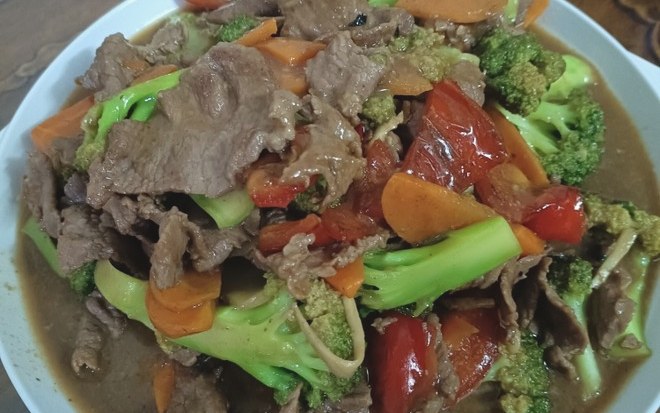
Beef and Broccoli Stir-Fry (西兰花炒牛肉)
Tender velveted beef and crisp broccoli in a glossy oyster-sauce glaze — the takeout classic rebuilt with a 20-minute marinade and a two-minute wok finish.
Instructions
-
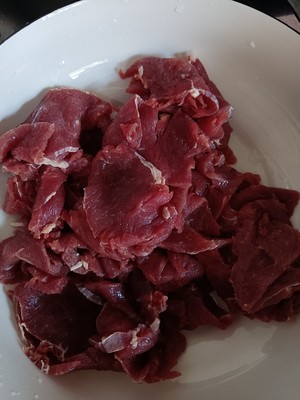
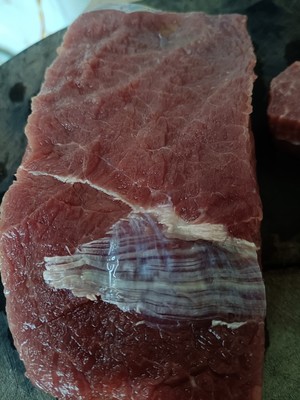 Slice the beef 3 mm thin, cutting against the direction of the muscle fibers — perpendicular across the grain, so each bite is short-fibered and tender. Partially freezing the beef for 20 minutes makes thin slicing much easier.
-
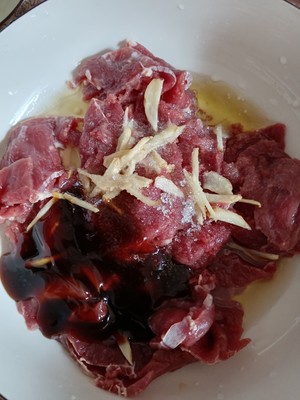
 Marinate: toss the beef with the marinade ingredients (oyster sauce, sugar, cornstarch, white pepper and 1 Tbsp oil), massaging until the liquid disappears into the meat. Rest 20 minutes at room temperature, or up to a few hours refrigerated.
-
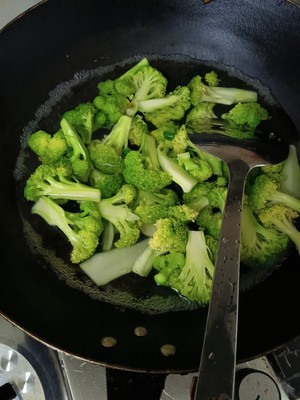
 Blanch the broccoli: drop the florets (and carrot, if using) into a pot of salted boiling water for exactly 60 seconds, then drain well. They turn bright green and just barely lose their raw edge — they'll finish in the wok. Keep ¼ cup of the blanching water.
-
 Mix the sauce: whisk the oyster sauce, light soy, white pepper, bouillon, water and cornstarch in a small bowl.
-
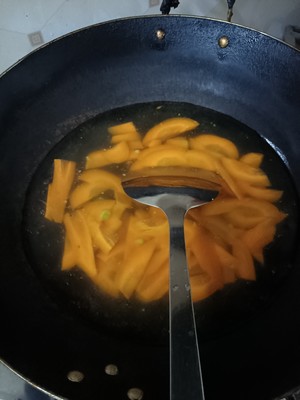 Heat a wok or 12-inch skillet over high heat until it just smokes. Add 2 Tbsp oil and swirl.
-
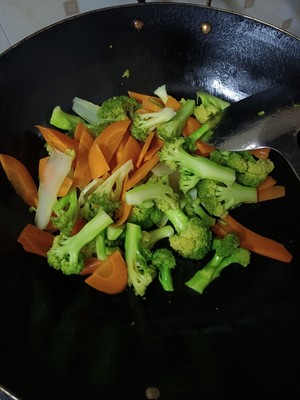 Add the beef and spread it into one layer. Sear undisturbed for 45 seconds, then splash in the Shaoxing wine and stir-fry 30–60 seconds more, until the beef is browned outside but still rare in the middle. Remove to a plate — it will finish cooking later, and overcooked beef is the one thing this dish can't survive.
-
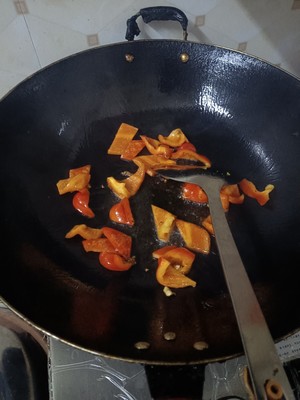 Add the garlic and ginger to the empty wok and stir 20 seconds until fragrant but not colored.
-
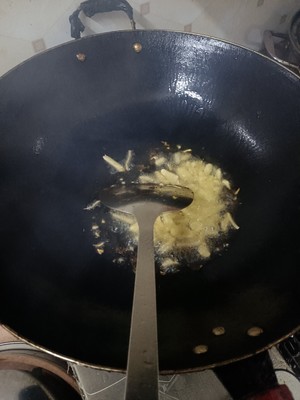 Return the broccoli and carrot, tossing for 1 minute so they pick up the aromatics and heat through.
-
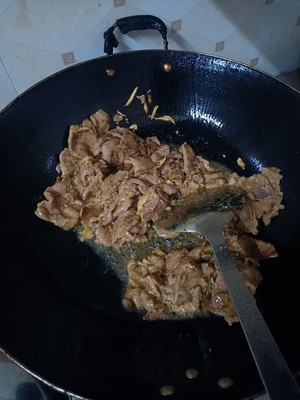 Return the beef with any collected juices, pour the sauce around the edge of the wok (it sizzles and thickens on contact) and toss everything 30–60 seconds, until the glaze coats every piece and the beef is just cooked through. From beef hitting the pan to table should be about two minutes — total.
-
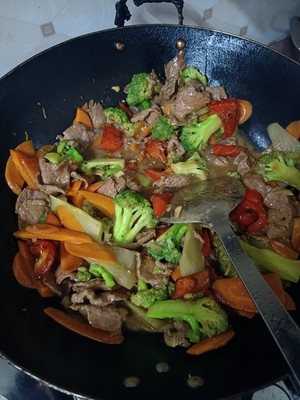 Serve immediately with steamed rice.
Why this recipe works
Beef and broccoli barely exists in China — it was invented for Western palates by Chinese-American cooks, and when it's made right, it deserves its fame. Making it right comes down to three things most home versions skip.
1. Slicing against the grain. Beef is a bundle of long fibers. Slice along them and every bite is a rope; slice across and each piece is tender before any marinade touches it. Partially freeze the meat for 20 minutes and you'll get paper-thin slices without effort.
2. A marinade that's also a sauce builder. Oyster sauce, cornstarch and oil do double duty here: they season and velvet the beef, then the same flavors reappear in the finishing sauce, so the beef and the glaze taste like one dish, not beef-plus-gravy. The cornstarch coat is a quick velveting — the same trick that keeps sliced beef silky in every good Chinese stir fry.
3. Two-stage cooking. Broccoli blanched separately stays green and snappy; beef seared alone stays rare inside until the final 30-second toss. Everything meets the pan three times, briefly — never simmered together into grayness.
About the dish
While China doesn't do beef-and-broccoli, it absolutely does chǎo niúròu — wok-seared beef with vegetables — and this dish is its transpacific child, born in Cantonese-American restaurants in the early 20th century. The Chinese version the cooks grew up with used gai lan (Chinese broccoli); when Western broccoli showed up in American markets, the swap was natural, and the oyster-sauce glaze — a Cantonese invention — came along for the ride.
The home version here follows a Guangdong home cook's method: marinate ahead, blanch the green, blast everything fast. It is the archetypal weeknight dish — from knife to table in 35 minutes, half of it hands-off — and the template for a dozen other stir-fries once you've got the rhythm.
What to serve with it
Steamed jasmine rice, obviously — the glossy glaze exists for it, and the rice collection has the pot of rice you need. For a bigger table, add egg fried rice and a cold smashed cucumber salad to keep things fresh. The mild, savory glaze makes this the best entry point for kids graduating from nuggets to Chinese food; adults who want heat reach for chili crisp at the table. Leftovers re-gloss in a hot skillet with a spoon of water. That tolerance makes it a natural beef and broccoli meal prep — cook once, re-gloss through the week.
Pro tips
- Slice against the grain — identify the direction the fibers run and cut across them. This single decision matters more than any marinade.
- The cornstarch and oil in the marinade are a mini-velveting: they protect the beef from the fierce heat and keep it slick and tender.
- Don't crowd the pan. If your skillet is smaller than 12 inches, sear the beef in two batches — a crowded pan steams instead of sears.
- Blanching (instead of stir-frying raw) keeps broccoli electric-green and crisp; it also means the wok time stays short enough to protect the beef.
- Undercook the beef on the first pass. It rides back into the pan at the end — gray, chewy beef-and-broccoli is always overcooked twice.
Storage & leftovers
- Refrigerate leftovers in a sealed container up to 3 days.
- Reheat in a hot skillet with 1 Tbsp water for 2 minutes — the sauce reglosses. Microwave is fine but the broccoli loses its snap.
- The raw marinated beef keeps 24 hours refrigerated; slice and freeze for up to 2 months.
Frequently asked questions
What cut of beef is best?
Flank steak is the classic — flavorful and tender when sliced against the grain. Sirloin and skirt work too; avoid stewing cuts like chuck, which need long cooking.
Can I skip the blanching and stir-fry the broccoli raw?
You can: add it right after the aromatics with 2 Tbsp water, cover for 90 seconds, then proceed. Blanching gives better color and more control, but the cover-steam method is solid.
Is there a substitute for oyster sauce?
Stir together 1½ Tbsp hoisin sauce + 1 Tbsp light soy + 1 tsp sugar as an emergency swap — sweeter, but in the right direction. Vegetarian "mushroom stir-fry sauce" is a direct 1:1 replacement.
Why is my beef tough?
Almost always one of three things: sliced with the grain, skipped the cornstarch marinade, or cooked through twice. This recipe guards against all three.
Can I make it ahead for meal prep?
Yes — this is a meal-prep favorite. Marinate and slice up to 24 hours ahead; cook fresh in 10 minutes. Cooked leftovers keep 3 days and reheat well (the broccoli softens but the flavor holds).
How do I make it gluten-free?
Use tamari for the soy sauce and a certified GF oyster sauce (many brands contain wheat). The cornstarch and everything else are already GF.
What is in beef and broccoli sauce?
Oyster sauce, light soy, white pepper, chicken bouillon, water and a little cornstarch — six pantry lines that thicken into a glossy glaze. No sugar in the sauce itself; the marinade carries the sweetness.
How thin should I slice the beef?
About 3 mm (1/8 inch), always against the grain. Partially freezing the steak for 20 minutes first stiffens it just enough for paper-thin slicing without a meat slicer.