Hong Kong classic · Sweets & Drinks
Mango Sago (芒果西米露)
Silky mango sago the dessert-house way: glass-clear chewy pearls, fresh mango puree and cubes, cold coconut milk poured over — with a no-fail sago cooking method.

Instructions
-
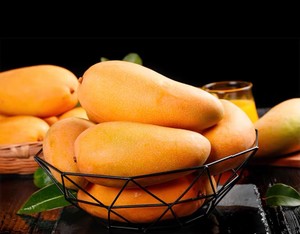 Cut the mangoes: slice the cheeks off each side of the pit, score the flesh in a crosshatch without piercing the skin, push the skin inward, and scrape the cubes off with a knife. Reserve the prettiest third of the cubes for topping.
-
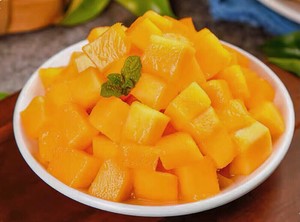 Blend the remaining mango cubes with 2 Tbsp of the sugar until completely smooth, then taste — ripe mangoes need little help, and you can add the last spoonful of sugar only if the puree tastes tart.
-
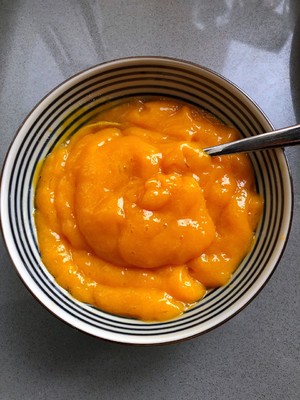 Bring a large pot of water (at least 8 cups / 2 L) to a full rolling boil. Pour the sago straight in — never rinse or soak it first, because the surface starch dissolves on contact with water and you lose the pearls.
-
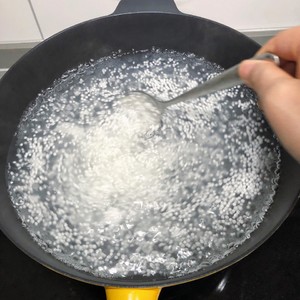 Boil over medium-high heat for about 15 minutes, stirring every few minutes so nothing sticks to the bottom. The pearls float at first, sink after about 10 minutes, and stay opaque white with a tiny pinprick core.
-
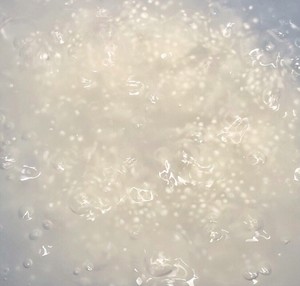 When the cores are small, turn off the heat, clamp the lid on, and let the pot sit for 10 minutes — carryover heat finishes the centers to glass-clear.
-
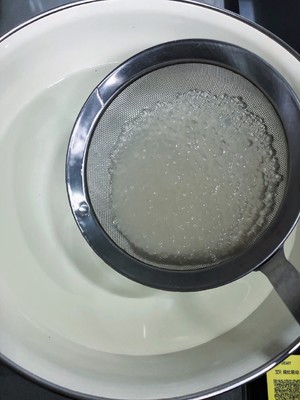 Scoop the sago out with a fine-mesh sieve immediately (do not leave it sitting in the hot water, or it turns mushy), rinse under cold running water twice to wash off the surface starch, then plunge into the ice water for 5 minutes for extra bounce. Drain well.
-
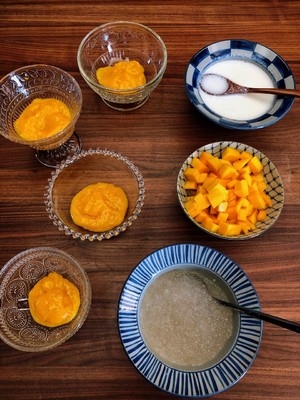 Stir the remaining 1 Tbsp sugar into the coconut milk until dissolved.
-
 Assemble in glasses: 2 Tbsp mango puree in the bottom, then 3 Tbsp sago, a spoonful of mango cubes, and coconut milk poured to fill. Chill for at least 2 hours before serving — colder is better.
Why this recipe works
Mango sago has exactly one hard part — cooking sago — and this method removes its two failure modes.
1. Never wash or soak. Sago pearls are pure starch; contact with cold water dissolves the surface into glue before you ever light the stove. Dry pearls go straight into a rolling boil.
2. Boil to a core, rest to clear. Fifteen minutes of boiling leaves a pinprick white center in each pearl. Ten more minutes off the heat, lid on, and carryover heat finishes it. This is the only reliable route to a glass-clear, springy pearl — boiling until fully transparent dissolves the outer third of the pearls first.
3. The ice bath sets the bite. Rinsing washes off loose surface starch so the dessert does not thicken into paste, and the ice-water shock firms the outer layer into that bouncy, separate-pearl chew the dessert shops get. Give the pearls a final thirty-minute chill before assembly — cold pearls hold their chew against the mango puree instead of going slack.
About the dish
Mango sago is the cold dessert that made Hong Kong-style dessert houses famous: fresh fruit, coconut milk and chewy pearls layered in a glass. It spread across Cantonese dessert shops and beyond in the late twentieth century — the story goes that chefs began pairing tropical fruit with the sago pearls already used in Cantonese sweet soups — and it is now the default mango dessert from Guangdong to Singapore. Unlike its fancier sibling mango pomelo sago (杨枝甘露), plain mango sago is the everyday version: no pomelo, no cream, five ingredients and a blender. It is what a family makes when mangoes are cheap and the summer is not cooling down. The sago itself is the old half of the pairing — Cantonese sweet soups were simmering pearl sago long before mangoes reached the south.
What to serve with it
Serve it well chilled, ideally after two hours in the fridge. It belongs to the cold-dessert family — explore more in our dessert collection — and it is the perfect ending to any dinner from this site, especially after a spicy Sichuan main. One glass per person is a serving; nobody ever stops at one. Aim for glass-clear, bouncy pearls — that chew is what separates dessert-shop mango sago from porridge in a glass. Leftovers keep a day in the fridge; the pearls firm up slightly, so loosen each glass with a splash of cold coconut milk before serving.
Pro tips
- The white core is the only doneness signal that matters: boil to a small core, rest to zero. Fishing pearls out when they merely look done gives you either crunchy centers or dissolved mush.
- Sago is pure starch and thickens whatever it sits in. If the glasses sit overnight, loosen with a spoonful of cold coconut milk before serving.
- Frozen mango works for the puree in a pinch (thaw first — it blends smoother than fresh), but fresh cubes are worth it for the topping.
- Chill your glasses in the freezer for 10 minutes: the coconut milk stays cold on contact and the layers read cleaner.
- Use a light hand with sugar — the dessert should taste of mango first. Honey mangoes often need nothing beyond the 2 Tbsp in the puree.
Storage & leftovers
- Refrigerate assembled glasses for up to 24 hours; the sago firms as it chills, so stir in a splash of cold coconut milk to loosen before serving.
- Store leftover cooked sago submerged in cold water in the fridge for up to 2 days, drained before use.
- Freezing is not recommended — the sago turns hard and the mango weeps when thawed.
Frequently asked questions
Why did my sago disappear into a starchy glue?
You either rinsed or soaked it before boiling, or left it sitting in the hot pot after cooking. Pour dry pearls straight into boiling water, and scoop them out the moment the cooking time is up.
My sago still has white centers after resting. What now?
Cover and rest another 10 minutes — it usually finishes. If a core persists, add a ladle of boiling water and repeat the 10-minute rest; do not just boil harder, which dissolves the outsides first.
Can I use large tapioca pearls?
Yes, but cook 20–25 minutes and expect a chewier, pudding-like result. Small pearl sago is what dessert shops use for that delicate, separate-pearl bite.
What can I use instead of coconut milk?
Whole milk or evaporated milk is the classic Hong Kong alternative, and oat milk works for dairy-free. Coconut milk gives the most dessert-shop flavor.
Can I make it ahead for a party?
Keep the components separate: the puree and coconut milk hold 2 days refrigerated, and cooked sago holds 2 days submerged in cold water (drain before use). Assemble up to 4 hours before serving.
What is the difference between mango sago and mango pomelo sago?
Mango pomelo sago — the famous dessert-shop showpiece — adds pomelo sacs and usually evaporated milk or mango ice cream to the same base. This is the plain everyday build: mango, sago, coconut milk and sugar, no pomelo and no cream, five ingredients and a blender.