Sichuan · Cold Dishes & Salads
Mouthwatering Chicken (口水鸡)
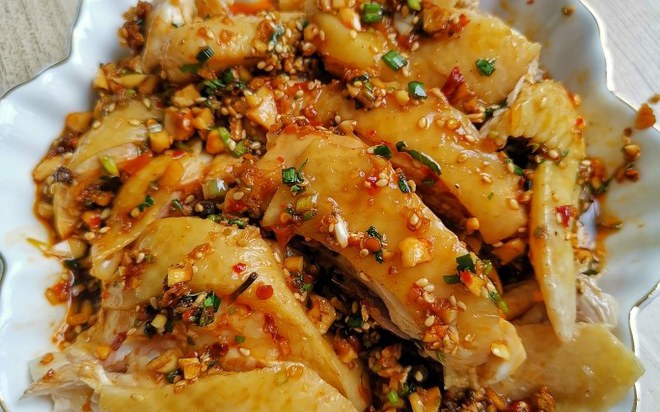
Sichuan mouthwatering chicken: a half bird poached gently, shocked in ice water for springy skin, then dressed in garlicky chili oil, black vinegar and peanuts.
Instructions
-
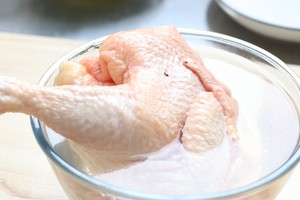
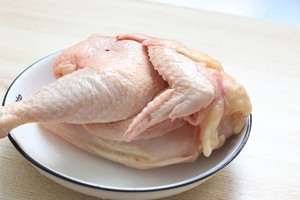 Trim the chicken: pull out any innards, cut away the tail and any stub of neck or foot, and check the skin for stray pinfeathers. Rinse the half bird under cold water a few times until the water runs clear, then pull off every pocket of visible yellow fat you can see — this is what keeps the finished dish clean and light instead of greasy.
-
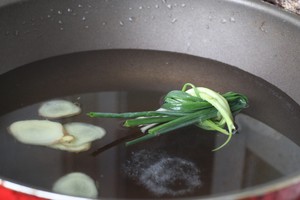
 Bring the 8 cups of water to a rolling boil in a pot just wide enough to hold the chicken, with the 1 tsp of salt, the ginger slices and the knot of 2 scallions. Wait for a full rolling boil before the chicken goes anywhere near the pot.
-
 Lower the chicken in breast side up, cover the pot, and boil over high heat for 5 minutes. This sets the outside and the shape of the bird.
-
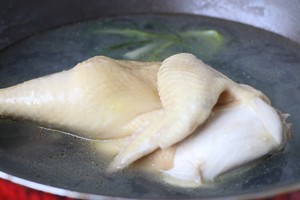 Turn off the heat and leave the chicken in the covered pot for 30 minutes. The residual heat cooks it through gently, which is what keeps the meat silky rather than stringy. To test, push a chopstick into the thickest part of the thigh: it should slide in with no resistance, and the juices that run out must be clear, never pink or bloody.
-
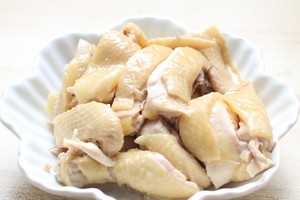 Shock the chicken: lift it straight out of the hot pot into a bowl of ice water and leave it for 5 minutes. The sudden cold stops the cooking instantly and tightens the skin into the springy, faintly gelatinous texture this dish is known for. Lift it out and pat it dry.
-
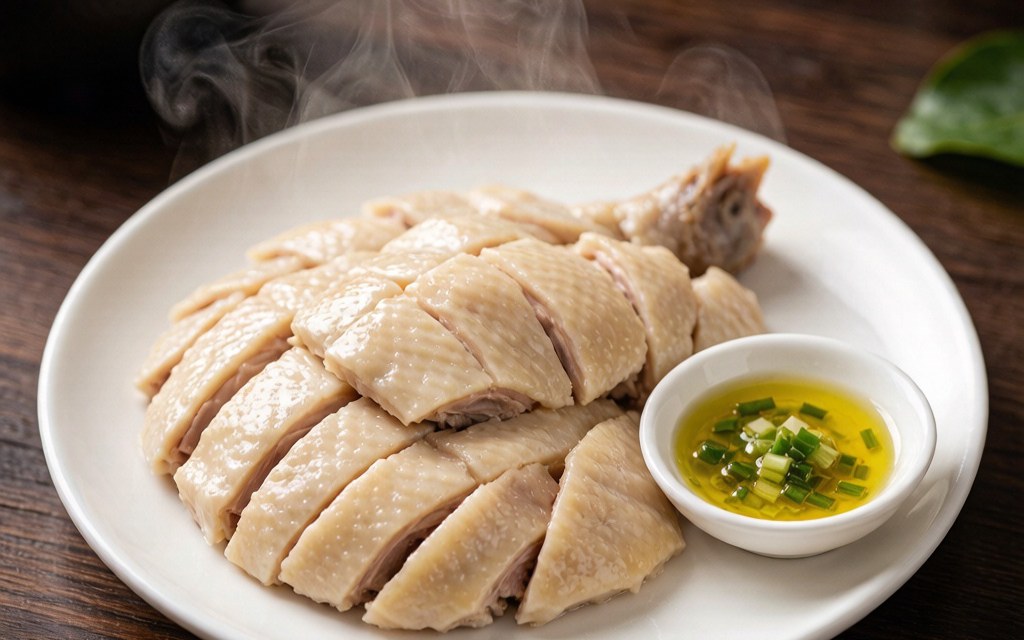
 Chop and plate: cut the cooled chicken through the bone into 2 cm (¾ inch) pieces — Chinese cold chicken is always served bone-in, and the bones are part of the flavour. Arrange the pieces in a single layer or a low mound on a serving plate.
-
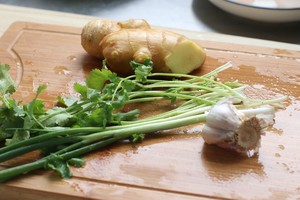
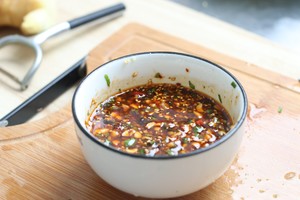 Make the dressing: in a bowl, combine the minced ginger, garlic, chopped scallions and cilantro with the chili oil, light soy sauce, black vinegar, sesame oil, sugar, MSG and salt. Stir well and taste — it should be sharp, garlicky and faintly sweet, and not too salty.
-
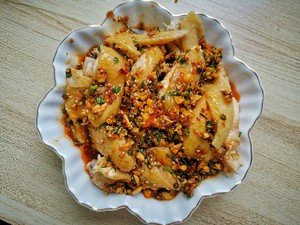 Spoon the dressing over the chicken, scatter the sesame seeds and crushed peanuts on top, and let the plate stand for 5–10 minutes so the sauce seeps down between the pieces. Serve at cool room temperature, not fridge-cold.
Why this recipe works
Mouthwatering chicken is really two techniques stacked on top of each other, and both of them are about restraint.
Boil five minutes, then walk away for thirty. The chicken never simmers to doneness. It boils just long enough to set the surface, then sits in a covered pot while residual heat carries it the rest of the way. This gentle finish is why the meat comes out silky rather than stringy — a hard boil drives moisture out of the muscle fibres, while a slow, off-heat steep keeps them relaxed. The chopstick test at the thigh tells you when it is done: no resistance, and clear juices, never pink.
Ice water, immediately. Going straight from the hot pot into an ice bath stops the cooking in seconds and contracts the skin against the meat, which is what produces the springy, slightly gelatinous bite that Chinese cold chicken is prized for. Without the shock, the bird keeps cooking on the counter and the skin turns slack.
A dressing built on vinegar, not just chili. Two parts chili oil to two parts black vinegar to one part sesame oil sounds aggressive, but the vinegar is what keeps it bright against the richness of cold chicken skin, and the sugar and MSG round off the sharp edges. The garlic, ginger and cilantro go in raw, so the sauce tastes loud and fresh rather than cooked.
About the dish
Mouthwatering chicken — kou shui ji (口水鸡) — takes its name from the effect it has on the people looking at it. The story goes that the dish was so aromatic that simply seeing it set mouths watering, and the nickname stuck. It comes from Sichuan, where cold dressed chicken is a fixture of the appetizer table in restaurants and at home, especially in the hot months when nobody wants to stand over a wok.
The technique underneath is essentially the same as Cantonese white cut chicken: a whole or half bird poached gently and chilled for firm, juicy meat. What changes in Sichuan is everything that goes on top. Instead of a restrained ginger-scallion oil, the bird is buried in chili oil, black vinegar, soy sauce, raw garlic, sesame oil, toasted sesame and crushed peanuts, with a scatter of fresh cilantro. It is a colder, sharper, more aromatic dish than its Cantonese cousin, and it is served at cool room temperature rather than fridge-cold.
What to serve with it
Serve this as the first dish at a Chinese table, or as the centerpiece of a light summer meal with plain rice. The dressing is intense, so plain steamed rice is the ideal partner, and a simple stir-fried green vegetable keeps the plate balanced.
Because it is a cold dish, it pairs naturally with other room-temperature plates — smashed cucumber, cold noodles, or a plate of sliced tomato. Browse cold dishes for more, and if you enjoy this style of gently poached chicken, the cold-dish pages are where the whole family lives. Leftover dressing is excellent spooned over noodles the next day. No wonder it is called saliva chicken — one look and mouths start watering.
Pro tips
- The chicken goes into fully boiling water, never cold water. That is the whole technique: a boiling start sets the surface proteins immediately, so the meat stays firm and the broth stays clear instead of turning cloudy and loose.
- Five minutes of boiling plus thirty minutes of covered resting is the entire cooking process. Do not lift the lid to check — every peek lets out the heat that is cooking the bird.
- The ice bath is not optional. It stops the cooking dead and firms the skin; skip it and you get chicken that is technically cooked but limp and dry.
- The dressing is a ratio you can remember: two parts chili oil, two parts soy sauce, two parts black vinegar, one part sesame oil, then 1 tsp sugar and ½ tsp salt per batch. Scale it up or down freely.
- This dish is meant to be fragrant rather than fiery — the source describes it as aromatic without being hot. Use the chili sediment from the bottom of the jar for flavor and hold back on the clear red oil if you want it mild. A drizzle of Sichuan pepper oil on top is a common modern addition and gives a lovely citrusy tingle, but the traditional dressing here is built on chili, vinegar and sesame alone.
- Bone-in chopping needs one firm blow rather than several hesitant ones, which splinter the bones. If you do not own a heavy cleaver, have the butcher cut the half bird into pieces for you.
Storage & leftovers
- Undressed poached chicken keeps 2 days in the fridge, tightly covered. Keep a cup of the poaching liquid with it so the meat does not dry out.
- Once dressed, eat it within a day. The peanuts go soft and the cilantro wilts, and the vinegar loses its edge.
- Serve cool or at room temperature. Take the plate out of the fridge 15 minutes before serving — fridge-cold chicken mutes both the chili and the sesame.
- Do not freeze the dressed dish. Plain poached chicken freezes for up to 1 month, but the texture suffers noticeably, so it is only worth it if you have a lot of leftovers.
Frequently asked questions
Is this the same as white cut chicken?
No, though the chicken is cooked in a similar way. White cut chicken is Cantonese and is served with a ginger-scallion oil that lets the plain chicken flavour lead. Mouthwatering chicken is Sichuan: the poached, chilled bird is covered in a garlicky chili, black vinegar and sesame dressing with peanuts, so it is sharper, saucier and far more assertive.
How spicy is it?
Medium at most, and the heat lives entirely in the chili oil, so it is easy to control. Use the thick chili sediment from the bottom of the jar for flavour and only a little of the red oil for heat, or hold the chili back to 1 Tbsp for a very mild plate.
The recipe calls for a bottled Sichuan seasoning. What should I actually use?
The original home cook used a jarred Sichuan fish seasoning, which is not sold outside China. Sichuan chili oil with its sediment is the closest everyday equivalent; chili crisp works too, and so does 2 Tbsp of doubanjiang fried in 2 Tbsp of oil and cooled. All three give you the chili-and-fermented-bean base the dressing needs.
Can I use chicken thighs or a whole bird instead?
Yes. Bone-in skin-on thighs poach in about 12 minutes at a bare simmer and then rest 10 minutes before the ice bath. A whole 3½ lb bird needs 8 minutes of boiling and 40 minutes of resting, and you will need a bigger pot and more water.
Why did my chicken come out dry and stringy?
Almost certainly overcooked — either it boiled longer than 5 minutes, or it sat in the pot well past the 30-minute rest, or the lid was off and the water never stayed hot enough to cook it gently. Use the chopstick test at the thigh and pull it the moment the juices run clear.
Can I make it ahead?
Yes, and it is a good dish for it. Cook and chill the chicken up to 2 days ahead and keep it covered in the fridge. Mix the dressing just before serving and spoon it on 10 minutes before the plate goes to the table, so the peanuts and cilantro are still fresh.
Do I really need the ice water bath?
Yes. The shock stops the carryover cooking in seconds and tightens the skin into the springy, faintly jelly-like texture this dish is known for — skip it and the skin turns slack while the meat keeps drying out. Five minutes in genuinely icy water is enough; pat the bird dry before chopping so the dressing clings.