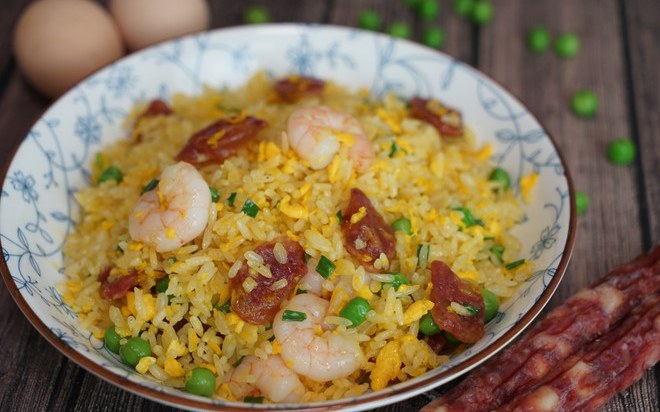
Chinese home style · Rice & One-Bowl Meals
Soy Sauce Fried Rice (酱油炒饭)
Real Chinese soy sauce fried rice: dry, dancing rice grains, silky yolk and fluffy white cooked separately, plus sweet-salty preserved radish in every bite.
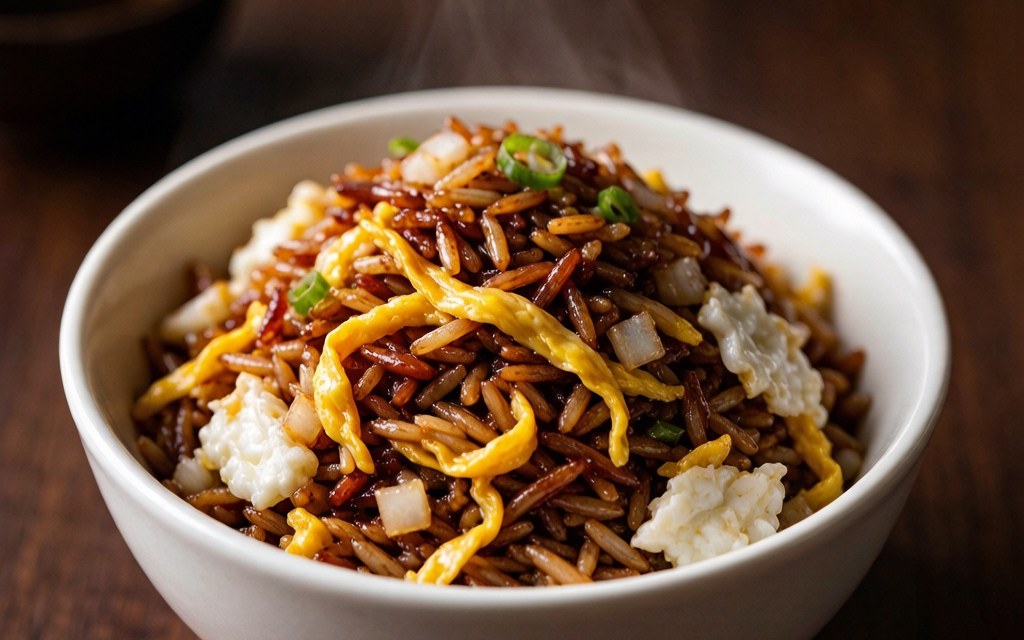
Instructions
-
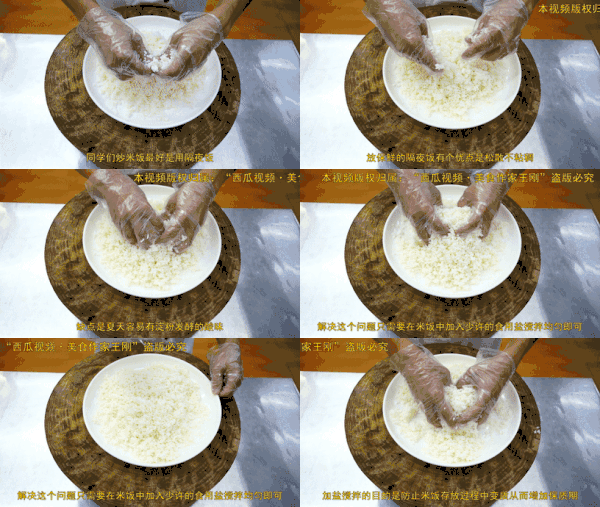
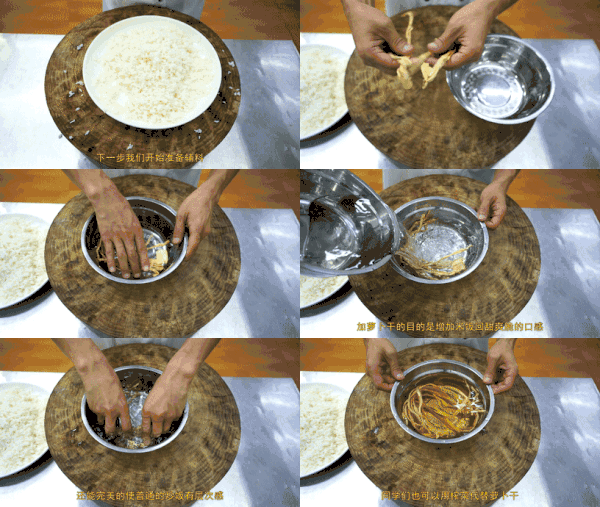
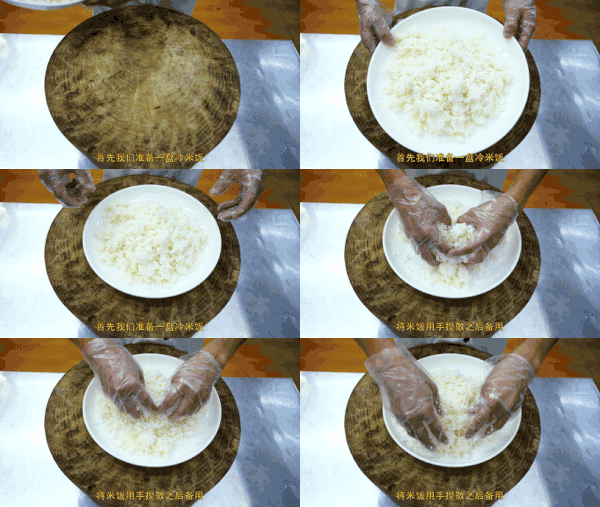 Crumble the cold rice between your fingers until every grain is separate — no lumps bigger than a single grain. If the rice feels damp or clumpy, toss it with the cornstarch until the grains look dry and lightly dusted.
-
 Soak the preserved radish in room-temperature water for 10 minutes to soften and lose excess salt, then squeeze it dry and mince it finer than the rice grains.
-
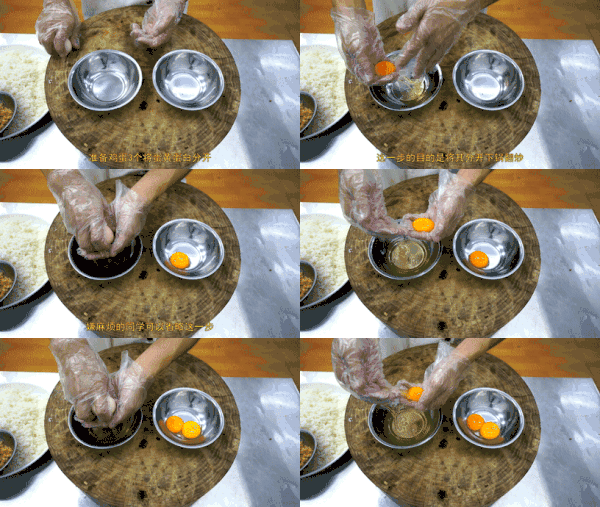
 Separate the eggs. Beat the yolks until completely smooth, and give the whites a brief whisk with the ¼ tsp salt.
-
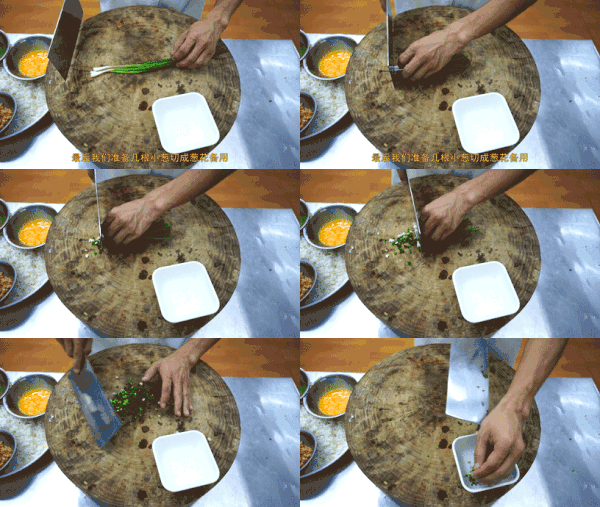
 Slice the scallions and set everything within arm's reach of the stove — from here the recipe moves fast.
-
 Heat a wok over high heat until it just starts to smoke. Add 2 Tbsp of the oil, swirl to coat the entire cooking surface, then pour the oil out — this pre-oils the pan so nothing sticks later. Leave about 1 Tbsp in the wok.
-
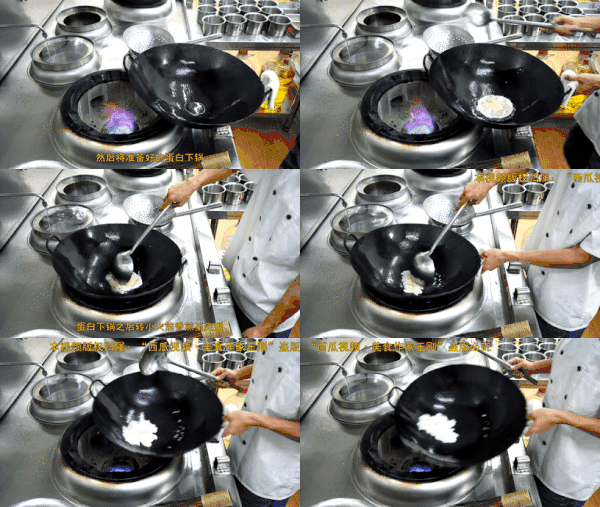 Add the egg whites, reduce the heat to low, and fry without moving them until set, about 1 minute. Flip, fry 30 seconds more until both sides are golden, then transfer to a plate.
-
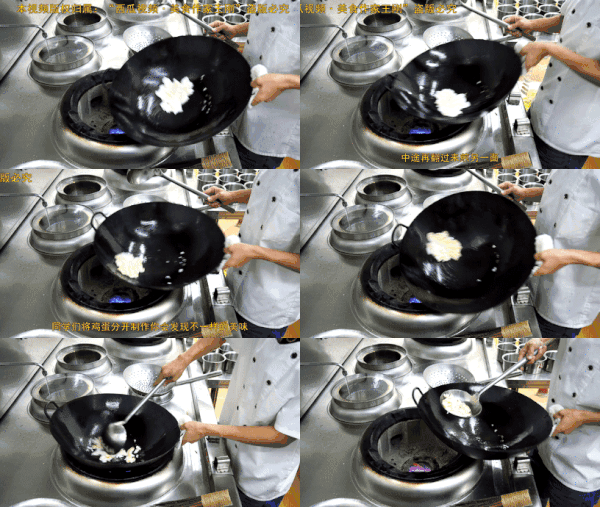 Add 1 Tbsp oil to the wok over medium-low heat and pour in the yolks. Fry slowly, nudging only once, until the yolk is set at the edges but still glossy in the middle — rushing this makes the yolk taste eggy instead of rich.
-
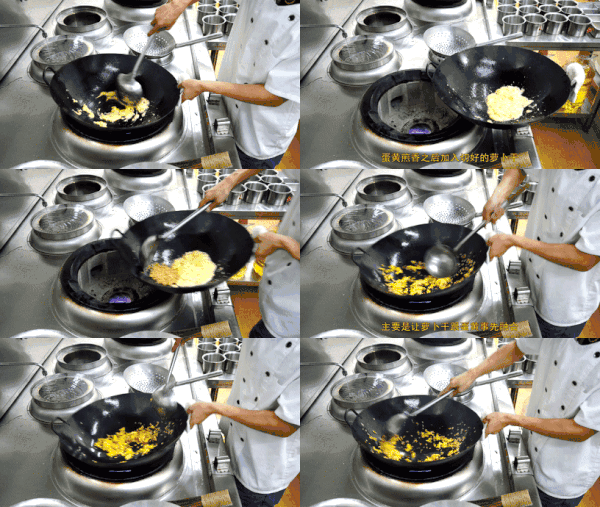 Add the minced radish to the yolk and toss a few times so they mingle, then roughly chop the fried whites into the wok and toss everything until the pan smells like toasted fried eggs.
-
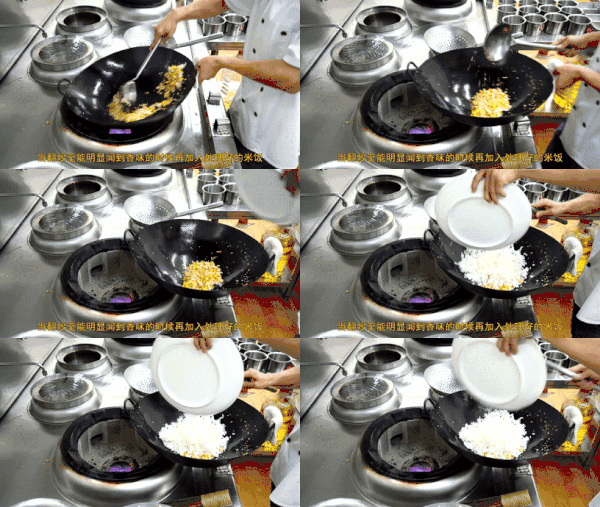 Add the rice all at once. Break it up with the spatula and toss, drizzling the last 1 Tbsp oil around the rim of the wok — hot oil hitting the metal, not the rice, is what shoots the pan temperature back up. Keep tossing over high heat until the rice feels light and the grains actually jump when you shake the wok.
-
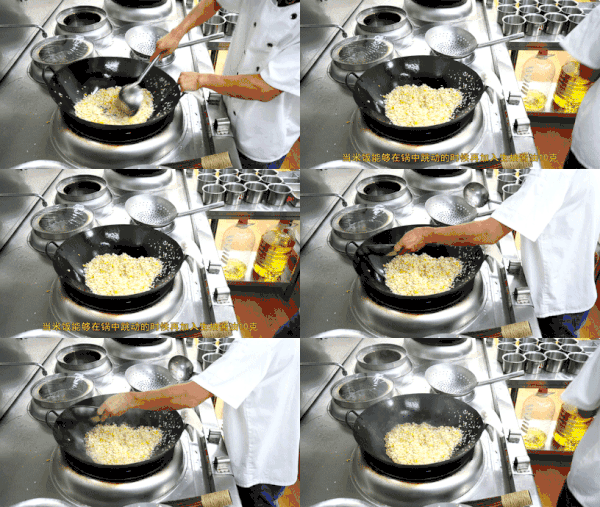 Pour the light soy sauce around the edge of the rice, not straight onto it — the hot wok caramelizes it on contact and burns off the raw soy taste. Add the scallions and salt, and keep tossing over medium-high heat for 1 minute.
-
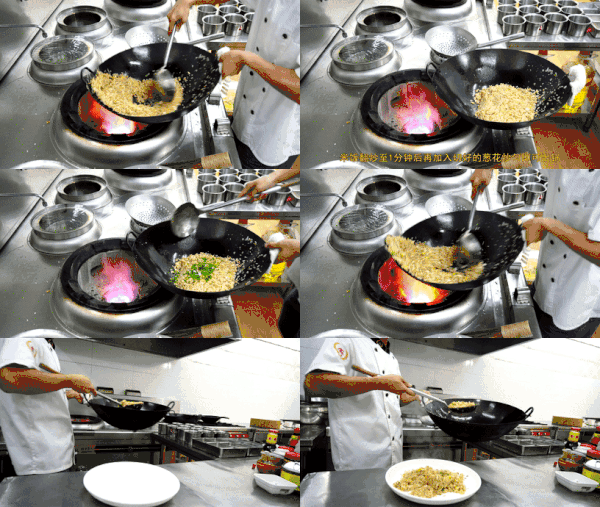 Serve immediately, straight from the wok — fried rice waits for no one.
Why this recipe works
Three small techniques separate this from sad, soggy dorm-room fried rice.
1. Bone-dry rice. As cooked rice sits overnight in the fridge, its starches retrograde — firming up so the grains stay distinct instead of dissolving into each other. The chef adds a second safeguard: a dusting of dry starch that absorbs any last surface moisture. Dry grains fry; wet grains steam. When the rice is dry enough, it physically jumps in the wok — that's the moment it's ready for soy.
2. Eggs cooked in two acts. Whites fried until golden on both sides give you chewy, toasted curds; yolks fried slowly at medium-low emulsify into the hot oil, perfuming it, so the rice that follows picks up that richness. Mixing everything into one beaten egg gives you only the average of the two.
3. Soy at the wok's edge. Pouring the soy sauce down the side of the rice — onto hot metal — caramelizes it instantly and drives off the raw, bitter edge of un-fried soy sauce. It also colors the grains evenly instead of pooling dark spots where it landed. The result is a fried rice that happens to be fully vegetarian, no swaps needed.
About the dish
Soy sauce fried rice (酱油炒饭) is China's ultimate leftover dish — the thing cooks make when the fridge holds nothing but yesterday's rice and half a scallion. Street breakfast stalls fry it in towering woks before dawn; midnight kitchens fry it in ten minutes flat. Its whole identity is thrift: no meat, no sauce, just rice, egg and the deep savory perfume of soy hitting hot iron.
This version follows a working Sichuan chef's method, with two upgrades over the bare-bones classic: eggs separated for texture, and preserved radish minced into the fry for sweet-salty crunch. He suggests zha cai as a substitute for the radish — either way, the little hit of pickle is what makes each bite land.
What to serve with it
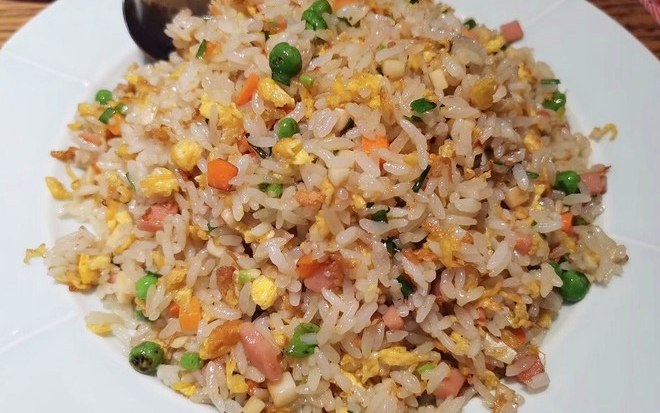
Soy sauce fried rice is a complete bowl on its own; a clear soup or a cool, vinegary smashed cucumber salad rounds out the meal. If you get hooked on the technique, compare it with classic egg fried rice — same rice, different personality — or browse more rice recipes for your next leftover batch.
Cold from the fridge overnight, it fries up even better the next morning — day-old rice is the whole point. For children, skip the preserved radish and stir in sweet corn instead; adults deserve a spoonful of chili oil on top, eaten straight from the wok if anyone is watching. It is the quick fried rice answer for empty-fridge weeknights.
Pro tips
- Day-old rice is the whole game: as cooked rice chills overnight, its starches firm up, so the grains stay separate instead of steaming into mush. No day-old rice? Spread hot rice on a tray and freeze it for 20 minutes.
- The cornstarch dusting is the chef's insurance policy — it absorbs the last surface moisture so the rice fries dry instead of steams. Skip it only with truly dry, loose rice.
- Cooking the yolks and whites separately is not fuss for its own sake: you get two textures — ribbons of rich yolk and fluffy, toasted white — and the yolk perfumes the oil that then coats every grain.
- Mince the preserved radish finer than a grain of rice, so each spoonful gets a hit of sweet-salty crunch without any big, chewy bites.
- Hold the oil back and add it in small drizzles at the wok's rim as you go; too much oil early on makes the rice fry heavy and greasy instead of light and bouncy.
Storage & leftovers
- Fried rice is best eaten immediately; leftovers keep 2 days refrigerated in a sealed container.
- Re-crisp in a hot skillet with 1 tsp oil for 2-3 minutes; the microwave heats it through but makes the grains tough.
- Freezing is not recommended — the cooked eggs turn rubbery and the radish weeps when thawed.
Frequently asked questions
Why separate the eggs?
It's a restaurant trick for two textures and a cleaner flavor: yolks fried low and slow turn rich and nutty and coat the rice, while whites fried until golden add chew. Short on time? Beat the eggs whole into one — the dish still works.
What is preserved dried radish, and what can I substitute?
It's radish that's been salted and dried, with a sweet crunch — look for it labeled 'preserved radish' or 'choi po' in Asian markets. Chopped zha cai (pickled mustard stem) is the chef's own suggested swap; rinsed, minced dill pickle works in a Western pantry.
Why is my fried rice soggy?
The rice was too fresh or too wet, or the wok wasn't hot enough. Use refrigerated overnight rice, break it up completely, dust with cornstarch if it feels damp, and give the wok time to reheat between additions.
Can I add meat or other vegetables?
Yes — small-diced Chinese sausage or ham fried along with the radish, or a handful of frozen peas added with the rice. Keep add-ins small so the rice stays the point, and add an extra teaspoon of soy if you add much.
My rice turned a dull gray instead of appetizing brown. Why?
The soy sauce went straight from the bottle onto cold rice in a cool wok. Drizzle it around the hot edge of the rice so it caramelizes the instant it lands.
Can I make this without a wok?
Yes — a heavy cast-iron or stainless 12-inch skillet works well. Pre-oil it the same way (oil in, swirl, pour out), give it time to reheat between additions, and resist crowding: a skillet holds less heat than a wok, so fry the rice in two batches if it doubles.