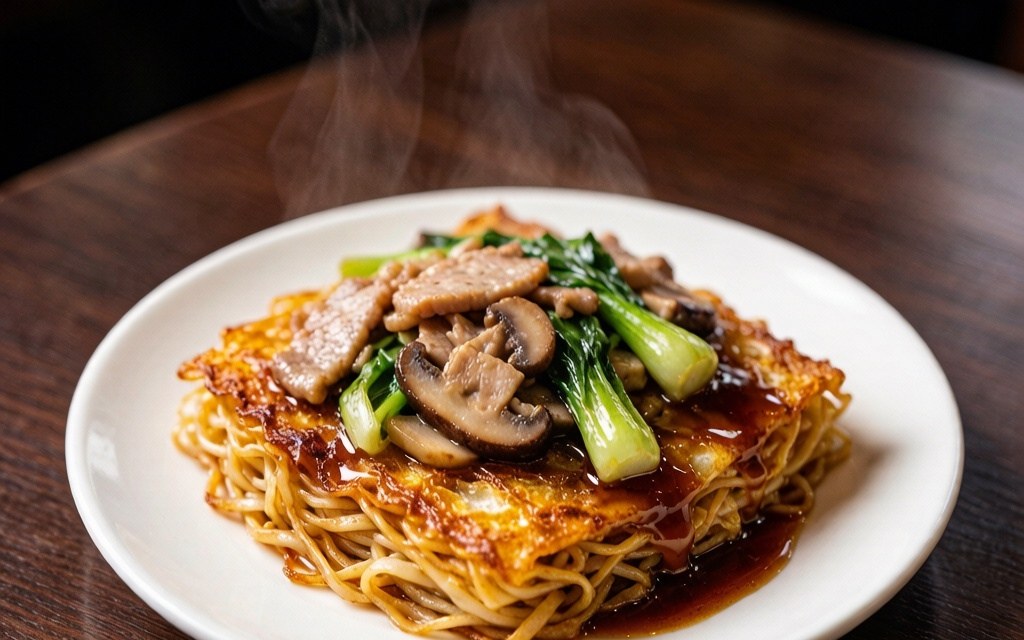
Cantonese · Rice & One-Bowl Meals
Claypot Chicken Rice (瓦煲鸡饭)
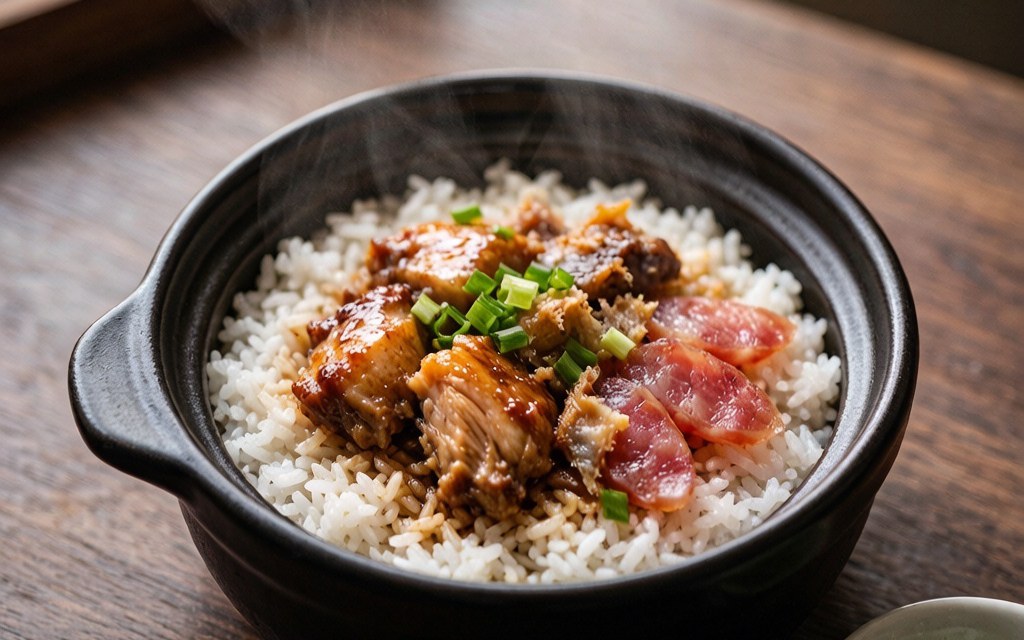
Chicken and salted fish claypot rice — savory one-pot comfort with a crackly rice crust, cooked with the on-off fire trick that controls the crust.
Instructions
-
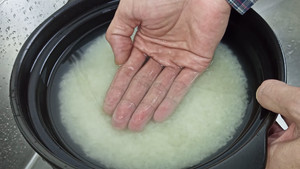 Rinse the rice until the water runs nearly clear, then cover it with the 1½ cups water and let it soak while you prep — at least 15 minutes. The water ratio here is 0.9–1 times the rice by weight for long-grain rice; if you use short-grain rice, increase the water to 1⅓–1.4 times (about 2 cups for 350 g rice).
-
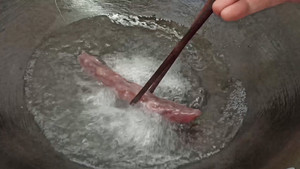
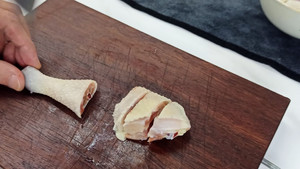 Blanch the lap cheong in boiling water for 30 seconds to clean the casing, then slice it thinly. Set aside.
-
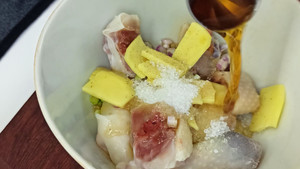
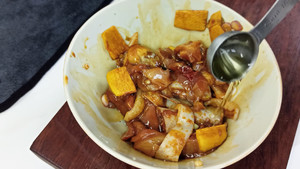
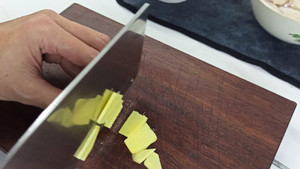 Marinate the chicken: toss the chicken pieces with the salt, sugar, white pepper, Shaoxing wine, dark soy sauce and cornstarch, massaging with your hand for 1 minute until the liquid is absorbed. Mix in the minced scallion whites, the ginger and finally 1 tsp oil. Marinate at least 15 minutes while you continue.
-
 Fry the salted fish: heat 2 tsp oil in a small skillet over low heat and fry the salted fish pieces for 2–3 minutes, until fragrant and lightly golden. Turn on the range hood — salted fish is pungent while frying, and that pungency mellows into deep savoriness in the finished rice. Set aside with the chicken.
-
 Put the pot (a 2-quart clay pot or small heavy pot) on the stove over high heat — sized so the flame diameter roughly matches the water surface. Bring the rice and water to a boil and keep the heat high the whole time.
-
 Cook for 4–5 minutes, until the surface water disappears and small craters form in the rice. Kill the heat immediately.
-
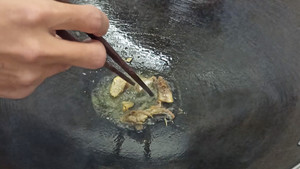 Working quickly, arrange the marinated chicken, fried salted fish and lap cheong slices evenly over the rice. Drizzle 2 tsp oil around the inside rim of the pot — it prevents sticking and is what makes the bottom crust crisp.
-
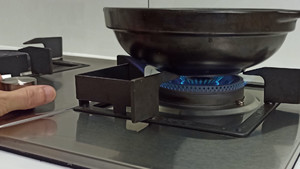 Cover and cook over high heat for 1 minute, then turn the heat off and rest, covered, for 2 minutes. Repeat this 1-minute-on / 2-minute-off cycle 2–3 more times. Each cycle pumps heat into the pot bottom without burning it, and the number of cycles is exactly how you control crust thickness: 2 cycles for a thin crust, 3 for a serious one.
-
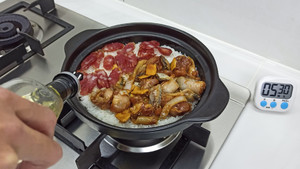 Let the pot rest, covered and off the heat, for 8–10 minutes so the chicken finishes in the trapped steam — the meat should read 165°F/74°C at its thickest piece and the rice grains should be tender all the way through.
-
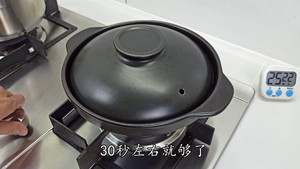
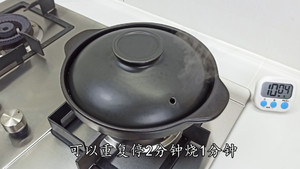 Uncover, scatter the scallion greens over the top, then put the pot back over high heat for about 30 seconds to drive off any last moisture at the bottom — this final flash makes the crust crackle rather than turn soggy.
-
 Serve the pot at the table, breaking the crust into shards with a spoon so every serving gets some. Eat as is — the salted fish seasons the rice — or pass light soy sauce at the table for anyone who wants more.
Why this recipe works
This is the fast, controlled way to claypot rice — no charcoal, no guesswork, and dinner and rice ready in the same pot.
1. The on-off fire cycle. A clay pot over continuous flame scorches at one hot spot long before the center is done. Switching the heat off for 2 minutes between 1-minute bursts lets the stored heat in the clay even out and radiate from all sides, crisping the bottom gently. It sounds fussy, but it is just flipping a switch — and it gives you a dial for crust thickness.
2. Raw rice, raw meat, one pot. The chicken is cut small and marinated with cornstarch, so it cooks through entirely in the trapped steam while the rice finishes below it, dripping its juices into the grains. Nothing is precooked except the salted fish, which needs the pan to bloom its aroma.
3. The final 30 seconds. Steam that condenses on the lid drips back and makes the bottom crust soggy right at the end. A short blast of high heat with the lid on drives that moisture off and leaves the crust crackling — the same reason you re-crisp fried food in a hot pan. The same on-off cycle chases a claypot rice crispy bottom whether the pot is clay or cast iron.
About the dish
Claypot chicken rice grows out of the Cantonese claypot rice tradition of Guangdong province, and the story goes that it took on a second life in Kampar, Malaysia, where versions with salted fish and marinated chicken became a hawker classic. The combination is practical genius: chicken for freshness, salted fish for fermented depth, and rice to carry both.
Compared with the cured-sausage version, this one is a weeknight proposition — the chicken steams in the time the rice takes, and the whole pot is on the table in about 20 minutes of cooking. In Cantonese home kitchens it is the pot you make when you want claypot rice tonight, not on the weekend.
Every Cantonese family argues about the crust the way others argue about steak doneness — some want it golden and chewy, some want it dark and glassy. The on-off fire trick in this recipe exists precisely so you can pick your side; listen for the crackle and decide how far to push it.
What to serve with it
This pot is honestly a meal by itself — rice, meat and crust in one. If you want a vegetable alongside, blanch some greens or serve a bright cucumber salad. A soft potsticker appetizer before the pot arrives turns it into a proper feast. Leftovers turn into breakfast: chill the crusty rice, then pan-fry it in a thin slick of oil until it re-crisps — homemade guoba, no clay pot required. Hot, plain tea is the right drink, and children get the milder top layer while the adults argue over the crust. It is claypot rice without claypot shopping required — a heavy Dutch oven with a tight lid gets you there.
Pro tips
- The on-off fire cycling is the whole trick: heat pushes into the clay and keeps radiating during the 2-minute rests, so the bottom crisps evenly instead of scorching in one hot spot.
- Do not open the lid during the cycles — each peek dumps steam and extends the cooking by minutes.
- Salted fish is the signature flavor here; dried shrimp is the polite substitute, but if you use it, add 1 tsp fish sauce to the marinade to make up the savoriness.
- Cut the chicken from one whole leg, not breast — thigh stays juicy through the long covered rest, and the bone-side bits give the rice body.
- No clay pot? A heavy 2-quart Dutch oven works fine; just accept slightly less dramatic crackling since cast iron holds heat longer than clay.
- Fry the salted fish with the window closed and the hood on full — your kitchen will smell like a Hong Kong cha chaan teng for an hour, which is either a bug or a feature.
Storage & leftovers
- Refrigerate leftovers in a sealed container for up to 2 days.
- Reheat in a covered skillet over low heat with a splash of water for 4–5 minutes to re-steam the rice and re-crisp the bottom.
- The microwave works in a pinch (90 seconds, covered) but the crust will soften.
- Freezing is not recommended — the chicken turns mealy and the rice goes hard after thawing.
Frequently asked questions
What is salted fish, and can I skip it?
Salted fish (salt-cured, sometimes fermented fish) is a Cantonese pantry staple sold dried at Asian grocers. It gives the rice its distinctive savory depth. You can skip it entirely — season the marinade with an extra ¼ tsp salt — but the dish loses its signature aroma.
How is this different from Cantonese claypot rice with cured meats?
This version tops the rice with fresh marinated chicken and fried salted fish instead of cured sausage, so it cooks faster (the chicken steams in 15 minutes) and tastes savory-salty rather than sweet. The crust technique is the same family.
Why does my crust never form?
Three usual causes: not enough oil drizzled at the rim, too much water in the rice (measure 0.9–1× by weight for long-grain), and opening the lid mid-cook, which dumps the heat that drives the crisping.
Can I use chicken breast?
You can, but cut it larger (1.5-inch pieces) and reduce the rest time to 6 minutes — breast overcooks fast in a sealed pot. Thigh is strongly recommended.
Can I make it ahead?
The chicken can marinate overnight in the fridge and the salted fish can be fried a day ahead. Once assembled and cooked, claypot rice does not improve with waiting — the crust is best within 10 minutes of the final 30-second flash.
Is the dish spicy?
No — it is savory and aromatic, not spicy at all. If you want heat, drizzle chili oil at the table.
Do I need an actual clay pot for this?
No — a heavy 2-quart Dutch oven works fine; expect slightly less dramatic crackling since cast iron holds heat longer than clay. What matters is a tight lid, oil at the rim, and the discipline not to lift the lid while the crust forms.