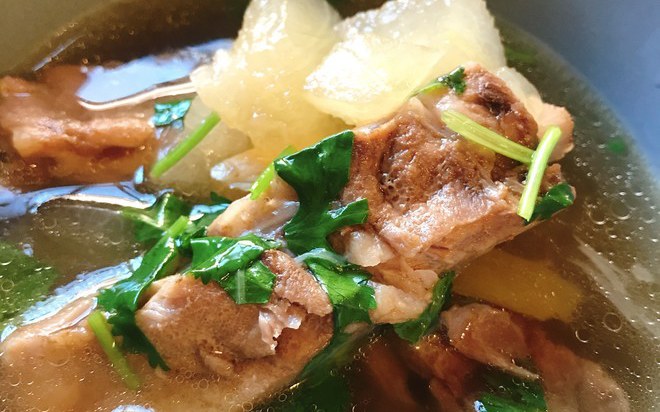
Chinese home style · Soups
Soybean Pig Trotter Soup (黄豆猪蹄汤)
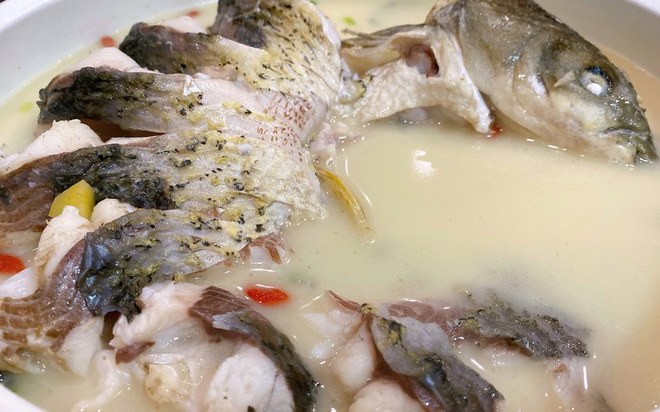
Milky-white Chinese winter soup: pig trotters simmered two hours with soaked soybeans until the broth turns silky and collagen-rich, soft beans in every spoonful.
Instructions
-
 The night before, rinse the dried soybeans and cover them with 3 inches (8 cm) of cold water. Leave them to soak overnight so they swell and soften — this keeps them from competing with the trotter's flavor.
-
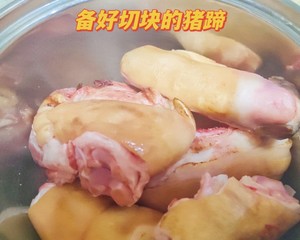 Put the trotter chunks in a pot, cover with cold water, and add the blanch scallion, ginger and Shaoxing wine. Bring to a rolling boil and skim off the gray foam for about 3 minutes.
-
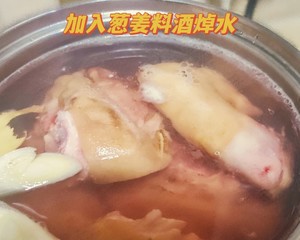 Lift the trotter out and rinse every piece under warm running water to wash away the scum. This step is what keeps the finished broth clean and sweet rather than gamey.
-
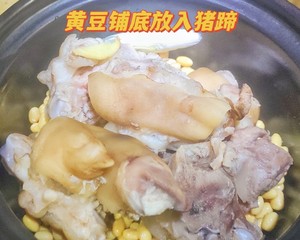 In a clay pot or heavy soup pot, spread the soaked soybeans over the bottom, then lay the trotter chunks on top. Add the soup scallion, ginger and 1 Tbsp Shaoxing wine.
-
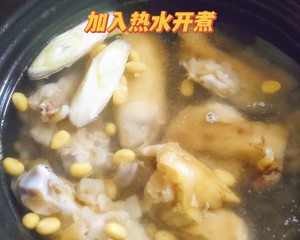 Pour in enough boiling water to cover everything by about 1 inch (2.5 cm). Always start with boiling water — cold water shocks the proteins and you lose the milky body.
-
 Bring to a boil over high heat, then drop to the lowest simmer, cover, and cook for a full 2 hours. The soup turns pale white after about 1 hour, but the extra hour is what builds the deep aroma.
-
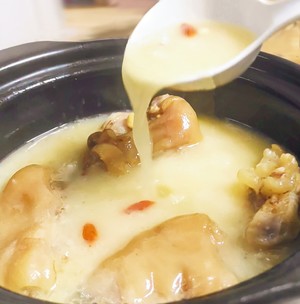 Add the goji berries for the last 5 minutes and season with the salt. Taste before adding more — the broth should taste clean and savory, not salty.
-
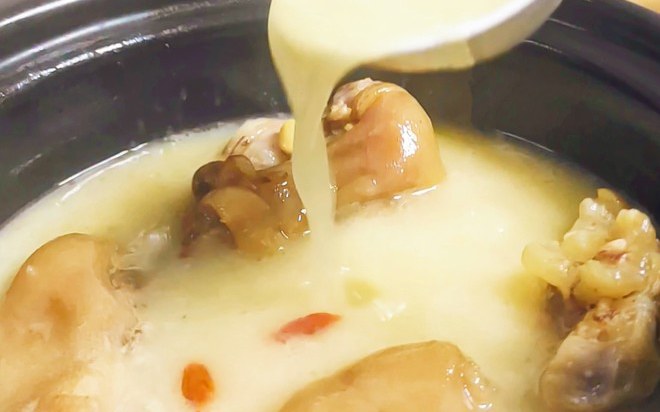
 Ladle into bowls with plenty of the soft beans and trotter. The broth should be thick enough to feel slightly sticky on the lips; that is the collagen doing its job.
Why this recipe works
This soup is built on one idea: patience turns cheap ingredients into something luxurious. Three details make the difference between a watery broth and a bowl that clings to the spoon.
1. An overnight soak for the beans. Dried soybeans hold a lot of structure. Soaking them for 8 hours or more lets water work its way into each bean so it softens fully during the same two hours the trotter needs. Under-soaked beans stay firm and chalky, and they push a beany flavor ahead of the pork instead of blending with it.
2. Starting with boiling water. Pouring boiling water over the blanched trotter is what produces the milky-white broth. The sudden heat keeps the surface proteins loose, so as the pot simmers, fat and gelatin emulsify into the liquid instead of being locked out. Add cold water and the proteins seize, leaving a clearer, thinner soup.
3. The full two hours. Collagen in the skin, tendons and joint cartilage needs sustained low heat to break down into gelatin. One hour gives you color; the second hour gives you body. That gelatin is why the soup feels silky and slightly sticky rather than just wet, and it is the quality that makes this a cold-weather restorative. That rolling-boil emulsion is the whole secret of how to get milky white broth from pigs feet soup — boil hard first, then let the gelatin do the rest.
About the dish
Soybean pig trotter soup (黄豆猪蹄汤) is a classic Chinese home-style slow soup, the kind families make on the first genuinely cold day of the year. Trotters are one of the least expensive cuts at the butcher, yet they carry more gelatin than almost anything else, which is why this broth has a reputation for being good for the skin and joints.
There is a strong tradition across China of pairing pork with soybeans — the beans add body and a mild, nutty sweetness that rounds out the rich pork. In this version the beans are kept deliberately modest so the trotter stays the main flavor, a balance home cooks often mention as the difference between a good pot and a great one. It is simple food: a pot left to burble on the lowest flame for an afternoon, filling the kitchen with the smell of a proper home-cooked meal.
What to serve with it
Serve the soup as the centerpiece of a simple meal, ladled into deep bowls with plenty of the soft beans and a piece of trotter in each. Plain steamed rice is all you need on the side, since the broth is rich enough to carry the table. A bright, quick vegetable dish cuts through the richness nicely — a garlic stir-fried green or a light stir-fry of seasonal vegetables. Because the soup is mild and soothing, it also works as the opening course of a larger dinner: a small bowl first, then a heartier braised main. Drink it hot, and do not rush the last spoonfuls — the beans at the bottom are the best part.
Pro tips
- Keep the soybeans to about ½ cup. More than that and their beany flavor pushes ahead of the pork, which is the whole point of the dish.
- Boiling water at the start is non-negotiable: it keeps the trotter's proteins from tightening and the broth stays opaque and rich.
- Two hours, not one. A 1-hour broth is white but thin; the second hour is when the gelatin from the skin and tendons dissolves and the soup turns silky.
- Do not salt early. Salt draws moisture out of the meat and can make the trotter firm; season at the end instead.
- Skim the first boil thoroughly. Any scum you leave behind will emulsify into the broth and make it taste slightly off.
- A clay pot holds a gentle, even heat that suits long simmers. A heavy Dutch oven works just as well on the lowest burner setting.
Storage & leftovers
- Refrigerate in a sealed container for up to 3 days. The broth sets to a soft jelly when cold — that is the gelatin, and it is a good sign.
- Reheat gently in a pot over medium-low heat for 5-8 minutes until the jelly melts back into broth. Avoid a hard boil, which can make the trotter tough.
- Freeze the broth and beans (without the trotter) for up to 2 months. Thaw overnight in the fridge and reheat gently; fresh-cooked trotter reheats better than frozen.
Frequently asked questions
Do I really have to soak the soybeans overnight?
Yes — an 8-hour soak lets the beans swell so they cook through in the same 2 hours as the trotter. In a pinch, cover them with boiling water and soak for 2 hours, but overnight gives the softer texture.
Can I use a pressure cooker or slow cooker?
A pressure cooker needs about 40 minutes at high pressure with a natural release. A slow cooker needs 6-8 hours on low. The stovetop method gives the best control over the milky broth.
My broth never turned white. What went wrong?
White broth comes from a rolling boil emulsifying the fat and gelatin into the water. If you simmered too gently from the start, boil hard, uncovered, for 10 minutes and it will turn opaque.
Is this soup very high in fat?
The skin and tendons supply gelatin rather than fat, and most of the rendered fat rises to the surface. Chill leftovers and lift off the solidified fat cap before reheating if you want a lighter bowl.
What can I serve with it?
Keep it simple: a bowl of steamed rice and a quick stir-fried green. The soup is the star and needs little else.
Can I make it ahead?
Yes, it actually improves overnight. Refrigerate and reheat gently; the gelatin will set the broth into a soft jelly, which liquefies again on warming.
Can I use peanuts instead of soybeans?
Yes — peanut pig trotter soup (花生猪蹄汤) is the classic sibling of this soup. Soak raw peanuts like the soybeans and simmer them along with the trotter; the broth turns out just as silky, with a sweeter, nuttier finish.
Can I freeze pig trotter soup?
Yes — freeze the broth and beans for up to 2 months, thaw overnight in the fridge, and reheat gently. Cooked trotter is best eaten fresh or refrigerated, since reheated-from-frozen trotter tends to toughen.