Chinese home style · Soups
Milky Fish Soup (水煮鱼汤)
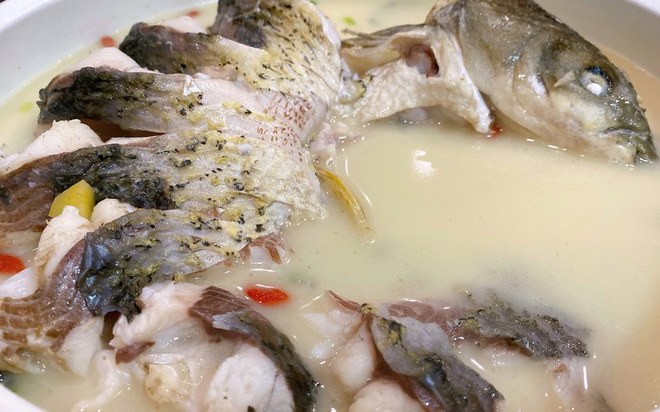
A milky Chinese fish soup built the old way: seared whole fish, boiling water and a hard five-minute boil emulsify into a silky broth with tender fish throughout.
Instructions
-
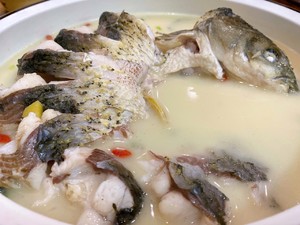 Clean the fish properly: scales, gills, guts, and especially the dark membrane lining the belly cavity — it is bitter. Ask the fishmonger to score the fish into connected sections, or cut three deep scores yourself, and snip off the fins. Pat the fish completely dry inside and out with paper towels; dry skin sears, wet skin spits and sticks.
-
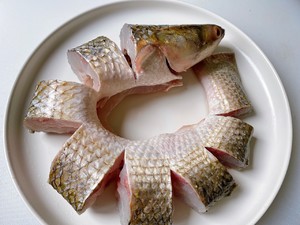 Heat the oil in a wok or heavy pot over medium-high heat until it shimmers. Add the fish and sear undisturbed 2-3 minutes until deep golden, then flip and sear the second side. Tuck the ginger, garlic and chilies (if using) into the oil around the fish for the last minute.
-
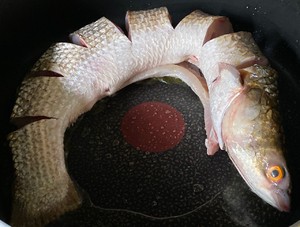 Pour off the excess oil — this one step keeps the soup silky instead of greasy. The fish may fall apart a little; that is fine, it is going into soup.
-
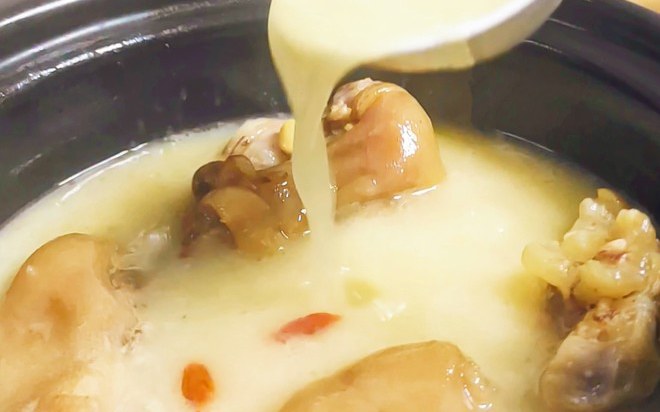
 Return the pot to high heat and pour in the boiling water — it must already be boiling, not cold from the tap, or the broth will not turn milky. Add the scallion knots, Shaoxing wine and salt. Boil hard, uncovered, for 5 minutes: the broth should go noticeably pale and cloudy as the seared fat emulsifies into the water.
-
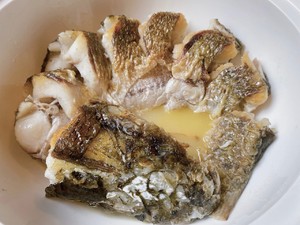 Lower the heat to a steady simmer and cook 5 minutes more — about 10 minutes total. Longer simmering turns the broth whiter but the fish mealy and bland, so resist. Taste and adjust the salt.
-
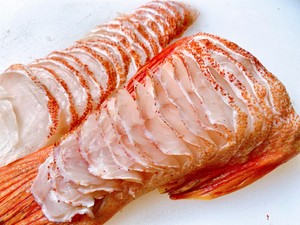 Squeeze in a little lemon juice, slide the whole fish onto a deep platter, and ladle the broth over. Scatter with the sliced scallion greens and goji berries. Serve the broth first, in sips; the fish is milder than you expect and lovely dipped in light soy sauce.
Why this recipe works
Milky fish soup runs on one piece of kitchen chemistry: emulsification. Fish fat and water do not mix on their own, but two things force them to. The first is the sear — browning the fish in hot oil renders fat and browned proteins, the raw material of both color and flavor. The second is violence: pouring in water that is already boiling and holding the pot at a hard, uncovered boil for the first five minutes mechanically shatters the fat into droplets too small to recombine, suspending them throughout the broth. That suspension is the milky color — there is no dairy involved and no cream hiding anything, which is how a milky fish soup without milk works. Everything else is restraint. The oil gets poured off after searing, so the emulsion carries flavor rather than grease. The aromatics stay at three: ginger, scallion, garlic. And the simmer is capped at about ten minutes — the broth keeps extracting after that, but the flesh pays for it, turning dry and anonymous. The lemon at the end is a quiet trick: a few drops of acid brighten the broth in a way salt alone cannot.
About the dish
Whole fish poached into a milky broth is everyday Chinese home cooking — the soup a family makes when someone needs building up, because fish broth is prized there as easily digested nourishment for children, new mothers and anyone recovering. The name of the original recipe points at how bare the method is: fish, water, and patience at the boil. Color obsession is a modern wrinkle — home cooks compare broths like jade, and the author, after years of testing everything from crucian carp to grouper, offers the sanest advice in the genre: river fish like crucian carp and grass carp go reliably white (but are bony), while some prized sea fish stay stubbornly clear no matter what. Her conclusion is worth adopting: do not chase the color, chase the taste. What matters is a broth that tastes of fish and sweetness, not of ginger or grease.
What to serve with it
Ladle the broth into wide bowls and drink it first, in sips, the way fish soup is meant to be taken. Finish the meal with the fish itself, dipped in a little light soy sauce. A simple stir-fried green and a pot of rice turn the broth into dinner, and a plate of smashed cucumber salad keeps the table cool. Simmer cubes of firm tofu in the pot and it becomes the classic fish soup with tofu, a meal in one bowl. If you made it with a bony fish, set out small bowls for the bones and remind everyone to eat carefully. More bowl-and-broth ideas live in our soups collection.
Pro tips
- Milky soup is an emulsion, not cream: the sear renders fish fat, and a hard boil in already-boiling water whips it into droplets too small to separate. Sear well, use boiling water, keep the first 5 minutes at a rolling boil — that is the whole secret.
- Do not move the fish for the first 2-3 minutes of searing. The skin releases on its own once crisp; early flipping tears it and the fish falls apart before its time.
- Bony traditional fish (crucian carp, grass carp) give the whitest, sweetest broth; sea bass or tilapia trade some color for far fewer bones. Pick your battle.
- Skip pungent spices — no star anise, no ground pepper in the pot. The point is the fish's own sweetness; ginger, scallion and a pinch of salt are enough.
- Some sea fish simply refuse to turn white no matter how long you boil them — the original author boiled a grouper for 10 minutes and got a clear but delicious broth. Taste, not color, is the finish line.
- Working with fillets? Fry the head and bones for the broth, then slip the fillets in for the final 3-4 minutes of simmering so they stay intact.
Storage & leftovers
- Refrigerate leftover soup with the fish in a sealed container up to 2 days.
- Reheat gently to a bare simmer on the stove — a rolling boil on day two breaks the fish apart.
- Freezing is not recommended: the emulsified broth can separate and the fish turns mealy when thawed.
Frequently asked questions
Why is my fish soup not milky white?
Usually one of three things: the fish was not seared long enough to render fat, the water went in cold, or the boil was too gentle. Milky color is emulsified fat, and it needs high heat. A few saltwater fish never go white at all — the soup will still taste excellent.
Which fish should I buy?
Any mild whole fish around 1½ lb (680 g): sea bass, tilapia, snapper or bream are all forgiving. Traditional crucian carp makes the best broth but is full of fine bones — warn the table.
How spicy is it?
Mild by default — there is no chili in the base recipe. If you want warmth, drop 2 dried chilies into the oil with the ginger, or grind a little white pepper over the bowl at the table.
Can I make it ahead?
The broth actually improves overnight: refrigerate it, fish and all, up to 2 days and reheat to a simmer before serving. The fish is at its best fresh, though — the flesh firms and dries in the fridge.
Can I add tofu or vegetables?
Yes — firm tofu cubes or sliced daikon go in at the simmering stage and soak up the broth; napa cabbage is good too, added for the last 3 minutes.
Do I need milk or cream to make the soup white?
No dairy anywhere. The milky color is fish fat emulsified into microscopic droplets by the sear and the hard boil in boiling water. If your broth stays clear, the fix is more sear and a fiercer first five minutes — not cream.
Can I make it with fillets instead of a whole fish?
Yes — fry the head and bones for the broth the same way, then slip the fillets in for the final 3-4 minutes of simmering so they stay intact and tender.