Shanghai home style · Buns & Pancakes
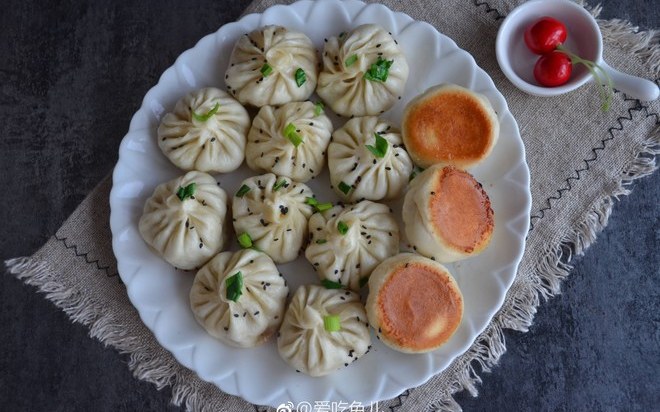
Sheng Jian Bao – Pan-Fried Pork Buns (生煎包)
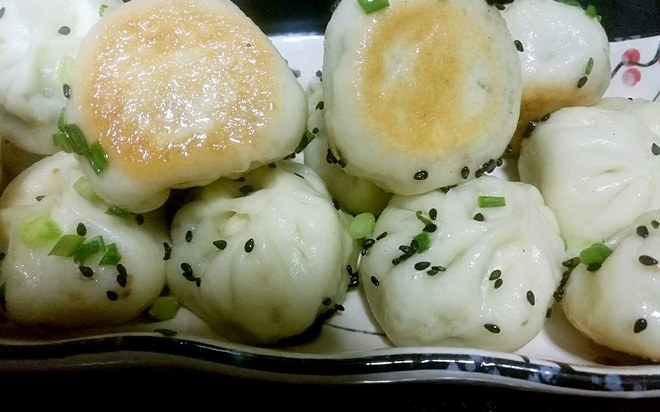
Shanghai's iconic pan-fried buns: pillowy yeasted tops, juicy pork-and-chive filling, a crackling golden bottom — plus the ice-flower lace variation at the end.
Instructions
-
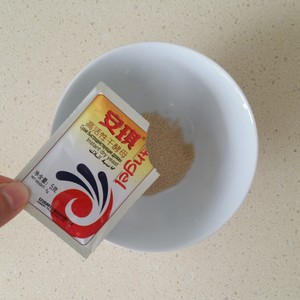 Stir the yeast and sugar into the warm water and let it sit for 5 minutes, until foamy on top. The sugar simply feeds the yeast for a faster, more reliable rise — skip it if you like, the dough will just prove a little slower.
-
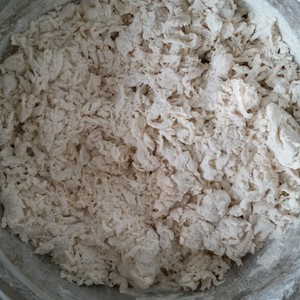 Make the dough: tip the flour into a bowl, pour in the yeast water while stirring with chopsticks or a fork into shaggy flakes, then knead 5–8 minutes into a smooth, soft dough. Cover and let rise until doubled, 60–90 minutes in a warm spot.
-
 Season the pork: add the salt, bouillon, black pepper and light soy sauce, and stir in one direction until the meat turns sticky. Then add the stock 1 Tbsp at a time, beating until each addition is fully absorbed before the next — the filling should end up glossy, loose and springy.
-
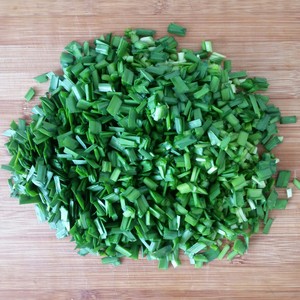
 Wash the chives, dry them thoroughly and mince. Toss them with the sesame oil in a separate bowl — the oil film keeps them from weeping — then fold them into the pork with the minced scallion whites, stirring just until even.
-
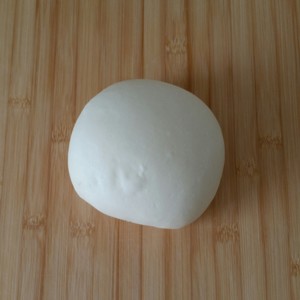
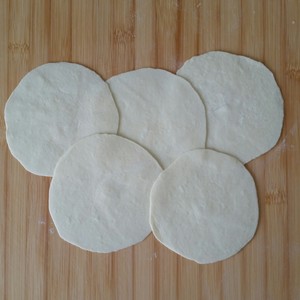 Punch down the risen dough and knead 2 minutes to drive the air out; it will shrink back to about 9¾ oz (275 g). Roll it into a rope and cut into 14 pieces of about ⅔ oz (19 g) each.
-
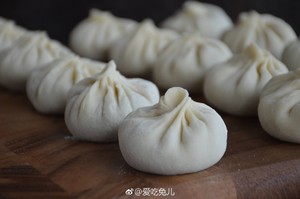 Flatten each piece and roll into a 3½-inch (9 cm) wrapper, a touch thicker in the center. Spoon in a generous 1½ Tbsp of filling, pleat the edges and pinch the bun fully closed, then rest the buns seam-up on a floured tray for 10 minutes — a short second proof keeps the tops fluffy in the pan.
-
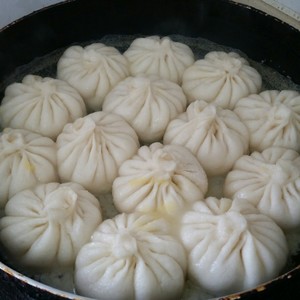
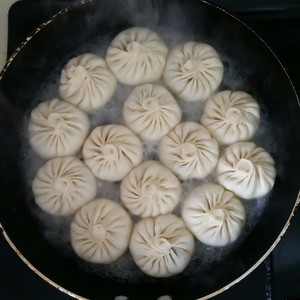 Heat the peanut oil in a large lidded nonstick skillet (10 inch / 26 cm) over low heat. When the oil shimmers, arrange all 14 buns in one snug layer, pleats up, and fry gently until the bottoms turn pale gold — lift one with a spatula to check.
-
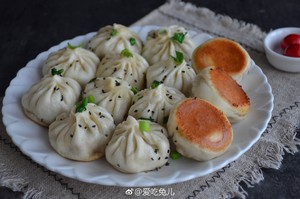 Slowly pour the cold water around the buns — it will spit — then cover immediately and raise the heat to high. Steam-fry about 8 minutes, until you hear loud, rapid crackling: that sound is the water boiling away.
-
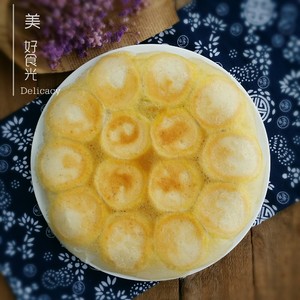 Shake the pan gently so the bottoms release, scatter the black sesame and scallion greens on top, cover, and turn off the heat. Let the buns sit 2 minutes in the trapped steam, then serve straight from the pan while the bottoms still crackle.
-
 For the ice-flower version (shui jian bao): whisk the cornmeal and flour into the cold water to a thin slurry, and pour it around the buns in step 8 instead of plain water. Cover on high heat until you hear rapid crackling and the slurry is nearly gone, lift the lid to check, then drop to low heat and stay close until the pan is fully dry — this is where the lace crisps without burning.
-
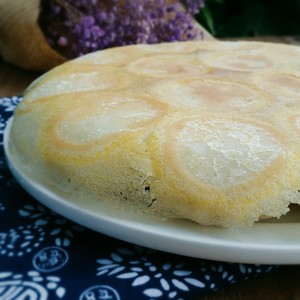 Shake the pan loose, then invert the whole pan onto a large plate in one confident motion, lace-side up. Serve hot — the ice flower is at its crispest within minutes of leaving the pan.
Why this recipe works
These buns deliver the full sheng jian bao contrast — a fluffy steamed crown over a shattering fried base — with nothing but a skillet and a lid.
1. A fully proofed yeasted dough. Unlike potsticker skins, this dough rises to double before wrapping and proofs again for 10 minutes while the pan heats. The gluten sets a soft, open crumb on top while the oil-fried underside turns crisp — the same dough, two futures, decided by which side touches the pan.
2. Stock beaten into the pork in stages (打水). Adding liquid spoonful by spoonful and beating until each is absorbed hydrates the meat proteins, which is why the filling stays juicy instead of tightening into a meatball. The chives are folded in at the last moment, coated in sesame oil first, so they stay bright green and intact instead of weeping into the meat.
3. The sound-guided water fry. Cold water hitting the hot pan turns to steam that cooks the upper half while the bottoms keep frying. Rather than timing it blindly, this recipe uses your ears: rapid crackling means the water has nearly boiled away and the crust is forming. The optional cornmeal-flour slurry in the variation fries into the crackling ice-flower lace (冰花) that turns a breakfast into a showpiece.
About the dish
Sheng jian bao — literally "raw-fried buns," meaning the buns go into the pan raw — are Shanghai's proudest breakfast. Supposedly born in the city's teahouses in the early twentieth century, they spread to glass-box street stalls where vendors fry dozens in wide lidded pans and sell them by the four, eaten standing up, scalding juice and all. Two famous Shanghai styles still divide fans: the older, meatier no-soup school and the juicier, soup-filled style that took over in the 1990s.
The buns here belong to the juicy home style, and the appended variation is their northern cousin, shui jian bao, beloved across Henan: the same fry-then-steam route, finished with a cornmeal-flour slurry that fries into the lacy skirt. In Shanghai the lace is optional; at northern street stalls it is the point. Either way the ritual is the same — bite a hole in the side first, slurp the steam, then eat. Unlike its thin-skinned steamed cousin xiao long bao, a sheng jian bao is judged by its bottom: crisp, lacquered, and audible.
What to serve with it
Serve four to a plate, straight from the pan, with plain rice porridge or the classic sheng jian bao dipping sauce — black vinegar with a few ginger slivers. A light seaweed egg drop soup balances the fried bottoms, and if you have a steamer going, a basket of steamed buns turns the morning into a proper dim-sum-style breakfast. Hot tea cuts the richness best, and the buns re-crisp well the next day — see the storage notes — though nothing beats that first crackle from the pan.
Pro tips
- The slurry must stay thin — about 3 g cornmeal and 3 g flour per 100 ml water. A thick paste fries into a chewy sheet instead of delicate lace, and that is the most common failure of this dish.
- Listen, don't peek: once the lid is on over high heat, the sizzle tells you everything. Loud crackling means the water is nearly gone; if the pan goes quiet early, check the bottoms right away.
- Dry the chives properly — wet chives dilute the filling and make wrapping slippery. A salad spinner followed by a towel does the job in two minutes.
- Weigh the dough pieces if you can; 19 g skins with a generous filling is what keeps these buns dainty rather than doughy. A bench scraper makes dividing even.
- No instant yeast? Use the same weight of active dry yeast and bloom it in the same warm sugared water — give it the full 5 minutes to foam before it meets the flour.
Storage & leftovers
- Best eaten straight from the pan, within minutes — the crisp bottom and any lace soften as the buns cool.
- Freeze shaped, second-proofed buns on a tray, then bag for up to 1 month and fry from frozen with 2–3 extra covered minutes.
- Leftovers keep 1 day refrigerated; re-crisp in a dry nonstick pan over medium heat for 2–3 minutes, covered, with a teaspoon of water splashed in to re-steam the tops.
Frequently asked questions
How is sheng jian bao different from potstickers?
Potstickers use an unleavened dumpling dough; sheng jian bao are real buns on a yeasted, fully proofed dough, so the tops stay bread-soft while only the bottoms fry. The filling is juicier too, because the thicker skin can hold more liquid without leaking.
Can I skip the ice-flower slurry?
Yes — the plain-water version is the original, giving a crisp golden bottom without lace. The slurry just adds the crackling skirt that makes the pan look impressive; both are authentic, and the slurry must stay thin either way.
Can I make these ahead?
Shape and second-proof the buns, then tray-freeze them solid and bag for up to 1 month. Fry from frozen: start on low so the bottoms set without burning, and add 2–3 minutes to the covered steaming. Do not thaw first or the dough collapses.
My bottoms burned before the filling cooked. What went wrong?
The pan was too hot during the dry fry, or too much heat stayed under the pan once the water was gone. Fry the bottoms only to pale gold, and drop to low heat as soon as the sizzling fades at the end.
Can I leave the sugar out of the dough?
Yes — the 2 g of sugar only feeds the yeast and nudges browning; the texture barely changes. Keep the yeast amount the same and expect a slightly slower rise.
What if my skillet has no lid?
Cover it with a baking sheet or a second pan of the same size — the goal is trapped steam for the top half of the buns. Foil crimped tightly around the rim also works for one batch.
What is the difference between sheng jian bao and xiao long bao?
Xiao long bao are thin-skinned and steamed, with aspic that melts into a spoonful of soup. Sheng jian bao are yeasted and pan-fried — juicy rather than soupy (here, stock is beaten into the pork), with a crisp golden bottom instead of a delicate skin.
What do you dip sheng jian bao in?
Black vinegar, Shanghai style, sometimes with a few slivers of raw ginger in the dish. Keep it simple — heavy soy or chili sauces bury the sweet pork and chives.