Shanghai street food · Buns & Pancakes
Shanghai Scallion Pancakes (上海葱油饼)
Shanghai's crackling scallion pancakes: half-hot-water dough, lard, a five-spice oil paste, a scandalous amount of scallions, and a fold that shatters into layers.
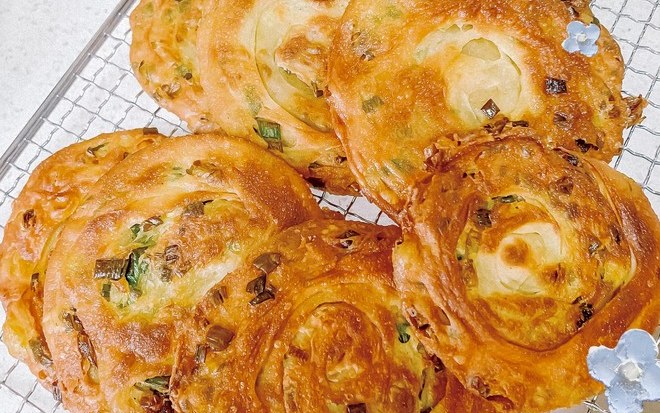
Instructions
-
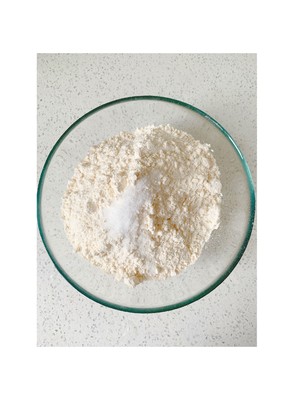 Make the dough: mix the flour, salt and sugar with the lard until crumbly. Pour in the boiling water in 3–4 additions, stirring — the hot water pre-cooks some starch, which is what makes these pancakes flaky instead of bready. Add the cold water and knead 5 minutes into a soft, smooth dough. Cover and rest 15 minutes.
-
 Slice the scallions thin — all 10 ounces. This sounds like a mountain of scallions and is exactly the point; they cook down into green, sweet, jammy layers. (The recipe's author calls them the soul ingredient.)
-
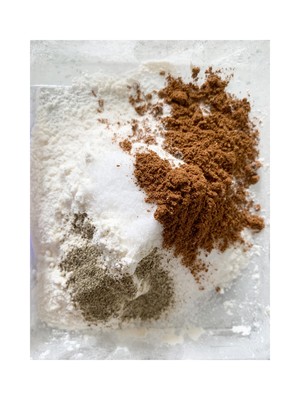 Make the oil paste: put the ⅓ cup flour, salt and five-spice in a bowl and pour the hot oil over, stirring into a smooth paste. This is the layer-builder — it waterproofs each turn of dough so the layers stay separate and shatter when fried.
-
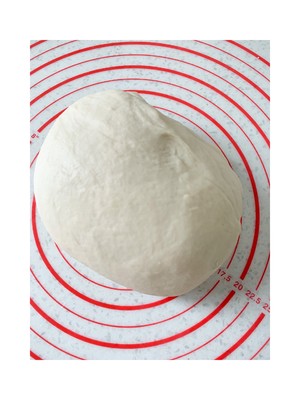 Divide and rest: knead the dough briefly, roll it into a rope, and cut into 8 pieces. Brush each with oil, cover, and rest 15 minutes more — rested dough rolls out dramatically thinner without fighting back.
-
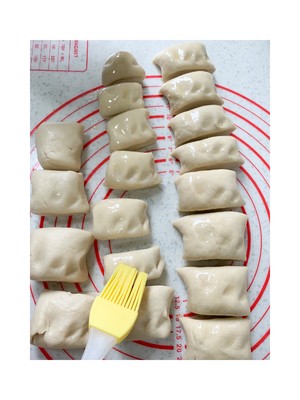 Roll and fill: roll one piece into a long thin rectangle, about 5×12 inches (13×30 cm) — thin enough to almost see through, but not so thin the scallions poke through. Spread a thin layer of oil paste edge to edge, then scatter a generous handful of scallions over two-thirds of it.
-
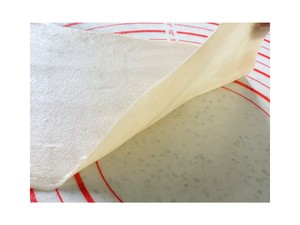 Roll up the rectangle tightly along its long side into a cylinder, then coil the cylinder into a spiral (snail shape), tucking the end underneath. Rest the coil 15 minutes, covered — this relaxes the gluten so the next roll doesn't squeeze the layers apart.
-
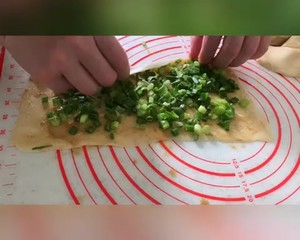 Final roll: press the coil flat with your palm, then roll gently into a 6-inch (15 cm) disc. You'll see green layers through the surface — stop before they burst. Repeat with the remaining dough.
-
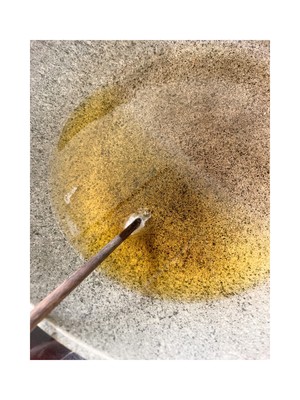
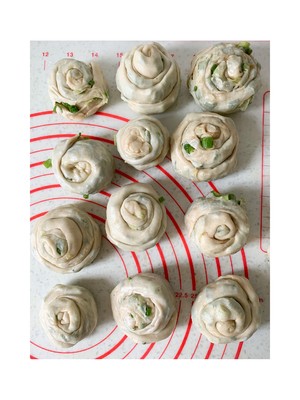 Pan-fry: heat ½ inch of oil in a heavy skillet to 170°C / 340°F (a wooden chopstick inserted fizzes steadily with small bubbles). Fry the pancakes 2–3 minutes per side, pressing gently with the spatula — the press is traditional: it forces the layers to separate and puff, and pushes the raw spots into the hot oil.
-
 Drain upright on a rack (not paper — paper steams the bottom), and serve hot. To eat like a local: press the pancake so the layers shatter, then eat the shards.
Why this recipe works
Scallion pancakes are flaky pastry pretending to be a flatbread, and the tricks are all in the dough logistics.
1. The half-hot-water dough (半烫面). Pouring most of the water boiling and finishing cold gives you both textures in one dough: the hot water gelatinizes starch for shattering flakiness, the cold water keeps enough gluten stretch to roll the layers thin without tearing. It's the same compromise our potsticker dough makes, tuned for frying. The softened lard does its own quiet work in fat form, shortening the strands so old-school scallion pancakes with lard shatter instead of chew.
2. The oil paste (油酥). Flour whisked into hot oil with salt and five-spice becomes the layer lubricant: brushed between every fold, it prevents the dough layers from welding during frying, so they separate into the crisp, shingled sheets that define the dish.
3. Rest, coil, rest. The two 15-minute rests bookending the shaping are what turn effort into layers: rested dough rolls to near-transparency, and the rested coil accepts the final gentle roll without squeezing its own strata shut. Scallion pancakes reward patience in two installments.
About the dish
Cōng yóu bǐng (葱油饼) — scallion oil pancake — is street breakfast royalty in Shanghai: griddled in cast-iron discs of oil at dawn stalls, pressed flat with the spatula, eaten piping hot in paper bags on the walk to work. The Shanghai version's tell is the shatter — thin, cracker-flaky layers heavy with scallion — versus the chewier Taiwanese style across the strait.
The stretch-and-coil fold (卷麻花式) — rolling the filled sheet into a rope, then stretching and coiling it like a snail — is the old stall technique for multiplying layers without more rolling. Vendors make it look like nothing; at home, the two rests are your version of thirty years of muscle memory. The ingredient list's honesty is part of the charm: flour, scallion, oil, salt — and an unreasonable amount of one of them.
What to serve with it
It needs nothing, but dips love it: black vinegar, our chili oil, or soy with a drop of sesame. In Shanghai they pair it with salty soy milk for breakfast; at your table it's the appetizer that disappears before the main dishes land. Kids eat the plain edges; adults hunt for the scallion-dense center. Day-old pancakes re-crisp in a dry skillet over medium heat, a minute per side — the microwave is banned. And if you froze raw discs, fry them straight from the freezer over slightly lower heat: a frozen scallion pancake turns into a five-minute breakfast, fried egg optional.
Pro tips
- Boiling water + cold water in the same dough is deliberate: hot water makes flaky tenderness, cold water builds just enough stretch to roll thin. Neither alone gets there.
- Lard is the traditional richness and the crispest; butter is a great Western stand-in; neutral oil works with a slightly less shattering result.
- Don't fear the scallion mountain — 300 g for 8 pancakes is street-stall standard. Under-filling is the number one home version disappointment.
- The two 15-minute rests bracket the rolling: before (roll thin easily) and after coiling (layers stay distinct). Skip them and you'll fight the dough and mash the layers.
- If the pancake puffs like a balloon while frying, that's success — press it down with the spatula so the layers toast individually.
- Oil at 170°C / 340°F, not hotter: too hot browns the outside while the inner layers stay raw and doughy.
Storage & leftovers
- Best within an hour of frying; re-crisp leftovers in a dry skillet or 200°C / 400°F oven for 4 minutes.
- Raw shaped discs: freeze with parchment between, up to 2 months. Fry from frozen, 1 extra minute per side.
- Fried pancakes don't refrigerate well — the layers soften. Fry what you'll eat; the raw dough is the thing to save.
Frequently asked questions
Can I bake these instead of frying?
Frying is what makes them crackle — brushed-and-baked versions are a different (softer) dish. For less oil, shallow-fry in ¼ inch and drain well; the crackle survives.
Can I use frozen scallion pancakes from the store?
They're a fine emergency, but homemade has three times the scallions and the fresh-fried shatter. Make a double batch and freeze the raw discs — the homemade version becomes your convenience food.
How do I get more layers?
Roll thinner, coil tighter, and rest after coiling. Layer count = how many times the oiled dough folds over itself, plus how gently the final roll preserves them.
My pancakes came out doughy inside. Why?
Oil too hot (outside cooked before the inside), or the disc rolled too thick. 170°C / 340°F and ¼ inch max thickness fixes both.
Can I make the dough ahead?
The dough keeps 24 hours refrigerated; the shaped raw discs freeze beautifully — stack with parchment, freeze up to 2 months, fry from frozen over slightly lower heat.
What's the difference between this and Taiwanese cong you bing?
The Shanghai street version (this one) is fried in shallow oil, flaky and cracker-crisp. The Taiwanese breakfast version is often pan-fried with more chew, and frequently wraps a fried egg. Same family, different texture philosophy.
Can I use bread flour or whole wheat flour?
All-purpose is the right choice here — bread flour's extra gluten makes the pancakes chewy instead of flaky, and whole wheat loses the shatter. The half-hot-water dough plus all-purpose is what gets you the street-stall texture.