Cantonese · Cold Dishes & Salads
White Cut Chicken (白切鸡)
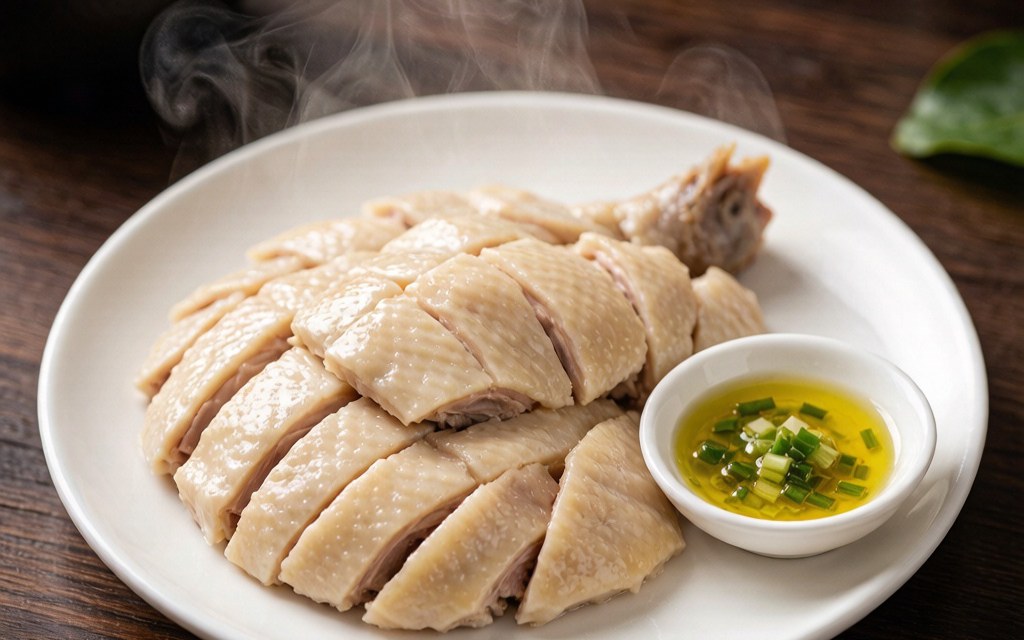
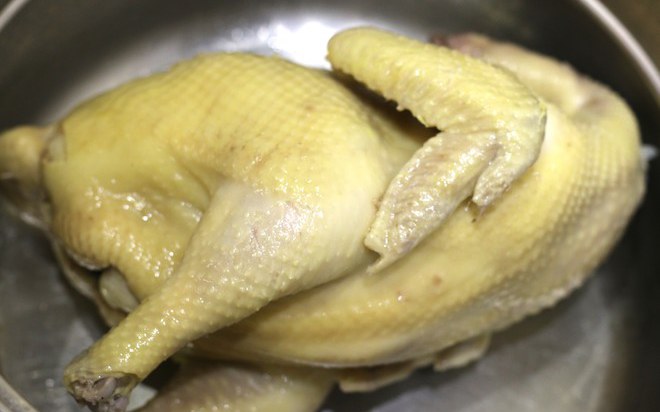
Cantonese white cut chicken: the bird is shocked from boiling water into ice for snappy skin, then steeped until silky and carved with ginger-scallion oil.
Instructions
-
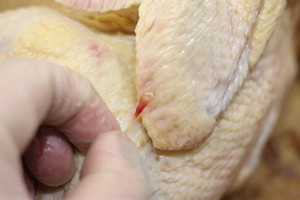
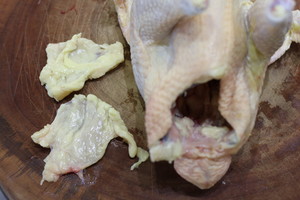
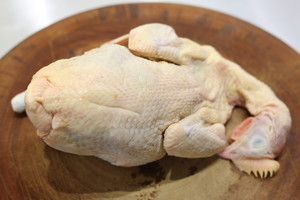 Rinse the chicken inside and out under cold water. Pull out any visible pin feathers, trim off the yellow tail fat if present, and pat the bird completely dry — a dry surface takes the hot-cold shocks much better.
-
 Set up before anything gets hot: fill a deep container large enough to hold the whole bird with cold water and half the ice, and place it right beside the stove. This is ice bath one.
-
 In a tall stockpot deep enough to submerge the chicken, combine the water, ginger, scallion, star anise, Sichuan peppercorns and Shaoxing wine. Bring to a rolling boil over high heat, about 10 minutes.
-
 Tighten the skin — the "three hot, three cold" dip: holding the bird by the head and neck (or with tongs gripping the middle of the neck), lower the whole chicken into the boiling water for 2 seconds, lift it out for 2 seconds, and repeat three times. The skin turns taut and slightly opaque; this shock is what gives white cut chicken its springy, snappy bite.
-
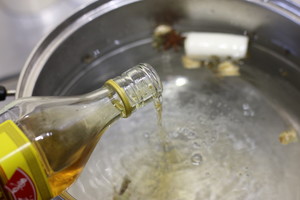 Lower the bird fully into the pot and boil, uncovered, for exactly 1 minute 20 seconds (1 minute for birds under 3 lb / 1.4 kg).
-
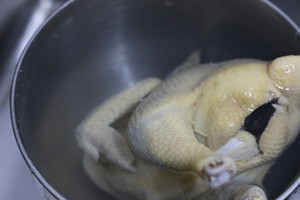
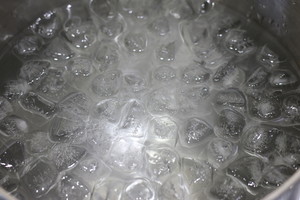 Lift the chicken straight into the ice bath and press it under so the skin is completely submerged. Chill for 2–3 minutes, until the surface feels cool to the touch — the skin will contract and look smooth and pale gold.
-
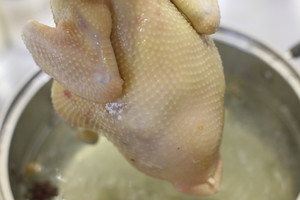 Bring the poaching water back to a rolling boil, then return the chicken. Boil for 6 minutes, uncovered, turning the bird over gently once at the 3-minute mark. Slide the tongs under the body to turn it rather than gripping the skin.
-
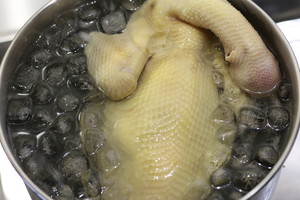 Turn off the heat, clamp the lid on, and leave the chicken to steep in the hot water for 50 minutes (40 minutes for birds under 3 lb). Do not lift the lid — the trapped heat finishes the meat gently to just-done while the skin stays intact.
-
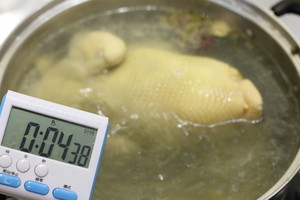 Lift the chicken out by the neck again and lower it into a second ice bath (the remaining ice plus cold water). Chill for 3–4 minutes to stop the cooking and firm the skin.
-
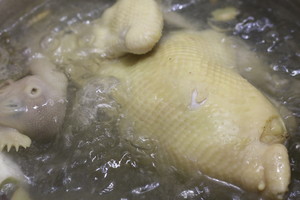 Hold the bird under cold running water for about 5 minutes, rubbing the surface lightly with your hands. This washes off the loose fat and scum so the skin dries clean, glossy and jelly-smooth.
-
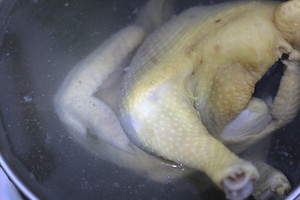 Pat the chicken dry and let it rest 20–30 minutes so the skin dries and the juices settle. Carve Chinese style: chop straight through the bone into bite-size pieces. A rosy tinge at the thigh bone is the hallmark of the dish — the meat itself is fully cooked.
-
 Make the sauce while the bird rests: stir the ginger, scallion, salt and sugar in a small heatproof bowl. Heat the oil in a tiny pan until it shimmers and sizzles around a chopstick dipped in it, then pour it over the ginger-scallion mix — it will spit and turn intensely fragrant. Serve alongside the chicken.
Why this recipe works
Whole-bird poaching looks alarming and is mostly physics, so here is what each move is buying you.
1. The hot-cold shocks (三上三下). Dipping the raw bird into boiling water three times, then plunging it into ice, does two things. The burst heat contracts the skin's collagen and sets it tight before the meat has cooked at all; the ice locks that shape in. It is the same principle as shocking a boiled egg — only here the prize is skin that bites back, springy and faintly gelatinous, the texture Cantonese cooks call cuì (脆).
2. Steep, don't boil. Boiling a chicken for 40 minutes squeezes out its juices and wrecks the skin. Six minutes of actual boiling is all a 3–4 lb bird needs to reach temperature; after that, water held just off the boil under a lid cooks the meat gently and evenly, the way a sous-vide bath would. The muscle fibers stay relaxed and the juices stay inside.
3. The cold rinse. Five minutes under running cold water after the steep sounds fussy, but it does real work: it washes the loose fat and coagulated scum off the surface so the skin dries to a clean, glossy, almost translucent finish instead of a greasy one. It is the difference between a chicken that looks steamed and one that looks lacquered. Done right, this is the Chinese cold chicken every other poached bird is judged against.
About the dish
White cut chicken (白切鸡, bái qiē jī — "plain-cut chicken") is the Cantonese statement that a truly good chicken needs almost nothing. The bird is poached plain, with no salt in the water, then chopped through the bone and dressed at the table with ginger-scallion oil. In Guangdong it anchors banquet tables and weeknight rice alike, and the leftover poaching broth becomes the next morning's congee.
The rosy bone is not a flaw to apologize for. Cooks there judge a white cut chicken by it: blood-dark marrow with clear, fully cooked juices means the steep was timed right. Once you have tasted properly done white cut chicken — skin that snaps, meat that slides off clean — the fully-boiled version reads as chalky and dry.
What to serve with it
Plain steamed rice and the ginger-scallion sauce are the classic pair; a cool smashed cucumber salad fits the same Cantonese table perfectly, and blanched greens with oyster sauce complete the trio. And do not discard the poaching liquid — strained, it makes the base for a quiet chicken broth or congee the next day. Leftover chicken is best cold or at room temperature, the Cantonese way; if you must reheat it, steam gently for five minutes, never boil. Children take the leg meat with extra sauce; save the gelatinous tail pieces for the adults who know. Cantonese families call it bak chit gai — same bird, same sauce, no hurry.
Pro tips
- The whole recipe lives or dies on two temperatures: water at a full rolling boil and ice baths that are truly icy. Add the ice just before you need each bath so it has not melted by the time the chicken goes in.
- Handle the hot bird only by the neck and head. The skin is fragile after poaching — every grip on the body risks a tear, and torn skin leaks the juices you worked to keep in.
- Resist opening the lid during the 50-minute steep. Each peek releases the stored heat that finishes the meat; the steep is doing the work, not the flame.
- Do not salt the poaching water — this is the authentic Cantonese way. The chicken is seasoned by the ginger-scallion sauce at the table, which keeps the meat sweet-tasting rather than cured.
- Strain and save the poaching liquid: after steeping it is a light, clean chicken broth, perfect for congee or a quick soup the same day.
- Serve the chicken warm or at room temperature, never straight from the fridge — chilled chicken fat turns waxy. Take it out 30 minutes before eating.
Storage & leftovers
- Refrigerate the chicken — carved or whole — covered, for up to 2 days. Keep it uncarved if you can; chopped pieces dry out faster.
- Eat it cold or at room temperature. To refresh the skin, pour a ladle of hot poaching broth over the pieces or steam them for 30 seconds. Skip the microwave — it makes the skin rubbery.
- Freeze the strained poaching broth for up to 3 months and the carcass for stock. The meat itself does not freeze well — the skin turns mealy when thawed.
- The ginger-scallion sauce keeps in a sealed jar in the fridge for up to 4 days; re-warm briefly or use it cold on noodles and rice.
Frequently asked questions
Is it safe if the bone looks pink?
Yes. White cut chicken is cooked by a long steep, so the flesh at the bone is fully cooked even when the marrow shows rosy — that pink is the signature of a properly done bird, like a roasted duck leg left slightly rose at the bone. If the idea troubles you, steep 10–15 minutes longer; the skin will be slightly less silky.
How is this different from Hainanese chicken rice?
Same family, different finish. Hainanese chicken rice cooks rice in the chicken fat and serves a soy-chili-ginger trio; white cut chicken is the plainer Cantonese original — nothing but the bird, a clean poach, and ginger-scallion oil. Master this one and you can make both.
Can I skip the ice baths and just boil?
You can, but you lose the dish's best quality. The boiling-to-ice shocks tighten the skin so it stays springy and gelatin-smooth instead of slack. Skipping them leaves you ordinary poached chicken.
My pot is too small to submerge a whole chicken. What now?
Use your widest pot, fill a bit less, and turn the bird once during the steep. As long as the water covers most of the body, the stored heat handles the rest — the original recipe was written for a small home burner too.
Can I make it ahead?
Yes — it is actually better made ahead. Hold the whole bird (don't carve) covered at room temperature for up to 2 hours, or refrigerate for up to a day and bring back to room temperature before chopping. Carving cold smears the skin.
How spicy is it?
Not spicy at all. The ginger-scallion sauce is aromatic, not hot. If your table wants heat, set out chili oil on the side — that is exactly how Cantonese families do it.
Do you serve white cut chicken hot or cold?
Room temperature is the Cantonese standard — the flesh is at its silkiest and the skin still snaps. Leftover chicken is eaten cold or at room temperature; if you must rewarm it, steam gently for five minutes and never boil.
What can I do with the poaching liquid?
Do not discard it. Strained, it becomes the base for a quiet chicken broth or the next morning's congee — in Guangdong that handoff is half the point of poaching a whole bird.