Cantonese · Street Food & Snacks
Mini Ham Sui Gok (珍珠咸水角)
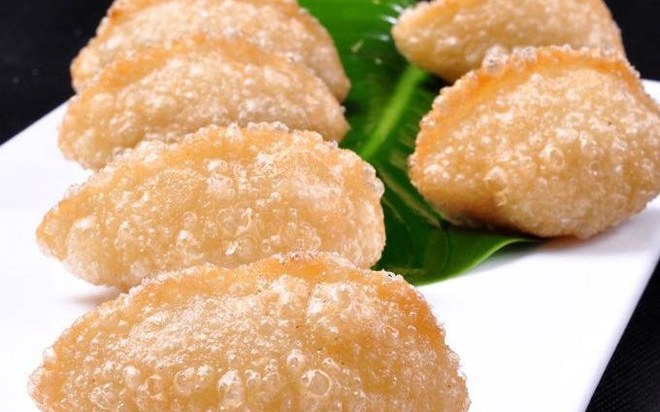
Mini Cantonese ham sui gok: chewy glutinous shells that blister crisp around a savory pork, shrimp and shiitake filling — the teahouse dim sum classic at home.
Instructions
-
 Make dough A: mix the glutinous rice flour and sugar, add the ice water, and knead until the sugar is fully dissolved and the dough is smooth and stiff, like firm play-dough.
-
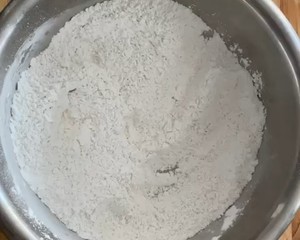 Make dough B: put the wheat starch in a heatproof bowl, pour the boiling water over it, and stir immediately — it seizes into a translucent, sticky paste within seconds.
-
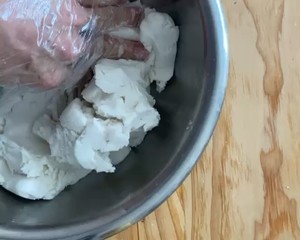
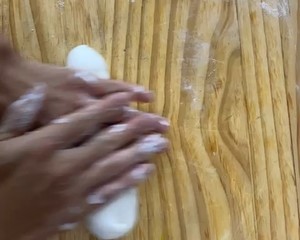
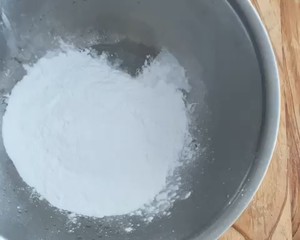 Knead A and B together until no white streaks remain, then work in the oil a spoonful at a time. The dough turns smooth, glossy and elastic. Wrap it in plastic and refrigerate for at least 30 minutes (up to overnight) — chilled dough shapes cleanly.
-
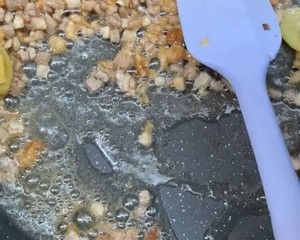
 Make the filling: heat 1 Tbsp oil in a skillet over medium heat, add the dried shrimp and diced pork belly, and fry for 2–3 minutes until the pork turns pale and its fat renders out.
-
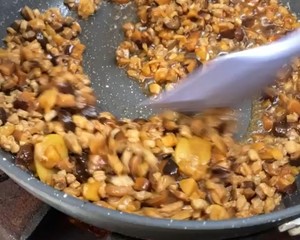
 Season with the light soy sauce, oyster sauce, salt and sugar and stir, then add the shiitake and gong cai. Toss for 1 minute, pour in the ⅓ cup water, cover and simmer for 5 minutes until tender.
-
 Stir the cornstarch slurry once more and trickle it in while stirring — the filling should thicken into a cohesive, scoopable mass with no watery puddles. Cool it completely (10 minutes in the freezer speeds this up); warm filling melts the dough seams.
-
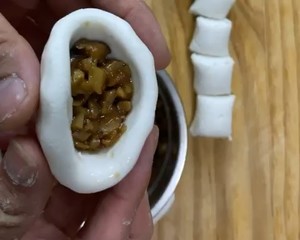
 Portion the chilled dough into 12 pieces of about 28 g, keeping them covered. Roll each into a ball, press your thumb into the center, and rotate your thumb in the cavity to form a bowl with thin sides and a slightly thicker bottom.
-
 Spoon in about 1½ Tbsp of the cold filling, fold the dough over, and pinch the seam firmly to seal. Shape the classic way — an olive with the pleated seam on top — or roll into a ball and pinch one end into a tiny beak for the chick look.
-
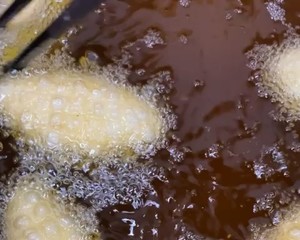
 Heat the oil in a deep, heavy pot to 170°C/340°F — a scrap of dough should sizzle and rise to the surface within 2 seconds. Fry 3–4 gok at a time for 4–5 minutes, rolling them gently so they color evenly, until deep golden and puffed and the shells blister into a crackly crust.
-
 Lift them out and drain on a rack or paper towels for 2–3 minutes — the shell crisps as it cools. Serve hot, straight from the batch: crispy outside, chewy inside.
Why this recipe works
Ham sui gok is a two-dough trick, and once you see why, it stops being intimidating.
1. The shell is two doughs in one. Pure glutinous rice dough fries up chewy but never blisters — it stays dense. The second dough, wheat starch scalded with boiling water, is what Cantonese bakers add to create that blistered, crackly dim-sum shell: it sets crisp while the glutinous dough around it stays springy. The sugar in the base dough is not just flavor — it caramelizes in the oil and deepens the golden color.
2. Cold dough, cold filling. Ice water in the base dough and a full chill afterwards keep the dough workable — glutinous dough turns sticky and slack as it warms, and a slack shell cannot hold a pleat. The filling must be cold for a different reason: warm filling melts fat into the seam, and fat in the seam means the gok can open in the fryer.
3. 170°C (340°F), no hotter. At this temperature the shell puffs gently and blisters into its signature crunchy skin while the center turns molten-chewy. Hotter oil browns the outside before the inside cooks; cooler oil soaks the shell greasy. A scrap of dough that rises within 2 seconds is your thermometer. Keeping them mini is the trick: small gok blister evenly before the filling turns dry, the teahouse detail behind pearl ham sui gok.
About the dish
Ham sui gok (咸水角) is a fixture of Cantonese dim sum trolleys — golden, puffed ovals with a pleated top, shell crackly and hollow-sounding when tapped, inside chewy and juicy. Dim sum houses make them teahouse-size; this recipe is the mini 'pearl' (珍珠) version popular at Cantonese dim sum schools — one or two bites each, so a plate disappears fast and the crunch-to-filling ratio doubles.
The filling follows the classic savory formula: fatty pork belly for richness, dried shrimp for the umami bass note, shiitake for depth, and a crunch element — gong cai, the dried stem lettuce prized for its squeaky bite — all bound with a light starch-thickened sauce so the filling holds together in the fryer. It is a party dish in the best sense: shaped ahead, fried in minutes, eaten standing up.
What to serve with it
Serve a pile of hot gok with strong black tea, the way a Guangdong teahouse would, or build a homemade dim sum spread with steamed dumplings and a platter from the street-food collection. A crisp pickle or a simple cucumber salad cuts the fried richness nicely. They are party food at heart — set out small plates and let people eat standing up. Best within the hour, while the shell still crackles; leftovers re-crisp in a 190°C (375°F) oven for 8 minutes, though the microwave will undo all the good work.
Pro tips
- Ice water is not decoration — cold liquid keeps the gluten-free glutinous dough from turning sticky and slack, and it is why you can shape these with your bare thumbs.
- The wheat starch paste is what makes the shell blister into that crackly dim-sum crust while the glutinous part stays chewy. Do not skip it; it costs pennies at any Asian market.
- Seal every seam twice — filling fat leaking into the oil makes it foam and can pop a gok open. If a seam will not stick, dab it with water and pinch again.
- Hold the oil at 170°C (340°F): too cool and they drink oil and turn greasy; too hot and they brown before the center puffs and goes chewy.
- This is the mini 'pearl' version — less dough per bite and a higher crunch ratio. For teahouse-size gok, make 8 pieces of 40 g and fry 1–2 minutes longer.
Storage & leftovers
- Best straight from the fryer; they stay crisp for about 30 minutes at room temperature.
- Refrigerate leftovers up to 1 day and re-crisp in a 190°C/375°F oven or air fryer for 5–6 minutes.
- Freeze raw, shaped gok for up to 1 month and fry from frozen — do not thaw first, or the dough slacks.
Frequently asked questions
What is ham sui gok?
A Cantonese dim sum classic: a lightly sweet glutinous rice shell wrapped around a savory pork, shrimp and mushroom filling, deep-fried so the outside blisters crisp while the inside stays chewy. The name means 'salt water dumpling', and the mini one-bite version is called pearl ham sui gok.
I can't find wheat starch. What can I use?
Tapioca starch is the closest 1:1 substitute — the shell will be slightly more elastic. All-cornstarch versions turn brittle. If neither is available, use cake flour, but expect a softer, less blistered crust.
What can replace gong cai?
Gong cai (dried stem lettuce) gives a squeaky crunch; celery, water chestnuts or diced bamboo shoots fill the same role. Rehydrate gong cai in warm water for 20 minutes and squeeze it dry before dicing.
Can I make them ahead?
Shape the raw gok, freeze them on a tray until solid, then bag them — fry straight from frozen, adding about 2 minutes. The filling keeps 3 days refrigerated.
Why did my gok burst in the oil?
Usually the seam was not pinched tight, or the filling was warm and greased it open. Cool the filling fully, seal firmly, and do not crowd the pot — pieces knocking together weaken the seams.