Jiangsu (Huaiyang) · Braised & Slow-Cooked
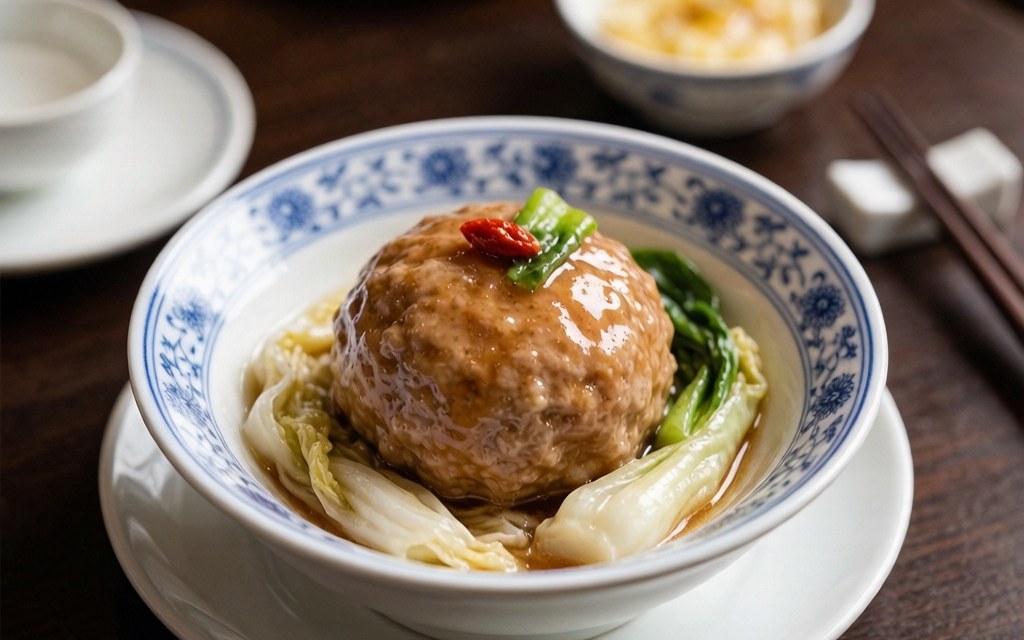
Master-Style Braised Lion's Head (老饭骨红烧狮子头)
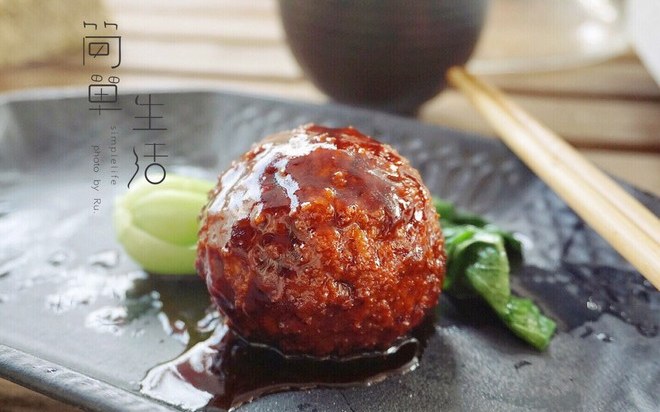
The banquet lion's head: pork hand-cut to pomegranate-seed dice, whipped with ginger-scallion water, set in oil and braised two hours until it quivers and melts.
Instructions
-
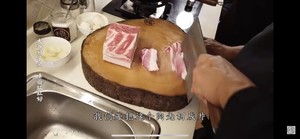 Cut the pork the banquet way: slice the belly, cut it into shreds, then into dice the size of pomegranate seeds. Now chop the dice coarsely, with the blade going all the way to the board — "fine cut, coarse chop" severs the sinews while keeping the grains that give the ball its layered chew.
-
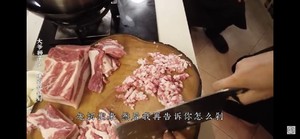 Smack each water chestnut with the flat of the knife and chop to small dice; bamboo shoots are the seasonal alternative. The point is a crisp, watery counterpoint buried in the soft meat.
-
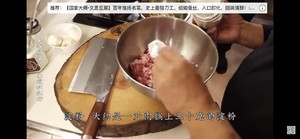 Make the ginger-scallion water: smash 5 scallion sections and 3 ginger slices, soak them in 1 cup (240 ml) water with 3 Tbsp Shaoxing wine for 10 minutes, squeezing occasionally.
-
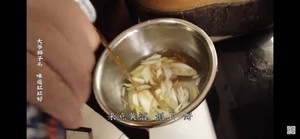 Add the starch, salt and 1 tsp white pepper to the pork and toss until evenly distributed.
-
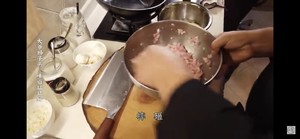 Whip in the flavored water 4–5 additions at a time, stirring and slapping the meat against the bowl in one direction until each addition disappears before the next. The finished paste should look glossy, feel elastic and pull away from the bowl; if it seems dry and stringy, it still wants more water. Stop once it springs back — an overmixed paste makes a tough ball.
-
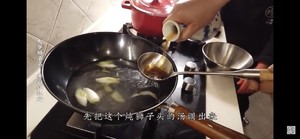 Build the braise before you fry — this order matters. Heat 1 Tbsp oil, fry 5 scallion sections and 4 ginger slices until fragrant, then add 6 cups (1.4 L) water, the light soy, dark soy, wine, star anise, cassia, Sichuan peppercorns and a pinch of white pepper. Drop in the strained scallion and ginger from the water and keep the pot at a bare simmer.
-
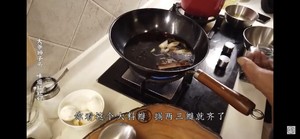 Shape the balls: portion 2½ oz (75 g) of paste each. If using salted duck yolks, flatten a portion around one yolk and seal it in. Dust a little dry starch on your palm so the surface smooths as you roll, and set the finished balls on a plate.
-
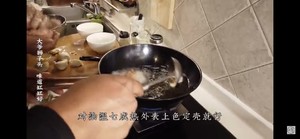
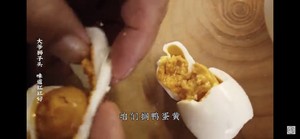 Heat the frying oil to 390°F (200°C) — vigorous bubbles stream from a wooden chopstick. Lower the balls in and fry just until the surface sets and pales to light gold, 1–2 minutes, turning so they color evenly. They are not cooked through and should not go deep brown.
-
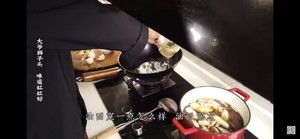 Transfer each ball straight from the oil into the simmering braise — a set-but-raw ball that waits on a plate will crack. Fry and transfer in batches if your pot is small.
-
 Simmer gently, lid ajar, for 1½–2 hours on medium-low heat: the belly fat renders out into the broth and the balls turn soft enough to quiver. Add the soaked peanuts halfway through.
-
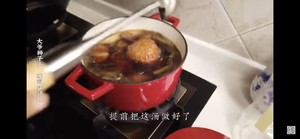 In the last 15 minutes, lay the napa leaves over the top like a blanket — they shield the balls from the air, soak up the broth and sweeten it. Taste the broth; add salt if it tastes thin.
-
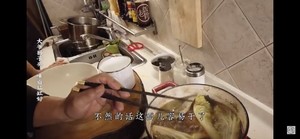 To serve, lift out the balls and cabbage, strain the broth over, and scatter the peanuts. No thickening — the broth should taste clean, and the ball should barely hold itself together on the spoon.
Why this recipe works
This is the banquet school of lion's head, and every step defends one idea: the meatball should taste purely of pork and melt on the tongue. 1. Fine cut, coarse chop. Slicing, shredding and dicing the belly by hand keeps the meat's muscle grain intact — that's where the chew and the layered bite come from — and one rough chop afterward severs the sinews a machine would leave whole. Grinding collapses both jobs into a dense paste.
2. Whip, don't squeeze. Instead of relying on egg and breadcrumbs, this paste is hydrated with a cup of ginger-scallion wine water, driven in by slapping. The proteins bond with the liquid the way a noodle dough bonds with water, so the finished ball is juicy from structure rather than from fillers — and the aromatics perfume it from inside. This ginger scallion water for meatballs is worth mixing even for ordinary pork balls.
3. Set-fry, long braise, cabbage blanket. A two-minute fry at high temperature fixes the sphere's shape without cooking it; then 1½–2 hours at a bare simmer renders the belly fat out into the broth, which is what makes a 40%-fat meatball eat clean instead of greasy. Napa leaves laid over the top stop the exposed surfaces from drying and turn into the quiet best bite of the pot.
About the dish
Lion's head (shi zi tou) belongs to Huaiyang cuisine, the refined cooking of the Yangzhou region — famous for knife work, broths and banquet dishes. This version follows the method popularized by Lao Fan Gu, a Chinese cooking channel fronted by retired master chefs with state-banquet backgrounds, which is why the ratios are exact: 30 g starch and 10 g salt per 500 g of meat, 75 g per ball.
The two schools of lion's head — clear-poached and red-braised — argue politely about which is truer. The red-braised one here fries only to set the shape and then lets a long spiced simmer do the work, finishing with napa cabbage and peanuts in the pot. It is a weekend-project dish: the kind of thing made for guests, New Year tables, and anyone who needs to be reminded what patient pork tastes like.
What to serve with it
Serve the balls in shallow bowls with strained broth ladled over and steamed rice alongside — the broth is unthickened on purpose, so it drinks like a soup. The napa from the pot is the built-in vegetable; if you want a contrast course, something sharp like smashed cucumber salad wakes the palate back up. More slow-cooked dishes live in our braised collection.
Pro tips
- "Fine cut, coarse chop" is the master rule: the careful dicing keeps the meat's grain (chew, layers, true pork flavor) while the final rough chop cuts the sinew that would make it stringy. A food processor can't do both — skip it here.
- The water-whip is what makes the ball tender instead of dense: 900 g of meat drinks most of a cup of flavored water. Slap rather than stir gently — the impact drives the liquid into the proteins.
- Fry only to set, then straight into liquid: a fried meatball that sits even 3 minutes will crack when it hits the broth. Have the braise simmering before the frying oil is hot.
- The 1½–2 hour simmer is not optional softening — it renders out the belly fat so the ball eats clean, rich but not greasy. Keep the heat low and the lid ajar; a hard boil roughs up the surface.
- The napa blanket is a banquet trick: it keeps the tops of the balls from drying out and becomes the best vegetable on the plate.
- The salt looks high at 2% of the meat's weight, but the long simmer, the unseasoned cabbage and the large volume of broth pull it back — taste the broth at the end before judging.
Storage & leftovers
- Refrigerate the meatballs submerged in their broth for up to 3 days; the fat rises and hardens on top and can be lifted off before reheating.
- Reheat by simmering gently in the broth for 10 minutes — they are already falling-apart tender, so never boil hard.
- Freeze the balls in their strained broth up to 1 month; the texture only softens further, which here is not a flaw.
Frequently asked questions
How is this version different from a home-style lion's head?
This is the banquet method: hand-cut dice instead of ground meat, flavored water whipped into the paste, a quick set-fry instead of a full golden fry, and a long 1½–2 hour poach in a spiced broth with no thickening — the meatball should wobble and melt, and the broth stay clean-tasting.
Can I use ground pork?
You can, and dinner will still be good — but you lose the layered, chewy-yet-melting texture that hand-cutting gives. If buying ground, ask the butcher for the coarsest grind available.
Can I do this in the oven?
After step 9, cover the pot and braise in a 300°F (150°C) oven for the same 1½–2 hours. The oven holds an even gentle heat and the broth stays clearer than on a stovetop simmer.
Is it spicy?
No — mild and savory. The ten Sichuan peppercorns are background perfume, not heat; this dish's signature is tenderness.
Do I need the salted duck egg yolk?
It's optional richness — a salty, sandy yolk center against the soft pork, common in celebration versions. Without it you have the classic dish; the balls stand on their own.
What if my paste won't hold together when rolling?
It usually needs more water, not less — keep slapping in the ginger-scallion water until the paste turns glossy and elastic. A dry paste cracks; a properly hydrated one sticks to itself like wet clay.
Why did my lion's head meatballs turn out dense?
Dense balls almost always trace to two causes: the pork was machine-ground instead of hand-cut (grinding collapses the grain into a paste), or the ginger-scallion water never got fully whipped in. Keep the dice, and keep slapping until the paste turns glossy — 900 g of meat drinks most of a cup.