Sichuan · Noodles
Spicy Pork Sauce Cold Noodles (麻辣肉酱凉面)
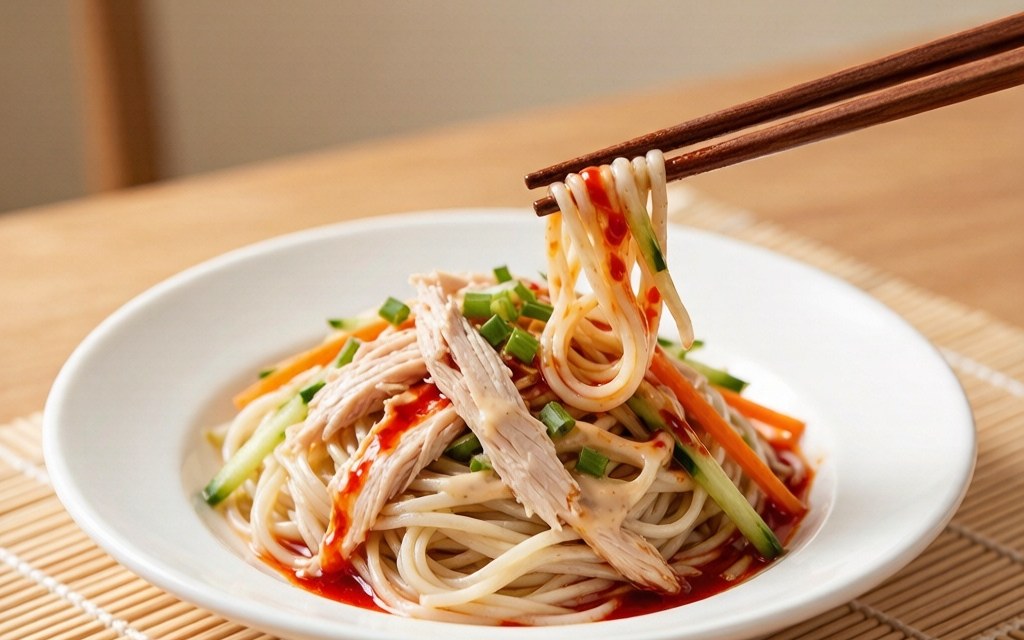
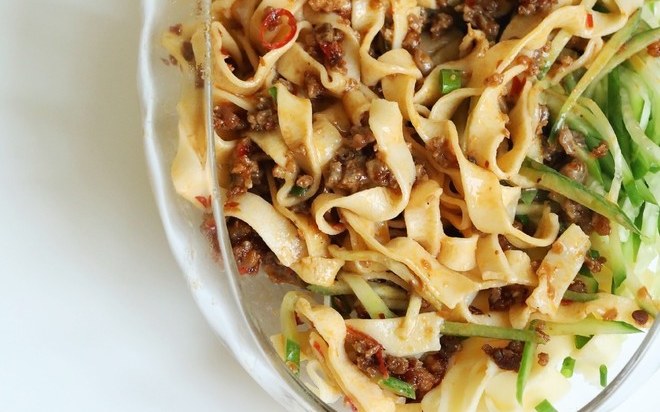
Fiery málà cold noodles: chewy homemade egg noodles under a numbing doubanjiang pork sauce, mellowed with a swirl of sesame paste — the sauce keeps for weeks.
Instructions
-
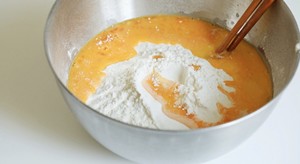 Make the noodle dough: stir together the flour, salt, baking soda, egg and cold water until shaggy clumps form, then knead for 3–5 minutes into a very stiff dough. It should feel dry and stubborn — that is correct; a soft dough makes sticky, clumpy noodles.
-
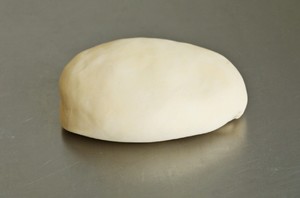 Cover the dough and rest it for 1 hour. The gluten relaxes, and what felt impossible to knead becomes smooth after 2–3 minutes of work.
-
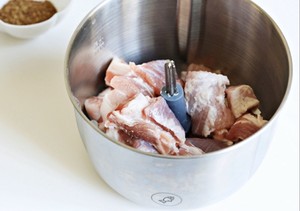
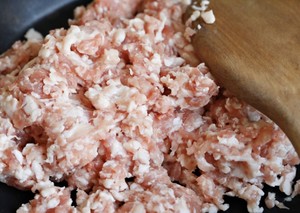
 Make the pork sauce while the dough rests: pulse the pork belly in a food processor to a coarse mince — about a dozen 1-second pulses, stopping before it turns to paste (no processor? chop by hand to ⅛-inch bits). Pulse the chilies, garlic, scallions and ginger the same way into a coarse, juicy rubble.
-
 Set a dry wok or heavy skillet over medium-low heat with no oil. Add the pork and fry, breaking it up, for 8–10 minutes: first it steams and releases liquid, then the liquid cooks off, the fat renders out, and the sizzle turns from bubbling to crackling. Raise the heat to high, splash in the Shaoxing wine, toss for 30 seconds, then scoop the pork onto a plate.
-
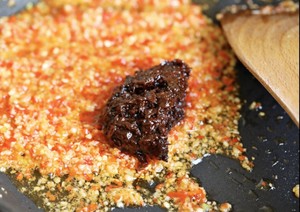
 Wipe the pan, add the 4 Tbsp oil and set it over medium heat. Fry the chili-garlic rubble for 1–2 minutes until it smells sharp and fragrant, then add the chopped doubanjiang and fry another 1–2 minutes, stirring, until the oil turns brick-red and glistens — the paste should sizzle gently, never scorch, or it goes bitter.
-
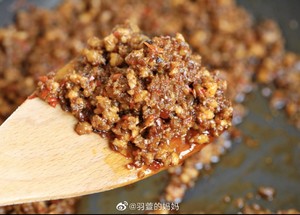
 Return the pork to the pan with any fat on the plate. Add the sugar and ground Sichuan pepper and stir-fry for 1–2 minutes more. The finished sauce is intentionally salty and concentrated — it has to season a whole bowl of plain noodles. Let it cool; it thickens as it sits.
-
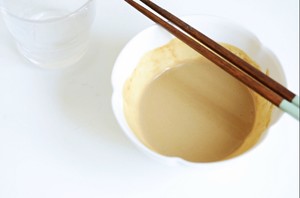
 Mix the sesame paste: put the sesame paste, soy sauce, sugar and salt in a bowl and whisk in the hot water in a thin stream. It will look broken and oily at first — keep whisking and it turns smooth, glossy and pourable, like warm heavy cream. This amount covers about 2 bowls; scale up for more.
-
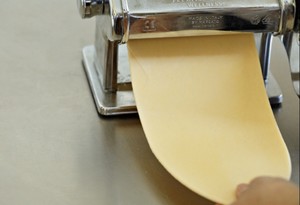
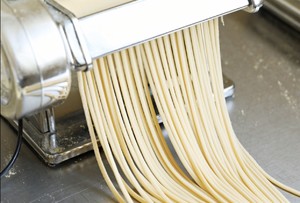
 Sheet the rested dough: divide it into 3 pieces, keep 2 wrapped, and flatten the third. Feed it through a pasta machine at the widest setting, folding it into thirds and re-feeding until it holds together in one piece, then work down one setting at a time, passing twice per setting and dusting with flour, until the sheet is about 1/16 inch (1.5 mm) thick.
-
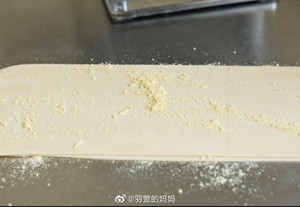
 Dust the sheet generously with cornmeal and cut it into fine noodles with the fettuccine or spaghetti cutter, or roll it loosely and slice by hand into ⅛-inch (3 mm) strands. Toss the strands with more cornmeal and nest them loosely. Repeat with the remaining dough, or freeze extra noodles in sealed bags.
-
 Cook the noodles: drop them into a large pot of boiling water and cook 60–90 seconds for fresh, until chewy with no raw center (dried store-bought: follow the package). Drain and rinse under cold water until fully cool, then drain very well.
-
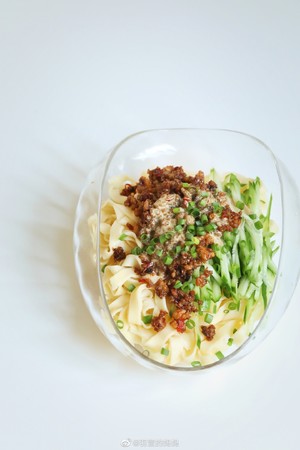 Assemble each bowl: noodles first, then a handful of cucumber shreds, 3–4 Tbsp pork sauce (warm it briefly in a small pan or the microwave if you like), 2 Tbsp sesame paste and 1 tsp black vinegar. Toss thoroughly — every strand should take on color — and eat immediately.
Why this recipe works
Three techniques make this bowl far better than the sum of its parts.
1. A deliberately stiff, low-water dough. Doughs for cold-serving noodles are mixed with far less water than bread dough — barely enough to hold the flour together. That stiffness builds dense gluten networks that survive rolling and cutting, which is why the noodles bite back with a springy chew instead of going soft and slippery in cold water. Baking soda nudges the pH upward, giving the strands their faint yellow color and that characteristic firm-yet-tender bite. The 1-hour rest is what makes the stiff dough workable at all.
2. Rendering the pork before seasoning it. The pork fries in a dry pan first, so its own fat cooks out and the moisture evaporates — meat thrown into seasoned oil straight away steams in its juices and turns rubbery. Only then does it meet the aromatics and the doubanjiang, which are fried in fresh oil until the paste releases its brick-red pigment. That fried-out red oil is the flavor engine of every Sichuan bean-paste dish.
3. Sesame paste as the binding layer. Cold noodles are slick; a salty meat sauce alone slides straight off them. Thinned sesame paste coats each strand first, and the sauce clings to the paste — an emulsion trick that turns two loose components into one coherent bowl.
About the dish
Málà (麻辣) — "numbing and spicy" — is the flavor pairing that defines Sichuan cooking: the burn of chilies against the citric tingle of Sichuan pepper. This cold-noodle version takes the same flavor base that powers mapo tofu — doubanjiang, garlic, ginger, ground Sichuan pepper — and concentrates it into a fried meat sauce that doubles as a fridge staple.
Cold noodle shops are a fixture of Sichuan summers, and cooks there treat them seriously: Sichuan locals call this whole family of chilled noodles liangmian, noodles are boiled, rinsed and oiled to order, and sauces are built to stay potent even when chilled, since cold dulls flavor. The original recipe's author fried her pork sauce deliberately salty and portioned it across days of lunches — which is the honest way this dish is eaten at home, one bowl at a time.
What to serve with it
The raw cucumber shreds are non-negotiable — their crunch and water cool the numbing heat. The sauce is the make-ahead part: with a jar of this pork noodle sauce in the fridge, a bowl of sesame paste cold noodles is minutes away any day of the week. If you want to stay in the málà family, our mapo tofu uses the same doubanjiang base in a bubbling hot dish. Otherwise keep it simple: a mild soup from the soups page, and tomorrow, spoon the leftover sauce over rice or toss it into a quick stir-fry of green beans.
Pro tips
- The pork sauce is the whole point of this recipe — a make-ahead workhorse. One batch keeps 2 weeks in the fridge and also upgrades fried rice, steamed buns or a plain bowl of rice.
- Chopping the doubanjiang before frying is not fussiness: whole-bean paste splatters, fries unevenly and stays gritty. Paste fried until the oil turns brick-red is the flavor backbone of the whole dish.
- Grind the Sichuan pepper fresh — pre-ground goes flat within weeks. Toast the peppercorns in a dry pan until they smell citrusy, then grind fine.
- No pasta machine? Roll the dough as thin as you can with a rolling pin, fold it loosely and slice with a sharp knife. Or skip straight to 1 lb (450 g) fresh lo mein noodles from the store — the sauce does not care.
- The sesame paste is the glue that carries the salty, oily meat sauce onto slick cold noodles. Without it the sauce slides off; with it, every bite is coated. Thin it until it ribbons off the spoon.
Storage & leftovers
- Refrigerate the pork sauce in a clean, airtight container for up to 2 weeks; reheat what you need in a skillet or the microwave (60–90 seconds) until it loosens.
- Keep fresh noodles dusted with cornmeal in a sealed bag: 1 day in the fridge, up to 1 month frozen. Cook straight from frozen.
- Assembled bowls do not wait — the noodles drink up the sauce and turn gluey within an hour. Toss only what you will eat.
Frequently asked questions
How spicy is this?
Genuinely hot as written — 10 bird's-eye chilies plus 55 g doubanjiang, with a numbing Sichuan-pepper finish. For medium heat, use 4–5 chilies and 3 Tbsp doubanjiang; the sugar and sesame paste keep everything balanced either way.
Can I skip making the noodles from scratch?
Yes. Use 1 lb (450 g) fresh lo mein or ramen-style noodles, or 12 oz (340 g) dried noodles cooked just past al dente. Rinse them cold either way — the chill and the loose, separate strands are essential.
Why is the pork sauce so salty?
It is designed as a condiment for unseasoned noodles, not a dish eaten on its own — all the salt comes from the fermented doubanjiang. Start with 3 Tbsp sauce per bowl and add more after tossing if you want.
I don't have a food processor. Can I still make the sauce?
Yes. Mince the pork with a knife into small, even bits (or ask the butcher to grind it), and finely chop the aromatics by hand. The texture will be slightly more rustic and just as good.
Can I freeze the pork sauce or the noodles?
Both. The sauce freezes up to 2 months; thaw and reheat in a skillet. Fresh noodles freeze beautifully dusted with cornmeal in portioned bags — cook them straight from frozen, adding 30 seconds to the boil.
How do I keep cold noodles from sticking together?
Rinse them under cold water until every strand is fully cool — rinsing washes off the surface starch that makes noodles glue. Dust the drained strands with cornmeal or a little oil, and keep sauce and noodles separate until the moment you toss.
What else can I do with the leftover pork sauce?
Treat it as a condiment jar: spoon it over plain rice or congee, tuck it into steamed buns, or toss a spoonful into fried rice. It keeps 2 weeks in the fridge, so one batch seasons several meals.