Jiangsu (Huaiyang) · Braised & Slow-Cooked
Lion's Head Meatballs (红烧狮子头)
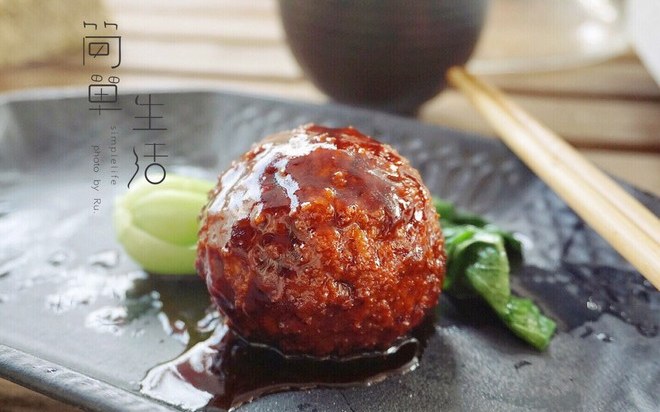
Giant silk-tender Chinese pork meatballs (shi zi tou) with water chestnut crunch, hand-slammed to hold shape, fried golden and braised in glossy sauce over bok choy.
Instructions
-
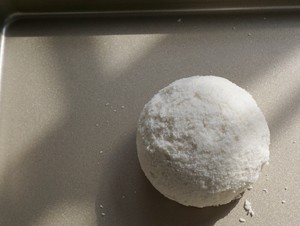 Dry the bun first: tear the crust off the steamed bun, break it up, and either leave it out overnight or dry it in a 250°F (120°C) oven for 15–20 minutes, until it is rock-hard. Crush into coarse crumbs — precision doesn't matter, they soften as you mix.
-
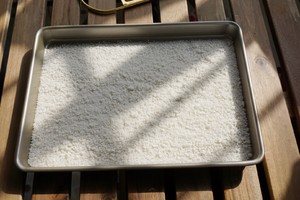 Cut the pork by hand for the best texture: slice it, cut the slices into strips, then into fine dice, and chop 1–2 minutes more. A food processor also works — pulse in short bursts until you have a fine mince with visible bits, never a paste.
-
 Blend the aromatics: whiz the scallion whites, ginger slices and ¼ onion with 3 Tbsp (45 ml) water until finely ground. Shortcut: 1 tsp onion powder, 1 tsp ginger powder and 1 Tbsp finely chopped scallion whites.
-
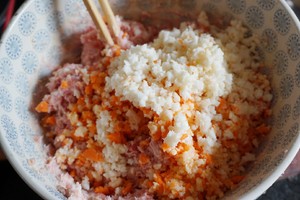
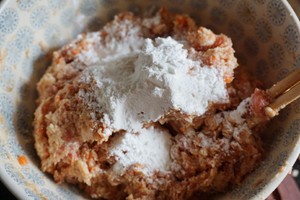 In a large bowl, combine the pork, the aromatic blend, salt, white pepper, sugar and light soy sauce, and stir hard in one direction with chopsticks or a wooden spoon until the liquid is fully absorbed.
-
 Pulse the carrot in the food processor until finely chopped, then add the water chestnuts and pulse 3–4 times only — processed together or too long, they turn to paste and lose their crunch. Fold both into the meat.
-
 Crack in the egg and mix in one direction again until fully absorbed.
-
 Add the dried bun crumbs and mix in one direction until evenly distributed through the meat.
-
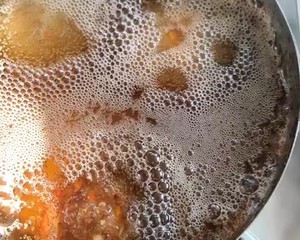 Sprinkle the cornstarch over, mix it in, then beat the mixture hard in one direction for 2–3 minutes, until it tightens, turns sticky-elastic and visibly resists the spoon.
-
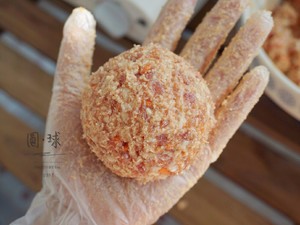
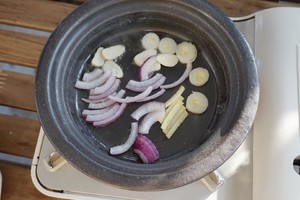 Shape: wet your hands, grab one-eighth of the mixture (about 3½ oz / 100 g) and toss it firmly from palm to palm 20–30 times, like a hot potato, until it compacts into a smooth, self-standing ball that doesn't slump. Repeat with the rest.
-
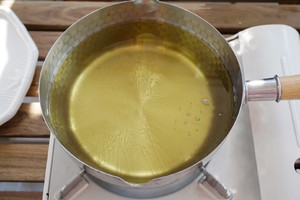
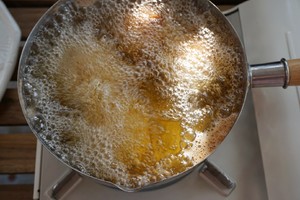
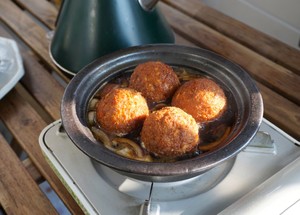 Fry: heat 4 cups (1 L) oil in a small deep pot to 325–340°F (163–170°C) — a wooden chopstick inserted in the oil should stream steady small bubbles. Slide the balls in gently without crowding, don't touch them for 15 seconds, then nudge them with a slotted spoon so they roll and color evenly. Fry 4–5 minutes until golden all over, and drain.
-
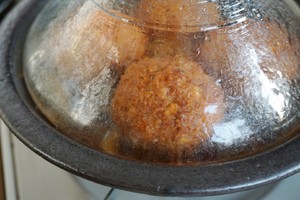 Braise: heat 1 Tbsp oil in a wide pot and sauté the sliced onion, ginger, garlic and scallion whites until fragrant, about 1 minute. Add the braising sauce, pour in the boiling water, and lay the meatballs in. Cover and simmer on the lowest heat for 15 minutes — through a glass lid you'll see them visibly plump up.
-
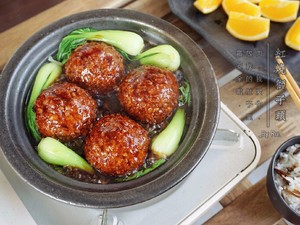 Meanwhile blanch the greens: bring a pot of water to a boil with ¼ tsp salt and ¼ tsp oil, add the bok choy, and cook just until bright green, about 30 seconds. Plunge into cold water, drain well, and arrange on a serving plate.
-
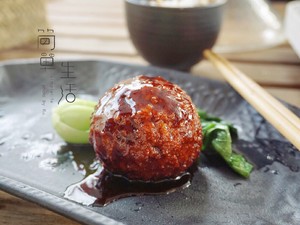 Finish: lift the meatballs onto the greens. Stir the cornstarch slurry into the simmering braising liquid and cook 30 seconds until it lightly coats the back of a spoon. Spoon the sauce over the meatballs and serve hot with steamed rice.
Why this recipe works
Lion's head is a texture dish, and this recipe engineers the texture three ways. 1. Hand-chopped meat, stirred one way. Cutting the pork into dice keeps visible grains in the mix, and stirring hard in a single direction draws out the salt-soluble proteins so they link into strands. That protein network is the only binder a proper lion's head needs — it's why the ball holds together while staying loose inside.
2. The palm-to-palm slam. Instead of squeezing the meatball into density, you toss it briskly from hand to hand until it compacts and turns glossy. The impact firms the outside without crushing the interior — exactly the contrast you want: a sphere that self-stands raw, then turns almost mousse-like after braising.
3. Dried mantou crumbs. The classic Chinese tenderizer: crumbled day-old steamed bun drinks in the meat juices and the braise, keeping the center fluffy like steamed sponge rather than dense like a Western meatball. Panko does the same job. A short golden fry then sets a crust that lets the ball survive fifteen minutes of simmering without cracking, and a quick cornstarch glaze turns the braising liquid into the lacquered sauce that makes the plate look professional.
About the dish
Lion's head (shi zi tou) is the signature giant meatball of Huaiyang cooking, the refined school of cuisine from the Yangzhou region of Jiangsu province — the Yangzhou lions head meatballs that many home versions, like this one, give extra character with water chestnut crunch. The story goes that the big, rough-surfaced ball — with loose meat ragged around it like a mane — reminded a diner of a lion's head, and the flattering name stuck. It has been a banquet and holiday dish for generations: big round balls stand for reunion and togetherness at the Chinese table.
There are two classic schools. The Jiangsu original is clear-poached with cabbage in a delicate broth; the red-braised version here — fried first, then simmered in soy-brown sauce — is the richer home style that spread across China. Both share the same soul: pork handled gently, seasoned quietly, and cooked until the texture, not the seasoning, does the impressing.
What to serve with it
Steamed rice is essential — the sauce is built for it — and the blanched greens on the plate do real work cutting the richness. A sharp, cold side such as smashed cucumber salad rounds out the meal. Because round shapes stand for reunion at the Chinese table, these also appear as the classic Chinese new year meatballs on holiday menus. If meatballs in sauce are your thing, browse the other braised dishes; and keep a pot of steamed rice going, because people will come back for seconds.
Pro tips
- Tossing the ball between palms (the slam step) is not theater — it compacts the meat into a firm sphere without squeezing out the fat, and it's the reason these balls hold their shape through frying and braising.
- Dried steamed bun crumbs are the classic tenderizer: they soak up juices and keep the interior loose and fluffy, like steamed sponge, instead of dense like a Western meatball. Panko is the honest substitute.
- Stirring in one direction aligns the meat proteins into strands — that protein glue is what binds the balls. Switch direction mid-mix and you undo the work.
- Keep the water chestnuts chunky; their crunch is the signature contrast against the soft meat. Canned chestnuts should be patted dry or the filling loosens.
- The fry isn't for cooking the balls through — it sets a golden crust so they can't crack or slouch during the 15-minute braise. Respect the first 15 seconds of no-touching or the crust tears.
- No powders and no blender? Grate the onion, ginger and scallion on the fine side of a box grater and stir 1 Tbsp of the pulp in with the seasonings.
Storage & leftovers
- Refrigerate the braised meatballs in their sauce for up to 4 days; like most braises they taste better on day two.
- Reheat gently: simmer the meatballs in the sauce with 2 Tbsp water for 8 minutes, or microwave covered at medium power for 2–3 minutes.
- Freeze the fried, unbraised meatballs up to 2 months and braise them from frozen; braised ones also freeze fine, but always blanch the greens fresh.
Frequently asked questions
Do I really need a steamed bun?
No — ½ cup of panko or dried breadcrumbs does the same job: absorbing meat juices and keeping the texture airy. The bun is simply the traditional Chinese version of a breadcrumb.
Can I skip the deep-frying?
You can pan-fry the balls in ½ inch (1 cm) of oil, turning gently, or poach them straight in the sauce — but the crust seals the shape and adds the classic golden flavor, and fried-then-braised is this version's whole route.
Why did my meatballs crack or fall apart?
Usually one of three things: the mixture wasn't stirred in one direction long enough to turn sticky, the balls weren't tossed between palms to compact, or they were moved around the oil before the crust set. Mix a full 2–3 minutes and leave each ball alone for the first 15 seconds.
Is this dish spicy?
Not at all — it's a mild, savory, slightly sweet braise that kids love. If you want heat, a few drops of chili oil on the finished plate work nicely.
Can I make them ahead?
Yes — fry the balls, cool them, and refrigerate up to 2 days or freeze up to 2 months. Braise straight from the fridge, adding 5 minutes; from frozen, simmer 25 minutes before saucing.
What is Chinese braising sauce, and what can I replace it with?
A ready-mixed soy-based sauce (Lee Kum Kee makes a common one). Mix 1½ Tbsp light soy, 1 Tbsp dark soy and 1 tsp sugar for an equivalent — that combination is what the bottled sauce is built on.
What cut of pork works best?
Boneless pork shoulder at about 70% lean — the fat is what keeps these giant balls silky instead of dense. Very lean pork makes a dry, tight meatball, so skip anything labeled 90% lean or more.
Can I use store-bought ground pork?
Yes. Pick a coarse grind with visible fat and keep to the 2–3 minutes of hard, one-direction beating — ground meat is already broken down, so the stirring alone has to build the binding.