Sichuan · Stir-Fry Classics
Twice-Cooked Pork with Garlic Sprouts (蒜苗回锅肉)
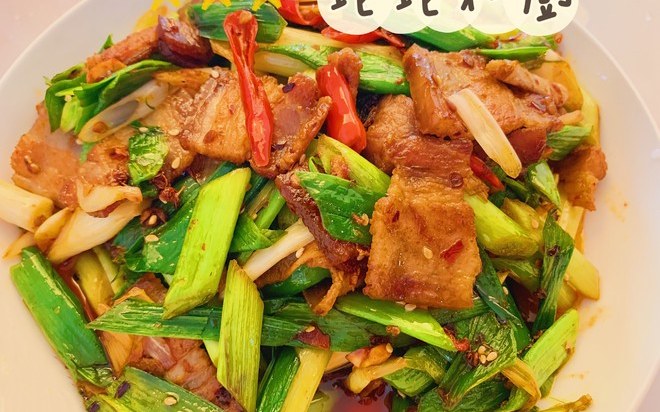
Classic Sichuan twice-cooked pork: belly boiled, sliced thin, then wok-fried until the fat curls, finished with doubanjiang, bird's eye chilies and garlic sprouts.
Instructions
-
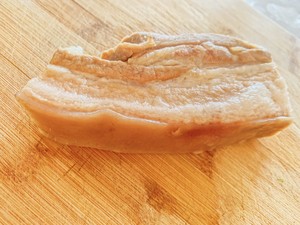 Put the whole slab of pork belly in a pot of cold water with 4 of the ginger slices, ½ tsp of the Sichuan peppercorns, the star anise and the Shaoxing wine. Bring to a boil, skim off the foam, then simmer gently for 30–60 minutes (about 40 minutes is typical), until a chopstick slides into the skin with only light resistance. Less time leaves the skin chewier, more time makes it fork-tender.
-
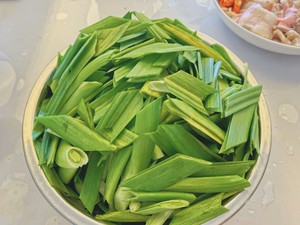 While the pork simmers, prep the rest: cut the garlic sprouts on the diagonal into 4 cm (1½ inch) pieces, keeping the white bottoms and the green leaves in separate piles. Halve the garlic cloves, slice the bird's eye chilies, and set aside the remaining 4 ginger slices and ½ tsp peppercorns.
-
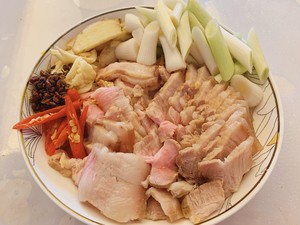 Lift the pork out and let it cool until you can handle it, about 30 minutes — 20 minutes in the freezer firms it up for cleaner slicing. Cut across the slab into slices 2–3 mm (a scant ⅛ inch) thick. Thick slices turn greasy in the wok; paper-thin ones fry down to crisps.
-
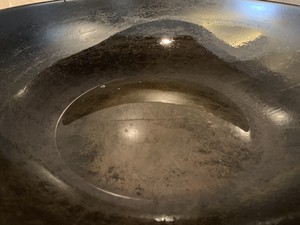 Heat the oil in a wok over low heat and lay the slices in a single layer. Keep the heat low for the first 2 minutes, then raise to medium and fry for 4–6 minutes, stirring gently, until the fat has rendered, the edges curl into little cups and the rims turn golden. If more than about 3 Tbsp of oil has pooled, pour off the excess and save it — it is liquid gold for fried rice.
-
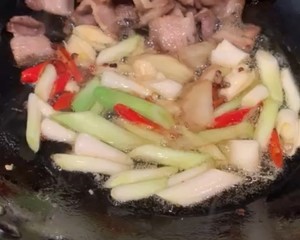 Reduce the heat to low and push the pork up the side of the wok. Add the garlic, chilies, the remaining ginger and peppercorns, and the garlic sprout whites to the hot oil. Sizzle for 30–40 seconds, until fragrant.
-
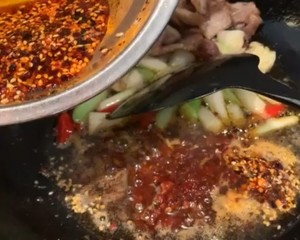 Add the doubanjiang and chili oil, still on low heat, and fry for 1–2 minutes, mashing the paste against the pan, until the oil turns red. Keep it well below scorching — burnt bean paste is the most common way to ruin this dish.
-
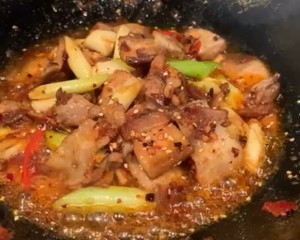 Raise the heat to medium, fold the pork back through the red oil, and toss for about 1 minute so every slice picks up color and flavor.
-
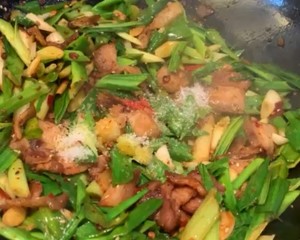 Add the garlic sprout leaves along with the light soy, salt, bouillon and sugar. Raise the heat to high and stir-fry for 1–2 minutes, just until the leaves wilt but stay bright green. Taste before adding more salt — the doubanjiang carries plenty — and serve immediately with rice.
Why this recipe works
Twice-cooked pork is a two-stage machine, and each stage has a specific job.
1. The boil sets up everything. Simmering the whole slab with ginger, Sichuan peppercorns and star anise does three things at once: it seasons the meat to the center, removes the raw pork smell, and starts turning the skin and fat tender. The chopstick test — sliding into the skin with light resistance — tells you the meat is done enough to slice but still has structure left for the wok.
2. The fry renders, then flavors. Thin 2–3 mm slices go into low oil, where the fat slowly renders out and the edges curl into little golden cups. That rendered fat is not waste; it becomes the cooking medium that carries the aromatics. Only then does the doubanjiang go in, fried low and slow until the oil turns red — the paste needs that gentle bloom to give up its color and savory depth without scorching.
3. The sprouts are staged. Garlic sprout whites sizzle with the aromatics, where their dense cores can take the heat; the leaves go in at the very end over high heat, wilting just until bright green. Cooking them together would give you stringy, army-green sprouts. And the seasoning is deliberately light — salt, a whisper of sugar, no dark soy — because salty doubanjiang already runs the flavor board.
About the dish
Hui guo rou (回锅肉) means 'returned-to-the-wok meat'. The story goes that the dish grew out of Sichuan memorial dinners, where pork was boiled whole as an offering, then sliced and fried with bean paste so the family could eat it afterwards — necessity turning ceremony into one of China's most loved dishes. Whatever the true origin, by the Qing era it was already a hallmark of Sichuan home cooking.
The classic pairing is garlic sprouts, whose sweet, mild garlic bite cuts through the richness of the belly. Every Sichuan family argues about details — doubanjiang versus sweet bean paste, sprouts versus cabbage — but the architecture never changes: boil whole, slice thin, fry until the fat curls, sauce with fermented chili paste. Where garlic sprouts are scarce, twice cooked pork with leeks is the same dish in winter clothes, and northern kitchens have cooked it that way for generations. This recipe follows the classic garlic-sprout route, with a spoonful of chili oil for those who like it louder.
What to serve with it
This is a rice dish through and through — the red oil is made for steamed rice, and plenty of it. Round out the table with mapo tofu and something plain and green, or use a spoonful of the leftover red oil to upgrade egg fried rice the next day. Refrigerate leftover pork for up to three days and re-fry it hot with a fresh handful of sprouts — a proper huiguorou household never serves it twice the same way. Boiled ahead, this is make ahead twice cooked pork: a 10-minute wok session on a weeknight. For children, fish out a few slices before the chili stage and offer sweet bean sauce alongside.
Pro tips
- Skin-on belly is non-negotiable. The skin is the texture signature of the dish — chewy-tender after the boil, lightly crisped at the edges after the fry — and it is why the boil time matters so much.
- The curl is your doneness test: when the fatty rims curl into little cups (deng zhan wo, 'little lamp cups') and turn translucent-golden, the fat has rendered enough and the slices will never taste greasy.
- The 'twice' in twice-cooked is literal: the first cook seasons the meat and brings it to the edge of done, the second renders fat and builds crust. Skipping or rushing the boil gives you raw-flavored pork that spits oil.
- Doubanjiang is aggressively salty, which is why this recipe seasons with only ¼ tsp salt and no dark soy — the author prefers the natural meat color anyway. Always taste before adjusting.
- Strain the leftover red oil into a jar and refrigerate for up to a week. It is the best oil you will ever fry eggs or rice in.
- No professional wok needed: a heavy 12-inch skillet works, just fry the slices in two batches so the temperature stays high enough to render rather than stew.
Storage & leftovers
- The boiled, sliced pork keeps 3 days refrigerated or up to 2 months frozen — freeze it flat in a bag and it goes from freezer to wok for a fast meal.
- The finished dish keeps 3 days refrigerated; reheat in a skillet over medium heat for 2–3 minutes to re-render the fat.
- The microwave works in a pinch (90 seconds), but the crisp fried edges only come back in a pan.
- Store the strained red oil separately in a jar in the fridge for up to a week.
Frequently asked questions
What does 'twice-cooked' actually mean?
The pork is cooked two times: first simmered whole with aromatics until just done, then sliced and fried in the wok. The Chinese name, hui guo rou, literally means 'meat returned to the wok'.
I can't find garlic sprouts. What should I use?
Garlic sprouts (green garlic) are young garlic plants with a mild, sweet garlic flavor. The closest substitute is a small leek plus 3 scallions; garlic scapes work beautifully in season. Plain chives are too delicate for the high heat.
How spicy is it?
Medium — the heat comes from 5 bird's eye chilies, the doubanjiang and the optional chili oil. Use 2 chilies and skip the chili oil for a gentle version, or cut the chilies entirely and keep the doubanjiang for flavor without burn.
Can I use pork shoulder instead of belly?
Yes, though the dish loses some of its rich curl. Boil shoulder for about 25–30 minutes and expect a leaner, firmer result; many readers who avoid fatty cuts prefer it this way.
Can I boil the pork ahead?
Absolutely — boiled, sliced pork keeps 3 days in the fridge and 2 months frozen, and chilled slices cut even thinner. The fry itself takes 10 minutes, so this makes an easy dinner-party dish.
Why did my twice-cooked pork come out greasy?
Usually one of three things: slices thicker than 3 mm, the heat too low so the fat never rendered, or excess oil left in the pan. Look for the curl, pour off what pools beyond 3 Tbsp, and finish on high heat with the sprouts.
How thin should I slice the pork belly?
2–3 mm (a scant ⅛ inch) — the reason the recipe firms the boiled slab in the freezer for 20 minutes first. Thick slices stay greasy instead of rendering their fat, and paper-thin ones fry down to crisps with curled, golden rims.
Can I make it without doubanjiang?
You can, though it becomes a milder cousin of the classic: fry the aromatics in the rendered fat, then season with 1 Tbsp sweet bean sauce (tianmianjiang) plus the chili oil. Sichuan families argue between doubanjiang and sweet-bean-paste versions — this is the sweet camp.