Jiangnan · Dumplings & Dim Sum
Fish and Pork Wontons (刀鱼馄饨)
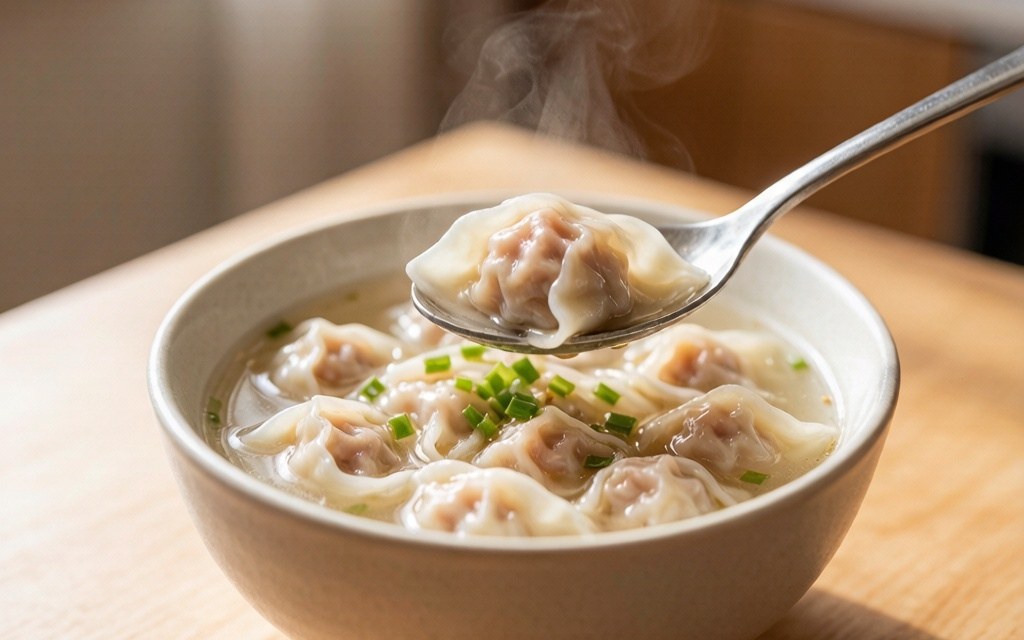
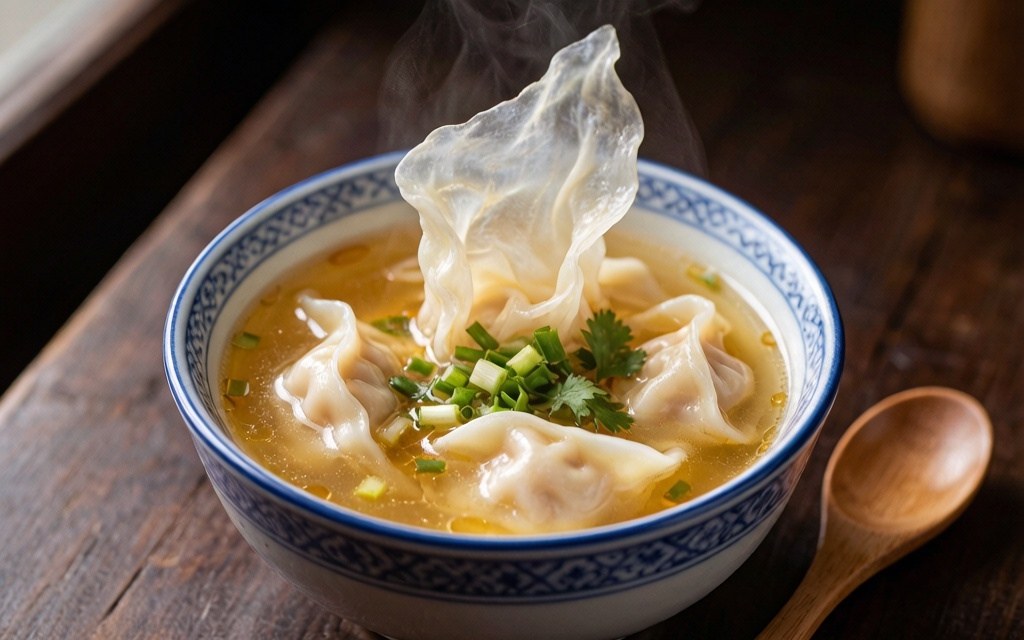
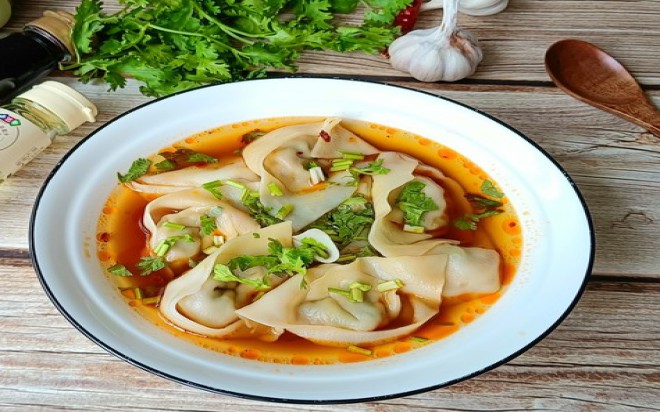
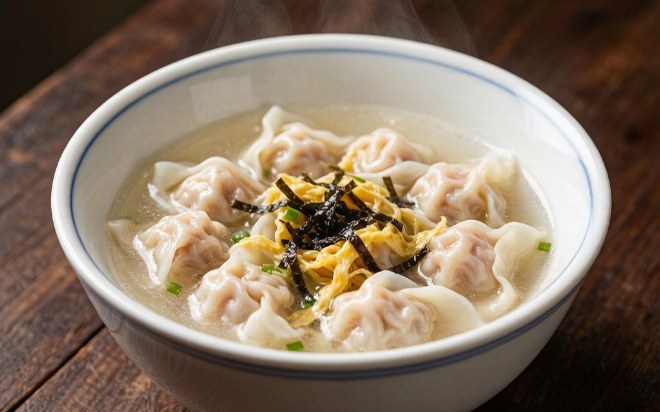
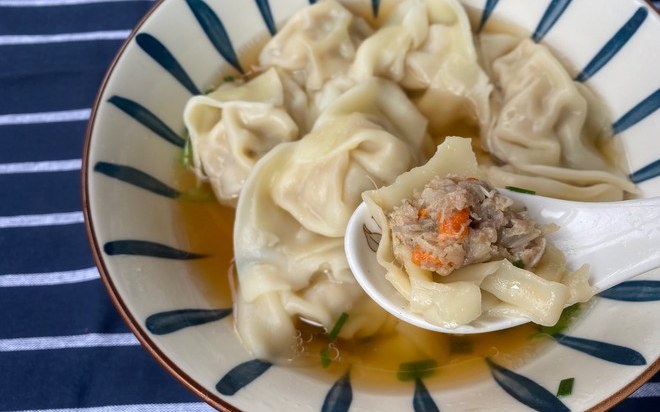
Delicate wontons with a silky fish-and-pork filling — half fish for sweetness, half pork for body. A Jiangnan specialty served in a bowl of clear broth.
Instructions
-
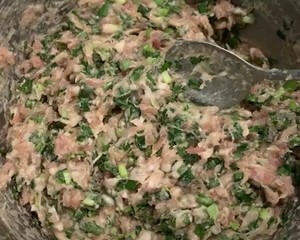 Prepare the fish: check the fillet carefully for bones and pin them out with tweezers or the tip of a knife. Pat dry, then finely chop by hand or pulse briefly in a food processor — you want a coarse paste with some texture, not a smooth purée.
-
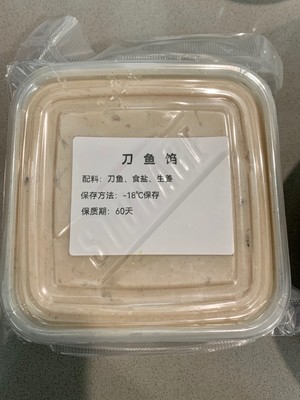 Season the pork: in a bowl, combine the pork with ½ tsp salt, the sugar, Shaoxing wine, ginger, scallions and neutral oil. Stir vigorously in one direction until sticky and uniform.
-
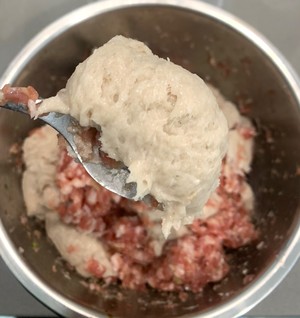 Combine: add the chopped fish to the seasoned pork and fold gently with a spatula until just evenly mixed. Do not over-mix once the fish is in — fish proteins break down faster than pork and can turn the filling gluey.
-
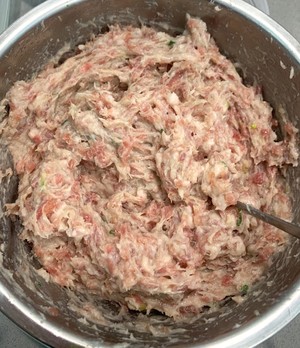 Check the seasoning: the filling should taste a touch saltier than you want the finished wonton, since the broth will season it further. Pan-fry a tiny spoonful and taste it to be sure before you wrap everything.
-
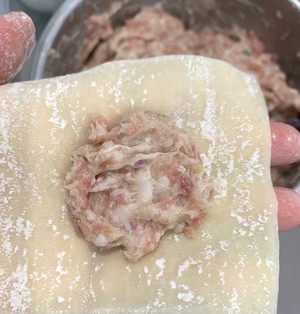 Wrap: lay a wonton wrapper on your palm, place about 1 tsp (5 g) of filling in the center, wet two adjoining edges with water and fold into a triangle, pressing out air. Bring the two far corners together and pinch to seal into the classic wonton shape. Repeat with the remaining wrappers.
-
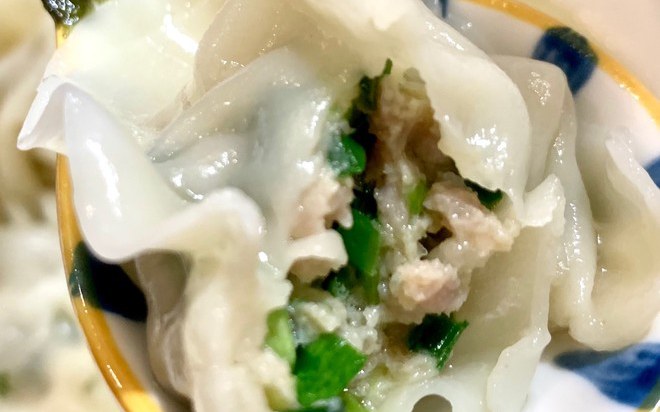
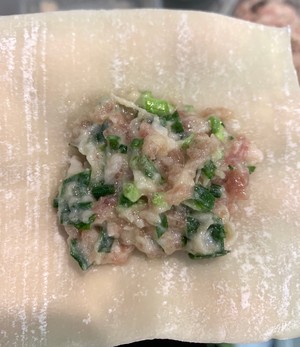 Optional chive batch: for half the filling, fold in a small handful of chopped chives and a pinch of salt just before wrapping those — chives add a fresh, oniony lift that pairs beautifully with the fish.
-
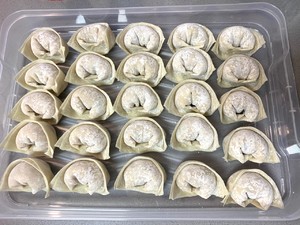 Cook: bring a large pot of water to a gentle boil. Drop in the wontons one at a time and stir once so they do not stick to the bottom. Cook at a lively simmer for 4–5 minutes, until they float and the wrappers turn translucent.
-
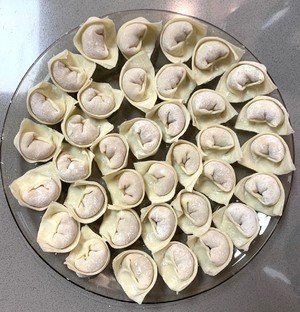 Assemble: while the wontons cook, ladle hot seasoned broth into bowls. Lift the cooked wontons straight into the broth with a spider.
-
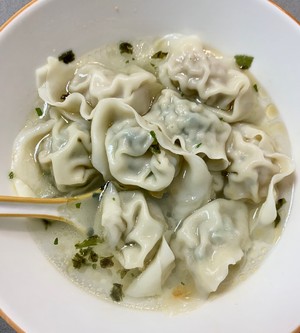 Serve: top each bowl with chopped scallions, a few drops of sesame oil and chili oil if you like, and a soft-poached egg. Eat immediately while the wrappers are still silky.
Why this recipe works
Fish wontons are a study in restraint: the filling has almost no seasoning, because the fish is the flavor. Getting it right is about structure, not spice.
1. The half-and-half filling. Fish is delicate and sets into something closer to a soft custard than a meatball — delicious, but it falls apart in the broth. Blending it half-and-half with pork gives the filling enough fat and protein structure to hold together through boiling, while the fish still lends its signature sweetness and a silkier bite than pork alone could.
2. Gentle seasoning. Where a pork wonton can carry soy sauce, ginger and wine boldly, a fish filling is easily overwhelmed. This recipe seasons lightly and lets the fish be the point — under-salting slightly, because the fish's own brine and the broth at the end both add salt.
3. Coarse, not puréed. Chopping the fish by hand to a coarse paste, rather than blitzing it smooth, keeps little flakes of texture that make each bite feel like fish rather than fish mousse. The same applies to the pork — a quick pulse, not a long blend.
About the dish
Wontons (馄饨, húntun) are the tender, thin-skinned cousins of dumplings, beloved across China and especially in the Jiangnan region around Shanghai, where they are as likely to appear at breakfast as at dinner. Their wrappers are rolled paper-thin so the filling, not the dough, is the focus.
Coastal Jiangnan cooks have long folded seafood into wontons, and fish-filled versions are a springtime treat when certain fish come into season. The source of this recipe uses a specialty fish filling and stretches it half-and-half with pork — a practical home-cook move that also happens to be the ideal texture. In coastal towns the fish of choice is often a local catch, and the same logic applies wherever you are: use the freshest firm white fish you can get, and the wontons will taste of the sea without a single drop of the ocean in your kitchen.
What to serve with it
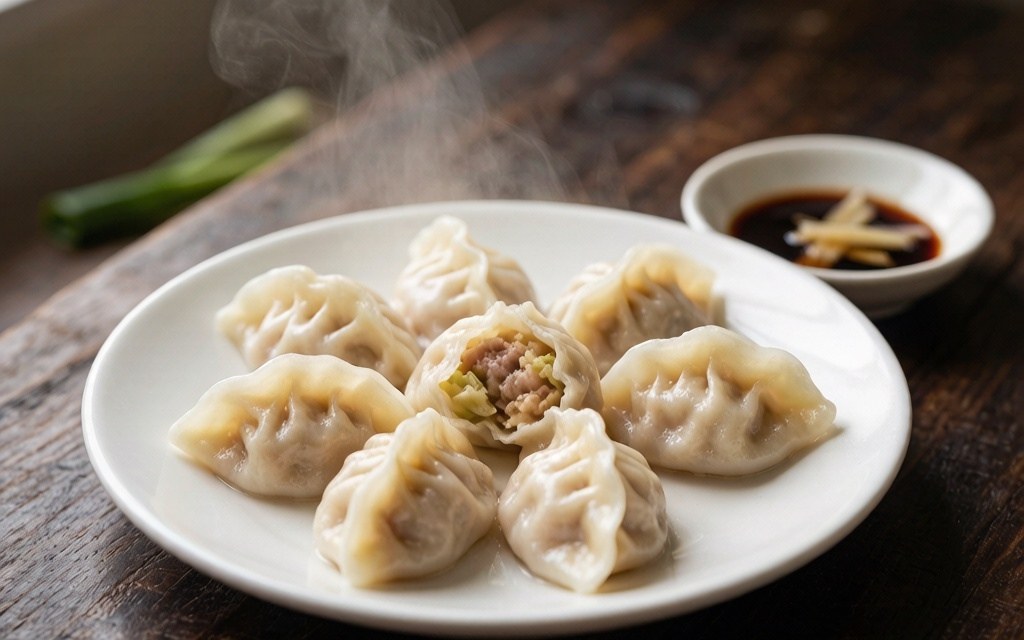
Fish wontons belong in a clear, light broth — never a heavy sauce. Ladle them into bowls of hot chicken or pork stock seasoned with a little soy sauce and sesame oil, then finish with scallions and, if you like, a drizzle of chili oil. A soft-poached egg in each bowl turns a bowl of wontons into a complete, comforting meal. On the side, keep it light and green: a simple smashed cucumber salad or a plate of blanched greens adds freshness without competing with the delicate filling. If you are serving a bigger crowd, a platter of steamed dumplings alongside makes a generous weekend spread. In Jiangnan homes this clear-broth fish wonton soup is a comfort classic.
Pro tips
- Keep the fish-to-pork ratio at roughly half and half. Fish alone makes a fragile, almost mousse-like filling; pork gives it the body to hold together in the broth.
- Season the pork a touch under-salted, because the fish is naturally briny and the broth adds more salt at the end.
- Always fry a spoonful of raw filling to taste before wrapping. Raw pork is the only reliable way to check seasoning on a mixed filling.
- Wontons freeze beautifully: freeze them in a single layer on a tray, then bag. Cook straight from frozen, adding 1–2 minutes.
- Do not boil the broth hard while the wontons cook in it if you are cooking them in the same pot — a rolling boil tears the thin wrappers. Cook in water, serve in broth.
- Mackerel or hairtail give the most authentic sweet, oceanic flavor; cod is milder and more forgiving if you are new to fish wontons.
Storage & leftovers
- Freeze uncooked wontons in a single layer on a tray until hard, then transfer to a freezer bag for up to 2 months. Cook from frozen without thawing.
- Raw filling keeps in the refrigerator for up to 1 day, tightly covered.
- Cooked leftover wontons keep in the refrigerator for up to 2 days, stored separately from the broth; reheat gently in simmering broth for 2 minutes.
- Freezing fully cooked wontons is not recommended — the thin wrappers turn mushy when thawed.
Frequently asked questions
What fish should I use?
Traditionally these are made with hairtail or a firm white ocean fish. Spanish mackerel, cod, pollock or haddock all work well. Choose a firm, sweet white fish and avoid oily fish like salmon, which overwhelms the filling.
Can I use frozen fish?
Yes — thaw it completely and pat it very dry before chopping, or the extra water will make the filling loose and hard to wrap.
Why half fish and half pork?
Fish on its own sets into a soft, almost custardy filling that falls apart. The pork adds fat and structure so the wontons hold their shape, while the fish brings a sweetness and silkiness pork alone lacks.
Can I make these ahead?
Yes, and they are ideal for it. Wrap and freeze them raw on a tray, then cook from frozen. The filling can also be made a day ahead and refrigerated, tightly covered.
What broth should I use?
A clear, light chicken or pork stock is traditional — it lets the delicate filling shine. Keep it well-seasoned but not heavy, and skip anything creamy.
My wrappers keep tearing. What am I doing wrong?
Usually the filling is too wet or you are overfilling. Use 1 tsp of filling, press out the air as you fold, and keep the wrapped wontons covered with a damp cloth so the wrappers do not dry out and crack.