Shanghai · Dumplings & Dim Sum
Shanghai Small Wontons (小馄饨)
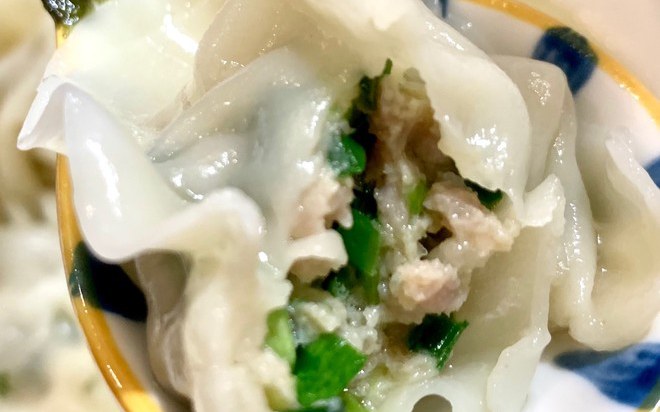
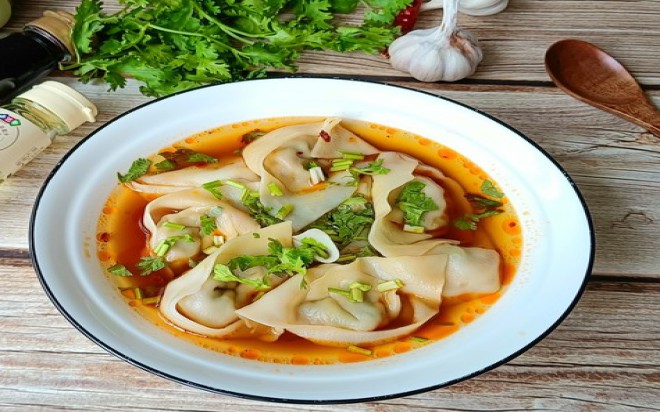
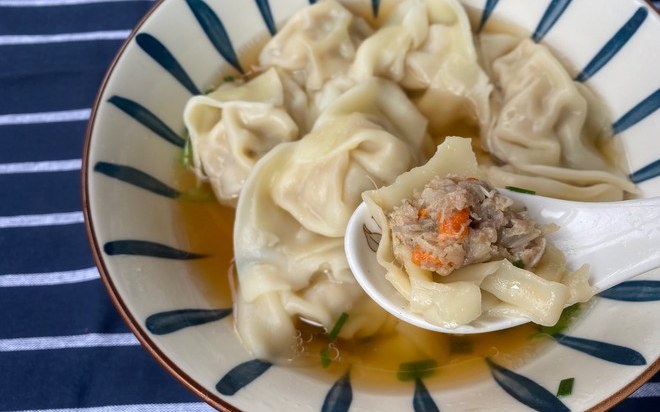
Paper-thin wrappers around a whisper of pork, served in clear laver broth — the four home secrets that make small wontons taste like a Shanghai breakfast stall.
Instructions
-
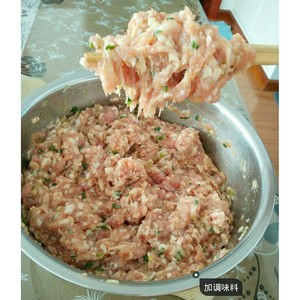 Season the pork: in a bowl, combine the ground pork, scallion, ginger, oil, Shaoxing wine, light soy sauce, ½ tsp salt and the sugar. Stir in one direction with chopsticks for 1 minute until evenly mixed. A little oil in the filling plays the role of the fat you would get from extra pork back — it keeps the tiny meat portion silky.
-
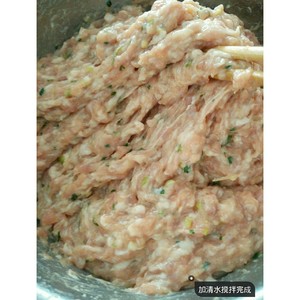 Whip in the water: add cold water 1 Tbsp at a time, stirring in the same direction each time and waiting until the water is fully absorbed before adding more. Stop after 5 Tbsp, or when the meat turns pale, glossy and sticky and refuses to take any more water. This hydrated paste is why each wonton tastes juicy despite its pea-sized filling.
-
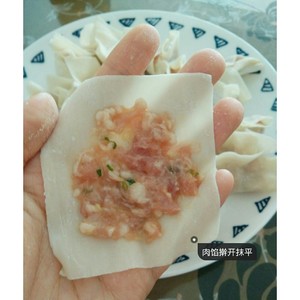 Set up the wrapping station: cut each wrapper sheet into 4 small squares with a pizza wheel or knife (they do not need to be perfectly even), keep a bowl of filling, a tray, and the stack of squares within reach. Cover the squares with a damp towel so they stay pliable.
-
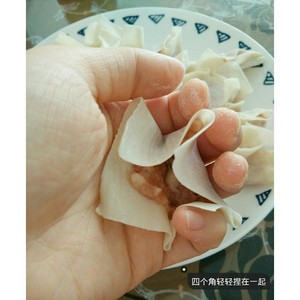 Wrap loose, never tight: spread a small smear of filling — about ½ tsp, flattened into a wide smudge — over the center of a square. It must be spread, not balled up. Bend your four fingers so the wrapper drapes over them, then let the four corners fall toward the middle and pinch them together gently, just enough to hold. Do not squeeze the flesh of the wonton at all.
-
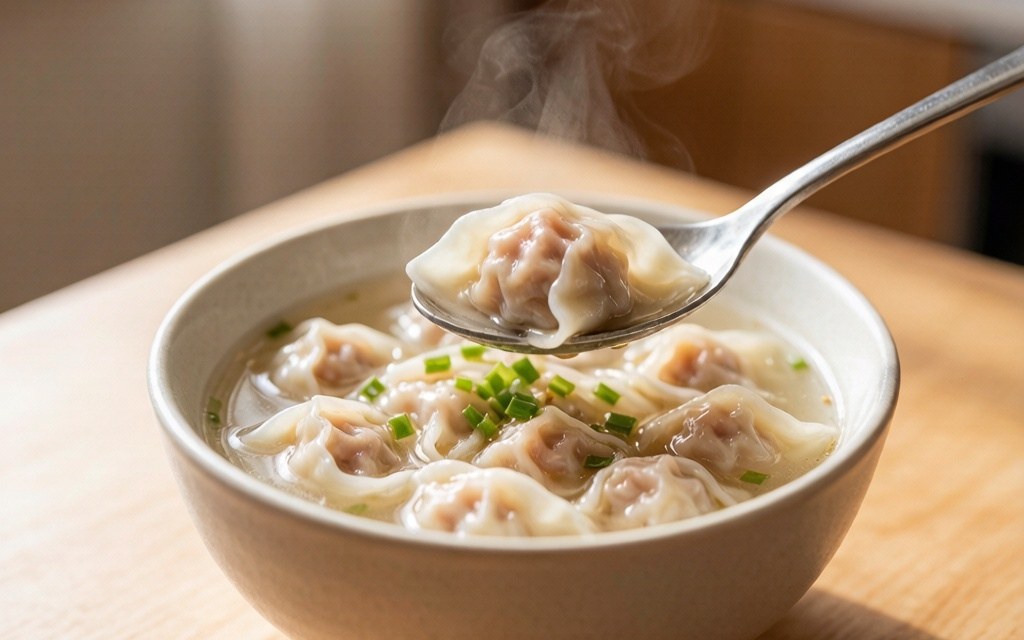
The result should look like a little ruffled pouch with a slack belly and thin, flappy corners. Trust the process: pork filling is sticky, and as it heats in the pot it contracts, pulling the wrapper tight around itself. A tightly pinched wonton cooks into a stiff, doughy lump instead.
-
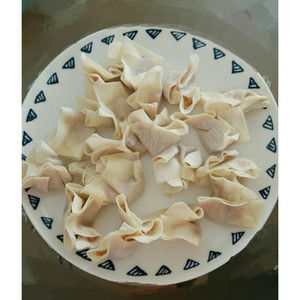
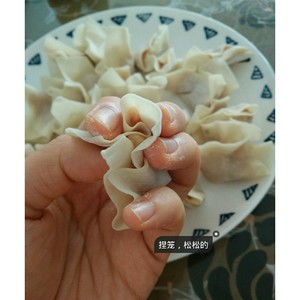 Lay the wontons in a single layer on a floured tray, not touching. Repeat until the filling is gone — expect well over 100 wontons from these amounts.
-
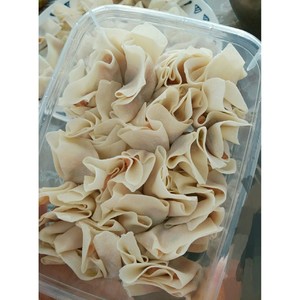 To freeze (recommended with a batch this size): freeze the tray for about 30 minutes, until the wontons are just set but not rock hard, then shake the tray and rap it on the counter so they separate, and box them. Frozen this way they never fuse into one brick, and they cook perfectly straight from frozen.
-
 Boil: bring a large pot of water to a full boil with 1 tsp salt. Slide in the wontons (fresh or frozen) and stir once gently. Keep the lid off and the heat high; small wontons cook in about 3 minutes.
-
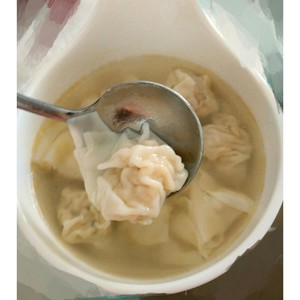 Add ½ cup (120 ml) cold water when the pot boils, cover, and let it come back up over medium heat. Add another splash of cold water, lid off, and finish over low heat — two additions in total. Done when they bob and roll freely and look plump and translucent-tinged.
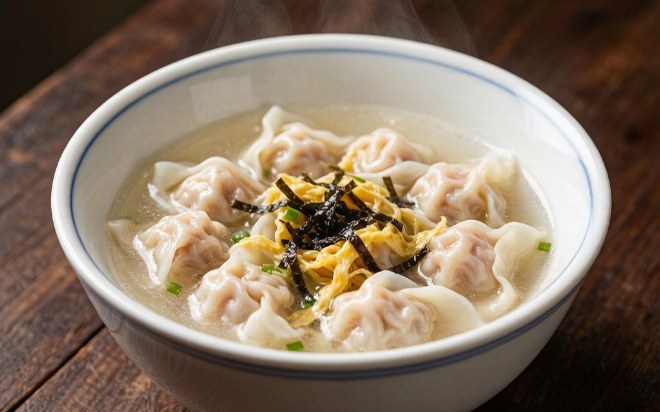
- Build the bowls while they cook: into each of 5–6 bowls put the salt, white pepper, bouillon powder, sesame oil (or lard), laver, dried shrimp and scallion. Ladle in boiling wonton water to dissolve, or hot chicken stock if you have it.
- Scoop 20 or so wontons into each bowl, float a few extra slivers of egg ribbon or a drop of chili oil if you like, and eat immediately — small wontons wait for no one.
Why this recipe works
Small wontons look like the simplest food in the Chinese repertoire — and that is exactly why most home versions disappoint. Four small decisions separate the stall-quality bowl from the mediocre one.
1. Water, whipped in one direction. Stirring cold water into pork in a single direction physically aligns the meat's proteins into a network that traps the liquid — the same principle as a dumpling filling taken to its logical extreme. Five tablespoons of water in eight ounces of pork turns a dense ball into a paste that swells and turns juicy when cooked, instead of shrinking into a rubbery pellet.
2. The loose fold. Big wontons are wrapped tight because they carry a heavy filling; small wontons are wrapped loose because they carry almost none. That is the whole grammar of small vs big wontons: tight wraps for heavy fillings, slack wraps for wisps of pork. Spreading the filling in a thin smudge anchors it to the wrapper from multiple points, and pinching only the four corners leaves the belly slack so the wrapper cooks tender. As the pork heats, it contracts and cinches the wrapper around itself — the fold tightens itself.
3. Salt, staged boiling, and a cold-water brake. Salt in the water seasons the enormous amount of wrapper that defines this dish. The two cold-water additions control the boil's violence: tiny wrappers need barely 3 minutes, and an unbroken gentle simmer is what keeps every pouch intact.
About the dish
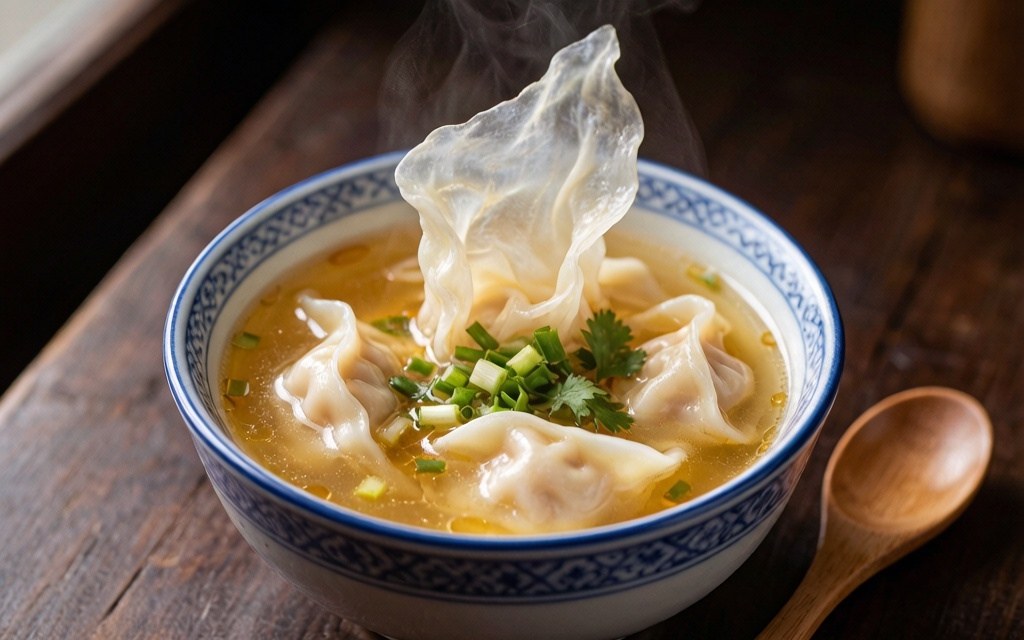
In Shanghai, small wontons (小馄饨) are the morning counterpoint to their big siblings: where 大馄饨 are a full meal of meat and greens in a firm wrapper, 小馄饨 are a light, brothy snack sold from breakfast stalls, served in shallow bowls swimming with laver, egg ribbon and scallion. The wrapper is rolled so thin it is almost translucent, and the filling is a flavoring rather than a course.
The version here follows the home-kitchen method that circulates among Shanghai families: fatty pork whipped with water, a little raw oil for tenderness, the loose four-corner fold, and a two-stage boil. It is the kind of recipe passed between neighbors rather than restaurants — no single origin story, just accumulated kitchen wisdom about skin, water and heat. Eat it the Shanghai way: as breakfast, late at night, or whenever a small hot bowl is the right answer.
What to serve with it
Small wontons are their own light meal — 20 in a bowl with the seasoned broth is plenty. For a bigger breakfast, pair with a jianbing or a couple of pan-fried buns; a side of smashed cucumber salad works if you are serving them as a dinner course. The same bowl answers to suzhou small wontons across the Yangtze delta — a nearly identical thin-skin, pinch-of-pork style. Keep chili oil and black vinegar on the table for the dressing-in-your-own-bowl crowd.
Pro tips
- The 1:2 meat-to-wrapper ratio is the whole identity of the dish: it is a skin-forward wonton. Do not be tempted to stuff them like northern dumplings — the broth-soaked wrapper is the pleasure.
- Spread the filling into a wide smudge rather than a ball. More surface area sticking to more wrapper means the filling anchors itself and cannot migrate out mid-boil.
- Fat is flavor here: 30% fat pork keeps the tiny filling tender. With leaner pork, that added 1 tsp cornstarch is the standard fix — it holds moisture the missing fat would have.
- Keep the wrapper squares under a damp towel at all times; a dried edge will not seal no matter how hard you pinch.
- The two cold-water additions are not superstition — each one tames the boil so the delicate wrappers never thrash themselves open before the filling is cooked.
Storage & leftovers
- Freeze uncooked wontons on a tray until just set, shake apart so they separate, then box and freeze up to 2 months; boil straight from frozen, adding 1 minute.
- Cooked wontons do not keep — they are a 10-minute food. Store only leftover uncooked ones.
- The raw filling keeps 1 day refrigerated; whip it again briefly before wrapping if it weeps.
Frequently asked questions
Can I use regular large wonton wrappers?
Yes — that is exactly what the cut-into-4 trick is for. Big wrappers cut into quarters approximate the thin, small squares used in Shanghai; the exact shape does not matter with a loose fold.
Why does my filling taste sour or fall apart in the pot?
Two usual culprits: the filling was not spread and anchored to the wrapper (so it slips out), or the wonton was pinched so tightly that trapped air burst it. Spread thin, pinch lightly, and both problems vanish.
Can I make these ahead?
Yes, and you should — they freeze beautifully. Freeze on a tray until just set, shake them apart, box, and cook straight from frozen. The wrapper still hugs the filling perfectly.
How spicy are they?
Not spicy at all — this is a clear, savory soup. Add chili oil or a spoonful of pickled-chili sauce at the table if you want heat.
What if I cannot find dried laver or dried shrimp?
Use any thin seaweed snack torn into bits and skip the shrimp, or swap in a handful of baby spinach and a drop more sesame oil. The broth needs something textural floating on top.
What makes small wontons different from big wontons?
Big Shanghai wontons (da hun tun) are a full meal: meat-and-greens filling in a firm wrapper, wrapped tight. Small wontons (xiao hun tun) are a light, brothy snack — a translucent wrapper seasoned by a dab of pork, folded loose, and eaten by the bowlful.
How much filling goes in each small wonton?
Barely anything — about half a teaspoon (2 g) of pork per square. The filling seasons the wrapper rather than stuffing it; a small wonton with a fat belly of meat has stopped being a small wonton.