Chinese home style · Soups
Hot and Sour Wonton Soup (酸汤馄饨)
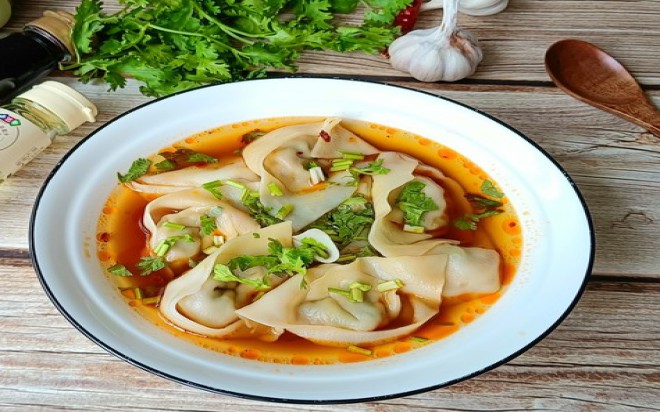
Plump pork-and-chive wontons in a sharp, garlicky hot-sour broth — the appetite-waking bowl that Chinese home cooks make when nothing else sounds good.
Instructions
-
 Make the wonton dough: mix the flour and water in a bowl and knead for 8–10 minutes, until the dough is smooth, firm and no longer sticky. Cover with an upturned bowl or plastic wrap and rest for 20 minutes — this relaxes the gluten so it rolls thin without fighting back.
-
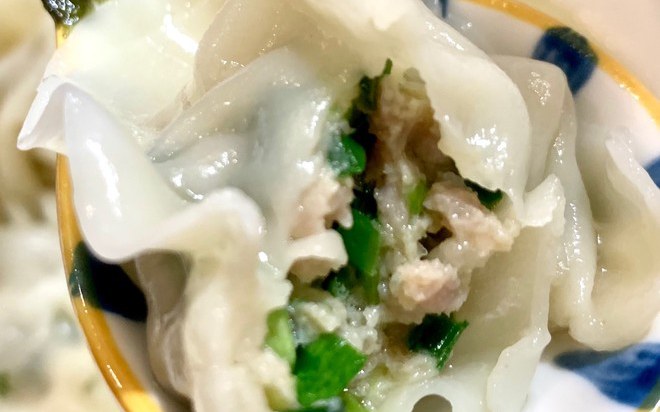
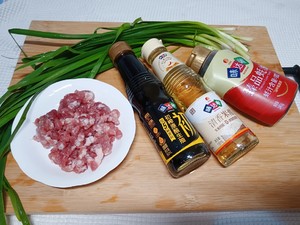
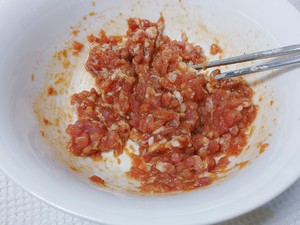 While the dough rests, make the filling. In a bowl, combine the ground pork, egg white, oyster sauce, light soy sauce, neutral oil and salt. Stir vigorously in one direction for 1–2 minutes until the mixture looks sticky and pale and holds together when you lift the spoon.
-
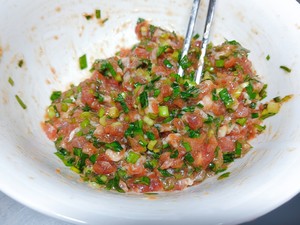 Fold in the chopped chives last and gently — over-mixing at this stage bruises them and turns the filling watery. Keep the filling chilled until you are ready to wrap.
-
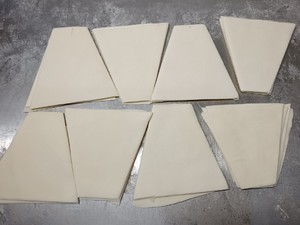 Roll and cut the wrappers: on a floured counter, roll the rested dough into a thin sheet about 1/16 inch (1.5 mm) thick. Cut it into squares about 3 inches (7–8 cm) across with a knife or pizza wheel. Dust each square lightly with flour and stack them with a little flour between.
-
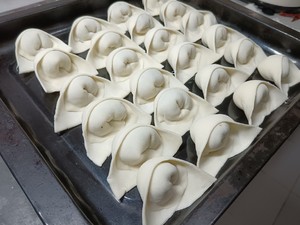
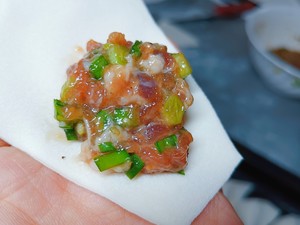 Wrap the wontons: put a teaspoon of filling in the center of a wrapper, fold it in half diagonally into a triangle, and press the edges firmly to seal. Bring the two far corners of the triangle together and press — that pinch is what gives a wonton its classic shape. Repeat with the remaining wrappers and filling.
-
 Bring a large pot of water to a rolling boil. Drop the wontons in one at a time, stirring gently once so they do not stick to the bottom, and cook for 4–5 minutes. They are done when they float to the surface and look puffy and translucent at the edges.
-
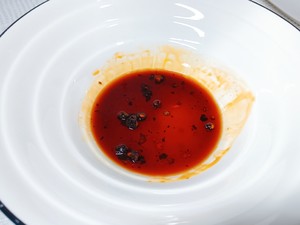 While the wontons boil, build the broth in each serving bowl: add the light soy sauce, black vinegar and chili sauce. This is the whole sour-and-spicy backbone of the soup — taste it and adjust before the wontons go in.
-
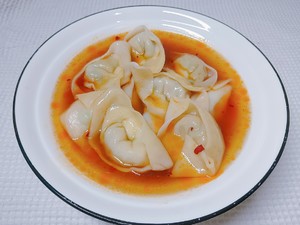 Ladle 4–6 Tbsp of the hot wonton cooking water into each bowl and stir — the starchy water turns the seasonings into a light, silky broth rather than a thin sauce.
-
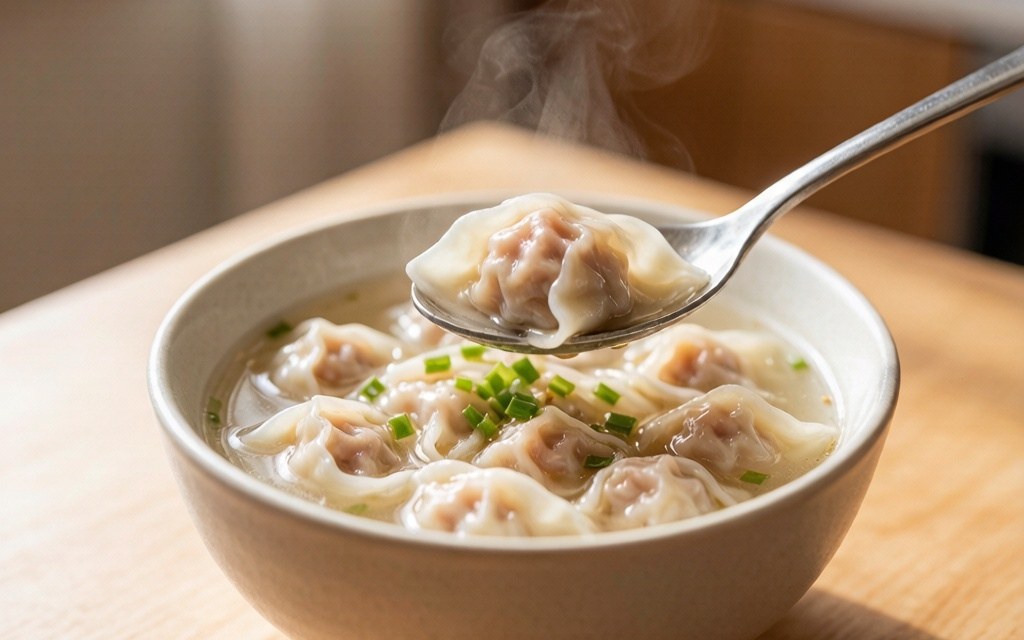
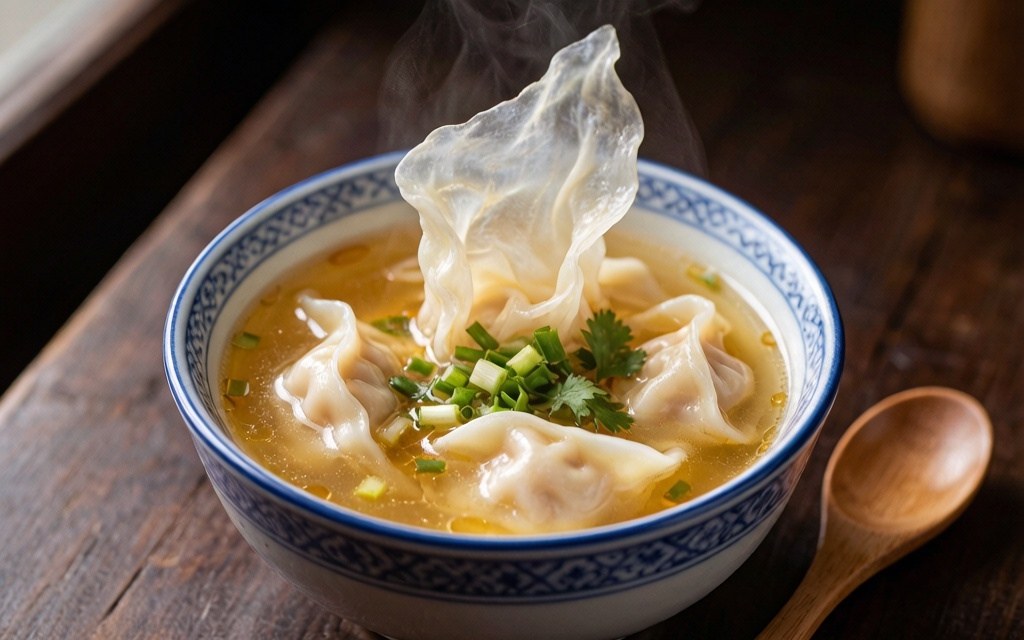
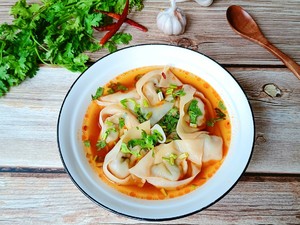 Transfer the cooked wontons into the broth with a slotted spoon, 8–10 per bowl, and serve immediately while the broth is steaming. Eat at once — wonton wrappers go soft fast.
Why this recipe works
Wonton soup lives or dies on two things — the filling's texture and the sharpness of the broth. Both are handled directly here.
1. The one-direction stir. Chinese meatball and wonton fillings all rely on the same trick: beating the meat in a single rotational direction until it turns sticky and pale. That motion aligns the muscle proteins into a loose mesh, and the egg white in this recipe is the bridge that locks the mesh together. The result is a filling that stays bouncy and holds its shape through the boil, instead of crumbling into the broth.
2. Chives go in last, and gently. Chopped chives release liquid the moment they are salted and worked. Folding them in at the very end, with the minimum of stirring, keeps their cell walls intact — the filling stays firm, and the chives keep their bright green color and bite after cooking.
3. Starchy cooking water as the broth. Straight soy sauce and vinegar in a bowl would taste harsh and thin. Ladling in the starchy water the wontons just cooked in does two jobs at once: it dilutes the seasonings to drinking strength and the starch gives the broth just enough body to coat each wonton as you lift it. It is the kind of small trick home cooks arrive at on their own and never write down — except this cook did. No stock needed — that is what makes this an easy weeknight hot and sour wonton soup.
About the dish
Wontons are one of the oldest filled foods in China — the name húntun appears in Han-dynasty texts, and the shape itself is said to echo the character for chaos, the unformed mass from which the world was ordered. Whatever the truth of the etymology, by the Tang dynasty wontons were a festive food in the north, and today every region has its own version: Cantonese wontons with shrimp and a clear broth, Sichuan chaoshou drowned in chili oil, Shanghai small wontons in a light pork broth.
The sour-broth version here — suān tāng húntun — is the northern home-cook answer to a cold night or a dull appetite. Vinegar, chili and soy in a bowl, topped up with the wonton pot's own water: no stock, no long simmer, no fuss. It is the dish a Chinese grandmother makes when someone in the house says they are not hungry, because sour and peppery is exactly what wakes an appetite up. Making the wrappers by hand is traditional and worth doing once; the source recipe rolls and cuts its own, and the texture is noticeably silkier than the store-bought kind.
What to serve with it
This is a one-bowl meal — 8 to 10 wontons per person with the broth they cooked in. A few drops of sesame oil on top, a scattering of chopped scallion or cilantro, and nothing else is needed. If you want to turn it into a bigger spread, a cold smashed cucumber salad on the side is the classic crunchy pairing, Drizzle a spoonful of chili oil over the top and it crosses into chili oil wonton soup territory. or browse the rest of the soups page for a second bowl to share.
Pro tips
- Stir the pork filling in one direction only. This builds a protein network that traps the egg white and oil, giving you bouncy, juicy wontons instead of crumbly ones.
- Chinese chives (jiǔcài) are the traditional choice and have a garlicky punch that regular chives lack. If you must substitute, use regular chives plus one small grated clove of garlic.
- The egg white is the binder. Skip it and the filling falls apart in the boiling water; use a whole egg and the filling turns wet and hard to wrap.
- Roll the wrappers thin — thicker than about 1.5 mm and the wontons taste doughy rather than silky. The rest in step 1 is what makes thin rolling possible.
- Using the wonton cooking water as the broth base is the original cook's trick: the starch from the wrappers thickens the soup just enough to cling to each wonton.
- Wrap a double batch and freeze the extras on a tray, then in a bag. Frozen wontons go straight into boiling water with 1 extra minute of cooking — a better weeknight dinner than most takeout.
Storage & leftovers
- Uncooked wontons: freeze on a tray until solid, then transfer to a zip bag for up to 1 month. Cook from frozen without thawing.
- Cooked leftover wontons keep in the fridge for up to 2 days; reheat by dropping them back into boiling water for 1 minute.
- The broth is best made fresh per bowl — the wrappers absorb liquid and turn mushy if the wontons sit in it.
Frequently asked questions
How spicy is this?
Mild as written — 1 tsp of chili sauce per bowl gives a gentle warmth rather than real heat. Add up to 1 Tbsp of chili crisp, or a spoonful of the oil from the jar, if you want it properly spicy.
Can I use store-bought wonton wrappers?
Yes. Buy square wrappers about 3 inches (7–8 cm) across, and you will need about 25–30 for this amount of filling. Homemade wrappers taste better but store-bought saves 25 minutes.
My wontons burst open while boiling. What went wrong?
The edges were not sealed tightly, or the wrappers were too thin. Press firmly along the whole edge, and do not skip the pinch that joins the two far corners — it is what holds the shape under heat.
What vinegar should I use for the sour broth?
Chinkiang (black) rice vinegar is the classic — mellow, slightly sweet, not harsh. If you only have distilled white vinegar, use half the amount and add ¼ tsp sugar to soften it.
Can I make this ahead?
The filling keeps in the fridge for 24 hours, and wrapped wontons freeze beautifully for up to a month. The broth should be built fresh in each bowl just before serving — it takes 20 seconds.
Why is my broth cloudy instead of clear?
It is meant to be slightly cloudy — that is the starch from the cooking water doing its job. If it is very cloudy, you used too much cooking water; start with 4 Tbsp per bowl and add more to taste.
Is this the same as Sichuan suanla chaoshou?
Related but different. Chaoshou is Sichuan's word for wontons, and classic suanla chaoshou sits them in a vinegar-chili-oil sauce rather than a bowl of hot broth. This version is the northern home-style sour soup, built from the wonton pot's own starchy water instead of oil and stock.
How many wontons should I serve per person?
Plan on 8 to 10 wontons in their broth as a one-bowl meal. For a multi-dish Chinese spread, half that portion alongside a cold salad is plenty.