Cantonese · Dumplings & Dim Sum
Rainbow Cheung Fun (彩色肠粉)
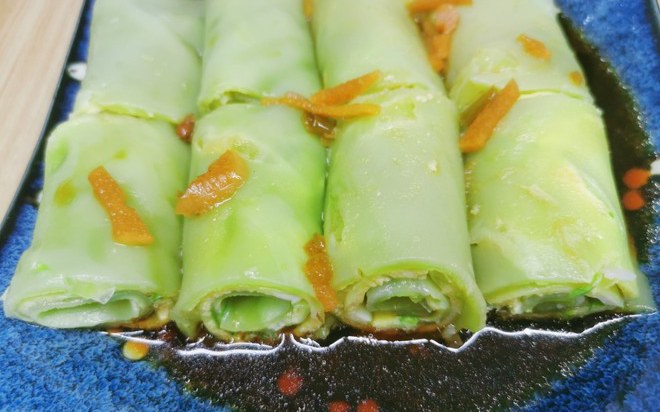
Cheung fun in four natural colours: one rice-noodle batter tinted with vegetable powders and wrapped around pork, beef, lamb or egg — a weekend party platter.
Instructions
-
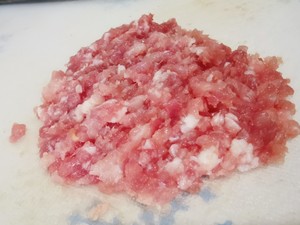 Whisk the premix flour and cold water in a large bowl until the batter is completely smooth, then stir in 2 tsp oil. It should look like thin cream, noticeably thinner than pancake batter.
-
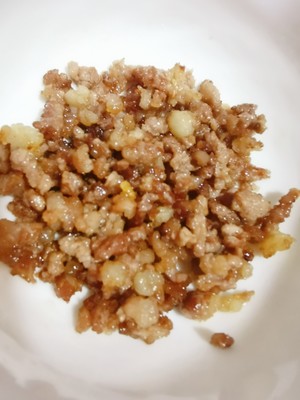 Divide the batter between four bowls, about ¾ cup each. Stir 1 tsp barley grass powder into the first for green, ¼ tsp red yeast rice powder into the second for red, and about 2 Tbsp of the red batter into the third to make pink. Leave the fourth plain. Keep a spoon in every bowl.
-
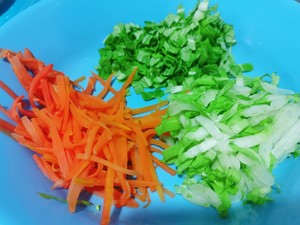 Cook the pork filling: heat a little oil in a skillet, add the ginger and the ground pork and stir-fry for 2–3 minutes, breaking the meat up, until no pink remains. Splash in the light soy sauce, scrape into a bowl and set aside. Cook the beef and the lamb the same way, in separate batches.
-
 Blanch the vegetables that need it: drop the shredded carrot and the soaked wood ear into boiling water for 2 minutes, then drain and spread out to cool. The bok choy leaves and stems are thin enough to go in raw.
-
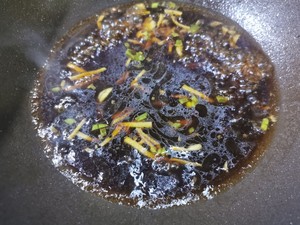
 Make the sauce: heat 2 Tbsp oil in a small pan, add the shredded scallion, ginger and garlic and fry for 30 seconds until fragrant, then pour in the light soy sauce and the water. Boil for 1 minute, taste, and pour into a jug — it should be a light savoury broth, not a thick gravy.
-
 Set up the steamer: fill a wide pot or a wok with about 2 inches (5 cm) of water and bring it to a rolling boil. Brush every flat tray of your steamer generously with oil, right into the corners.
-
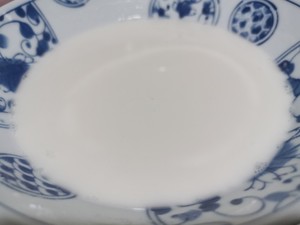
 Steam the first sheet: stir the batter you are about to use, because the flour sinks within seconds, then ladle in just enough to coat the tray in a thin layer — about ⅓ cup (80 ml) for an 8-inch tray. Tilt the tray to spread it edge to edge.
-
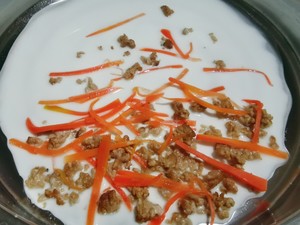
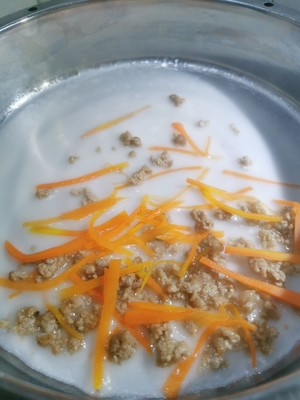
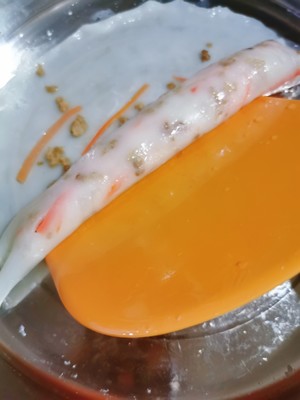 Scatter the filling down one side of the tray, keeping it to about a third of the surface so there is room to roll: pork with wood ear, or beef with bok choy, or lamb with carrot, or a spoonful of beaten egg with bok choy stems.
-
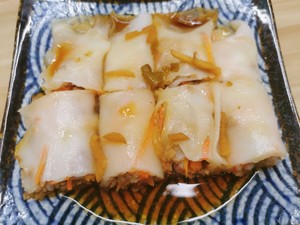 Cover and steam over high heat for 2 minutes, until the sheet turns translucent and puffs up into bubbles. Two minutes is the whole window — longer and the sheet turns gluey and tears.
-
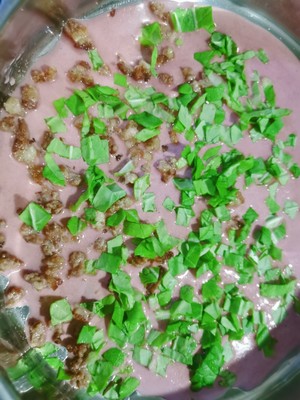 Lift the tray out and roll while it is still hot. Slide a bench scraper or a thin metal spatula under the filling end and roll the sheet over on itself, then slide the roll onto a lightly oiled plate. A cooled sheet cracks, so work quickly and confidently.
-
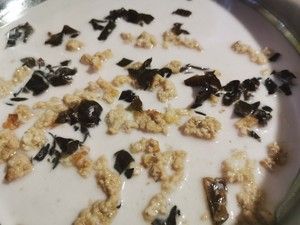 Repeat with the remaining batters and fillings, stirring each bowl every single time before you ladle. You should end up with 8–10 rolls.
-
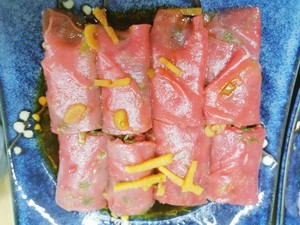 Cut each roll into 2–3 pieces with a sharp, wet knife, then arrange them in colour groups on one large plate and scatter over the sliced scallion.
-
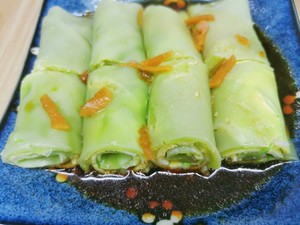 Re-steam the whole plate for 2 minutes just before serving. The rolls cool while you work, and this brings them back to soft and glossy.
-
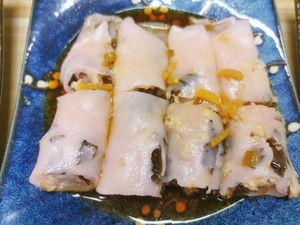 Spoon the sauce over the rolls at the table, with chili oil for anyone who wants it.
Why this recipe works
Cheung fun is a two-ingredient idea — a thin rice batter and steam — and everything that goes wrong with it comes down to three details.
1. A thin sheet, steamed fast. The batter has to be thin enough to pour and swirl into a translucent film. Steam it for two minutes and the starch sets into a silky, slightly elastic sheet that rolls without cracking; leave it for four and the same batter turns into a rubbery slab. The bubbles that appear on the surface are your timer.
2. Colour from plants, not dye. Barley grass powder, spinach powder, beet powder and red yeast rice powder are all dry, stable and neutral enough to tint a batter without flavouring it. They also carry the same idea the original home cook was after: four bowls of batter, four colours, one platter, no artificial colouring and no extra shopping trip. That is natural food coloring doing real work, not just decoration.
3. Steam, cool, re-steam. Rolling ten sheets takes half an hour, so the first rolls are always cold by the time the last one is done. Two minutes back in the steamer on the serving plate returns them to exactly the texture they had at minute two — which is why this is a party dish rather than a race.
About the dish
Cheung fun (肠粉, chángfěn — literally "intestine noodle", after the rolled shape) is the great Cantonese breakfast: a rice sheet steamed to order on a cloth or a metal tray, filled, rolled and cut into segments, then dressed with a light soy sauce. Guangzhou and Hong Kong shops do it in front of you in under three minutes, and the smell of the steam is part of the appeal.
Home versions grew up around premixed rice-noodle-roll flour, which takes the guesswork out of the batter, and around stacked flat steamers that let a home cook work on several trays at once. Colouring the batter with vegetable and grain powders is a modern home-kitchen flourish rather than a teahouse tradition — but it turns an everyday breakfast into a platter worth putting in the middle of the table, and it is the version children ask for.
What to serve with it
Serve the platter warm with the sauce jug alongside, and let people help themselves by colour. It is a breakfast or a snack on its own, but it makes a fuller meal with a bowl of congee or a clear soup — the Cantonese habit of a steamed thing and a soupy thing together. For a bigger spread, add a plate from our dumpling collection, or blanch a tray of gai lan and dress it with the same sauce. For the Malaysian street style, drizzle the rolls with a thick chee cheong fun sweet sauce and roasted sesame instead.
Pro tips
- Stir before every single ladle. Rice flour drops out of suspension in under a minute, so an unstirred bowl gives you a watery sheet at the top and a paste at the bottom.
- The powders are for colour, not flavour. One teaspoon of grass powder per ¾ cup of batter is plenty; more turns the rolls grassy, and red yeast rice powder is intensely staining, so a quarter teaspoon colours a whole bowl.
- Roll while the sheet is hot. The window between translucent-and-bubbling and cool-enough-to-crack is about twenty seconds, and a bench scraper makes the roll far easier than fingers or a spatula.
- No tiered steamer? Two 8-inch round cake pans and any pot wide enough to hold one at a time with a rack will do — it takes twice as long, and round trays give you shorter rolls, which is perfectly fine.
- Only pre-cook what needs it. Raw carrot and wood ear will not soften in a two-minute steam, so blanch them first; bok choy leaves are thin enough to go in raw.
- Ten rolls is a platter for four as a snack, or a light lunch for two with a bowl of congee or soup alongside.
Storage & leftovers
- Refrigerate cooled rolls in a single layer, covered, for up to 1 day. They stiffen as they chill and soften again when re-steamed.
- Re-steam the plated rolls over boiling water for 3 minutes. Do not microwave them, which turns the sheets rubbery.
- Keep the sauce separately; it keeps 4 days refrigerated and doubles as a dressing for plain noodles or blanched greens.
- Freezing is not recommended — the sheets turn brittle and weep water when they thaw.
Frequently asked questions
What is cheung fun premix flour?
A ready-blended rice noodle roll mix sold in Asian groceries, usually rice flour with wheat starch and cornstarch already balanced in it. It is the fastest route to a reliable sheet. If you cannot find it, whisk 1 cup (125 g) rice flour, ¼ cup (30 g) wheat starch and 2 Tbsp (16 g) cornstarch with the same 2¼ cups of water.
Do the colours change the taste?
Barely, if you keep the amounts small. Barley grass and spinach powders are faintly vegetal, beet powder faintly sweet, and red yeast rice powder earthy. They are decoration — if you can taste them clearly, you used too much.
Can I make this vegetarian?
Yes. The egg and bok choy filling is already vegetarian, and plain batter with sliced shiitake and scallion works well. Use vegetarian oyster sauce or extra soy sauce in the dipping sauce.
Why did my sheets tear when I rolled them?
Almost always a batter that is too thick or a tray that was not oiled into the corners. Aim for thin cream, brush the tray thoroughly, and never steam longer than two minutes.
Can I make these ahead?
Yes, and the recipe assumes you will. Make all the rolls, cool them, cover and refrigerate for up to a day, then re-steam the plated rolls for 3 minutes instead of 2 before serving.
How is this served for breakfast?
Cantonese breakfast stalls serve cheung fun with a bowl of congee or a cup of warm soy milk. Two or three rolls per person plus a soup makes a complete meal at any hour.
How do I color cheung fun batter naturally?
Use fine powders, not juices — this recipe tints with barley grass, wheatgrass or spinach powder for green and red yeast rice or beet powder for red, whisked straight into the divided batter. Powders leave the water ratio untouched, which protects the thin, pourable consistency the sheets depend on.
What sauce goes on chee cheong fun?
This recipe pours the Cantonese dressing: hot oil over shredded scallion, ginger and garlic, loosened with light soy sauce and water. Malaysian-style chee cheong fun instead uses a thick sweet sauce topped with roasted sesame — the plain rolls take either happily.