Chinese home style · Buns & Pancakes
Lion Dance Mantou (醒狮馒头)
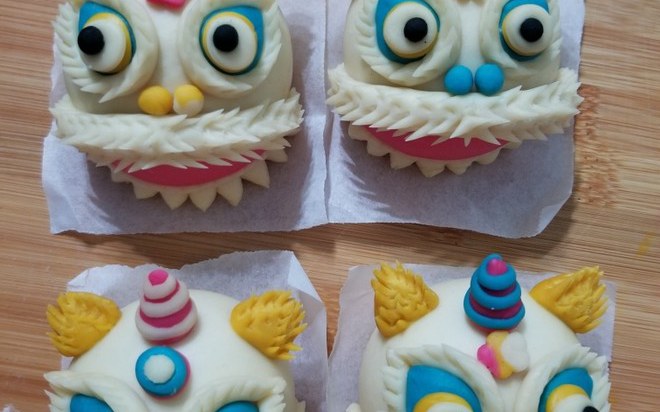
Fluffy milk-dough lion dance heads for Chinese New Year: a pink muzzle, blue eyes, scissor-cut fur and a curled horn, built piece by piece with exact gram weights.
Instructions
-
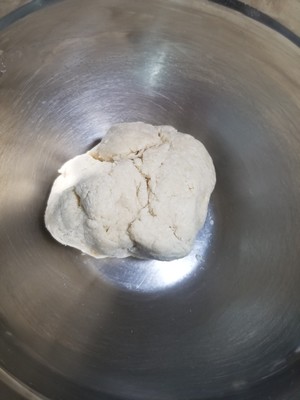 Make the dough: whisk the flour, milk powder, sugar, salt and instant yeast in a large bowl. Pour in the lukewarm milk and stir with chopsticks or a fork until no dry flour is left — it will look rough and shaggy. Cover the bowl and leave it for 30 minutes so the flour hydrates on its own; if your kitchen is warmer than 20°C (68°F), put the bowl in the fridge instead.
-
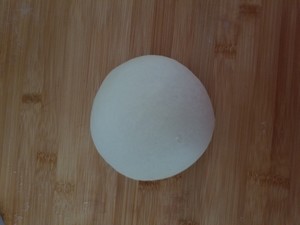 Add the softened butter and knead for 6–8 minutes, until the dough is smooth, soft and only slightly tacky. Press a finger into it: the dent should spring back slowly. A stand mixer with a dough hook does this in about 4 minutes.
-
 Divide the dough by weight into 20 g for blue, 30 g for pink, 20 g for yellow and 2 g for black; the rest stays white. Knead a dab of gel coloring into each piece — a pea-sized dab for the 20–30 g balls, a rice-grain for the 2 g black ball — until the color is even, then wrap every ball, white dough included, in plastic wrap so nothing dries out.
-
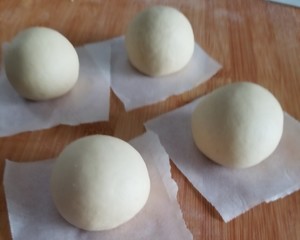
 Weigh the white dough into 4 pieces of 50 g. Roll each one under a cupped hand against the counter until it is a tight, smooth ball, and set the balls on separate parchment squares. These are the four lion heads; keep the remaining white dough covered — it becomes every small part.
-
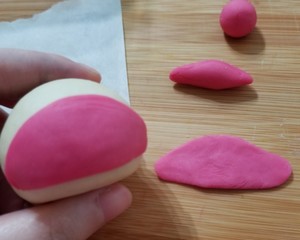
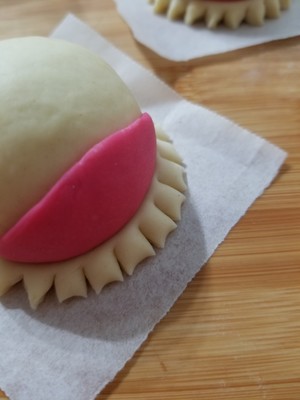 Shape the muzzle: roll 2 g of pink dough into a small olive, flatten it into a soft oval and press it onto the lower front of one head, sitting just below the middle. Brush the underside with water first — water is the glue, and a dry piece slides off during proofing.
-
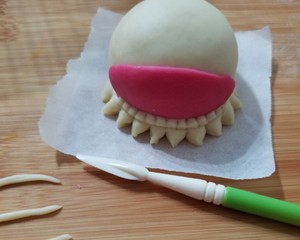 Roll 4 g of white dough into a rope about 5 mm thick and slightly longer than the pink oval. Flatten one side of the rope, brush its underside with water, and lay it along the top edge of the pink piece so it overlaps like a small bridge.
-
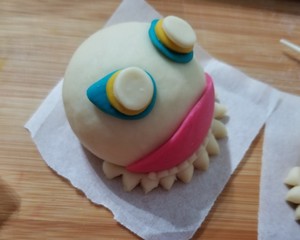 Cut the ends of that rope with a knife, then pinch the top of it into a triangle — this is the lion's nose. Press it down firmly; these pieces are tiny and they only stick where you press them.
-
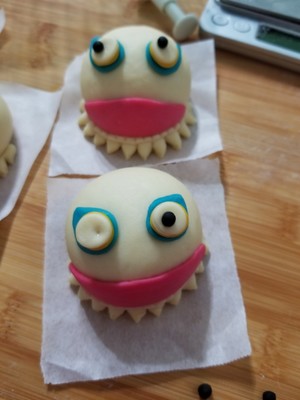 Make the teeth: roll a scrap of white dough paper-thin, cut a strip about 5 mm wide, brush it with water and press it onto the lower part of the pink muzzle. Press short vertical marks into it with a toothpick or the back of a knife so it reads as a row of teeth.
-
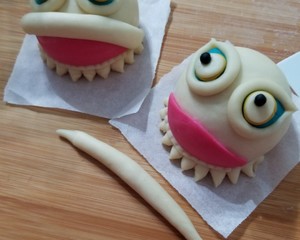 Make the eyes: roll 0.7 g of blue dough into a teardrop, flatten it and stick it beside the nose with a brush of water. Set the two eyes as close together as they will sit — the dough pushes them apart as it proofs.
-
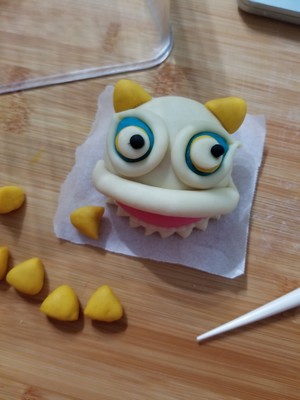 Layer each eye: press a small yellow circle onto the blue teardrop, then a smaller white circle on top of that, pressing each one down lightly. Thinly rolled dough cut with the mouth of a small piping tip makes neat circles.
-
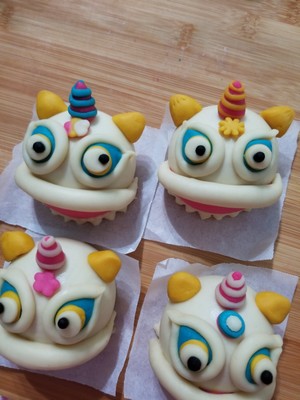 Dimple the center of each eye with the blunt end of a skewer, roll a tiny black ball and press it into the dimple. Press it once more before you move on — black pupils are the first part to fall off.
-
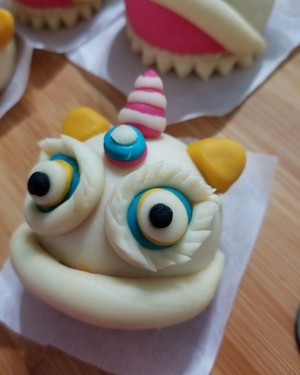 Roll white dough into a 2 mm rope with slightly pointed ends and wrap it around one eye, cutting off the excess where the ends meet at the outer corner. Pinch the seam closed and flick the outer tail up so it looks like an eyelash.
-
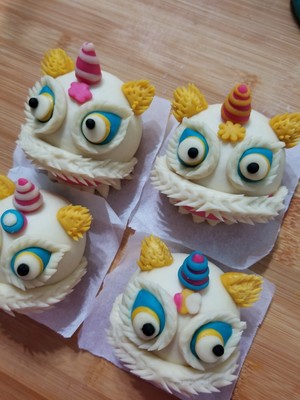 Roll another white rope, 5 mm thick and about 6 g, with both ends tapered, and lay it along the top edge of the pink muzzle, curving it to follow the shape. This is the lion's upper lip.
-
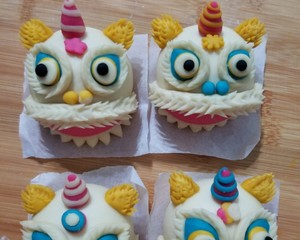 Roll 1.5 g of yellow dough into a small triangle for an ear, flatten it slightly, and press its lower edge thinner so it hugs the curve of the head. Attach one ear on each side, above the eyes.
-
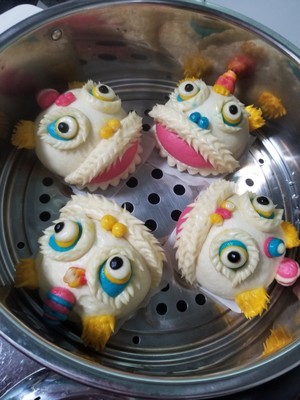 Roll 1.4 g of pink dough into a cone, wind a thin white rope around it in a spiral, and set it on the forehead between the ears — the lion's horn. Press the base down until it sits flat.
-
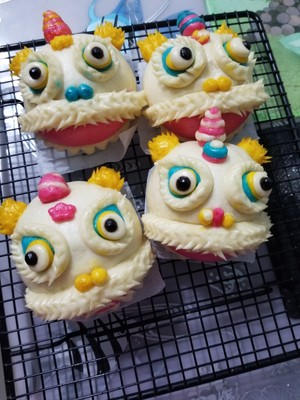 Flatten small pieces of the pink, yellow and blue dough and press them onto the top of the head as overlapping patches, like scales. If you have a small fondant flower cutter, press a few flowers from the same dough instead.
-
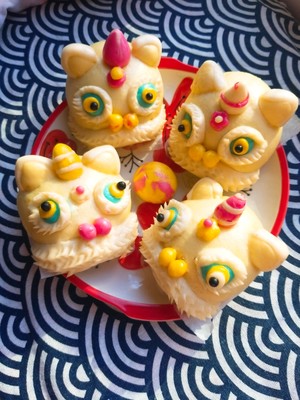 Snip the fur: with small, sharp scissors, cut into the flattened dough around the eyes in short, angled snips, working in the direction the fur should lie. Hold the bun in your hand and turn it as you cut; wide pieces take two or three layers of snips to look furry.
-
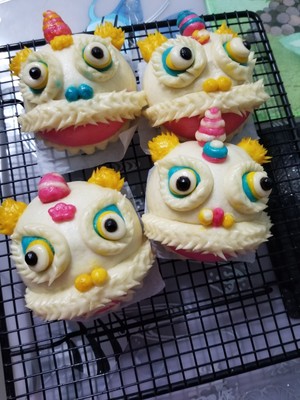 Snip a ring of short cuts around the base of each ear and along the brow, then roll a few 2 mm balls of white dough and press them below the eyes. Every snip opens up in the steamer, so cut a little more than looks right.
-
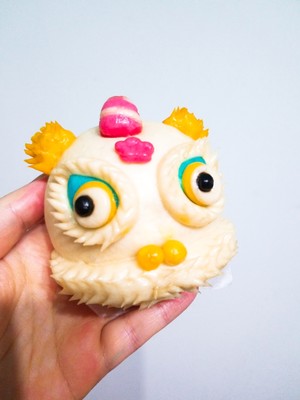 Set the four heads in the steamer with at least 5 cm (2 in) between them and let them proof over cold water — 25 to 40 minutes in a warm kitchen, until they look puffy and a fingertip pressed into the side springs back slowly. Press every small part down again before the lid goes on.
-
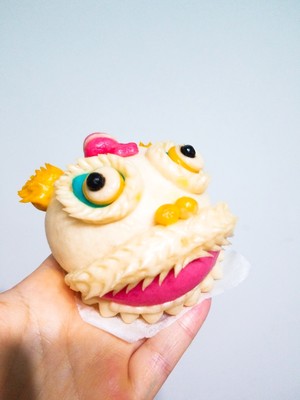 Bring the water to a rolling boil, then steam over medium heat for 15 minutes. Turn off the heat, wait 1 minute, lift the lid away from you so condensation does not drip onto the faces, and move the buns to a rack to cool.
Why this recipe works
Three things decide whether a lion head comes out of the steamer looking like a lion, or like a bun with loose dots sliding off the top.
1. A rested, enriched dough. The flour and milk sit together for 30 minutes before any butter goes in. That rest lets the flour hydrate on its own, so the gluten that forms afterwards is smooth and extensible — a dough you can roll to 2 mm without it springing back. The butter goes in late for the same reason: fat coats the proteins and keeps the dough tender, which lets the tiny parts hold a sharp edge instead of slumping.
2. Water-glued parts, pressed down hard. During proofing the dough swells and pushes at anything resting on the surface — that is why decorated buns lose their eyes. A thin film of water re-wets the skin so the two pieces of dough weld into one, and firm pressure squeezes out the air between them. Wet the piece, not the head, and press firmly.
3. Scissor-cut fur. Every strand of fur is a snip into flattened dough. Cut at a shallow angle and each cut opens into a flap; the steam swells and separates the flaps, which is what reads as fur. Cut straight down and the dough closes over the cut as it rises.
Steam on medium heat and wait one minute before lifting the lid — a rolling boil, or a drip of condensation, will crater the faces.
About the dish
The lion dance (醒狮, xǐng shī — “awakening lion”) is the southern Chinese lion: the one with the high narrow head, the bulging eyes and a single horn, danced by two performers under a paper-and-bamboo costume at Lunar New Year, shop openings and weddings. Traditionally the head carries a mirror on the forehead and a fringe of fur around the brow — the same features this bun is built from.
Shaping steamed dough into figures is an old festival habit in its own right. In Shaanxi and Shandong, home cooks have made 花馍 (huā mó, “flower buns”) in the shape of animals and flowers for weddings and New Year for generations. The lion-head version is where the two traditions meet: a milk-enriched mantou dough, colored and cut, sized to sit on a steamer rack instead of being carried down a street.
This is a project, not a weeknight bun. Give it an afternoon, expect the first one to look strange, and let the table judge the rest.
What to serve with it
These are bread, so serve them like bread: torn open beside red-braised pork or a braised chicken, with the sauce spooned over the torn edges. On a New Year table they belong in the middle of the spread as the centerpiece — set a few plainer hua mo flower buns beside them and the whole table reads festival — and they are just as good plain with hot tea the next morning.
Leftovers split and filled with braised meat make an excellent sandwich. To build out the rest of the table, start with our braised dishes and add a cool plate from cold dishes.
Pro tips
- Weigh the small parts — 2 g of pink for the muzzle, 0.7 g of blue per eye, 1.5 g per ear. Eyeballing colored dough is how one eye ends up twice the size of the other.
- Keep every ball you are not touching under plastic wrap. A dry skin on the dough shows up as cracks across the face once the bun is steamed.
- Water is the glue, but only a thin film: brush the piece, not the head. Too much water and the part slides off during proofing instead of welding on.
- Roll the small parts on parchment and lift them with a palette knife or the back of a knife — they hold their shape instead of stretching between your fingers.
- Gel coloring gives the cleanest pink, blue and yellow. Natural powders (beetroot, pumpkin, butterfly pea, bamboo charcoal) work too, but each adds bulk, so knead in a few drops of extra milk and add the powder a pinch at a time.
- Snip the fur after the parts are pressed on but before proofing, and cut on a shallow angle. Straight-down cuts close themselves as the dough rises.
Storage & leftovers
- Keep fully cooled lion buns in a sealed bag at room temperature for 1 day.
- Refrigerate for up to 3 days, then re-steam for 4 minutes to bring back the softness — the microwave toughens the crust and blurs the fine parts.
- Freeze for up to 1 month and re-steam straight from frozen for 8 minutes.
- Cool them completely before bagging: trapped steam makes the surface sticky and softens the snips.
Frequently asked questions
Do I have to use food coloring?
No. Beetroot or red yeast rice powder gives the pink, pumpkin powder the yellow, butterfly pea powder the blue and bamboo charcoal the black. Powders make the dough a little stiffer, so knead in a few drops of milk as you color each ball.
My parts fell off in the steamer. What went wrong?
Almost always too little pressure or too much water. Press each piece down firmly — firmer than feels safe — and use only a thin brush of water. Check the buns before the lid goes on: if a part has lifted during proofing, press it back down and steam anyway; a small shift is normal.
Can I make any of this ahead?
The uncolored dough can be mixed, kneaded and refrigerated overnight in a sealed bag; let it come back to room temperature for 30 minutes before coloring. Shaped buns are best steamed the same day, and the whole project takes about 3 hours from start to finish.
How long does this really take?
Three hours, most of it shaping. The dough itself is 20 minutes of work; the rest is pressing on pieces, cutting fur and proofing. Work assembly-line style — all four bodies, then all four muzzles — and you will finish in half the time.
Do I need a special steamer?
A bamboo or metal steamer with a tight lid is ideal. Without one, set a rack or an inverted heatproof bowl in a deep pot, fill it to just below the rack, cover the pot with a lid and steam the buns on the rack — make sure the boiling water never touches them.
Are these filled?
No — they are plain milk mantou, like a soft, lightly sweet bread roll, and every decoration is made from the same dough. That is the traditional version, and it is exactly why the shapes hold: there is no wet filling to soak the base.
Why did my buns wrinkle or collapse after steaming?
Usually over-proofing: if the dough rises past puffy-and-slowly-springing before the heat goes on, the structure deflates when the steam hits. Second suspect is lifting the lid too fast — the sudden temperature drop pits the surface. Keep the proof in check, steam on medium, and wait that 1 minute before opening.