Sichuan home style · Noodles
Mapo Tofu Noodles (麻婆豆腐拌面)
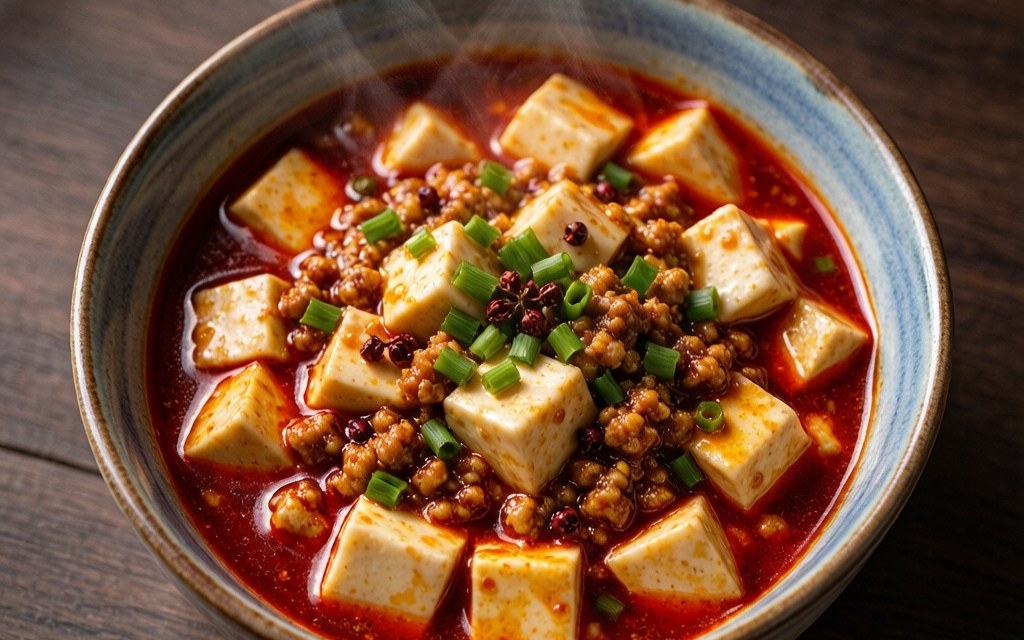
Silky tofu and garlicky pork in a thin, numbing chili sauce, ladled over hot noodles — the saucy Sichuan bowl built for slurping, ready in half an hour.
Instructions
-
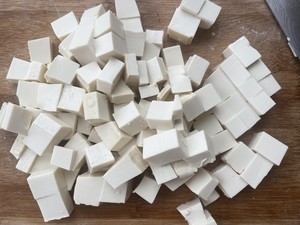
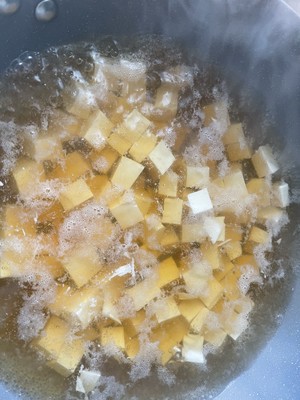
 Bring the 6 cups of water to a boil in a wide pot, stir in the 1 Tbsp of light soy sauce, and slide in the tofu cubes. Simmer 3 minutes — the soy seasons the tofu from the inside and firms the surface so the cubes survive being stirred later. Lift the tofu out with a slotted spoon and leave the seasoned water in the pot for the noodles.
-
 Mince the garlic and ginger. A whole head of garlic is correct for this bowl: the sauce is deliberately garlic-forward, and the brief fry later tames it. Crack the Sichuan peppercorns coarsely under the flat of a knife.
-
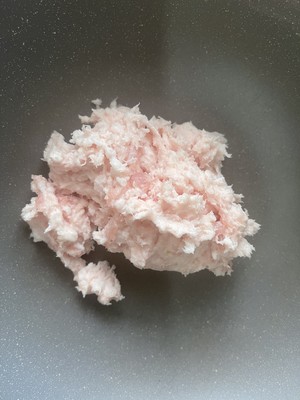
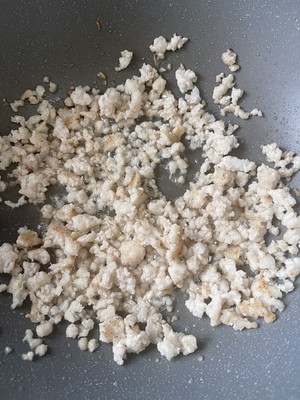
 Put the ground pork in a cold wok or large skillet over high heat and break it up with a spatula. Fry 3–4 minutes, until the grains are white with no pink left — fatty pork needs no added oil, but if yours is lean, add the 1 Tbsp of oil first. Turn the heat down to medium-low.
-
 Add the garlic, ginger and cracked Sichuan peppercorns and stir 30 seconds, until they smell fragrant but have not browned.
-
 Add the chili powder and the doubanjiang and fry 30–45 seconds, stirring constantly, until the oil in the pan turns red and smells toasty. Keep the heat low — scorched chili powder is what makes this sauce taste bitter.
-
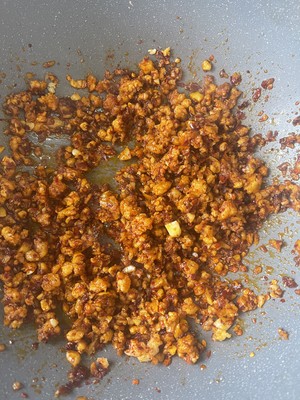 Pour in the ½ cup of water and bring it to a boil. You are aiming for a sauce thin enough to run between noodles, not a thick paste, so do not reduce it hard.
-
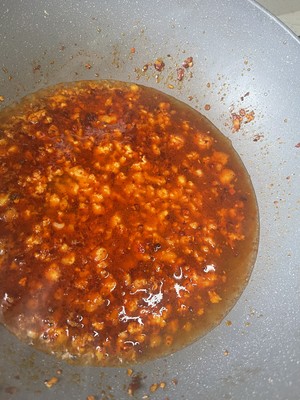 Slide in the tofu, then season with the salt, ground Sichuan pepper and the 1 Tbsp of seasoned soy sauce. Push the tofu gently with the back of a spoon instead of stirring, so the cubes stay whole.
-
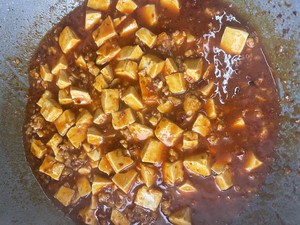 Stir the slurry once more — the cornstarch settles fast — and pour it in. Simmer 30–60 seconds, until the sauce turns glossy and clings lightly to the tofu. One thin slurry is all this version needs.
-
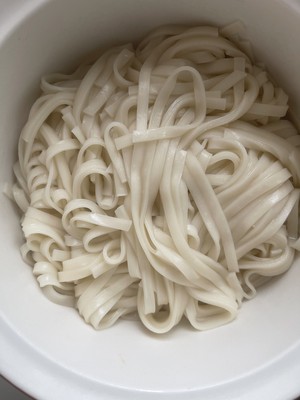 Boil the noodles in the pot of seasoned water according to the package directions, then drain them and divide among four bowls.
-
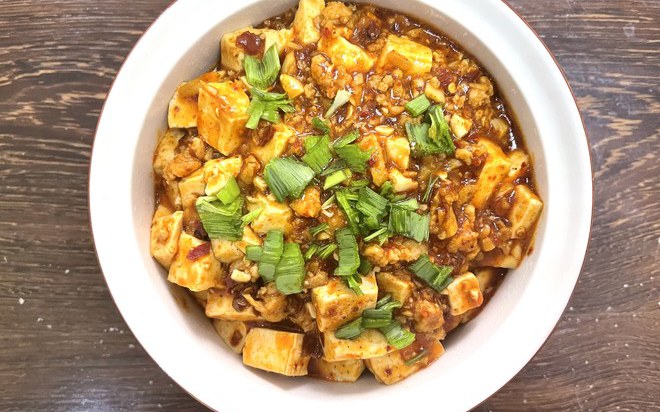
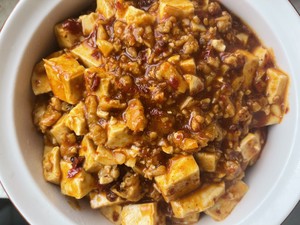 Ladle the mapo tofu over the noodles, spooning plenty of sauce over each portion, and scatter the sliced garlic sprouts on top. Serve immediately, while the sauce is still glossy and loose enough to coat every strand.
Why this recipe works
Mapo tofu is usually served with rice, where a thick sauce is an advantage. Put the same sauce on noodles and it has to behave differently — and that changes three things.
1. Tofu blanched in soy water. Tofu is mostly water and tastes of very little on its own. Simmering the cubes for three minutes in water seasoned with soy sauce does two jobs: it drives some of the water out and pulls seasoning in, and it firms the surface so the cubes can be pushed around with a spoon without crumbling. Skip this and the tofu tastes like a blank spot in the middle of a very flavourful bowl.
2. A deliberately loose sauce, thickened once. Restaurant mapo tofu is thickened in two or three stages to a glossy gel that sits on top of rice. Here you want the opposite: one thin slurry, and a sauce that stays liquid enough to run down between the noodles and coat every strand. The extra water in step 6 is not sloppiness, it is the recipe.
3. Garlic, chili and bean paste in that order, over low heat. The aromatics go in first and get 30 seconds; the chili powder and doubanjiang go in after the heat comes down, and get another 30–45 seconds. That short, gentle fry is what blooms the colour and aroma out of the chili without burning it — and burnt chili powder is the one mistake you cannot fix.
About the dish
Mapo tofu comes from Chengdu, where the story goes that a small restaurant run by a woman whose face was marked by smallpox — mapo, the pockmarked grandmother — started serving tofu simmered with chili, bean paste and minced meat in the 19th century. It became one of the defining dishes of Sichuan cooking: numbing, fiery, and built around the texture of tofu rather than meat.
Ladling a saucy braise over noodles is a habit that runs across China, and Sichuan cooks do it with mapo tofu as readily as with anything else. This home version comes from a cookbook author who numbered it among her everyday recipes: the tofu is blanched in soy water, the pork is deliberately fatty, the garlic is generous, and the whole thing is loosened so that the sauce becomes the dressing rather than a topping. It is the same flavour family as the classic tofu dish, redirected into a one-bowl dinner.
What to serve with it
This bowl needs nothing more than a cool contrast: a smashed cucumber salad or a plate of blanched greens with a few drops of sesame oil cuts through the chili fat beautifully. A spoonful of chili oil on top is welcome if you keep a jar in the fridge.
If you would rather have the classic version on rice, the site's mapo tofu follows the traditional two-stage thickening, and the noodles section has more one-bowl dinners like this one. And because the topping reheats in minutes, this doubles as a weeknight mapo noodles bowl: boil fresh noodles while the sauce warms, and dinner is on the table in under half an hour.
Pro tips
- Fatty pork is the point of this version. The rendered fat carries the chili and bean paste and keeps the sauce loose enough to coat noodles — a lean grind gives you dry crumbs floating in water.
- Use one thin slurry, not the three-stage thickening of restaurant mapo tofu. The sauce here has to flow between noodles; a tight gel would glue the bowl into a single lump.
- Blanching the tofu in soy water does two jobs at once: it seasons the bland centre of the cubes and firms them enough to take a gentle stir without breaking.
- Toast whole Sichuan peppercorns in a dry pan for 30 seconds before grinding if you want the numbing hit to be sharper — pre-ground pepper loses its citrus buzz within weeks.
- Fresh wheat noodles, knife-cut noodles or even spaghetti all work. If you use dried noodles, salt the water lightly and reserve 2 Tbsp of the cooking water to loosen the sauce if it tightens while you plate.
- Prep everything before you turn on the wok. Once the pork goes in, the sauce comes together in under 4 minutes and there is no time to go looking for the chili powder.
Storage & leftovers
- Keep the mapo tofu topping and the noodles in separate containers. The topping lasts 3 days refrigerated; cooked noodles are best eaten the same day and turn gluey by the next.
- Reheat the topping in a covered skillet over low heat with a splash of water for 5 minutes, stirring as little as possible so the tofu stays intact.
- The topping freezes for up to 1 month. The tofu comes back spongier than fresh, so thaw it overnight in the fridge and loosen with water rather than reheating it hard.
- Do not assemble the bowls in advance. Sauce sitting on noodles turns them soft and starchy within 15 minutes.
Frequently asked questions
How spicy is this?
Medium. The heat comes from the chili powder and the doubanjiang, so it is easy to tune: use 2 tsp of chili powder and a mild bean paste for a gentle bowl, or double it if you want the full Sichuan burn.
Can I make it vegetarian?
Yes. Skip the pork, fry 8 oz (225 g) of finely chopped mushrooms in 2 Tbsp of oil until dry, and add 1 tsp of light soy sauce with them. Use a vegetarian bean paste and the bowl is fully plant-based.
What kind of noodles should I use?
Fresh Chinese wheat noodles, about 3 mm thick, are ideal because their starch grabs the sauce. Dried wheat noodles work, and so does spaghetti in a pinch — avoid rice noodles, which slide out from under the sauce.
Can I use firm tofu instead of soft?
Yes, but blanch it for 4 minutes instead of 3 and expect a chewier, less custardy bowl. Silken tofu is too fragile here: it will break down into the sauce and thicken it like a gravy.
Why did my sauce turn bitter?
The chili powder or the bean paste scorched. Both need low heat and constant stirring, and only 30–45 seconds in the pan before the water goes in. If it happens, start again rather than trying to rescue it with sugar.
Can I make the topping ahead?
Yes. Cook the mapo tofu through the slurry stage and refrigerate up to 3 days. Reheat it gently in a covered pan with 2 Tbsp of water, then boil the noodles fresh — the bowl only works when the noodles and the sauce are both hot.
How is this different from mapo tofu over rice?
Same flavour family, different engineering: for noodles the sauce is loosened with extra water and thickened with one thin slurry so it can flow between strands, while rice mapo tofu uses a thicker two-stage gel that sits on top. Serve this one in deep bowls with plenty of sauce.